
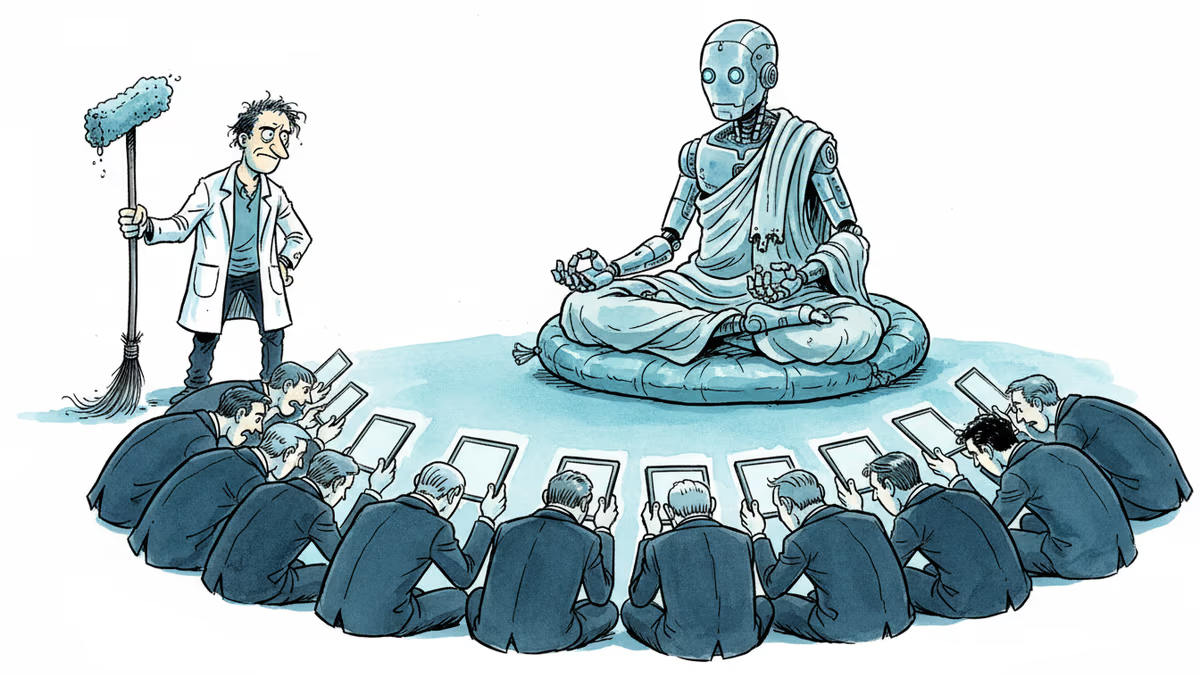
The Robot Monk Problem: Hype, Hope, and Humanoids
A humanoid robot has been ordained as a Buddhist monk. Another chased wild boars in Warsaw. But a tech journalist who actually poked one with a stick says: this is closer to flying cars than ChatGPT.
A robot has been ordained as a Buddhist monk. Another chased wild boars off the streets of Warsaw. A third walked the White House red carpet beside the First Lady. And Elon Musk says Tesla's Optimus will soon be the most profitable product ever invented — outnumbering humans themselves.
So tech journalist James Vincent did what any reasonable person would do. He went and tried to kick one.
The Man Who Poked a Robot
Vincent, who wrote a Harper's Magazine cover story titled "Kicking Robots," visited two of America's leading humanoid robotics companies — Apptronik and Agility Robotics — to get past the pitch decks and see what these machines actually do. He wasn't allowed to kick. Instead, he was handed a broom handle with safety foam taped to the end and told to shove as hard as he could.
The robot staggered backward, threw its arms up to regain balance, then walked right back up to him and looked him in the eye.
"I realized: these things are real," he said.
But real, it turns out, is a long way from ready. The two companies build very different machines. Agility Robotics focuses on warehouse logistics with a deliberately non-human design — backward-facing knees, built for efficiency. Apptronik makes something closer to a human in proportion, designed for general-purpose work. Both share the same pitch: put it anywhere a human laborer goes, and it will do what a human laborer does.
That, Vincent says, is an enormous ask.
Why Now — And Why AI Is Both the Answer and the Problem
The reason humanoid robots are suddenly everywhere is the same reason everything in tech is suddenly everywhere: AI.

Old industrial robots had to be manually programmed for every single movement — degrees of rotation, precise pressure, exact trajectory. The promise of modern deep learning is that robots can now learn those movements from data, the same way ChatGPT learned language. Feed it enough examples, and it figures out how to connect input to output on its own. Meta recently acquired a robotics startup. Google has been testing its AI models on physical robots for years. And Tesla has made Optimus the centerpiece of Musk's next act.
But Vincent flags a fundamental mismatch. Chatbots live in the world of text, where a mistake is an inconvenience — you spot it, correct it, move on. Robots live in the physical world, where a mistake has weight and consequence. "If a robot breaks one in every ten cups while cleaning your kitchen," he asks, "are you going to accept that?"
The error tolerance that makes AI assistants useful doesn't translate to machines operating in your home, your hospital, or your warehouse floor.
China's Edge Isn't Just Speed
The US and China are both racing toward humanoid robotics, but Vincent argues they're running for different reasons — and that difference matters.
American companies are largely marketing home robots as luxury products: the perfect robot butler for the affluent household. China's state planners are responding to a structural crisis. By 2040, people over 60 are projected to make up 30% of China's population. Manufacturing labor is shrinking. Elder care costs are rising. Humanoid robots, if they work, could address both gaps simultaneously.
And China has something the US doesn't: manufacturing scale. The ability to produce thousands of units simultaneously gives Chinese companies a compounding advantage that's difficult to replicate through innovation alone. That's why, Vincent concludes, China is pulling ahead — not because of ideology, but because the economic incentive is structurally sharper.
Closer to Flying Cars Than ChatGPT
Vincent's verdict is direct: the current humanoid robot moment is "nearer to flying cars" than it is to the ChatGPT inflection point.
There have been genuine capability leaps. The robots he met were more capable than anything available five years ago. But the gap between genuine progress and the promises being made by Musk and others — robots in your home next year, never making mistakes, certainly not knocking over your cat — is wide enough to drive a forklift through.
His realistic timeline: humanoid robots becoming a common presence in workplaces and eventually homes over the next ten-plus years. In three to five years? Unlikely.
The pattern here is familiar. A legitimate technological advance arrives. Investors flood in. Companies compete not just on product but on narrative. Promises inflate to match capital expectations. And somewhere in that gap between what's real and what's promised, decisions get made — by factory workers wondering about their jobs, by hospitals considering robot caregivers, by governments drafting policy — based on a version of the future that hasn't arrived and may not arrive on schedule.
This content is AI-generated based on source articles. While we strive for accuracy, errors may occur. We recommend verifying with the original source.
Related Articles
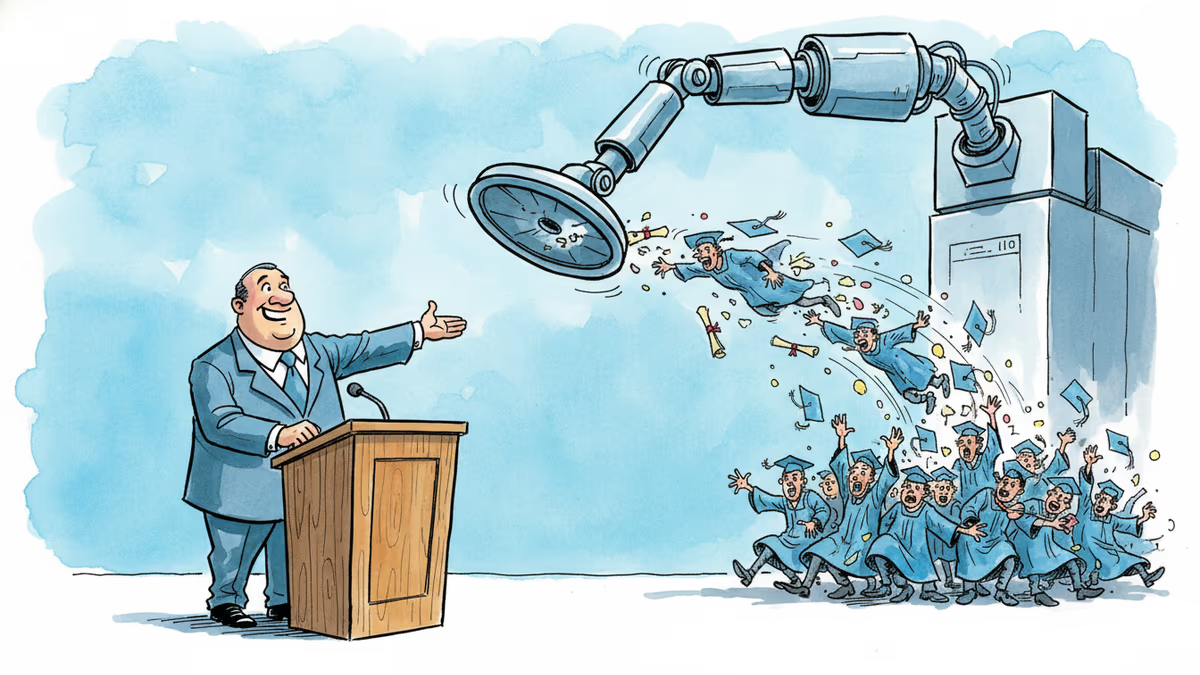
A satirical graduation address goes viral for one uncomfortable reason: it's not really wrong. What the joke reveals about AI, entry-level jobs, and the deal we made with work.
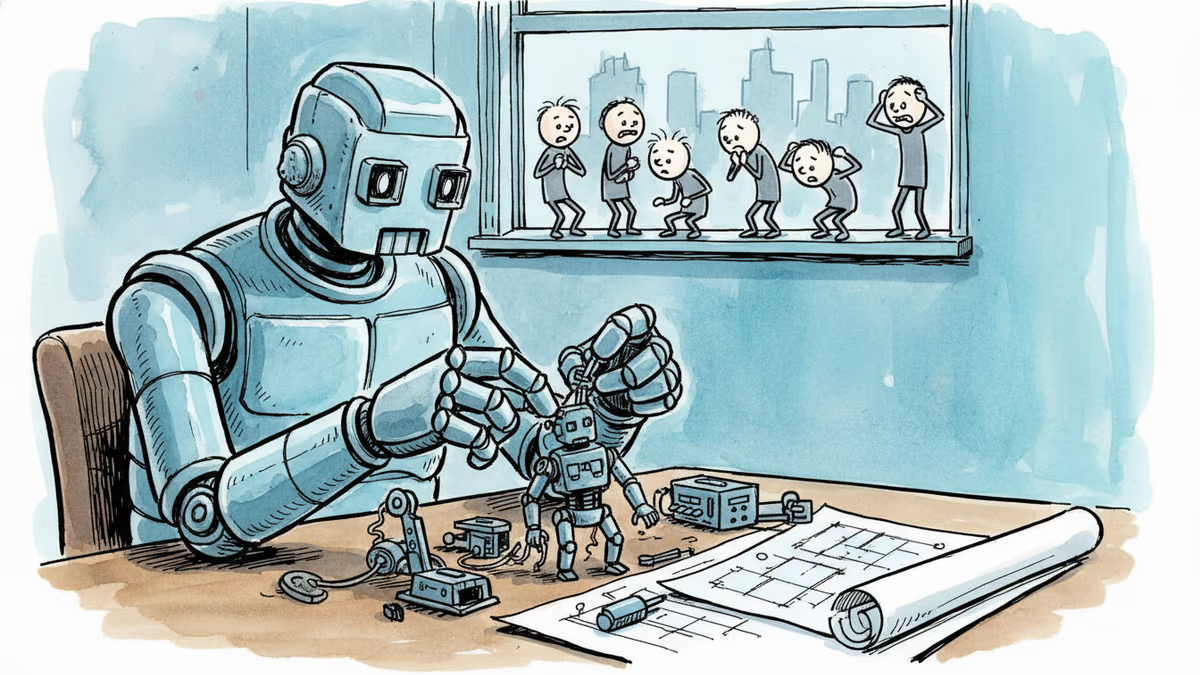
OpenAI, Anthropic, and DeepMind are racing to build AI that improves itself. What happens when the pace of AI progress is set by AI—not humans?
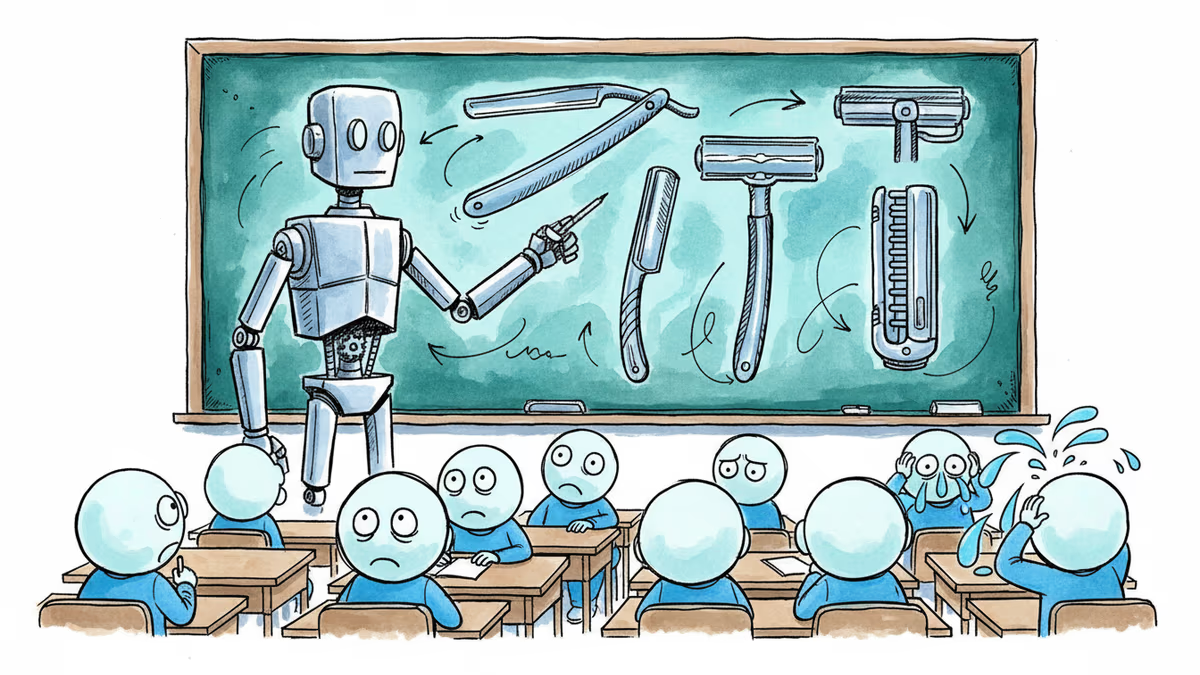
A satirical short story imagines AI-powered classrooms under a Melania Trump education initiative—and asks what we lose when we optimize learning for efficiency.
The AI consciousness debate is settled. But the question that actually matters — whether human-AI arrangements grow or erode human judgment — remains almost entirely unasked.
A satirical graduation address goes viral for one uncomfortable reason: it's not really wrong. What the joke reveals about AI, entry-level jobs, and the deal we made with work.
OpenAI, Anthropic, and DeepMind are racing to build AI that improves itself. What happens when the pace of AI progress is set by AI—not humans?
A satirical short story imagines AI-powered classrooms under a Melania Trump education initiative—and asks what we lose when we optimize learning for efficiency.
The AI consciousness debate is settled. But the question that actually matters — whether human-AI arrangements grow or erode human judgment — remains almost entirely unasked.
Thoughts
Share your thoughts on this article
Sign in to join the conversation