

A $25 Billion Freeze: Understanding the US Offshore Wind Pause Crisis
The Trump administration's pause on $25B in offshore wind projects has sparked a legal firestorm. Explore the national security claims and economic impacts.
The new year has kicked off with a massive legal collision on the US East Coast. On December 22, 2025, the Trump administration hit the pause button on five major offshore wind farms currently under construction, leaving $25 billion in investments hanging by a thread. As of this week, developers have officially launched a flurry of lawsuits to restart the projects.
The US Offshore Wind Pause $25B Conflict: Radar vs. Renewables
The Department of the Interior cited national security as the primary catalyst, claiming that spinning turbines create 'clutter' on military and weather radar systems. While radar interference is a documented technical challenge, developers like Orsted and Equinor argue these issues were already addressed during the multi-year federal review process.
| Project Name | Progress / Status | Target Capacity |
|---|---|---|
| Revolution Wind | 87% Complete / Paused | 704 MW |
| Empire Wind | Over 60% Complete / Paused | 810 MW |
| Vineyard Wind 1 | Under Construction / Paused | 800 MW |
| Sunrise Wind | Development / Paused | 924 MW |

Economic Fallout and the Energy Price Spike
The stakes couldn't be higher. These five projects were slated to power 2.5 million homes and create 10,000 jobs. A 2025 study revealed that had just 3.5 gigawatts of offshore wind been operational during the previous winter, energy prices would've dropped by 11%, saving ratepayers $400 million.
Before the current administration took office, BloombergNEF projected the US would reach 39 gigawatts of offshore wind by 2035. Today, that forecast has cratered to a mere 6 gigawatts. The chilling effect of pausing projects that are nearly 90% complete sends a message of extreme unpredictability to global investors.
Authors
Related Articles
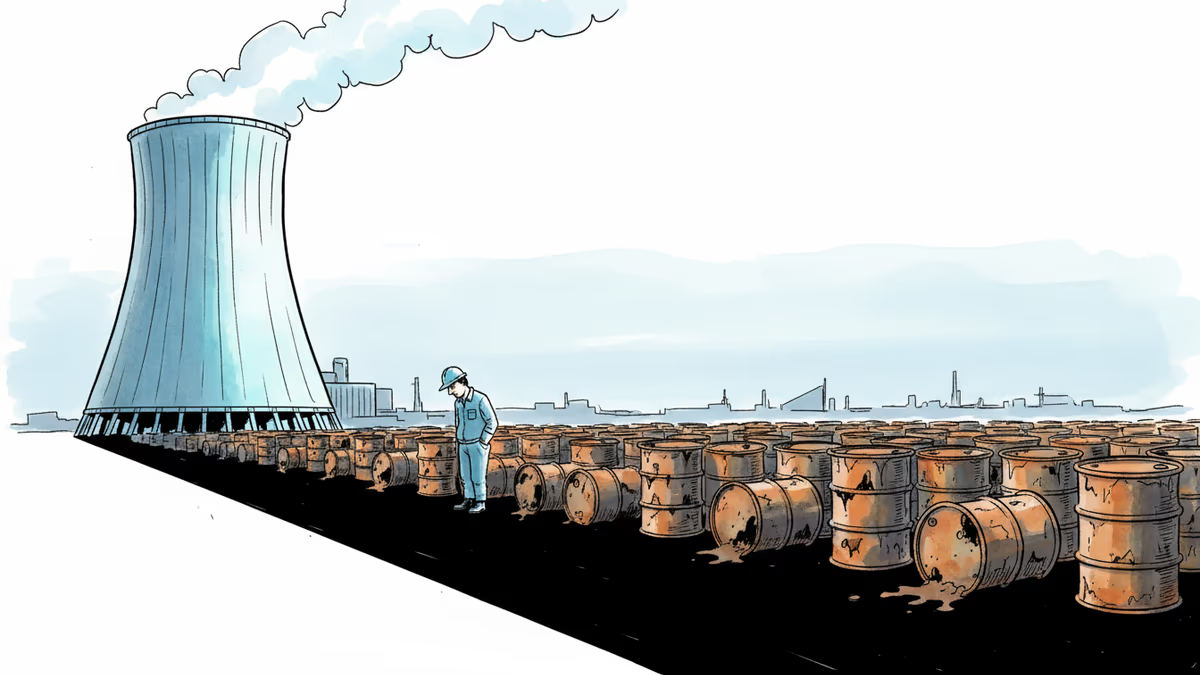
Nuclear power is winning fans across the political spectrum—and Big Tech is pouring billions in. But America still has no permanent home for the 2,000 metric tons of high-level waste its reactors produce every single year.

The Trump administration has gutted the DOJ's Voting Section, pushing out two dozen experienced lawyers and replacing them with loyalists. With 2026 midterms approaching, what does this mean for American democracy?
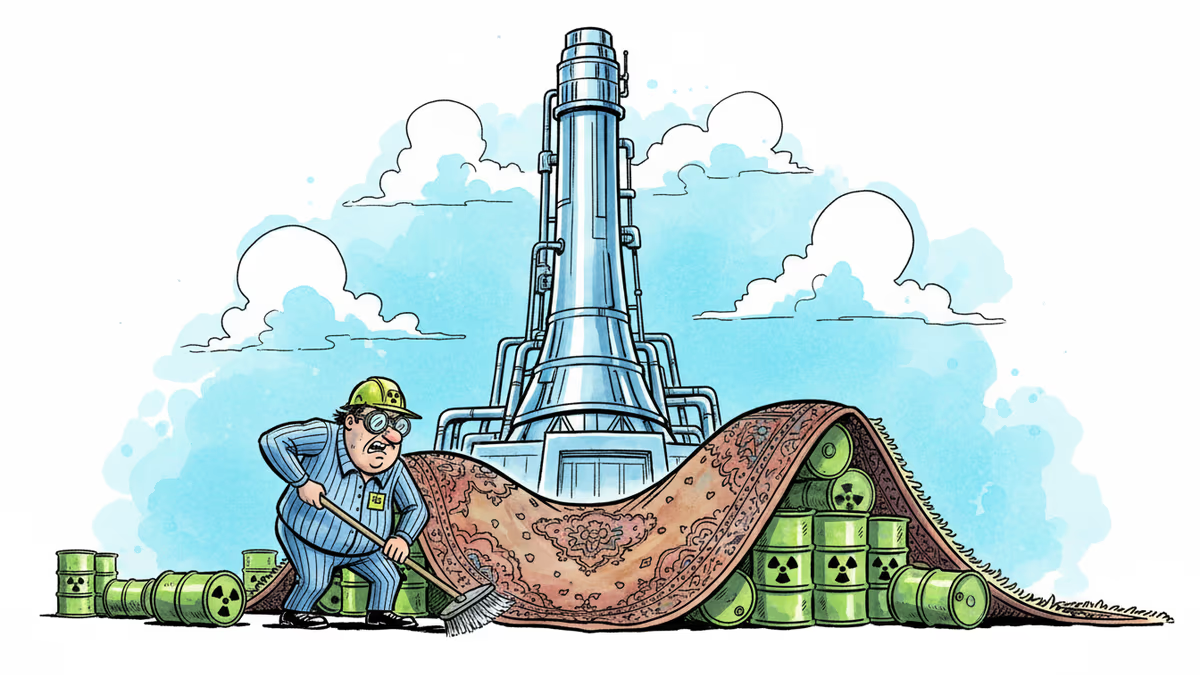
Nuclear energy is booming again, fueled by Big Tech's data center appetite. But 70 years of spent fuel still has nowhere permanent to go. Finland solved it. The US hasn't tried hard enough.
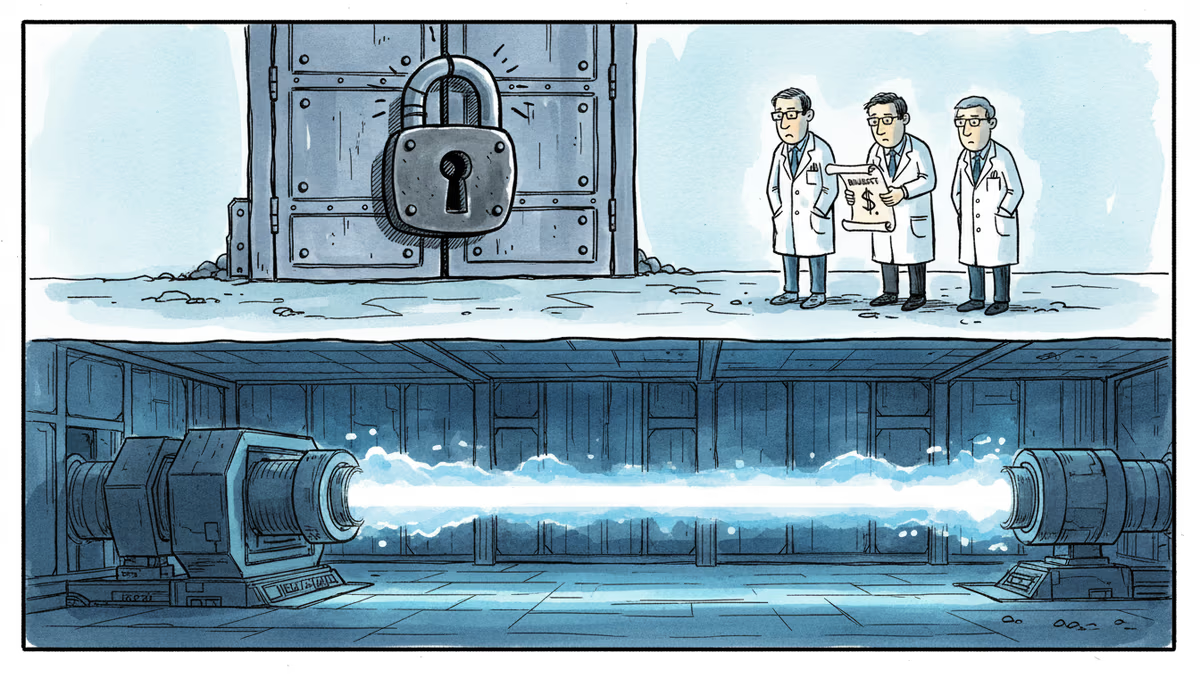
The Texas Petawatt laser—capable of outpowering the entire US electrical grid for a trillionth of a second—has shut down due to funding cuts. What does this mean for fusion energy and America's scientific future?
Nuclear power is winning fans across the political spectrum—and Big Tech is pouring billions in. But America still has no permanent home for the 2,000 metric tons of high-level waste its reactors produce every single year.
The Trump administration has gutted the DOJ's Voting Section, pushing out two dozen experienced lawyers and replacing them with loyalists. With 2026 midterms approaching, what does this mean for American democracy?
Nuclear energy is booming again, fueled by Big Tech's data center appetite. But 70 years of spent fuel still has nowhere permanent to go. Finland solved it. The US hasn't tried hard enough.
The Texas Petawatt laser—capable of outpowering the entire US electrical grid for a trillionth of a second—has shut down due to funding cuts. What does this mean for fusion energy and America's scientific future?
Thoughts
Share your thoughts on this article
Sign in to join the conversation