

Nvidia $5 Trillion Valuation: The Physical AI Era at CES 2026
Nvidia hit a historic $5 trillion valuation at CES 2026. The company shifted focus from gaming to 'Physical AI' and the Rubin platform, signaling its intent to power robots and autonomous vehicles by 2027.
Is Nvidia still a gaming company? The answer from CES 2026 is a resounding no. Nvidia has officially become the first company in history to hit a $5 trillion valuation, shifting its entire weight toward a future where every physical object is powered by artificial intelligence.
Nvidia $5 Trillion Valuation Driven by Physical AI
CEO Jensen Huang introduced the concept of Physical AI—AI systems that don't just generate chat responses but interact with the tangible world. These models are trained in virtual simulations before being deployed into robots and vehicles. According to Bloomberg, this move marks Nvidia's transition from a component supplier to a primary player in industrial automation.
- Cosmos: A world foundation model designed to predict movement and simulate entire environments.
- Alpamayo: A specialized reasoning model built for autonomous driving, featured in the Mercedes-Benz CLA.
- Robotaxi Ambitions: Plans to launch a Level 4 autonomous taxi service with partners as early as 2027.

The Rubin Era: Moving Beyond the GPU
Notably absent from the keynote was any mention of new GeForce graphics cards. Instead, Nvidia placed all its bets on Rubin, its next-generation AI platform. Rubin isn't just a chip; it's a full-stack system integrating CPUs, GPUs, and networking designed to handle the astronomical compute demands of hyperscalers and governments.
Nvidia's strategy is clear: sell the pipes of the AI ecosystem. By releasing open models for healthcare, climate science, and robotics, they are ensuring that every developer, from local startups using DGX Spark to massive data centers, remains tethered to Nvidia's hardware and software stack.
Authors
Related Articles

Nvidia shipped roughly a billion RISC-V cores in 2024, then announced it would run CUDA on the open standard. We break down how royalty-free instruction sets and open software stacks are trying to route around CUDA's lock-in. Part 2 of the Semiconductor Sovereignty series.

US AI-chip export controls split into three layers in the first half of 2026 — January easing, a May crackdown on circumvention, and a pending bill. Nvidia erased China from its guidance and still posted a record $81.6 billion quarter. A look at the export policy that both shields and cages it.
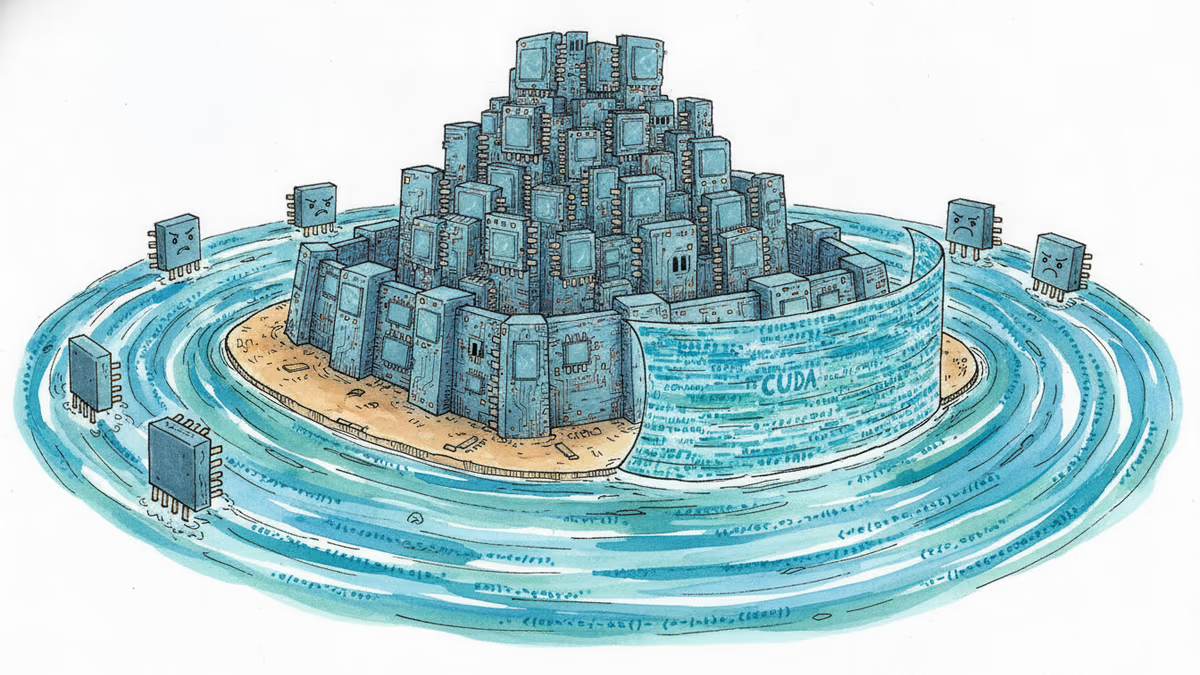
AMD's MI325X matches or beats Nvidia on memory and bandwidth — yet Nvidia's 86-92% share holds. The real moat is CUDA, 20 years in the making. Part 1 of 4.
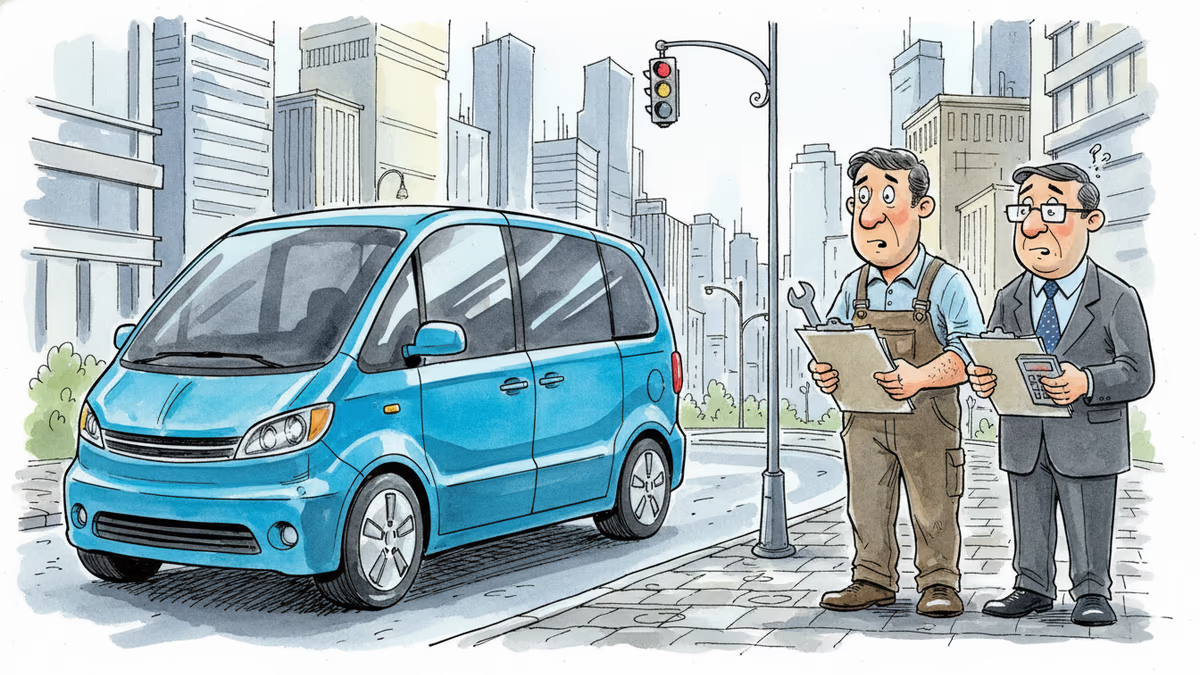
Waymo's new Ojai robotaxi isn't just a vehicle upgrade. It's the company's most serious attempt yet at cracking the cost problem that has kept autonomous vehicles from scaling. Here's what's really at stake.
Nvidia shipped roughly a billion RISC-V cores in 2024, then announced it would run CUDA on the open standard. We break down how royalty-free instruction sets and open software stacks are trying to route around CUDA's lock-in. Part 2 of the Semiconductor Sovereignty series.
US AI-chip export controls split into three layers in the first half of 2026 — January easing, a May crackdown on circumvention, and a pending bill. Nvidia erased China from its guidance and still posted a record $81.6 billion quarter. A look at the export policy that both shields and cages it.
AMD's MI325X matches or beats Nvidia on memory and bandwidth — yet Nvidia's 86-92% share holds. The real moat is CUDA, 20 years in the making. Part 1 of 4.
Waymo's new Ojai robotaxi isn't just a vehicle upgrade. It's the company's most serious attempt yet at cracking the cost problem that has kept autonomous vehicles from scaling. Here's what's really at stake.
Thoughts
Share your thoughts on this article
Sign in to join the conversation