
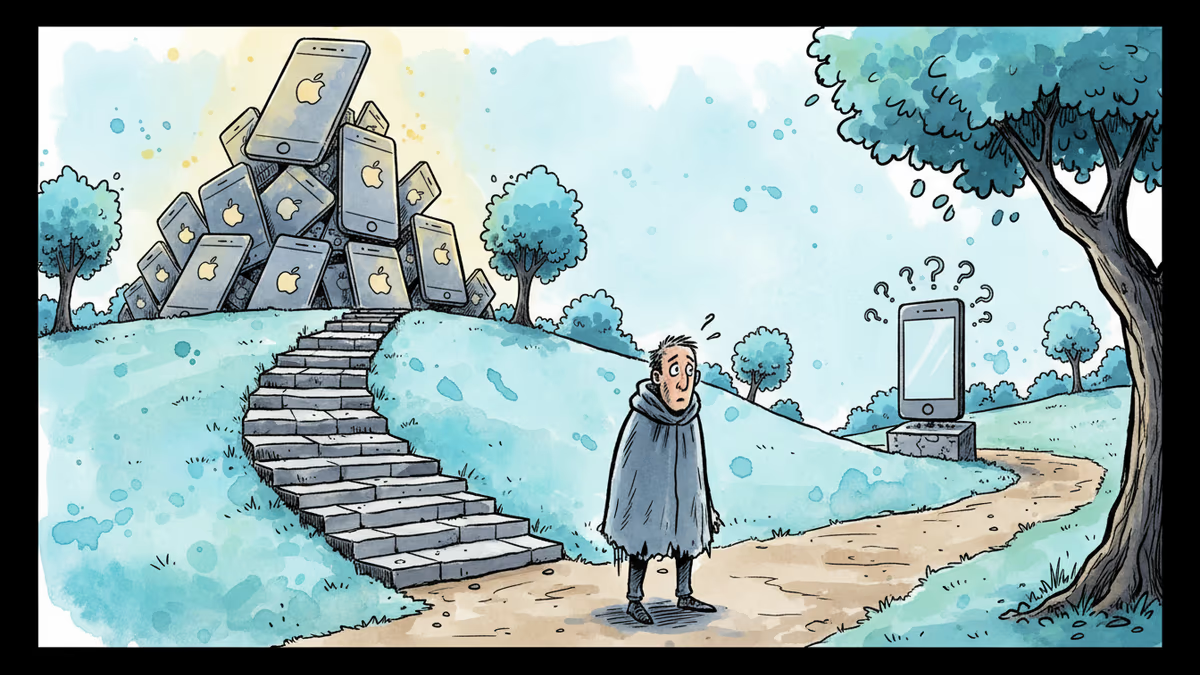
iPhone 17E at $599: Apple's Budget Gamble or Gateway Drug?
Apple launches the $599 iPhone 17E with MagSafe and A19 chip, testing whether premium experiences can truly be affordable. The strategy reveals deeper questions about brand positioning.
Can $599 Buy You Into Apple's Walled Garden?
Apple just answered a question nobody asked: what happens when you strip a premium phone down to its essentials? The iPhone 17E, launching March 11th at $599, represents Apple's most interesting pricing experiment in years.
Unlike last year's disappointing iPhone 16E, this model includes MagSafe wireless charging, the faster A19 chip, and double the base storage (256GB). It even supports Apple Intelligence. On paper, it's tantalizingly close to the $799 standard iPhone 17.
But the devil, as always, lives in the details.
The Invisible Compromises
Apple's cost-cutting feels surgical. The 6.1-inch display runs at 60Hz while every other iPhone 17 model offers 120Hz smoothness. Peak brightness caps at 1,200 nits – fine indoors, potentially frustrating in bright sunlight.
The camera tells a more complex story. While the 48MP main sensor matches pricier siblings, the 17E loses the ultrawide lens and macro capabilities. The 12MP front camera lags behind the 18MP shooters found elsewhere in the lineup. For a generation raised on perfect selfies, this matters.

Most tellingly, Apple withheld the Camera Control button and Dynamic Island – features the company has spent months marketing as revolutionary. The message is clear: premium experiences have premium prices.
Market Psychology at Play
This isn't just about specs – it's about Apple testing how low it can go without diluting its brand. The company has watched Samsung succeed with its Galaxy A series and Google gain traction with budget Pixels. But Apple's challenge is different: maintaining premium perception while expanding accessibility.
The $599 price point is strategically chosen. It's low enough to attract Android switchers and budget-conscious buyers, yet high enough to avoid cannibalizing the standard iPhone 17. It's also perfectly positioned for corporate bulk purchases and family plan additions.
For competitors, the 17E represents a new threat. OnePlus, Nothing, and other "flagship killers" suddenly face Apple's ecosystem advantages at comparable prices. The question isn't whether the 17E offers the best specs for $599 – it's whether Apple's software integration and brand cache justify the premium over Android alternatives.
The Long Game
Apple's real gamble isn't on the 17E's immediate success. It's betting that users who enter the ecosystem at $599 will eventually upgrade to pricier models. The 17E becomes a gateway drug – offering just enough premium experience to create loyalty, while leaving room for desire.
This strategy could backfire if users find the 17E "good enough." Why upgrade to a $1,099 Pro model when the budget option handles daily tasks adequately? Apple's challenge is making the compromises feel meaningful without making them deal-breakers.
Authors
Related Articles
After 15 years of fragmented mobile messaging, Apple and Google are rolling out end-to-end encrypted RCS messaging between iPhones and Android devices. Here's what changed, why it took so long, and what it means for your privacy.
Apple agreed to pay $250 million to settle claims it misled iPhone 16 buyers about Apple Intelligence features. What this means for consumers, Big Tech marketing, and the AI industry.
Apple quietly removed the entry-level $599 Mac Mini, raising the starting price to $799 — just one day after Tim Cook warned of chip supply constraints on the earnings call.

Apple names John Ternus, its hardware engineering chief, as the next CEO. The shift from operator to product person signals where Apple thinks its next decade of growth will come from — and raises real questions about what comes next.
After 15 years of fragmented mobile messaging, Apple and Google are rolling out end-to-end encrypted RCS messaging between iPhones and Android devices. Here's what changed, why it took so long, and what it means for your privacy.
Apple agreed to pay $250 million to settle claims it misled iPhone 16 buyers about Apple Intelligence features. What this means for consumers, Big Tech marketing, and the AI industry.
Apple quietly removed the entry-level $599 Mac Mini, raising the starting price to $799 — just one day after Tim Cook warned of chip supply constraints on the earnings call.
Apple names John Ternus, its hardware engineering chief, as the next CEO. The shift from operator to product person signals where Apple thinks its next decade of growth will come from — and raises real questions about what comes next.
Thoughts
Share your thoughts on this article
Sign in to join the conversation