
America Has the Mines. It Doesn't Have the People.
The U.S. is pouring billions into critical mineral mining, but the real bottleneck isn't geology—it's the workforce and processing expertise lost over 30 years of offshoring.
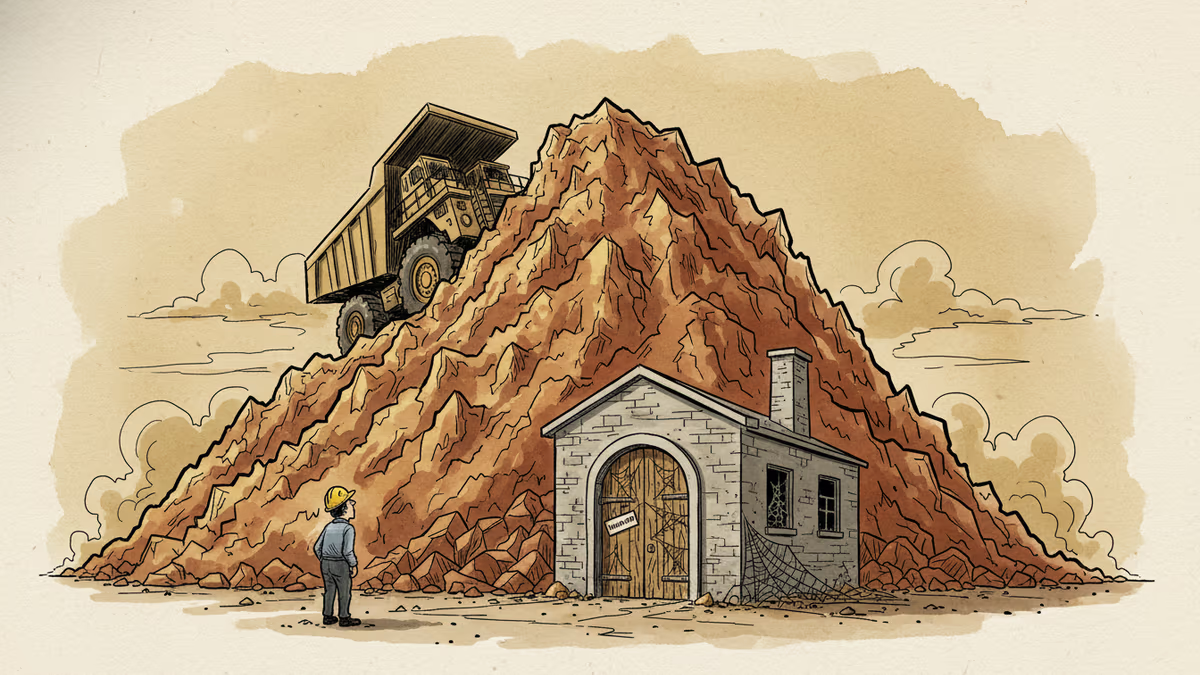
America has the ore. It has the money. What it doesn't have is enough people who know what to do next.
That's the uncomfortable reality behind the U.S. push to secure critical minerals. According to the U.S. Geological Survey, the country imported roughly 80% of its rare earth compounds and metals in 2024. More striking: up to 90% of rare earth minerals extracted in the U.S. and allied nations were shipped to China for processing. The materials that go into electric vehicles, smartphones, and missile guidance systems are, in practice, hostage to a single country's refining capacity.
Washington has framed this as a national security crisis and is spending billions to fix it. But the policy conversation keeps circling geology and geopolitics—where the deposits are, who controls access—while a more fundamental question goes largely unasked: Does the U.S. still have the human expertise to process what it digs up?
How America Gave It Away
For two decades, the United States dominated global rare earth production. From 1965 through the mid-1980s, the Mountain Pass mine in California's Mojave Desert supplied most of the world's rare earth elements for electronics and defense. U.S. output ran around 15,000 metric tons per year—roughly three times the rest of the world combined. American metallurgists and chemical engineers held deep expertise in separation and refining.
Then the economics shifted. Environmental incidents at Mountain Pass—radioactive wastewater leaking into the Mojave through the 1980s and 1990s—combined with tightening regulations to push costs up sharply. Meanwhile, China expanded production rapidly, with lower labor costs and fewer environmental constraints. By the early 2000s, U.S. rare earth output had fallen to near zero.
What's easy to miss is that the processing capacity didn't just decline—it evaporated. And it took the workforce with it. Mining and mineral engineering programs now graduate only a few hundred students per year, well below historic levels. The number of accredited programs has shrunk since the 1980s. Many faculty members are approaching retirement. The institutional knowledge that took decades to build quietly aged out of the system.
Why Money Alone Won't Fix It

The U.S. now has two active rare earth mining sites: a heavy mineral sand operation in southeast Georgia and the revived Mountain Pass mine in California. Together, they produced roughly 51,000 metric tons of rare earth mineral concentrates in 2025. That sounds like progress.
But a significant portion of that material still goes to China for processing. Because the facilities to do it domestically barely exist.
Building a processing facility isn't like opening a distribution center. Permitting alone takes years. From investment decision to first production can stretch a full decade. The equipment is specialized. The regulatory compliance requirements are exacting. And the workforce needed to operate these plants—people who can separate neodymium from praseodymium, run solvent extraction circuits, and maintain hydrometallurgical systems within environmental standards—requires years of training and hands-on experience that can't be fast-tracked.
The environmental dimension adds another layer of difficulty. Rare earth separation typically involves chemical processing with acids and solvents. Poorly managed, these processes produce toxic wastewater, air pollution, and soil contamination—exactly what happened in parts of China as production expanded rapidly in the 1990s and 2000s. U.S. regulations, shaped by disasters like the 1969 Cuyahoga River fire and the Love Canal crisis, set strict standards for air quality, water discharge, and waste management. Meeting those standards requires expertise in pollution control and environmental systems design—skills that are themselves in short supply.
This creates a paradox: the regulatory framework that protects American communities from the worst industrial harms also raises the bar for who can operate these facilities. That's not an argument against the regulations. It's an argument for investing in the people who can work within them.
What Other Countries Are Already Doing
Canada and Australia offer instructive contrasts. Canada's critical minerals strategy explicitly connects mining projects to battery and EV manufacturing, funding processing facilities, building regional supply chain hubs, and tying workforce training programs to those specific industries. Australia has combined policy incentives with public financing to encourage domestic processing, while expanding university and vocational programs in mining, metallurgy, and mineral engineering.
The United States has ingredients that neither country can fully match: world-class research universities, a large industrial labor base, and regions like Appalachia where coal's decline has left workers with transferable skills and few opportunities. Land-grant and technical universities could expand programs integrating mining, materials science, environmental restoration, and recycling. Federal apprenticeship initiatives and university-industry partnerships exist but are scattered across agencies without the coordination needed to move at scale.
The gap between what the U.S. has and what it needs isn't geological. The country has significant mineral resources. The gap is in the systems and people required to turn those resources into usable materials—and that gap developed over thirty years of policy neglect and offshoring.
This content is AI-generated based on source articles. While we strive for accuracy, errors may occur. We recommend verifying with the original source.
Related Articles
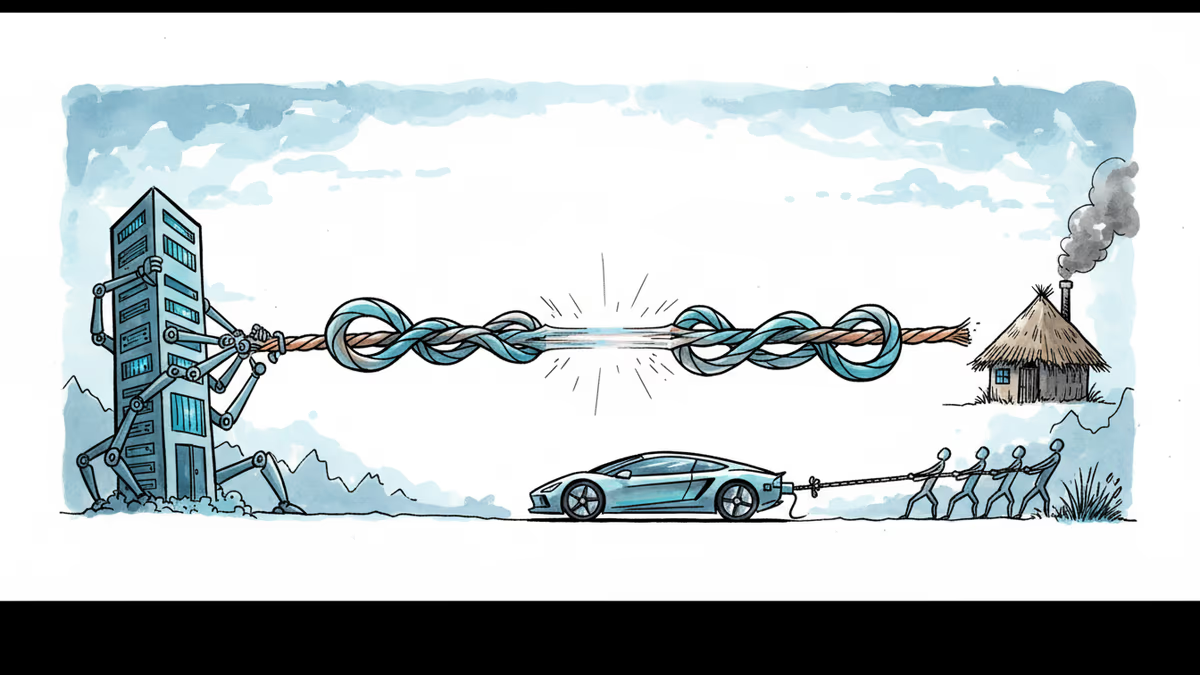
Copper demand from AI data centers, EVs, and emerging economies is outpacing supply. By 2050, the world faces a 7-million-ton annual shortfall. Here's why higher prices aren't enough to fix it.
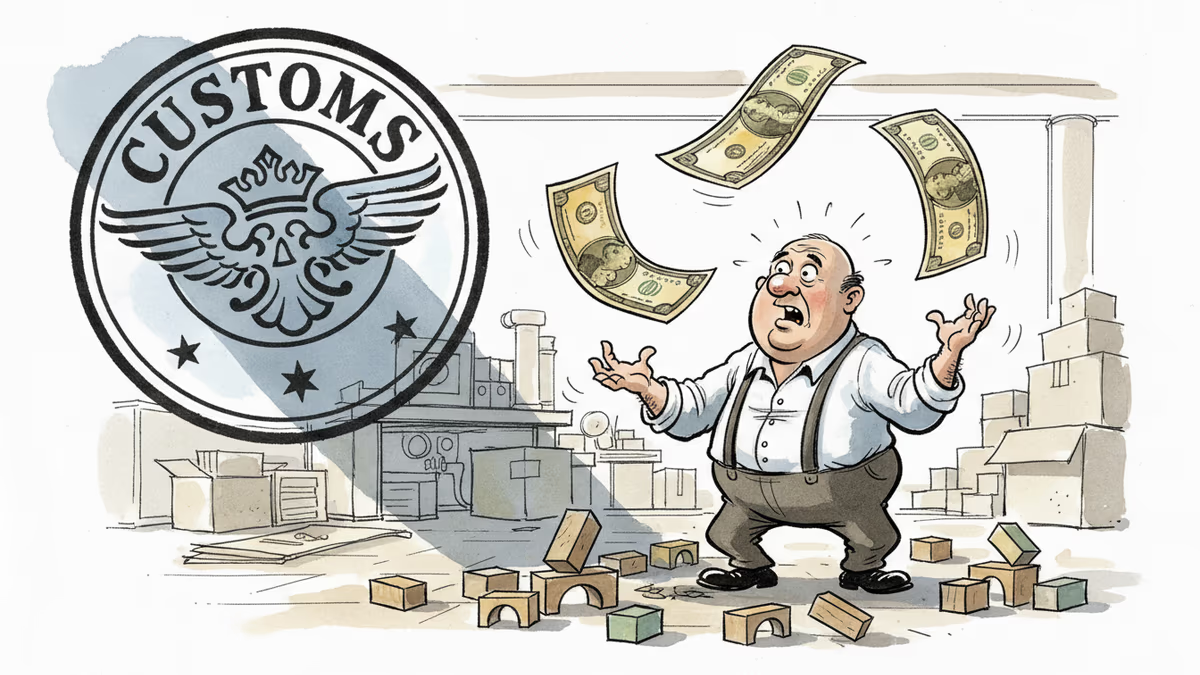
Learning Resources paid over $10 million in tariffs before winning at the Supreme Court. But new tariffs started immediately. A look inside the global supply chain reality.
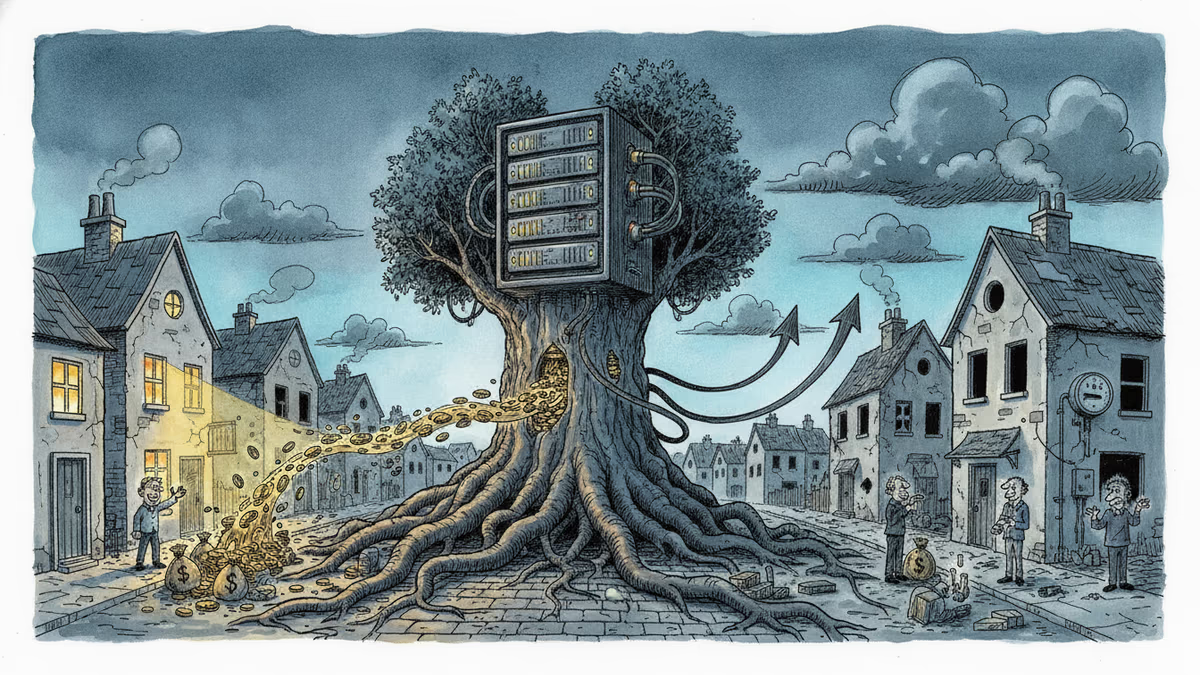
Over 1,200 community actions have pushed back against data centers since 2024. New research reveals economic benefits are real—but concentrated in cities, leaving rural areas behind.
Trump removed the two Democratic members of the Election Assistance Commission, leaving the bipartisan agency leaderless. A Supreme Court ruling made it legal. Here's why a non-crisis can still be a warning sign.
Copper demand from AI data centers, EVs, and emerging economies is outpacing supply. By 2050, the world faces a 7-million-ton annual shortfall. Here's why higher prices aren't enough to fix it.
Learning Resources paid over $10 million in tariffs before winning at the Supreme Court. But new tariffs started immediately. A look inside the global supply chain reality.
Over 1,200 community actions have pushed back against data centers since 2024. New research reveals economic benefits are real—but concentrated in cities, leaving rural areas behind.
Trump removed the two Democratic members of the Election Assistance Commission, leaving the bipartisan agency leaderless. A Supreme Court ruling made it legal. Here's why a non-crisis can still be a warning sign.
Thoughts
Share your thoughts on this article
Sign in to join the conversation