
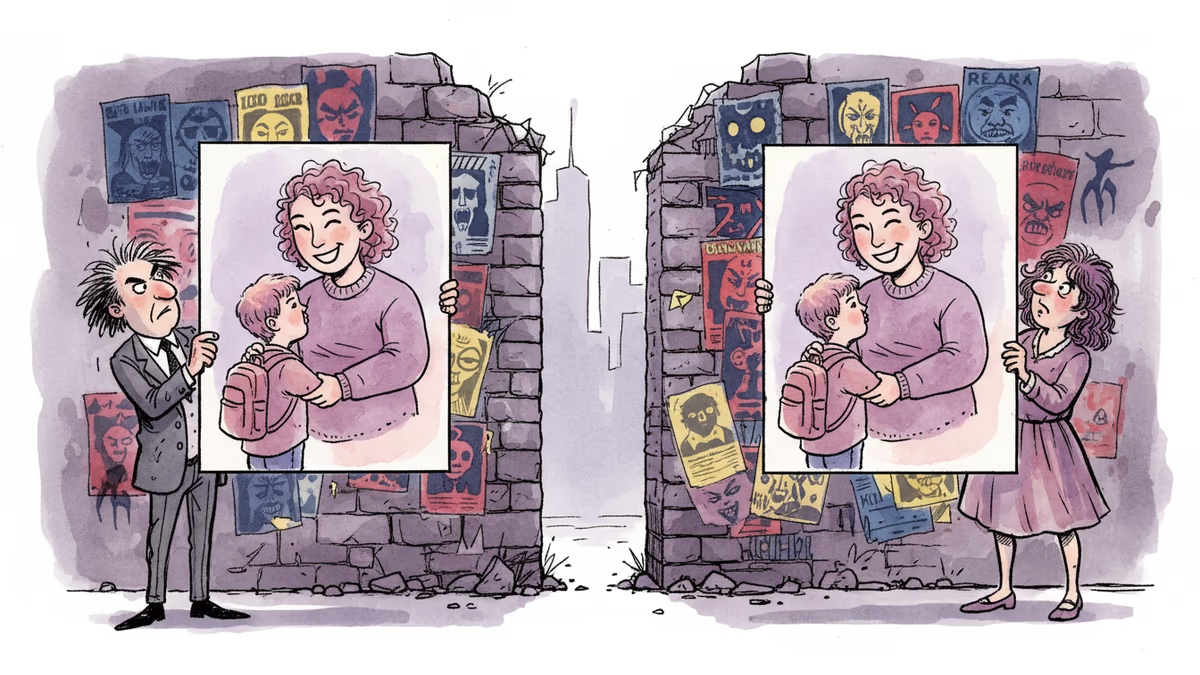
Strip Away the Party Label, and Americans Want the Same Teacher
A five-year study of 2,000+ Americans found bipartisan consensus on what makes a great teacher—until a party name was attached. The results reveal something deeper than an education debate.
Ask a Democrat and a Republican to describe their best teacher. Odds are, you'll hear the same person.
What the Data Actually Showed
For five years, from 2020 through 2025, a research team from Arizona State University surveyed more than 2,000 Americans—Democrats, Republicans, and independents—asking a deceptively simple question: what makes a very good teacher?
The researchers expected to map a familiar partisan divide. Instead, they found something that has become genuinely rare in American public life: cross-partisan agreement, and a strong one at that.
Participants were given ten statements describing possible teacher qualities and asked to rank them. Five centered on relationships—caring about students, making lessons relevant to their lives, providing individualized support. The other five emphasized content coverage, academic competition, and strict discipline. Regardless of age, race, gender, or political affiliation, respondents converged on the same seven priorities. They wanted teachers who knew them, cared about them, and connected learning to their actual lives. They did not particularly prioritize teachers who pushed through large volumes of material, ranked students against each other, or ran a tight disciplinary ship.
A 2022 follow-up with 179 teachers in Arizona and California produced nearly identical results. Teachers described great teaching the same way students remembered it.
When a Label Changes Everything
Satisfied they'd found genuine consensus, the team designed a third experiment. Between late 2024 and early 2025, they presented the same "very good teacher" description—drawn from their earlier findings—to a nationally representative sample of 1,562 adults. The twist: some participants were told the description was endorsed by Democrats, others were told it came from Republicans, and a control group received it with no political tag at all.
Without any label, roughly 85% of Democrats, Republicans, and independents agreed with the description. Then the labels went on.

When Republicans saw the description tied to Democrats, their agreement dropped from 85% to 64%. When Democrats saw it tied to Republicans, agreement fell from 86% to 76%. The drop was sharper on the right, but neither side was immune. The content hadn't changed by a single word. Only the attributed source had.
Political scientists call this affective polarization: the phenomenon where reactions to an idea are driven less by the idea itself than by who appears to be behind it. It's a distinction between disagreeing with a policy and distrusting the people associated with it—and the two have become increasingly hard to separate.
Why This Matters Beyond a Survey
The backdrop here is important. American K–12 education has become one of the most combustible arenas in domestic politics. Conservative parent groups are pushing to remove books touching on LGBTQ+ themes or race from school libraries. Civil liberties advocates and progressive parents are fighting those removals as censorship. Debates over transgender students' bathroom access, AI in classrooms, and the composition of school boards have turned local school meetings into national news events.
On the surface, it looks like a society that cannot agree on the basics. But the survey data complicates that picture. At the national level, education is framed as an intractable culture war. At the individual level, Americans still report high confidence in their own local schools—and, it turns out, in their own vision of what a good teacher looks like.
The researchers suggest this gap may be less about incompatible values and more about how issues get framed. When every education debate is presented as a proxy war between two irreconcilable worldviews, the underlying agreement gets buried.
There's also a policy mismatch worth noting. Federal education law over the past four decades—most notably No Child Left Behind, which mandated standardized testing in reading and math—has emphasized exactly what Americans say they don't prioritize: measurable content delivery and competitive performance metrics. The policies reflect a theory of good education that the public, across party lines, doesn't actually endorse.
The Harder Question Underneath
None of this means the conflicts are manufactured. Real disagreements exist over curriculum content, parental rights, and the boundaries of classroom discussion. Those disputes won't dissolve because a survey found common ground on teaching style.
But the research does raise a more uncomfortable possibility: that the architecture of political conflict—how debates are framed by media, politicians, and platform algorithms—may be producing a perception of division that outpaces the division itself. When two-thirds of Republicans and Democrats still agree on what good teaching looks like, even after a partisan label is applied, the disagreement is real but not total. Something is amplifying it.
The research team offers a low-tech test. Ask someone with different politics than yours about the best teacher they ever had. Then listen. The description you hear, they suggest, will probably sound familiar.
This content is AI-generated based on source articles. While we strive for accuracy, errors may occur. We recommend verifying with the original source.
Related Articles
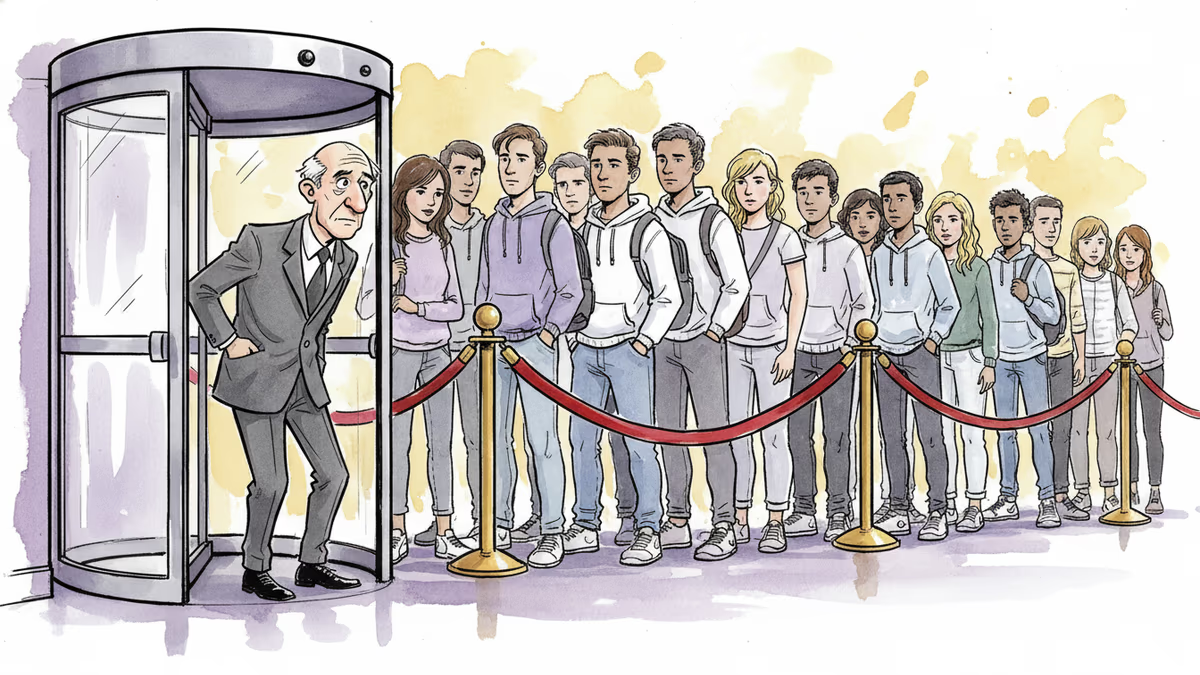
The average U.S. retirement age has climbed from 57 to well past 65. As people live longer and social bonds outside work erode, the old script for stepping away no longer holds. Here's why.

AI looks like liberation, threat, or environmental disaster depending on where you stand. A framework of nine competing narratives reveals why single-lens thinking is the real danger.
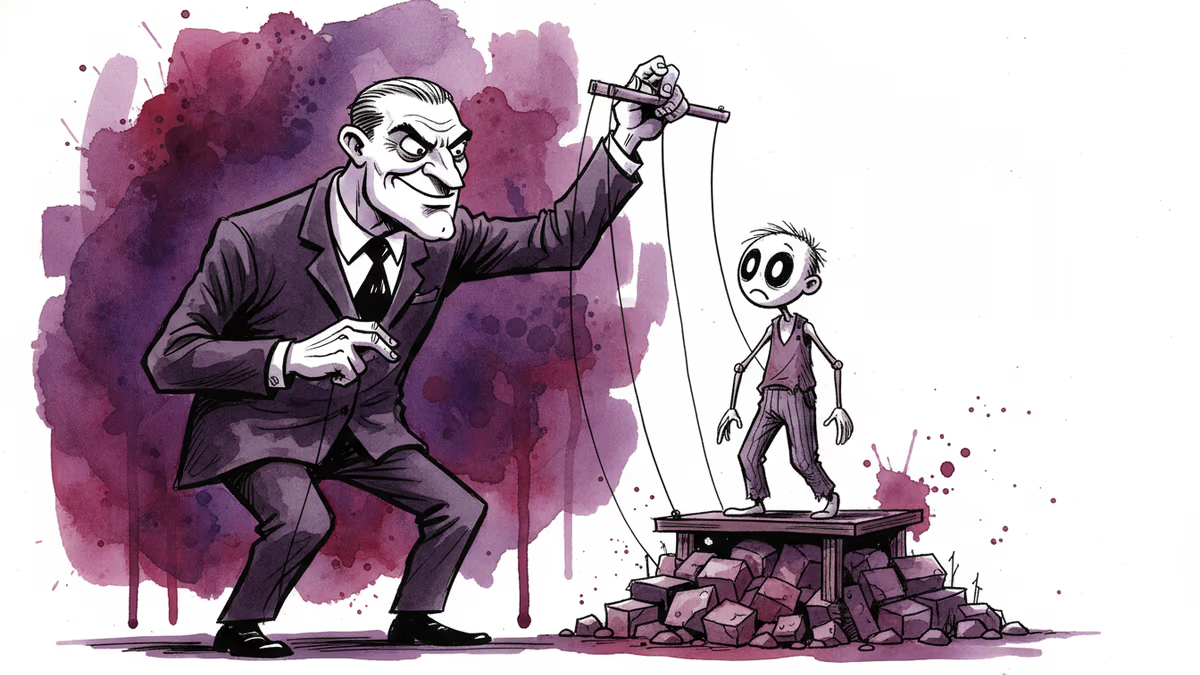
The Wizard of the Kremlin isn't really about Putin's evil. It's about the clever people who thought they could manage him—and what that says about how power actually works.
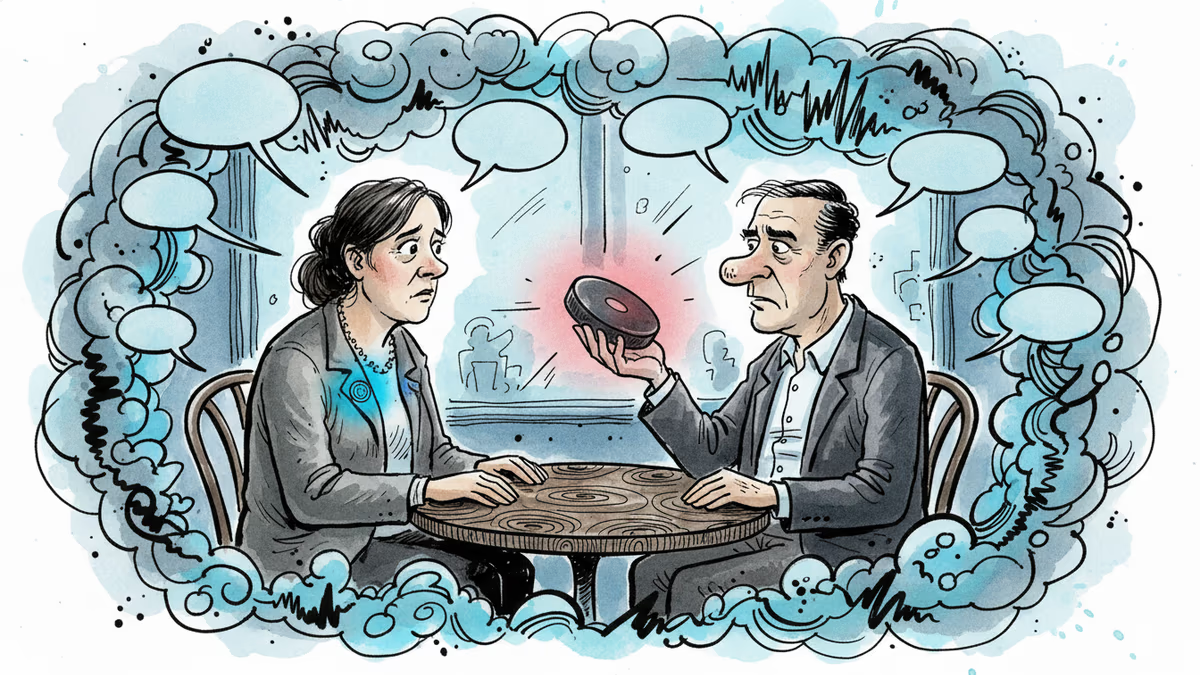
AI wearables that silently record conversations are coming. A look at the escalating battle between surveillance tech and the countermeasures trying to stop it—and why the mouse usually loses.
The average U.S. retirement age has climbed from 57 to well past 65. As people live longer and social bonds outside work erode, the old script for stepping away no longer holds. Here's why.
AI looks like liberation, threat, or environmental disaster depending on where you stand. A framework of nine competing narratives reveals why single-lens thinking is the real danger.
The Wizard of the Kremlin isn't really about Putin's evil. It's about the clever people who thought they could manage him—and what that says about how power actually works.
AI wearables that silently record conversations are coming. A look at the escalating battle between surveillance tech and the countermeasures trying to stop it—and why the mouse usually loses.
Thoughts
Share your thoughts on this article
Sign in to join the conversation