
The Grief Nobody Talks About—Until Now
Writer Danielle Crittenden's memoir about losing her daughter Miranda challenges how modern society handles parental grief—and why the bereaved so often disappear in silence.
The dental hygienist asked, "So, what's new?" David Frum sat in the chair, mouth propped open, and spent nearly half a minute deciding whether to answer honestly. He said, "Not much."
His daughter had died two months earlier. She was 32.
A Dispatch from a Country Nobody Wants to Visit
In February 2024, Miranda Frum died suddenly in her Brooklyn Heights apartment. She had survived a 10-hour brain surgery in 2019. She had modeled in Europe and Japan. She had been caught under Hamas rocket fire in Tel Aviv in the summer of 2014. She had done all of that, and then she was gone at 32.
Her mother, writer Danielle Crittenden, responded the only way she knew how: she reported. Raised in a newsroom family — her stepfather co-founded the Toronto Sun, her parents all worked in the same Toronto newsroom at various points — Crittenden had covered murders and fires as a teenager. Now she turned that same instinct on the most unnavigable terrain of her life. The result is Dispatches From Grief: A Mother's Journey Through the Unthinkable, published May 5, 2026.
In a podcast conversation with her husband, Atlantic staff writer David Frum, Crittenden described the experience with the precision of a foreign correspondent: "I felt like I'd been transported — unwillingly deported — to this alternative land of grief. And I just had to write about it."
Why This Grief Is Different
Crittenden opens the book with a line that cuts straight through: "I thought I knew grief."
She and Frum had both lost parents. That grief, while painful, arrives within a kind of cognitive framework the brain builds over a lifetime. You always knew, somewhere, that you would outlive your parents. But losing a child reverses the order of the universe. The brain has no drawer for this.
What follows is a double isolation. First, the grief itself — which Crittenden describes as not merely emotional but physically unbearable, a pain with no painkiller. Then, the loneliness of being surrounded by people who cannot access what you're experiencing. She read grief books obsessively in the early months, looking for a cure. Most of them, she found, were oriented toward healing, toward the stages, toward the destination of acceptance. "That seemed to me palpably untrue and palpably unhelpful."
One of the mothers who read an early draft wrote back: "Thank you. Now I have something to show people." That sentence is the book's reason for existing.

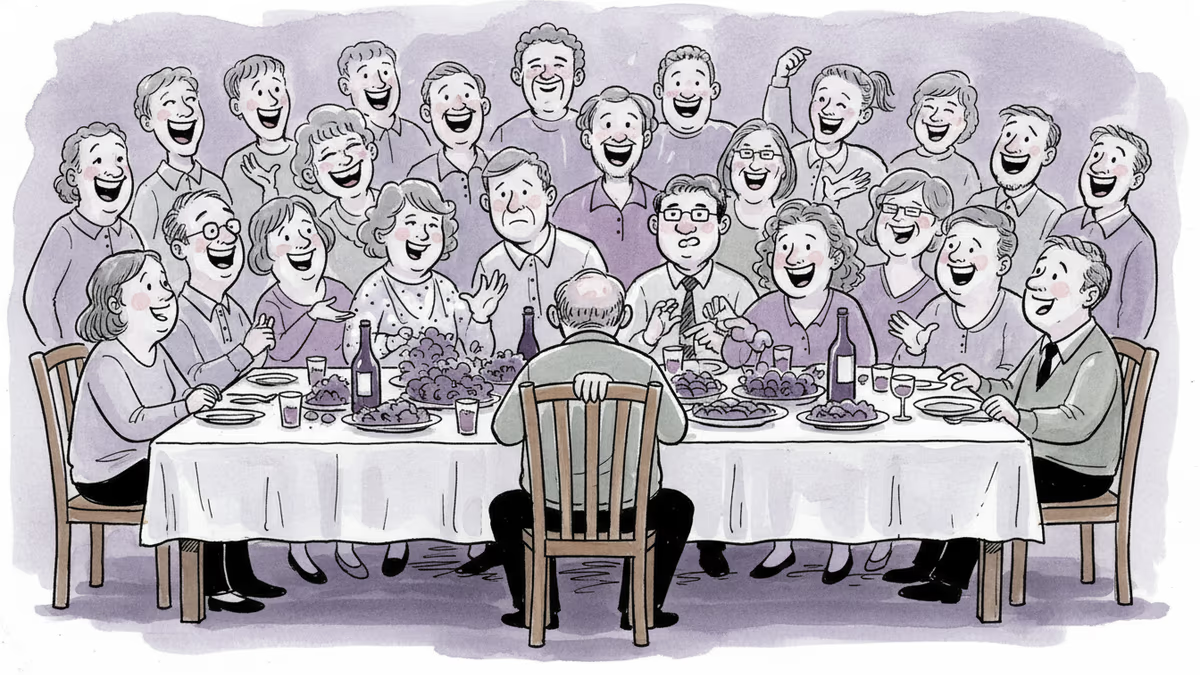
The Ghost at the Feast
Once the initial shock passes, the bereaved discover something uncomfortable: the world moves on, and they don't. Crittenden and Frum call it being "grief bores" — showing up to other people's lives as a reminder of something no one wants to think about. The grieving person starts to feel like a pariah. So they go quiet.
"How many kids do you have?" used to be the easiest question in the world. Now it's a minefield. Say three, and you're lying. Say two, and you've erased her. Tell the truth, and you've detonated a social grenade. Crittenden recounts a hotel check-in the night before she and her youngest daughter Bea were to clear out Miranda's apartment. The front-desk clerk kept pushing: Business or pleasure? Any shows? Finally cornered, Crittenden told him. His response: "Well, at least Miranda's in a better place, am I right?" She replied: "She had a very nice one-bedroom in Brooklyn Heights. I think she was pretty happy there." In New York, real estate logic beats theology.
These moments of dark comedy are scattered through the book — not as relief exactly, but as truth. Crittenden's friends nicknamed her the "Minister of Fun" before any of this happened. Christopher Hitchens, who once argued provocatively that women are inherently less funny than men, made a specific exception for her after Frum pointed it out. That wit hasn't disappeared; it's just operating in a different register now, like the drunken knights in a Shakespeare tragedy, providing brief breathing room in the darkest scenes.
The Digital Haunting
Crittenden also wrote about this for the Wall Street Journal: the peculiar cruelty of grief in the digital age.
Old grief had physical borders. You packed away the letters. You put the photo albums on a shelf. You chose when to look. Now, the dead trail us through our devices. Facebook's Memories algorithm surfaces a photo of Miranda and her dog Ringo from 2018. The car Bluetooth asks if you'd like to connect to Miranda's iPhone. Her name sits in the Favorites list on the phone. Crittenden calls these "emotional IEDs" — they detonate without warning, in the middle of an ordinary Tuesday.
The irony is sharp: the same companies that push unsolicited memories into your face will not give you access to the data you actually want. Frum spent months and significant legal fees obtaining a court order — worded precisely to Apple's specifications — to access Miranda's iCloud photos. The photos arrived. A substantial portion of them were pictures of Ringo. "We already had plenty of Ringo photos," Frum noted. They laughed. But underneath the laugh is the thing Crittenden still doesn't know: whether Miranda tried to call 911 in her final moments. Whether she reached out to anyone. The phone stays locked. It may always stay locked.
Since the Wall Street Journal piece ran, Crittenden has received emails from other parents in the same situation. The digital estate problem is not a niche inconvenience. It is a systemic gap that the legal and tech infrastructure has not caught up to.
Surviving, Differently
Crittenden is candid in the book about what survival actually looked like. There were periods, she says, when she was not fully in the land of the living. Not planning to act on it, but feeling strongly that death would be preferable to the pain she was in. She knew, even then, that this meant being willing to leave her surviving children. She writes about it anyway.
Research supports what she describes: the mortality rate for bereaved parents — especially mothers — rises measurably in the five years following a child's death. Suicide, addiction, simple self-neglect, distraction. The nervous system doesn't just mourn; it malfunctions. Memory deteriorates. Clumsiness increases. The body registers what the mind is trying to process.
What kept Crittenden anchored, she says, was partly the marriage — "I don't know what would have happened if we didn't have a strong underlying relationship" — and partly her son Nat's early declaration: "The worst thing we could do to Miranda's memory is have our family fall apart." Frum, for his part, acknowledges the gendered escape hatch that work provides. He spent a week absorbed in stablecoin regulation. It was, he says, a genuine respite. The hazard, he adds, is that while you're escaping your trouble, you're also escaping her — the person who is still there, still in the thick of it, with no equivalent hatch.
The grief industry, Crittenden notes, has an answer for all of this: personal growth. TED Talks. Retreats. The idea that the worst thing that can happen to you is an opportunity. She calls these people "happiness hucksters" and is direct about her feelings toward them. But she also distinguishes between that and something real: absorbing Miranda's qualities into herself. Miranda was a connector, a person who could read people accurately and gravitate toward those in pain. Crittenden finds herself doing those things now. Not because Miranda's death was a gift. But because Miranda was.
This content is AI-generated based on source articles. While we strive for accuracy, errors may occur. We recommend verifying with the original source.
Related Articles
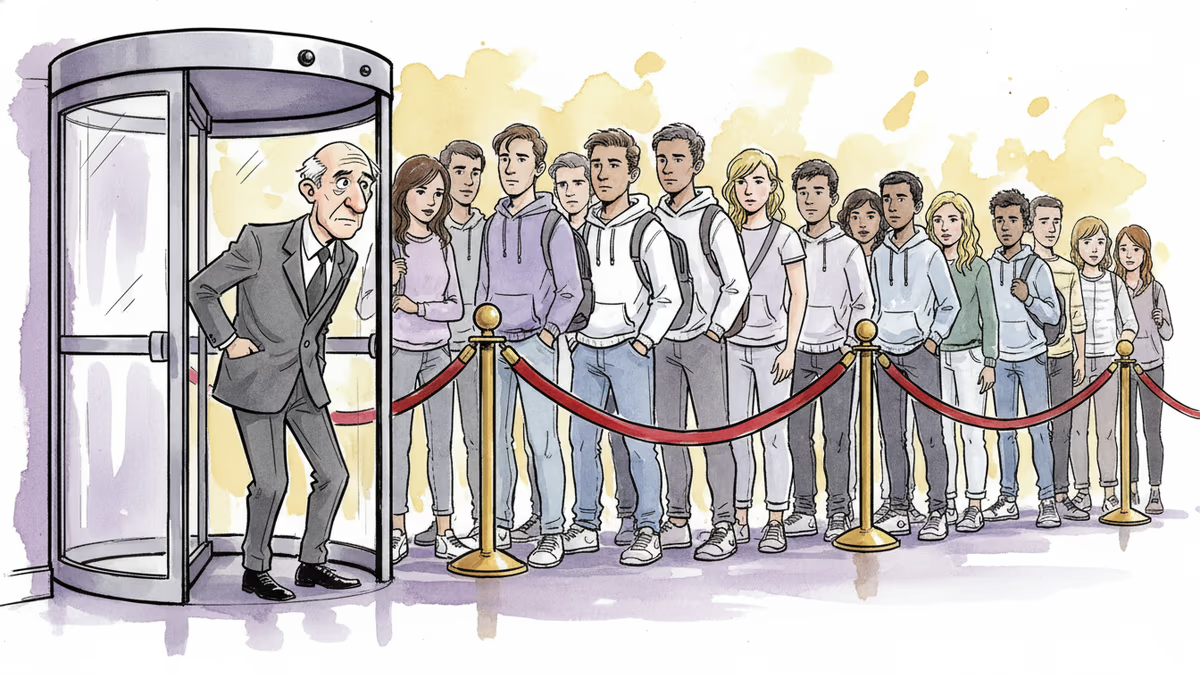
The average U.S. retirement age has climbed from 57 to well past 65. As people live longer and social bonds outside work erode, the old script for stepping away no longer holds. Here's why.
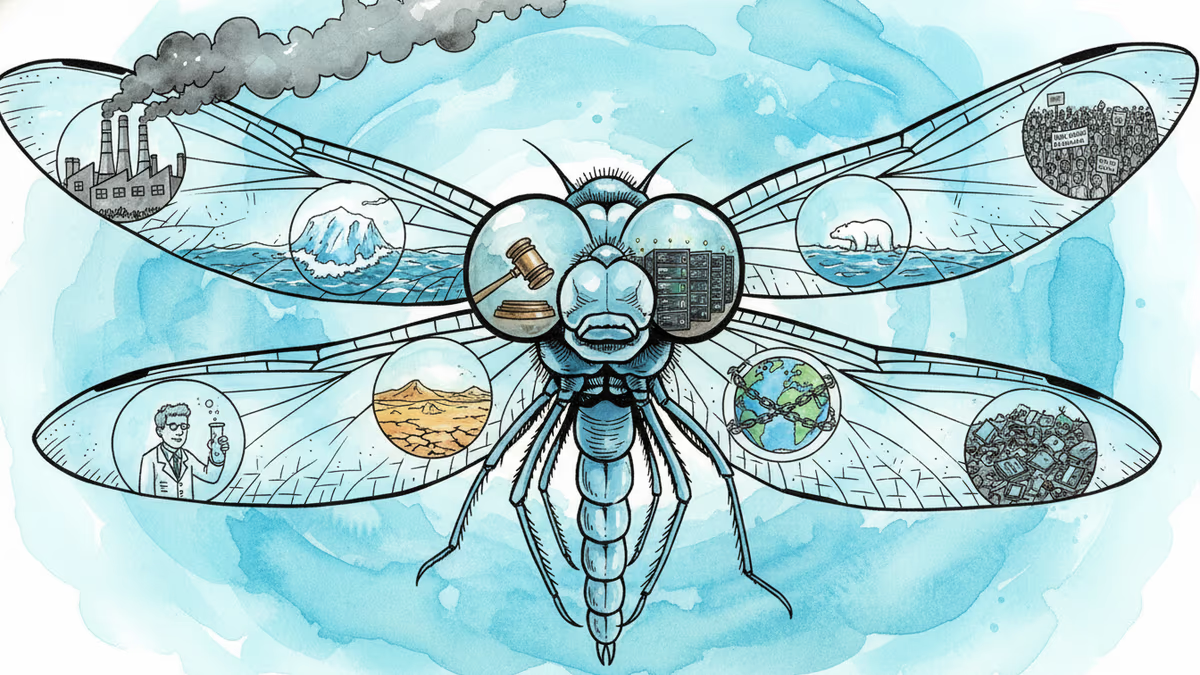
AI looks like liberation, threat, or environmental disaster depending on where you stand. A framework of nine competing narratives reveals why single-lens thinking is the real danger.
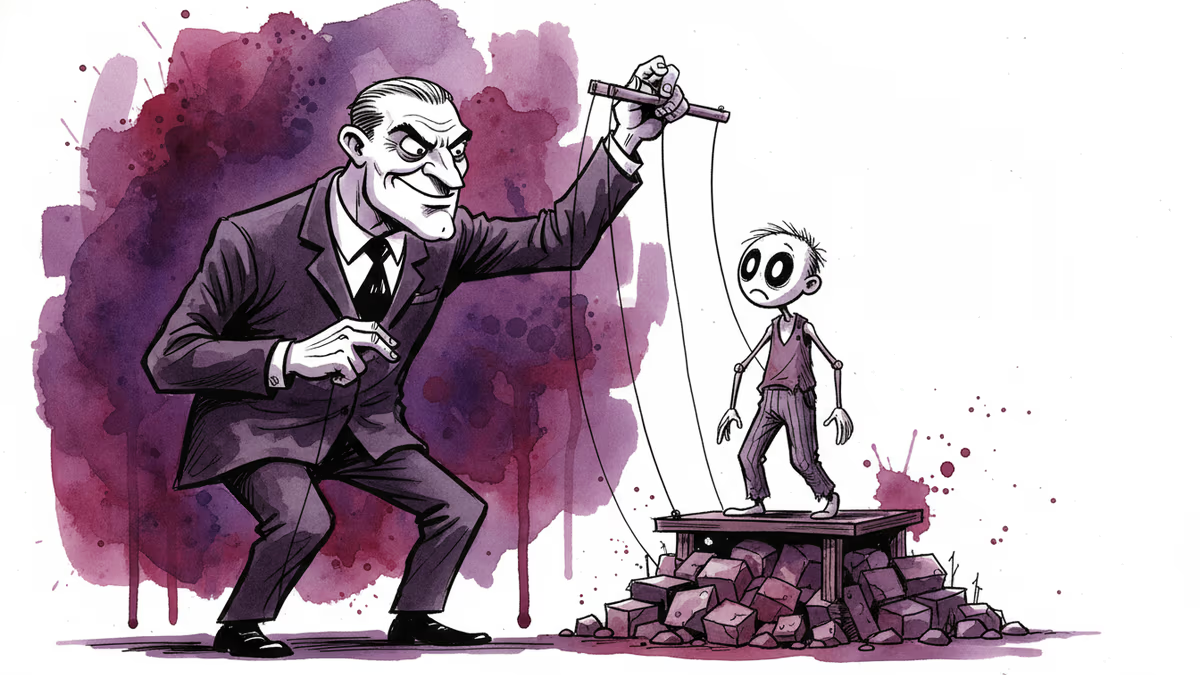
The Wizard of the Kremlin isn't really about Putin's evil. It's about the clever people who thought they could manage him—and what that says about how power actually works.
AI wearables that silently record conversations are coming. A look at the escalating battle between surveillance tech and the countermeasures trying to stop it—and why the mouse usually loses.
The average U.S. retirement age has climbed from 57 to well past 65. As people live longer and social bonds outside work erode, the old script for stepping away no longer holds. Here's why.
AI looks like liberation, threat, or environmental disaster depending on where you stand. A framework of nine competing narratives reveals why single-lens thinking is the real danger.
The Wizard of the Kremlin isn't really about Putin's evil. It's about the clever people who thought they could manage him—and what that says about how power actually works.
AI wearables that silently record conversations are coming. A look at the escalating battle between surveillance tech and the countermeasures trying to stop it—and why the mouse usually loses.
Thoughts
Share your thoughts on this article
Sign in to join the conversation