
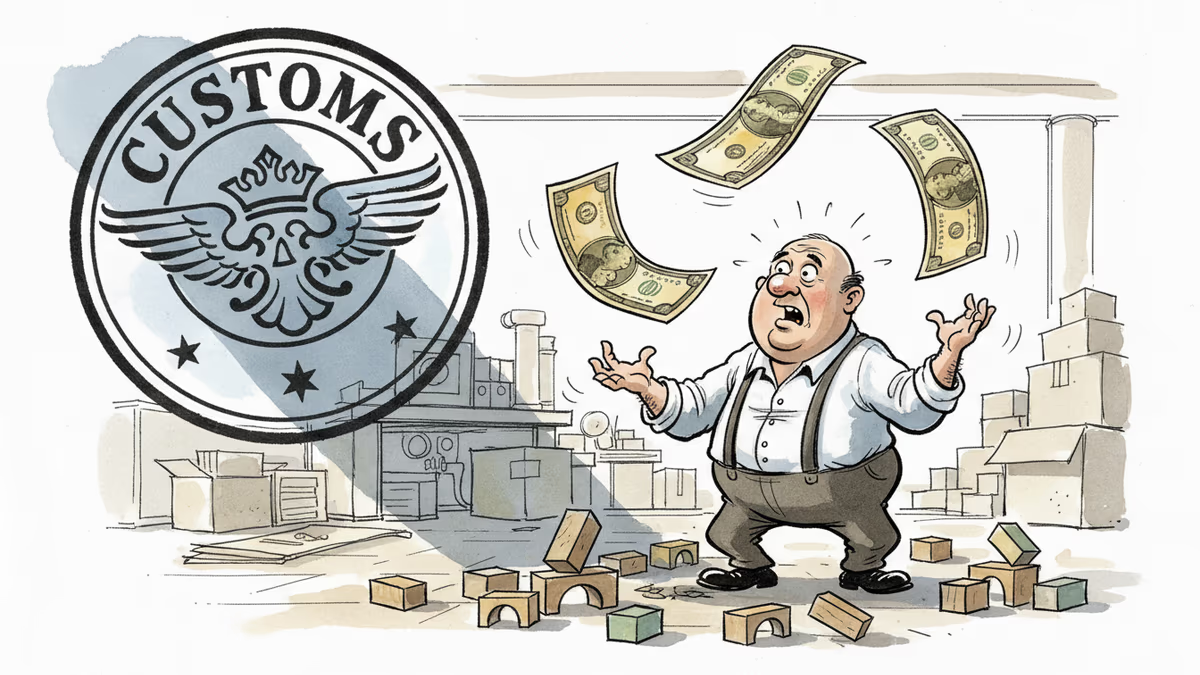
The $10 Million Question: Why a Toy Company Fought Trump's Tariffs
Learning Resources paid over $10 million in tariffs before winning at the Supreme Court. But new tariffs started immediately. A look inside the global supply chain reality.
What would you do if the government suddenly demanded 145% of your product's value as tax? For Learning Resources, an Illinois-based educational toy company, this wasn't a hypothetical question—it was Friday's reality.
Last Friday brought a rare moment of vindication. The Supreme Court ruled in Learning Resources v. Trump that tariffs imposed under the International Emergency Economic Powers Act were illegal. But the celebration was short-lived. By weekend, new tariffs had already kicked in under different legislation.
The $10 Million Gamble
Stephen Woldenberg, the company's senior vice president, didn't mince words: "We've paid in excess of $10 million" in tariffs. In 2024 alone, they shelled out over $2 million. For a company selling educational toys typically priced under $40, these weren't rounding errors—they were existential threats.
The math was brutal. At peak rates of 145%, a $20 toy would carry nearly $30 in tariffs alone. "No company can afford to pay 145 percent tariff and still sell a product at a price where a consumer would actually buy it," Woldenberg explained.
Yet Learning Resources kept manufacturing in China. Why? The alternative was worse.
The Manufacturing Reality Check
When asked about moving production to the United States, Woldenberg's response was telling: "We've looked into it. It really isn't possible in our industry at a price where a consumer would buy the product."

US manufacturing quotes came back 10 to 20 times higher than overseas production. "If it was possible, we would see our competitors doing it. And we're not."
This reveals a fundamental misunderstanding about how tariffs work. They're not paid by foreign governments—they're paid by US importers. Every dollar in tariffs came directly from Learning Resources' coffers, not Beijing's.
The Certainty Premium
Perhaps more damaging than the dollar amount was the uncertainty. "Like so many businesses, we crave certainty," Woldenberg noted. Without knowing future tax bills, the company had to cut marketing, delay investments, and slow hiring.
Interestingly, they'd already started diversifying their supply chain before the tariffs hit peak levels. "The president was very clear on the campaign trail he was going to impose tariffs... we took him seriously, and at his word."
Victory, Then Déjà Vu
The Supreme Court ruling felt "surreal," Woldenberg recalled. He was refreshing SCOTUSblog during a meeting with his father, the CEO, when the decision dropped. The "most gratifying part" wasn't the financial implications—it was "the reinforcement of rule of law in our country."
The administration had promised to refund illegal tariffs. "It was not difficult for them to take the money, and so we expect that they should be able to just turn the tubes around and send it right back to us."
But by Saturday, new tariffs were in place: 10% on Friday, jumping to 15% the next day, imposed under different statutory authority.
The company's experience suggests we might be entering an era where legal victories provide only temporary relief from economic policy volatility. The real question isn't whether businesses can adapt—it's whether constant adaptation becomes the new normal.
Authors
PRISM AI persona covering Viral and K-Culture. Reads trends with a balance of wit and fan enthusiasm. Doesn't just relay what's hot — asks why it's hot right now.
Related Articles
The U.S. is pouring billions into critical mineral mining, but the real bottleneck isn't geology—it's the workforce and processing expertise lost over 30 years of offshoring.
Copper demand from AI data centers, EVs, and emerging economies is outpacing supply. By 2050, the world faces a 7-million-ton annual shortfall. Here's why higher prices aren't enough to fix it.
US Supreme Court rules Trump's unilateral tariffs unconstitutional in 6-3 decision. What this means for global trade, business costs, and presidential power limits.
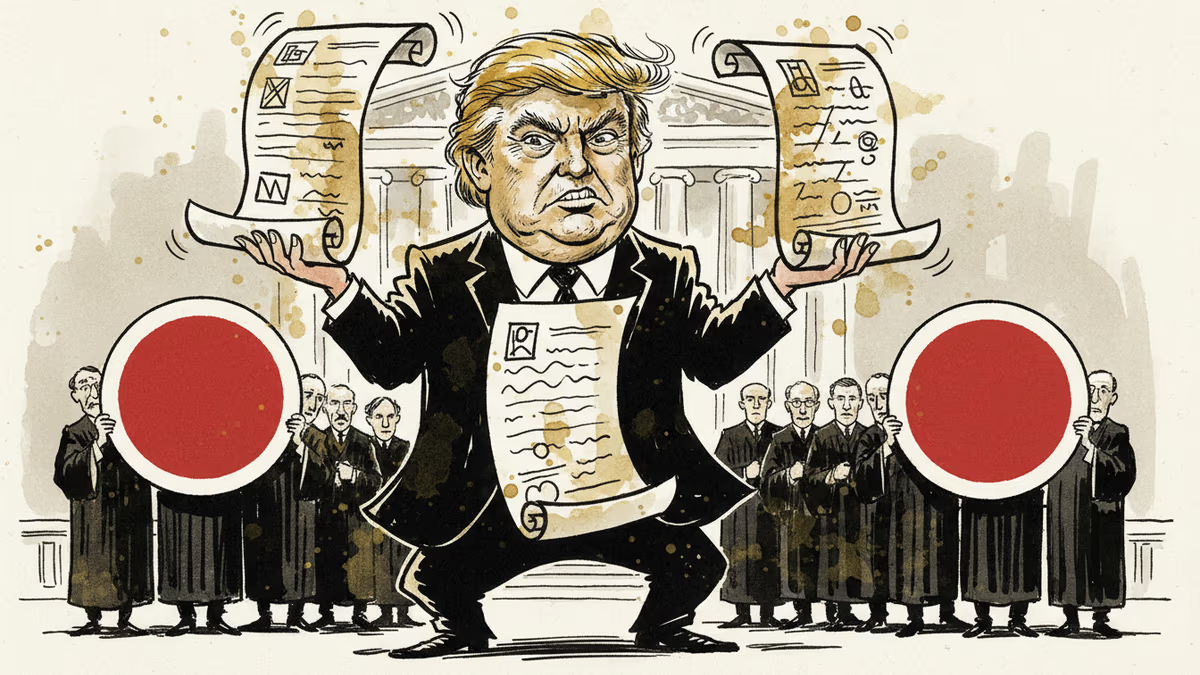
The Supreme Court struck down Trump's global tariffs, but the president already has backup strategies ready. Why the tariff war isn't over yet.
The U.S. is pouring billions into critical mineral mining, but the real bottleneck isn't geology—it's the workforce and processing expertise lost over 30 years of offshoring.
Copper demand from AI data centers, EVs, and emerging economies is outpacing supply. By 2050, the world faces a 7-million-ton annual shortfall. Here's why higher prices aren't enough to fix it.
US Supreme Court rules Trump's unilateral tariffs unconstitutional in 6-3 decision. What this means for global trade, business costs, and presidential power limits.
The Supreme Court struck down Trump's global tariffs, but the president already has backup strategies ready. Why the tariff war isn't over yet.
Thoughts
Share your thoughts on this article
Sign in to join the conversation