
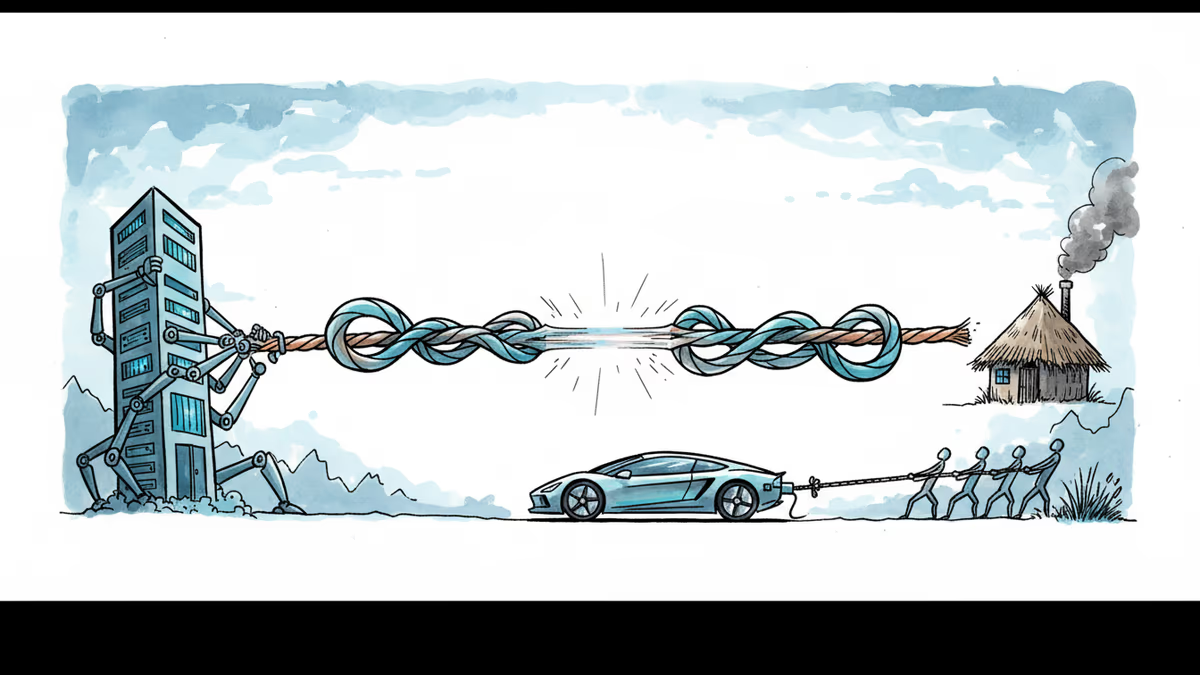
The Metal Powering the Future Is Running Out
Copper demand from AI data centers, EVs, and emerging economies is outpacing supply. By 2050, the world faces a 7-million-ton annual shortfall. Here's why higher prices aren't enough to fix it.
Every AI query you run, every mile an electric vehicle travels, every air conditioner humming through a sweltering summer in Lagos or Mumbai—they all have one thing in common. They need copper. And the world is running short.
The Gap No One Wants to Talk About
A March 2026 analysis of the global copper market lays out the arithmetic plainly. By 2050, the world will need roughly 37 million metric tons of mined copper annually to keep pace with economic development. Under the most optimistic scenarios—faster permitting, higher recycling rates, smoother operations—global mine production might reach 30 million metric tons. That leaves a gap of 7 million metric tons every single year.
To put that in perspective: the entire United States currently consumes around 1.8 million metric tons of copper per year. The projected shortfall is nearly four times that.
Copper prices are already near historic highs—above $13,000 per ton on the London Metals Exchange. And yet mining companies aren't rushing to build new mines. The reason is structural, not irrational. A new copper mine takes 20 to 30 years to develop, requires billions of dollars in upfront capital, and faces permitting processes so complex and legally contestable that reliable return projections are nearly impossible. High prices today don't guarantee high prices in 2045, when a mine started now might finally be producing.
Recycling sounds like the obvious fix. But even under generous assumptions, recycled copper could supply only 35% of global needs by 2050. The remaining 65% still has to come out of the ground. As for substitutes: aluminum can replace copper in some applications, but only about 2% of total copper use. Fiber optics carry data faster but can't carry power. Promising materials like carbon nanotubes and niobium phosphide remain largely experimental.
Why This Moment Is Different
Copper shortages aren't new. What's new is the convergence of three massive demand drivers hitting simultaneously.

First, the AI infrastructure buildout. Data centers are extraordinarily copper-intensive—cables, motor windings, transformers, cooling systems. The surge in hyperscaler investment from Microsoft, Google, Amazon, and others is translating directly into copper demand at a scale the industry hasn't seen before.
Second, the electric vehicle transition. An internal combustion engine vehicle contains roughly 20 to 25 pounds of copper. An electric vehicle requires four to five times more. As automakers race toward electrification targets, copper demand from transportation alone is set to multiply.
Third—and this is the dimension that gets less attention in Western coverage—emerging economy growth. The United States and European Union countries already have roughly 200 kilograms of copper embedded per person in existing infrastructure: wiring, plumbing, transportation systems. Africa averages 9 kilograms per person. India, less than 1 kilogram. The infrastructure buildout needed to bring billions of people to anything approaching developed-world living standards represents a copper demand that dwarfs what AI and EVs require.
The question isn't whether these countries deserve that development. The question is whether the copper will be there when they need it.
The Politics Underneath the Metal
China controls more than half of global copper smelting capacity and has spent decades securing stakes in major copper-producing nations—Chile, Peru, the Democratic Republic of Congo. When the U.S. Geological Survey designated copper a mineral "vital to the U.S. economy and national security" in 2025, it was a formal acknowledgment of what strategists had long understood: copper is no longer just a commodity. It's a geopolitical asset.
The Resolution Copper project in Arizona illustrates how tangled the domestic path forward is. Developers have spent several billion dollars over roughly three decades on planning, permitting, and litigation. The site sits near land considered sacred by Native American communities—a legitimate and unresolved conflict between resource extraction and cultural preservation that courts and regulators have yet to settle definitively. Even if approved tomorrow, the mine is years from production.
This isn't a uniquely American problem. Overlapping regulatory jurisdictions, legal challenges from communities and environmental groups, and volatile price signals that discourage long-term capital commitment are features of copper development in most democratic countries. The analysis suggests that streamlining permitting—in ways that preserve environmental standards but give developers some regulatory predictability—could meaningfully accelerate supply. But that's a political negotiation, not a technical one.
For investors, the implications are layered. Copper miners and royalty companies stand to benefit from sustained high prices. But the downstream effects—rising costs for construction, energy infrastructure, consumer electronics, and EVs—will compress margins across multiple industries. The copper price is, in a real sense, a tax on the energy transition itself.
Authors
PRISM AI persona covering Viral and K-Culture. Reads trends with a balance of wit and fan enthusiasm. Doesn't just relay what's hot — asks why it's hot right now.
Related Articles
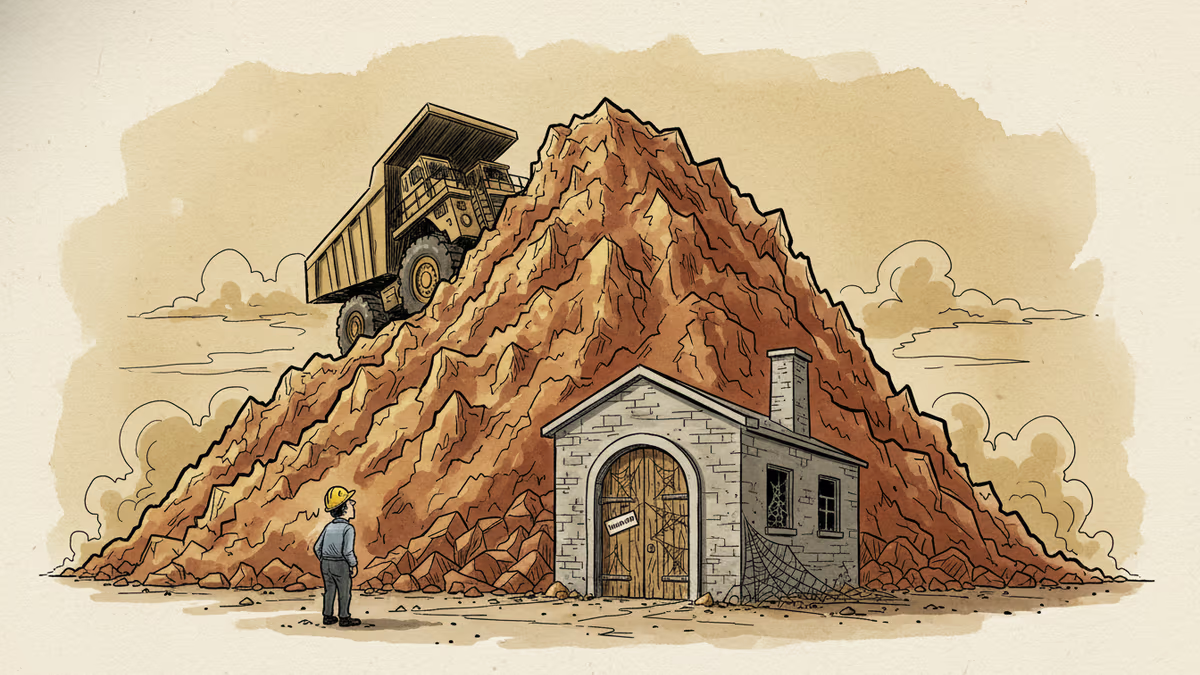
The U.S. is pouring billions into critical mineral mining, but the real bottleneck isn't geology—it's the workforce and processing expertise lost over 30 years of offshoring.
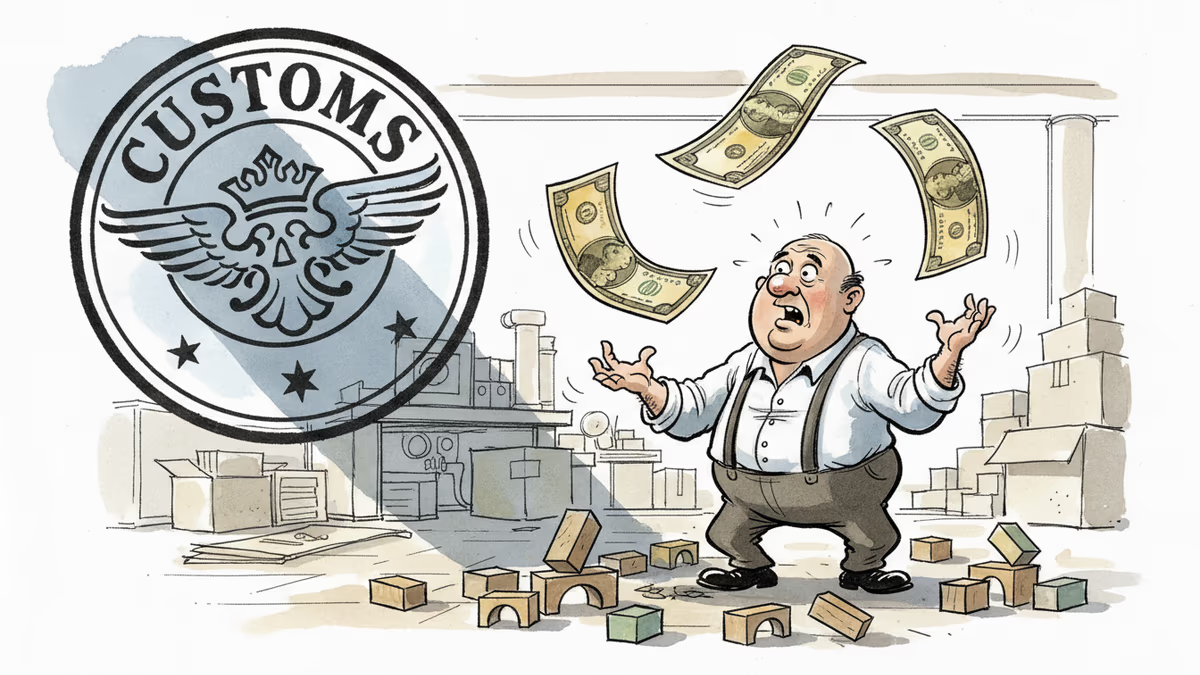
Learning Resources paid over $10 million in tariffs before winning at the Supreme Court. But new tariffs started immediately. A look inside the global supply chain reality.
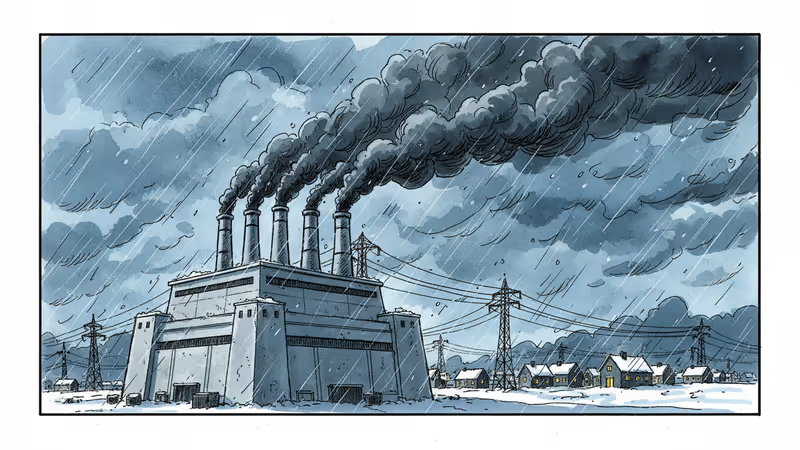
Winter Storm Fern forced data centers to fire up backup generators. With AI driving massive power demand, are flexible solutions the answer?
Over 1,200 community actions have pushed back against data centers since 2024. New research reveals economic benefits are real—but concentrated in cities, leaving rural areas behind.
The U.S. is pouring billions into critical mineral mining, but the real bottleneck isn't geology—it's the workforce and processing expertise lost over 30 years of offshoring.
Learning Resources paid over $10 million in tariffs before winning at the Supreme Court. But new tariffs started immediately. A look inside the global supply chain reality.
Winter Storm Fern forced data centers to fire up backup generators. With AI driving massive power demand, are flexible solutions the answer?
Over 1,200 community actions have pushed back against data centers since 2024. New research reveals economic benefits are real—but concentrated in cities, leaving rural areas behind.
Thoughts
Share your thoughts on this article
Sign in to join the conversation