
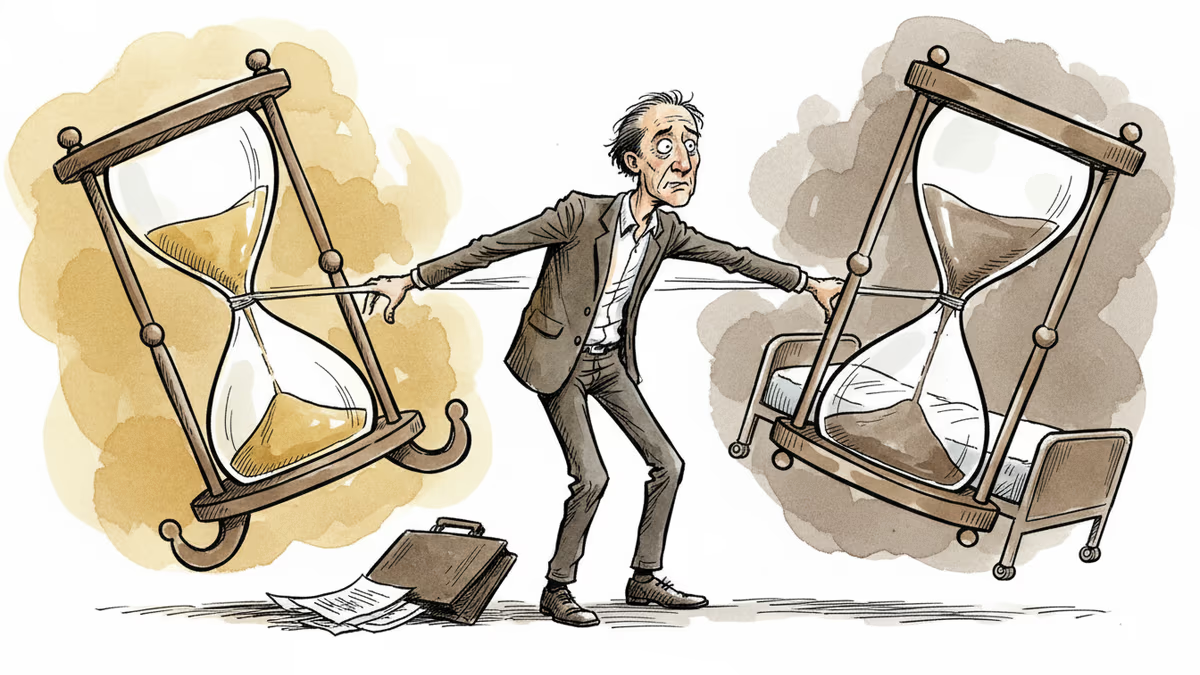
The Invisible Workforce Holding America Together
63 million Americans are unpaid family caregivers. As Pennsylvania debates paid leave, the 'sandwich generation' reveals why 12 weeks may not be enough for a chronic, compounding crisis.
They don't clock in. They don't get paid. And there are now 63 million of them.
America's family caregivers—unpaid individuals supporting a relative through illness, disability, or aging—grew from 53 million in 2020 to 63 million in 2025, a nearly 19% jump in five years. As the baby boomer generation moves deeper into its seventies and eighties, that number is only heading one direction. The question isn't whether this will become a crisis. It already is. The question is who's going to pay for it.
Squeezed From Both Ends
Within that 63 million is a subset facing a particularly acute version of this pressure: the so-called sandwich generation. Typically in their 40s and 50s, these adults are simultaneously raising children and caring for aging parents. They are, quite literally, sandwiched between two generations of dependents—and the financial and emotional math rarely adds up.
Research shows that sandwich generation caregivers already burn through most of their paid time off on caregiving tasks, leaving little room for their own health needs. Many reduce working hours or decline promotions. Some exit the workforce entirely before retirement age—a decision that doesn't just affect them personally, but ripples outward into lost tax revenue, reduced pension contributions, and a weakened social safety net for everyone.
The burden falls disproportionately on women. Across the U.S., women provide a structurally unequal share of unpaid family care. This isn't just a cultural pattern—it translates directly into career interruptions, wage gaps, and heightened poverty risk in old age. The person most likely to be managing a parent's medication schedule while helping a teenager with college applications is also the person most likely to see her retirement savings hollowed out by the effort.
What the Law Currently Offers—and Doesn't

Federal law offers a floor, not a solution. The Family and Medical Leave Act (FMLA) guarantees up to 12 weeks of unpaid, job-protected leave—but unpaid leave is functionally inaccessible for anyone living paycheck to paycheck. The Older Americans Act funds meal delivery and transportation services. The RAISE Family Caregivers Act mandates a national strategy. None of it puts money in a caregiver's pocket.
Some states have moved faster. California offers up to 8 weeks of paid caregiving leave, replacing up to 90% of wages for lower earners. Washington and Massachusetts both provide up to 12 weeks, with wage replacement rates of 90% and 80% respectively—and crucially, both include job protection.
Now Pennsylvania is debating whether to join them. State Rep. Jennifer O'Mara's Family Care Act cleared the Pennsylvania House in March 2026. It would allow employees up to 12 paid weeks off for childbirth or a family member's serious illness. The House version would have employers cover the cost, with grants for small businesses. The Senate version, pending in committee as of May 2026, would fund benefits through employee payroll deductions of up to 1% of income.
The stakes are unusually high in the Pittsburgh metro area, one of the oldest urban populations in the country. Allegheny County alone is projected to add 50,000 residents aged 65 and older by 2050. Workers there are already navigating a childcare system strained by staffing shortages and limited spots—while simultaneously managing eldercare. Without a universal mandate, coverage remains patchwork: strongest at large employers, weakest for part-time workers, lower-wage earners, and employees at small businesses.
Why 12 Weeks Might Miss the Point
Here's the structural problem no one wants to say out loud: the Family Care Act is designed for discrete, predictable events. A birth. A surgery. A finite recovery. That model fits a calendar. It doesn't fit dementia.
Sandwich generation caregiving is chronic, overlapping, and unpredictable. A parent who was stable last month might need emergency hospitalization next week. A child's school schedule doesn't pause because grandma had a fall. What these caregivers need isn't a single block of 12 weeks—it's the ability to take flexible, intermittent leave as crises arise. The bill does allow for intermittent leave, but that creates real administrative friction for employers: scheduling disruptions, paperwork burdens, and coordination headaches that could limit how readily businesses accommodate the option in practice.
The wage replacement structure raises its own concerns. The bill proposes 90% wage replacement with a weekly cap ranging from $573 to $995, depending on earnings. For a low-wage worker, 90% replacement is meaningful—it removes the brutal binary of "care for your mother or pay your rent." But it doesn't cover the out-of-pocket costs that accumulate around serious illness: transportation, medications, home modifications, professional respite care. And it reaches only employed workers. The caregivers who have already stepped back from the workforce—often the most financially precarious—don't qualify at all.
There's a deeper tension here that the legislation doesn't resolve. Employers, particularly small ones, worry about the operational disruption of unpredictable absences. Advocates argue that without flexible, intermittent leave, the policy will help some caregivers while leaving the most burdened ones behind. Both concerns are legitimate. Getting the design right matters as much as passing the bill.
This content is AI-generated based on source articles. While we strive for accuracy, errors may occur. We recommend verifying with the original source.
Related Articles
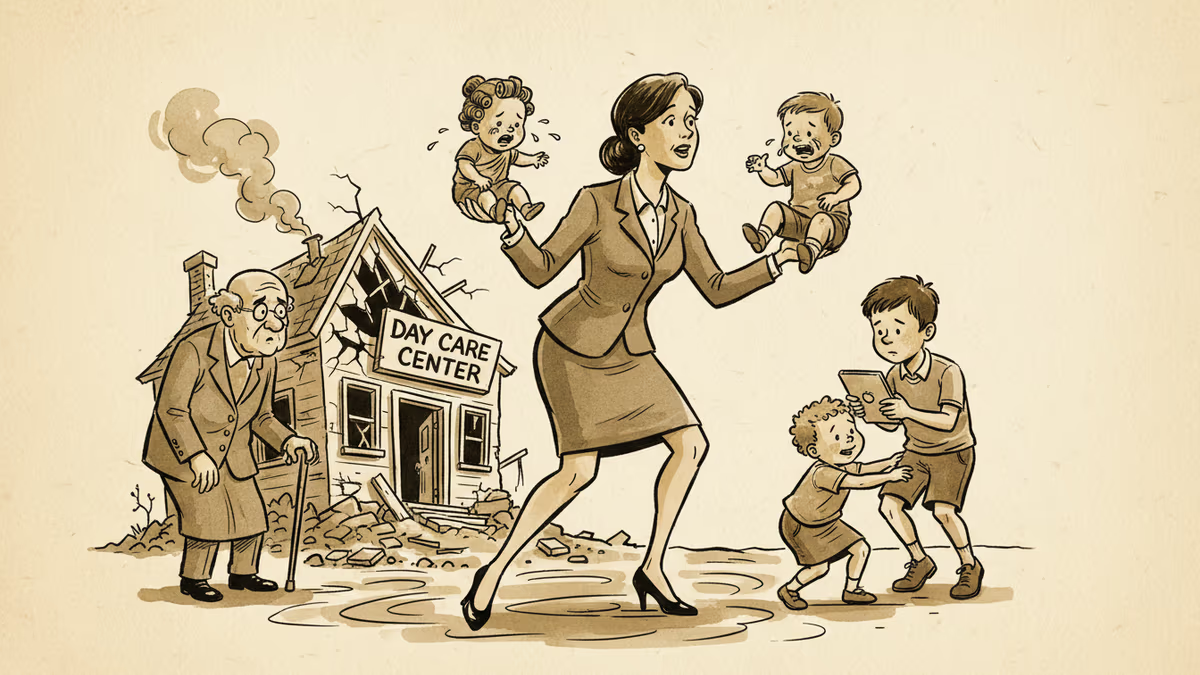
As baby boomers age and adult children juggle caring for parents and children, affordable adult day care centers face closure due to inadequate funding, leaving families in crisis.
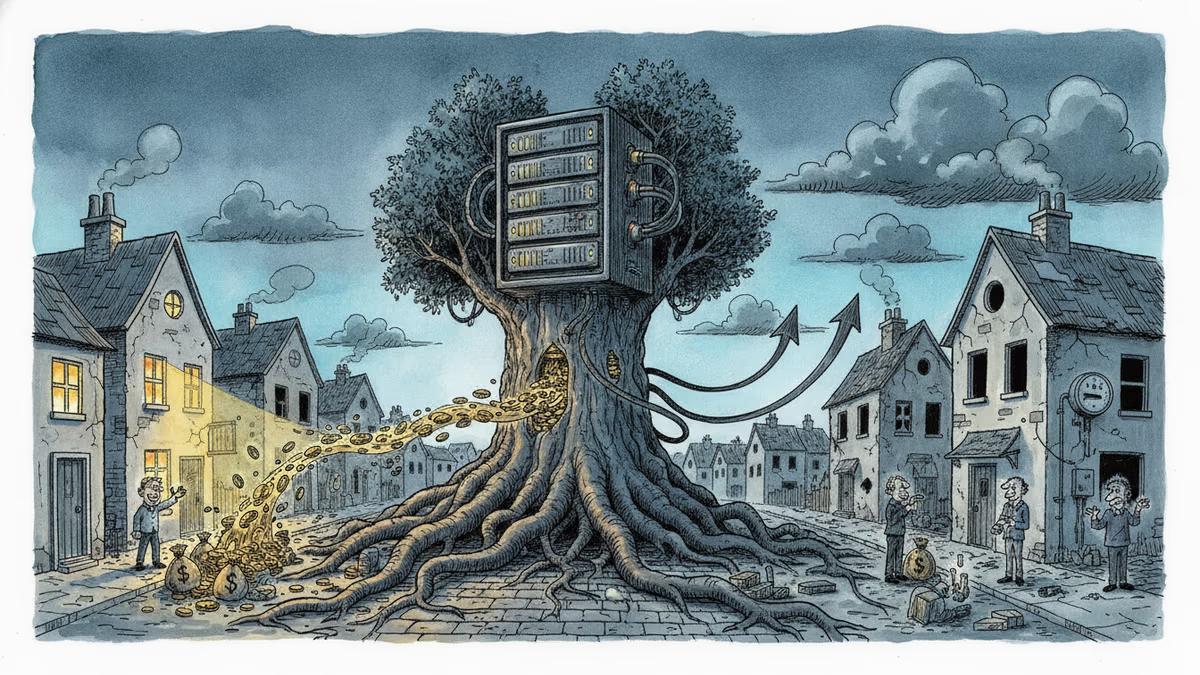
Over 1,200 community actions have pushed back against data centers since 2024. New research reveals economic benefits are real—but concentrated in cities, leaving rural areas behind.
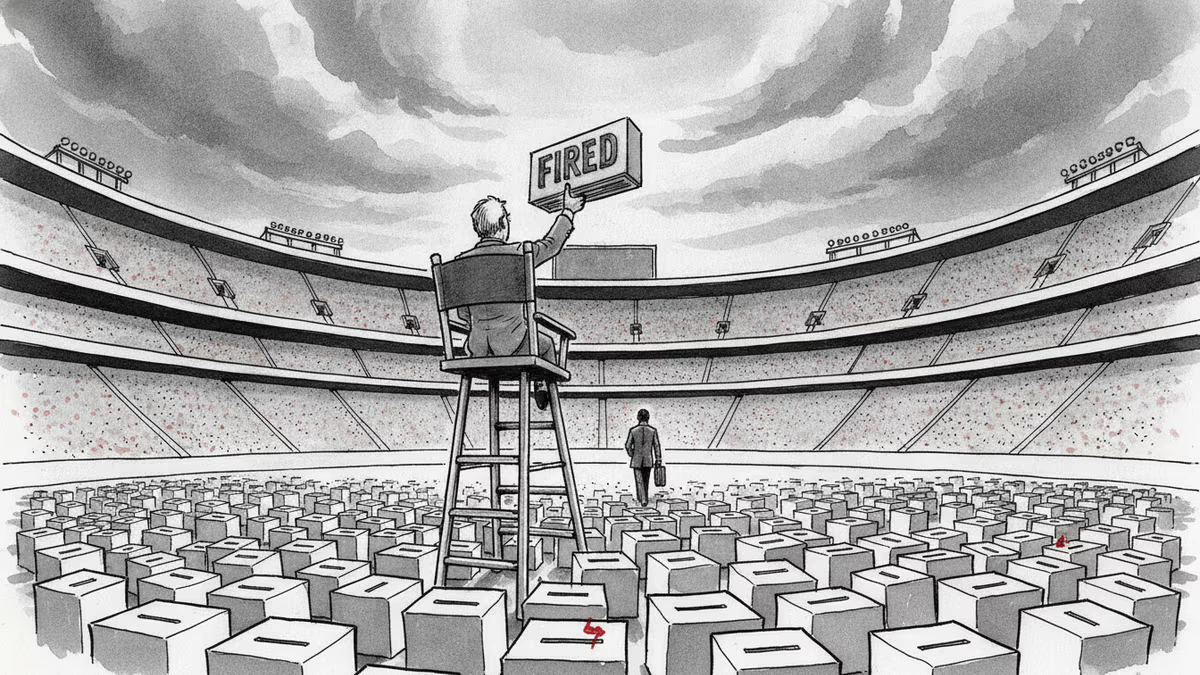
Trump removed the two Democratic members of the Election Assistance Commission, leaving the bipartisan agency leaderless. A Supreme Court ruling made it legal. Here's why a non-crisis can still be a warning sign.
Lebanon and Israel signed a framework agreement in June 2026. Hezbollah rejected it. Israel kept fighting. History suggests this moment is real—and fragile.
As baby boomers age and adult children juggle caring for parents and children, affordable adult day care centers face closure due to inadequate funding, leaving families in crisis.
Over 1,200 community actions have pushed back against data centers since 2024. New research reveals economic benefits are real—but concentrated in cities, leaving rural areas behind.
Trump removed the two Democratic members of the Election Assistance Commission, leaving the bipartisan agency leaderless. A Supreme Court ruling made it legal. Here's why a non-crisis can still be a warning sign.
Lebanon and Israel signed a framework agreement in June 2026. Hezbollah rejected it. Israel kept fighting. History suggests this moment is real—and fragile.
Thoughts
Share your thoughts on this article
Sign in to join the conversation