
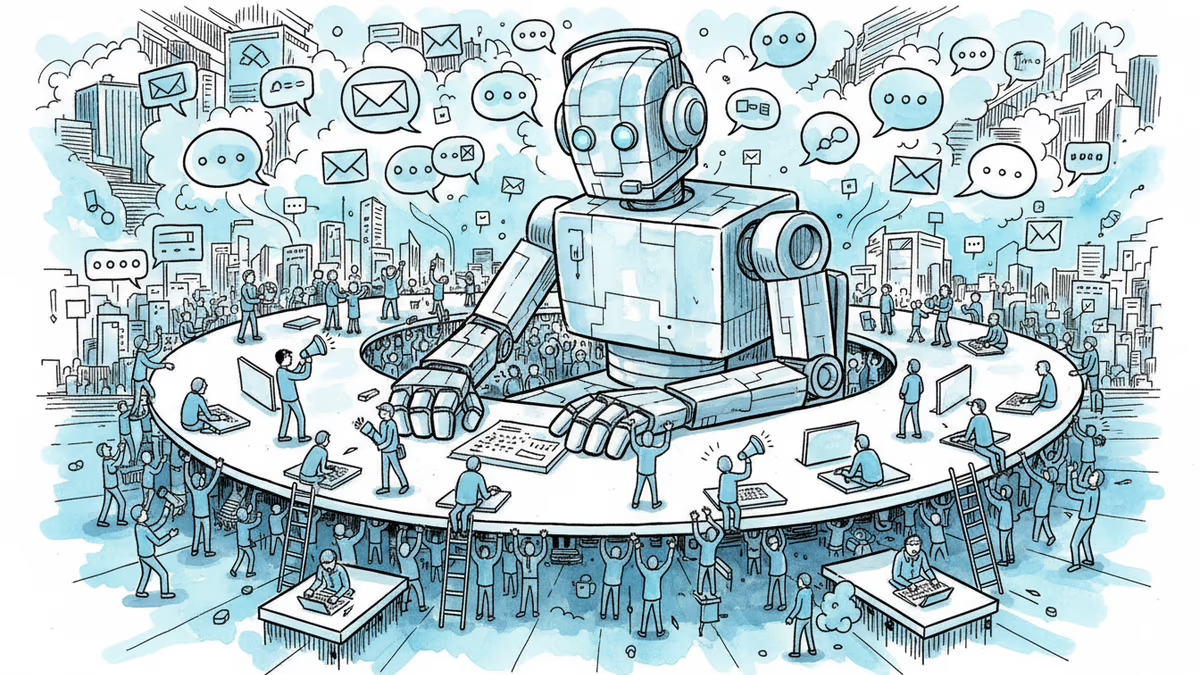
The Death of Call Centers as We Know Them
AI-native customer service agency 14.ai raises $3M to replace traditional support teams. Can humans and AI really work together, or is this the beginning of the end for customer service jobs?
Thursday morning: A backlog of customer tickets piling up across email, social media, SMS, and phone calls. Thursday afternoon: Every single channel cleared, customers happy, problem solved. No magic involved—just 14.ai, a Y Combinator-backed startup that's making traditional call centers look like horse-drawn carriages in the age of Tesla.
The company just raised $3 million in seed funding from Y Combinator, General Catalyst, and the founders of Dropbox, Slack, Replit, and Vercel. But here's what's really got the BPO industry sweating: they're not selling software. They're replacing entire customer service departments.
Why Software Isn't Enough Anymore
While most AI startups are busy building tools for companies to use, 14.ai took a different approach. "We're not building software for customers. 14.ai is an AI-native customer service agency," explains co-founder Michael Fester. "We combine software and services in one package."
The logic is brutal in its simplicity: Why sell someone a hammer when you can build their house? Most companies struggle to operate AI customer service software effectively. So 14.ai just takes over the entire operation instead.
Their team of six people—all AI engineers, zero traditional customer service reps—works around the clock. They can integrate with any support system within a day and start clearing backlogs immediately across email, calls, chat, TikTok, Facebook, Telegram, and WhatsApp.
The 60-40 Rule That's Reshaping Work
Y Combinator partner Tom Blomfield shared a fascinating insight: the optimal balance is 60% AI automation and 40% human handling. "As the AI takes over more and more of the work, the balance between AI and humans will change over time," he told TechCrunch.

But here's the kicker—unlike traditional platforms that force companies through "painful headcount reductions," 14.ai becomes the entire customer service department. They can reassign agents between clients at different stages of AI adoption, making the transition smoother.
Still, not everyone's celebrating. The BPO industry, which employs millions globally, is sounding alarm bells. Countries like the Philippines and India, which built entire economies around outsourced customer service, are watching nervously.
The Agency Model Goes AI-Native
14.ai isn't just handling support tickets—they're positioning themselves as a "revenue growth engine." By capturing conversations early and extracting insights, they're helping clients identify sales opportunities and optimize their entire customer journey.
They're working with luxury skincare brand Yon-KA, smart glasses maker Brilliant Labs, and lighting company Creative Lighting. Each client gets the same promise: we'll remove three line items from your balance sheet—ticketing systems, AI software add-ons, and human labor costs.
To test their own medicine, the founders run GloGlo, a glucose gummies brand for Type 1 diabetics, operating it almost entirely with AI. It's their laboratory for pushing the boundaries of autonomous customer service.
The Bigger Picture: Jobs or Just Job Categories?
14.ai represents something larger than customer service automation—it's the emergence of AI-native agencies across industries. Y Combinator even listed "AI-powered agencies" in their 2026 startup requests, signaling this is just the beginning.
The question isn't whether AI will change customer service—it already has. The question is whether the humans left in the equation will be partners or casualties.
Authors
Related Articles

Samsung and SK unveiled a chip and AI investment package worth thousands of trillions of won on June 29. The headline number swings wildly by outlet, but the real contest isn't capital — it's water and power.

Lucra Sports CEO Dylan Robbins landed Cathie Wood's ARK Invest as a Series B lead without building AI. The story behind his unconventional fundraising playbook.
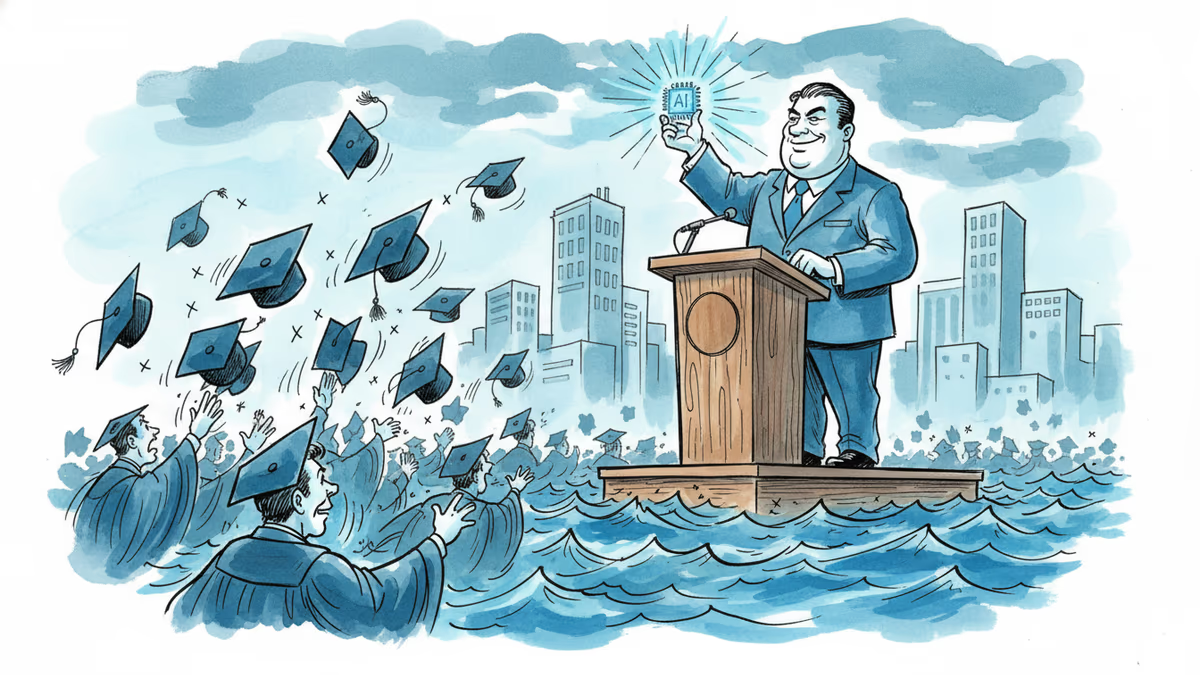
Viral videos show 2026 graduates jeering executives who praise AI at commencement ceremonies. It's not just rudeness — it's a signal about who pays for technological optimism.

Filipino virtual assistants using AI to ghost-manage LinkedIn profiles for executives is now a structured industry. 30 comments a day, fake engagement rings, and a platform struggling to tell real from fabricated.
Samsung and SK unveiled a chip and AI investment package worth thousands of trillions of won on June 29. The headline number swings wildly by outlet, but the real contest isn't capital — it's water and power.
Lucra Sports CEO Dylan Robbins landed Cathie Wood's ARK Invest as a Series B lead without building AI. The story behind his unconventional fundraising playbook.
Viral videos show 2026 graduates jeering executives who praise AI at commencement ceremonies. It's not just rudeness — it's a signal about who pays for technological optimism.
Filipino virtual assistants using AI to ghost-manage LinkedIn profiles for executives is now a structured industry. 30 comments a day, fake engagement rings, and a platform struggling to tell real from fabricated.
Thoughts
Share your thoughts on this article
Sign in to join the conversation