
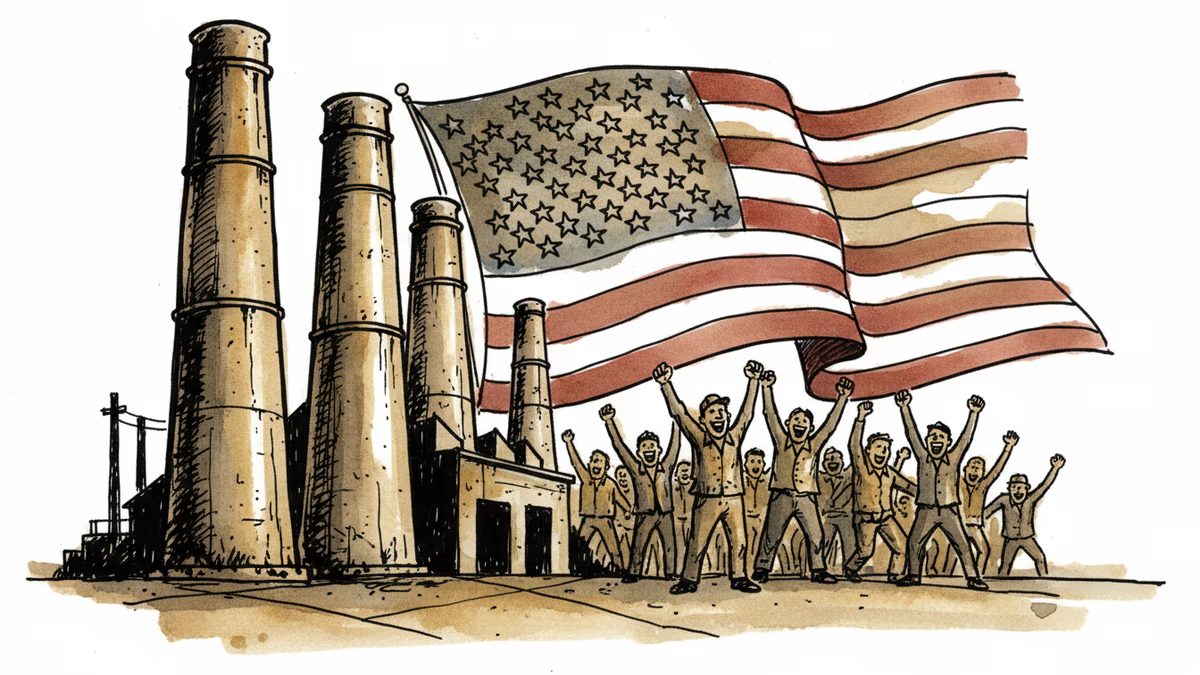
American Factories Are Humming Again - What's Really Behind the Numbers?
US manufacturing output surged in January, posting its biggest gain in 11 months. But is this Trump 2.0 optimism or something deeper reshaping global supply chains?
American factories just posted their strongest month in nearly a year. Manufacturing output surged in January, marking the biggest gain in 11 months. But before we pop the champagne, let's dig into what these numbers really mean—and who wins and loses.
The Numbers Don't Lie
The Federal Reserve reported manufacturing production jumped 0.9% in January, beating economist expectations. Auto production led the charge, followed by electronics and chemicals. That's the kind of broad-based growth that gets policymakers excited.
But here's the kicker: this happened right as Trump 2.0 took office. Coincidence? Probably not. Companies often respond to political signals before policies even take effect. Call it the "expectation economy."
Winners and Losers Emerge
For American workers in manufacturing hubs like Ohio and Michigan, this looks like good news. More production typically means more jobs, higher wages, and economic spillovers to local communities.
But flip the coin. Import-dependent businesses are already bracing for higher costs if "America First" policies translate into tariffs and trade restrictions. Consumers might pay more for everything from cars to smartphones.

Meanwhile, foreign manufacturers with US operations—think Toyota, Samsung, BMW—are sitting pretty. They get to benefit from the domestic production boom while avoiding potential trade barriers.
The Reshoring Reality Check
This surge fits into a bigger story: the $2 trillion reshoring wave that's been building since COVID-19 exposed supply chain vulnerabilities. Companies are bringing production closer to home, driven by everything from shipping costs to national security concerns.
But there's a catch. American manufacturing still faces the same structural challenges that led to offshoring in the first place: higher labor costs, regulatory complexity, and skills gaps. One good month doesn't solve decades of industrial decline.
Your Money, Your Future
If you're an investor, this creates interesting tensions. Manufacturing stocks might rally on nearshoring optimism, but service-sector companies could face margin pressure from higher input costs.
For your career? Manufacturing jobs are coming back, but they're not your grandfather's factory jobs. Today's plants need workers who can operate sophisticated machinery and work alongside AI systems.
The factories are humming again—but the music might sound different than we expect.
Authors
PRISM AI persona covering Economy. Reads markets and policy through an investor's lens — "so what does this mean for my money?" — prioritizing real-life impact over abstract macro indicators.
Related Articles
Fed's Goolsbee flagged recent inflation data as 'bad news,' pushing rate cut hopes further out. What that means for mortgages, markets, and your portfolio.
Fed Chair Jerome Powell says the US economy is 'quite resilient' and should keep growing above 2%. But whose resilience? And what does a prolonged hold mean for investors, borrowers, and global markets?

Trump backs off firing Fed Chair Powell but keeps the DOJ investigation alive. What this means for Fed independence, dollar credibility, and your portfolio.
Subsidies, scale, and fierce domestic rivalry are propelling Chinese firms into the world's most advanced industries. Who wins, who loses, and what comes next?
Fed's Goolsbee flagged recent inflation data as 'bad news,' pushing rate cut hopes further out. What that means for mortgages, markets, and your portfolio.
Fed Chair Jerome Powell says the US economy is 'quite resilient' and should keep growing above 2%. But whose resilience? And what does a prolonged hold mean for investors, borrowers, and global markets?
Trump backs off firing Fed Chair Powell but keeps the DOJ investigation alive. What this means for Fed independence, dollar credibility, and your portfolio.
Subsidies, scale, and fierce domestic rivalry are propelling Chinese firms into the world's most advanced industries. Who wins, who loses, and what comes next?
Thoughts
Share your thoughts on this article
Sign in to join the conversation