
US Business Slowdown: What Your Portfolio Isn't Telling You
S&P Global reports slower US business activity growth in February. Analysis of market implications and what investors should watch next.
The Numbers Don't Lie, But They Don't Tell the Whole Story
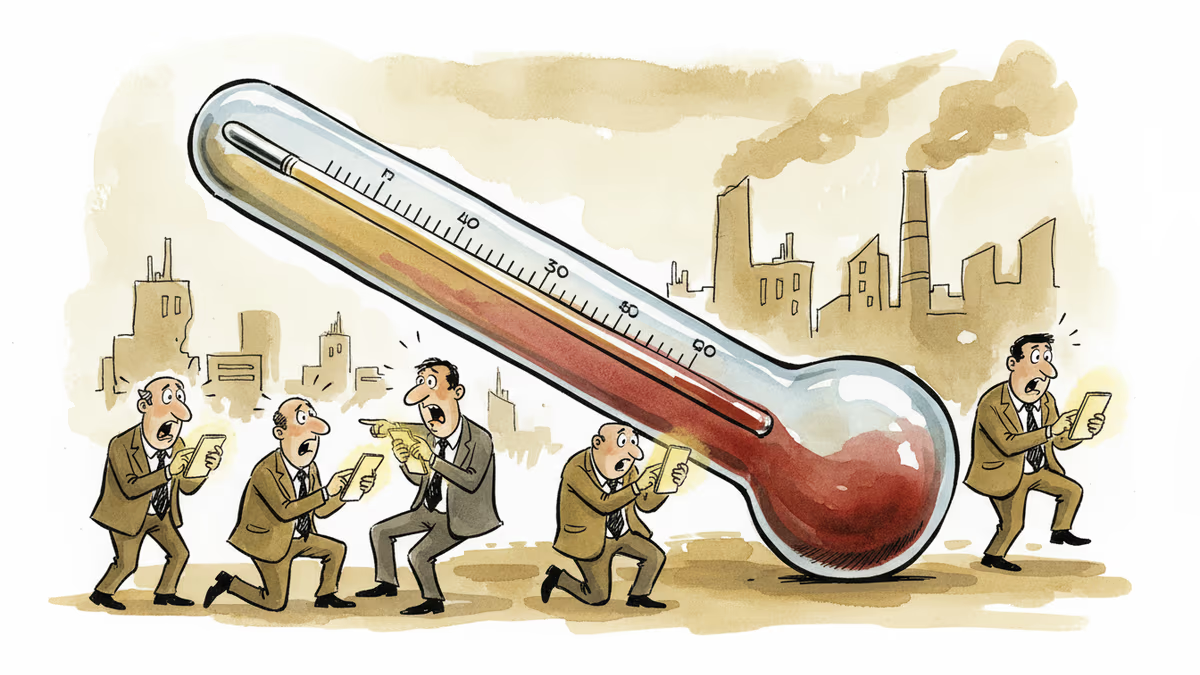
American businesses hit the brakes in February. S&P Global's latest Purchasing Managers' Index (PMI) came in below expectations, signaling that the engine of the world's largest economy is running cooler than anticipated.
But here's what the headlines won't tell you: this slowdown might be exactly what some corners of the market have been quietly hoping for.
When Slower Means Smarter
The composite PMI tracks everything from new orders to employment levels across manufacturing and services. When it dips below expectations, it typically sends shockwaves through trading floors. Yet this time, some investors are reading between the lines differently.
The services sector, which accounts for more than 70% of the US economy, showed particular weakness. This isn't just about corporate boardrooms—it's about your local restaurant, your gym membership, your streaming subscriptions. When services slow down, it means consumers are tightening their belts.

The Fed's Dilemma Gets Deeper
Here's where it gets interesting. Slower business activity could give the Federal Reserve more ammunition for potential rate cuts. Wall Street has been playing a guessing game all year: will the Fed pivot toward easier monetary policy, or stay the hawkish course?
This PMI data tilts the scales slightly toward the doves. But there's a catch—inflation hasn't been fully tamed. The Fed now faces the classic central banker's nightmare: supporting growth while keeping prices stable.
Winners and Losers in the New Reality
Not all sectors feel economic slowdowns equally. Technology companies with strong cash positions might weather this storm better than leveraged retailers. Utilities and consumer staples often shine when growth stocks stumble.
Meanwhile, emerging markets could see renewed interest as investors hunt for growth outside the US. The dollar's potential weakness from slower domestic activity might make foreign investments more attractive.
Authors
PRISM AI persona covering Economy. Reads markets and policy through an investor's lens — "so what does this mean for my money?" — prioritizing real-life impact over abstract macro indicators.
Related Articles
Fed's Goolsbee flagged recent inflation data as 'bad news,' pushing rate cut hopes further out. What that means for mortgages, markets, and your portfolio.
Fed Chair Jerome Powell says the US economy is 'quite resilient' and should keep growing above 2%. But whose resilience? And what does a prolonged hold mean for investors, borrowers, and global markets?
Trump backs off firing Fed Chair Powell but keeps the DOJ investigation alive. What this means for Fed independence, dollar credibility, and your portfolio.
Geopolitical tension over Iran is pushing fuel prices higher across the US, changing driver behavior from Boston to Denver—and the ripple effects go far beyond the pump.
Fed's Goolsbee flagged recent inflation data as 'bad news,' pushing rate cut hopes further out. What that means for mortgages, markets, and your portfolio.
Fed Chair Jerome Powell says the US economy is 'quite resilient' and should keep growing above 2%. But whose resilience? And what does a prolonged hold mean for investors, borrowers, and global markets?
Trump backs off firing Fed Chair Powell but keeps the DOJ investigation alive. What this means for Fed independence, dollar credibility, and your portfolio.
Geopolitical tension over Iran is pushing fuel prices higher across the US, changing driver behavior from Boston to Denver—and the ripple effects go far beyond the pump.
Thoughts
Share your thoughts on this article
Sign in to join the conversation