
Apple Just Dropped 7 Products in 3 Days. Here's Why.
Apple's unprecedented 3-day product blitz reveals a strategic shift. From $599 MacBooks to M5 chips, we analyze what this means for the tech giant's future.
7 Products, 3 Days: Apple's New Playbook
Apple just shattered its own rulebook. Over three consecutive days, the company unleashed 7 new products in rapid succession. Monday brought the iPhone 17e and M4 iPad Air. Tuesday delivered M5 MacBook Air, new MacBook Pros, and Studio Displays. Wednesday capped it off with the $599 MacBook Neo—Apple's cheapest laptop ever.
This isn't the Apple we know. The company that perfects the art of the singular, stage-managed reveal just went full machine-gun mode. Why?
The answer lies in what Apple fears most: becoming irrelevant.
The Race to the Bottom (Sort Of)
Let's talk numbers. The MacBook Neo starts at $599—that's Chromebook territory. The iPhone 17e doubles its base storage to 256GB while maintaining the same $599 price. These aren't just product updates; they're strategic repositioning moves.
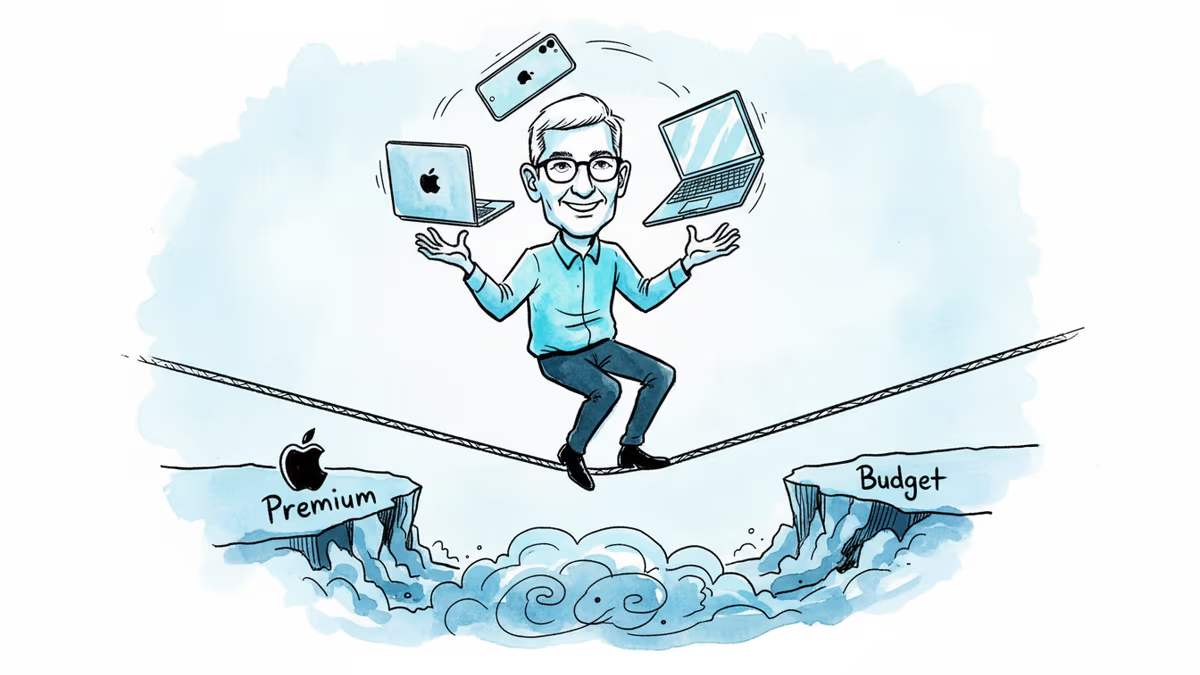
Apple is finally acknowledging what everyone knew: premium pricing has limits. When Google's Pixelbook costs less than half your cheapest laptop, you've got a problem. When Samsung's budget phones offer similar features at 60% of your price, customers notice.
But here's the twist—Apple isn't abandoning premium. They're expanding the definition of "Apple-worthy."
M5: The AI Gambit
The real story isn't about cheaper products—it's about the M5 chip. Apple claims it's 4x faster at AI tasks than M4, with 4x improvement in LLM processing and 8x boost in AI image generation.
Why the AI obsession? Because Apple is losing the narrative. While OpenAI and Google dominate AI conversations, Siri still struggles with basic requests. The M5 isn't just a chip upgrade—it's Apple's hardware-first answer to software-first AI leaders.

The message is clear: "We may not have ChatGPT, but we have the silicon to run AI better than anyone."
The Chromebook Killer Strategy
The MacBook Neo represents Apple's most aggressive education play yet. Running on the A18 Pro chip (borrowed from iPhones), it targets students who need "good enough" computing at accessible prices.
This puts Google in an uncomfortable position. Chromebooks succeeded because they offered simplicity and affordability when MacBooks were $1,200+. Now Apple's playing the same game with better hardware and a more polished OS.
Educational buyers—Apple's bread and butter for decades—suddenly have options across every price point.
What Competitors Are Thinking Right Now
Microsoft is likely reconsidering Surface pricing. When Apple undercuts you on hardware while offering comparable software, your value proposition gets murky.
Google faces an existential question: What's Chrome OS for if macOS comes cheaper? The Chromebook's core appeal—affordability—just got challenged.
Samsung and other Android manufacturers must be calculating how Apple's budget push affects their premium Android pricing. If Apple can do "premium" at $599, what's a Galaxy S worth?
The Premium Paradox
Apple's playing a dangerous game. Expand too far down-market, and you risk brand dilution. The MacBook Neo runs iPhone chips, not desktop-class silicon. Performance limitations are inevitable.
Early reviews will be crucial. If the Neo feels "cheap" despite the Apple logo, it could damage perceptions across the entire lineup. But if it delivers a genuinely good experience at $599, it redefines what "Apple quality" means.
The Bigger Picture: Platform Wars 2.0
This isn't just about individual products—it's about ecosystem lock-in at every price point. Apple wants your first computer, your budget phone, your premium tablet, and everything in between.
The strategy mirrors what worked in mobile: offer options across price tiers while maintaining ecosystem advantages. Once you're in—with your photos, apps, and workflows—switching becomes harder regardless of which Apple device got you there.
Authors
Related Articles
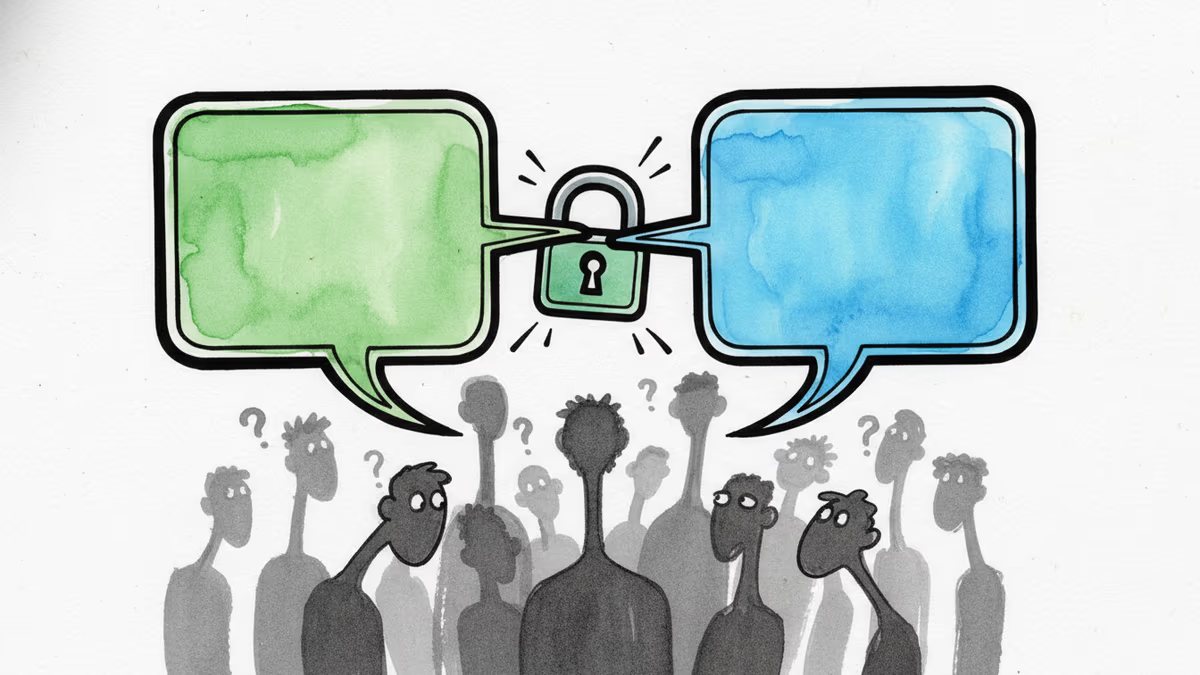
After 15 years of fragmented mobile messaging, Apple and Google are rolling out end-to-end encrypted RCS messaging between iPhones and Android devices. Here's what changed, why it took so long, and what it means for your privacy.
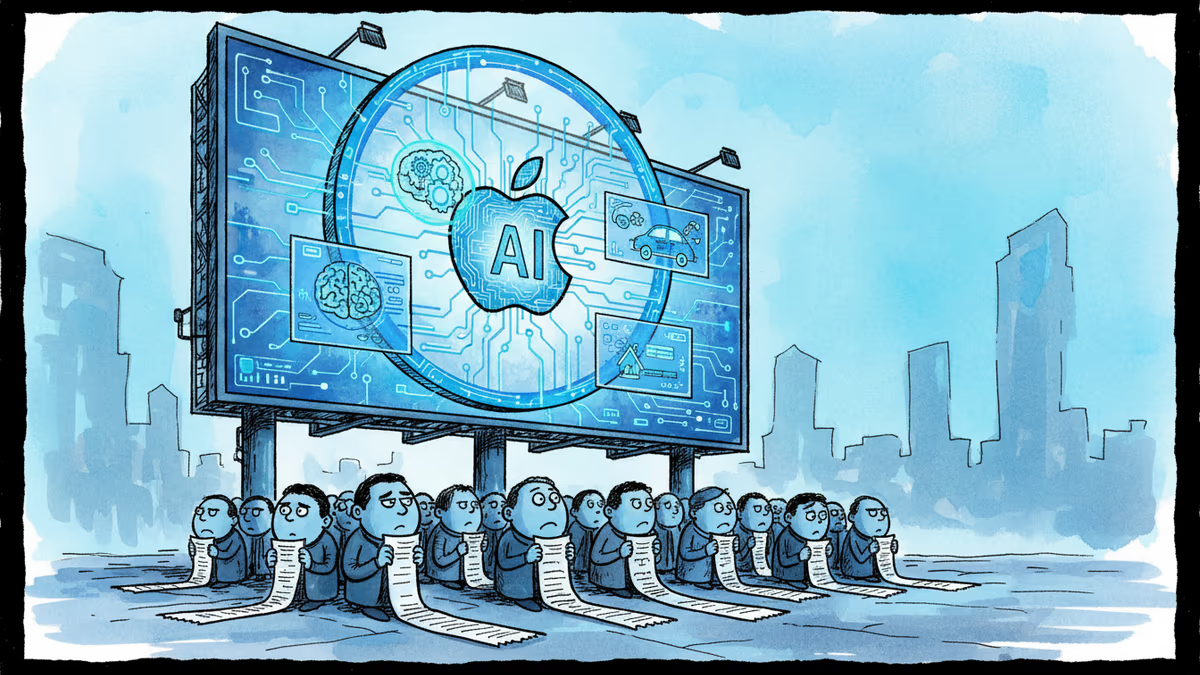
Apple agreed to pay $250 million to settle claims it misled iPhone 16 buyers about Apple Intelligence features. What this means for consumers, Big Tech marketing, and the AI industry.
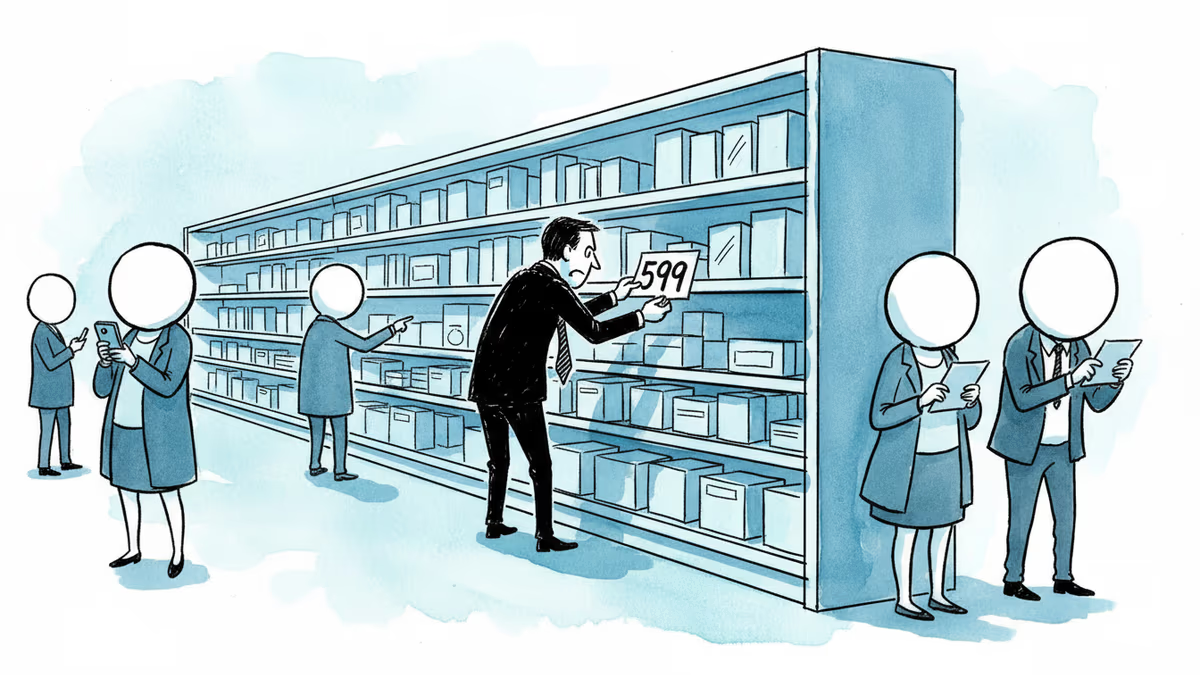
Apple quietly removed the entry-level $599 Mac Mini, raising the starting price to $799 — just one day after Tim Cook warned of chip supply constraints on the earnings call.
Apple names John Ternus, its hardware engineering chief, as the next CEO. The shift from operator to product person signals where Apple thinks its next decade of growth will come from — and raises real questions about what comes next.
After 15 years of fragmented mobile messaging, Apple and Google are rolling out end-to-end encrypted RCS messaging between iPhones and Android devices. Here's what changed, why it took so long, and what it means for your privacy.
Apple agreed to pay $250 million to settle claims it misled iPhone 16 buyers about Apple Intelligence features. What this means for consumers, Big Tech marketing, and the AI industry.
Apple quietly removed the entry-level $599 Mac Mini, raising the starting price to $799 — just one day after Tim Cook warned of chip supply constraints on the earnings call.
Apple names John Ternus, its hardware engineering chief, as the next CEO. The shift from operator to product person signals where Apple thinks its next decade of growth will come from — and raises real questions about what comes next.
Thoughts
Share your thoughts on this article
Sign in to join the conversation