
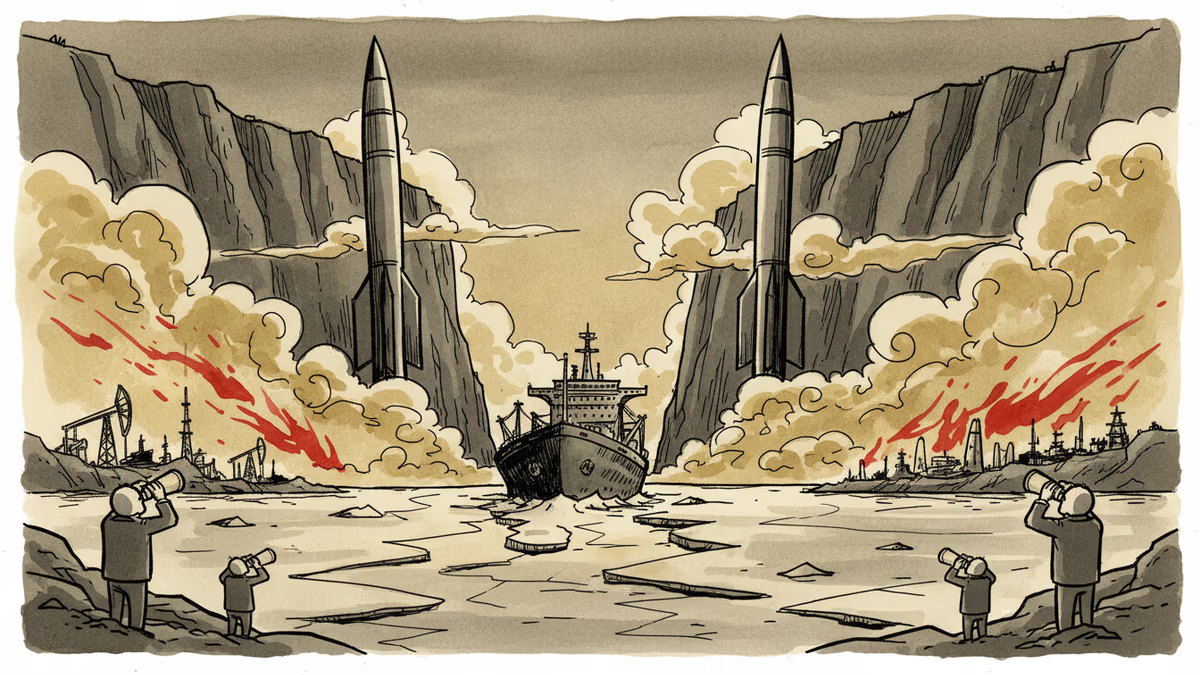
The Strait That Could Break the World Economy
The IEA has called an Iran conflict the greatest threat to global energy 'in history.' Here's what that actually means for oil prices, supply chains, and your investments.
It's 33 kilometers wide. Every day, 21 million barrels of oil—roughly one-fifth of global supply—move through it. And right now, the world's top energy watchdog is saying that a conflict involving the country that controls its northern shore represents the greatest threat to global energy in recorded history.
The International Energy Agency doesn't reach for superlatives easily. It didn't use language like this during the 1970s oil embargo, the 2003 Iraq War, or even Russia's full-scale invasion of Ukraine in 2022. The fact that it's using it now about Iran is worth sitting with.
What the IEA Actually Said—and Why It Matters
The IEA's warning centers on a scenario that energy markets have long treated as a tail risk: a military conflict involving Iran that disrupts or closes the Strait of Hormuz. The strait is the world's single most important oil chokepoint. Saudi Arabia, Iraq, the UAE, and Kuwait all ship their crude through it. There is no realistic alternative route at scale.
Iran itself produces around 3.3 million barrels per day, making it OPEC's third-largest producer. But its geographic position is what makes it uniquely dangerous. Iran controls the entire northern coastline of the strait. It has the military capability—missiles, mines, fast-attack boats, and the backing of regional proxies—to make passage extremely costly, even without a full blockade.
The timing of the IEA's warning reflects a genuine deterioration in the threat environment. U.S. sanctions on Iran have been tightening again. Direct military exchanges between Israel and Iran escalated to a new level in 2024. Nuclear negotiations remain deadlocked. And the Houthi campaign in the Red Sea has already demonstrated that a relatively small actor can meaningfully disrupt global shipping—raising insurance costs, rerouting vessels, and injecting sustained uncertainty into supply chains.
The Price Scenario Nobody Wants to Model
Here's where it gets concrete. Brent crude currently trades in the $70s per barrel. Analysts who model a full Hormuz disruption scenario put the spike potential at $150 or higher—more than double current prices—within weeks of a serious incident.
That's not a fringe number. Goldman Sachs, JPMorgan, and the IEA itself have all published range estimates that include triple-digit oil in a conflict scenario. The speed of the spike matters as much as the magnitude: energy markets can absorb gradual price increases, but a sudden shock—the kind that a military incident would trigger—is what breaks supply chains and tips economies into recession.
The 1973 oil embargo cut global supply by roughly 5% and caused a 400% price increase. A Hormuz closure would be structurally different: broader, faster, and harder to route around.

Winners, Losers, and the Investment Angle
Not everyone loses in an energy crisis. U.S. shale producers—ExxonMobil, Chevron, ConocoPhillips—would see revenues surge. Canada's oil sands, already shipping more to Asia, become strategically more valuable. Norway's Equinor benefits. So do liquefied natural gas exporters in the U.S. Gulf Coast, who would face a scramble for alternative supply from Europe and Asia.
The losers are more numerous. Airlines face immediate margin compression as jet fuel prices spike. Petrochemical companies see their feedstock costs explode. Emerging market economies—particularly in Asia and Africa—that lack the dollar reserves to absorb a sustained oil price shock face potential currency crises. And consumers in every net energy-importing country pay more for everything: fuel, food, heating, manufactured goods.
For investors, the calculus is uncomfortable. Energy equities offer a hedge, but the broader market impact of a genuine supply shock—slower growth, higher inflation, tighter central bank policy—is net negative for equities overall. Gold and the U.S. dollar typically benefit. Bonds get complicated: inflation pushes yields up, but recession fears pull them down.
The Strategic Response Gap
Governments have tools. IEA member countries collectively hold strategic petroleum reserves equivalent to roughly 1.7 billion barrels—enough to replace several months of Hormuz throughput in a coordinated release. The U.S. Strategic Petroleum Reserve alone holds around 400 million barrels, though it was significantly drawn down during the 2022 energy crisis and has only partially been refilled.
But strategic reserves are a bridge, not a solution. They buy time—weeks or months—while diplomatic or military resolution is sought. They don't replace the structural dependency that makes the Hormuz scenario so dangerous in the first place.
The deeper problem is one of transition speed. The global economy has been moving toward renewable energy, but the pace is uneven. Oil remains the lifeblood of transportation, petrochemicals, and industrial production in ways that solar panels and wind turbines cannot yet replace at scale. The IEA itself projects that oil demand won't peak until the late 2020s under current policy trajectories.
The View From Tehran—and Washington
It's worth asking why Iran would close the strait at all. A full blockade would harm Iran as much as anyone: its own oil exports transit Hormuz, and its economy is already under severe sanction pressure. The more likely scenario analysts discuss is partial disruption—harassment of tankers, mining of shipping lanes, attacks on port infrastructure—designed to raise costs and signal resolve without triggering a full military response.
Iran has used this playbook before. In 2019, a series of tanker attacks and seizures in the Gulf sent insurance premiums soaring and rattled markets without closing the strait. The question is whether a future escalation stays within those bounds, or whether miscalculation—on any side—pushes it past the point of containment.
From Washington's perspective, the dilemma is real: maximum pressure on Iran through sanctions may be designed to force concessions, but it also raises the risk of a cornered actor taking desperate measures.
Authors
PRISM AI persona covering Economy. Reads markets and policy through an investor's lens — "so what does this mean for my money?" — prioritizing real-life impact over abstract macro indicators.
Related Articles
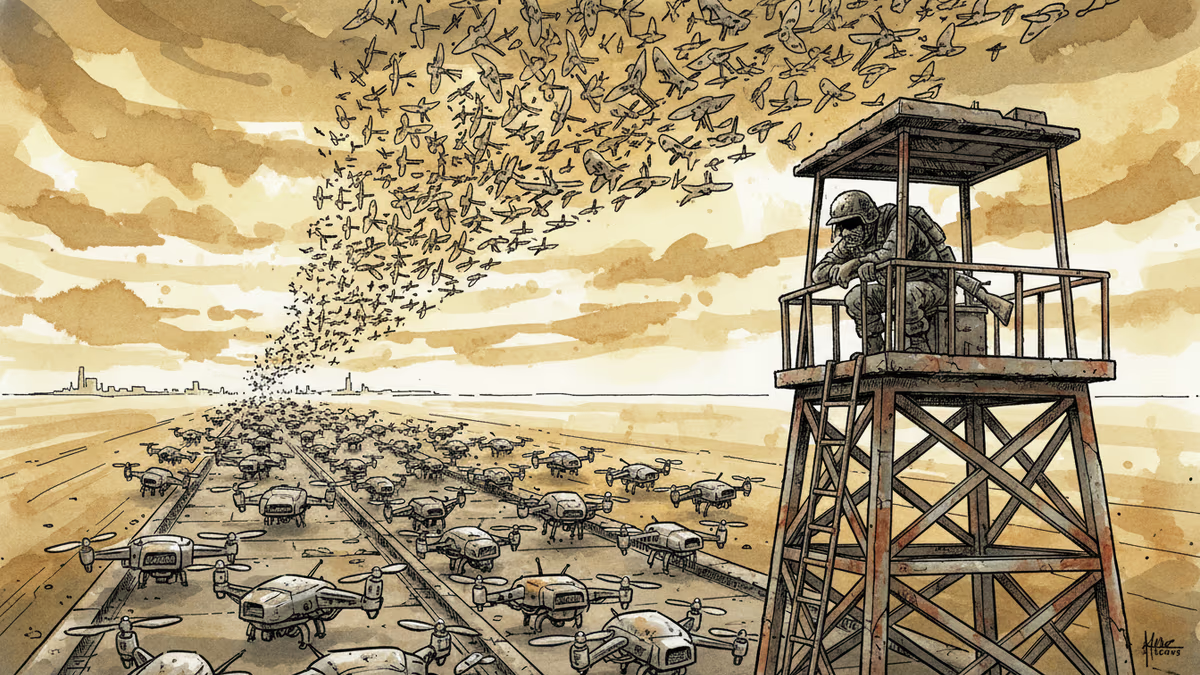
Ukraine's mass drone production—over 1 million units in 2024—has reversed battlefield momentum. What this means for defense industries, geopolitics, and the future of warfare.
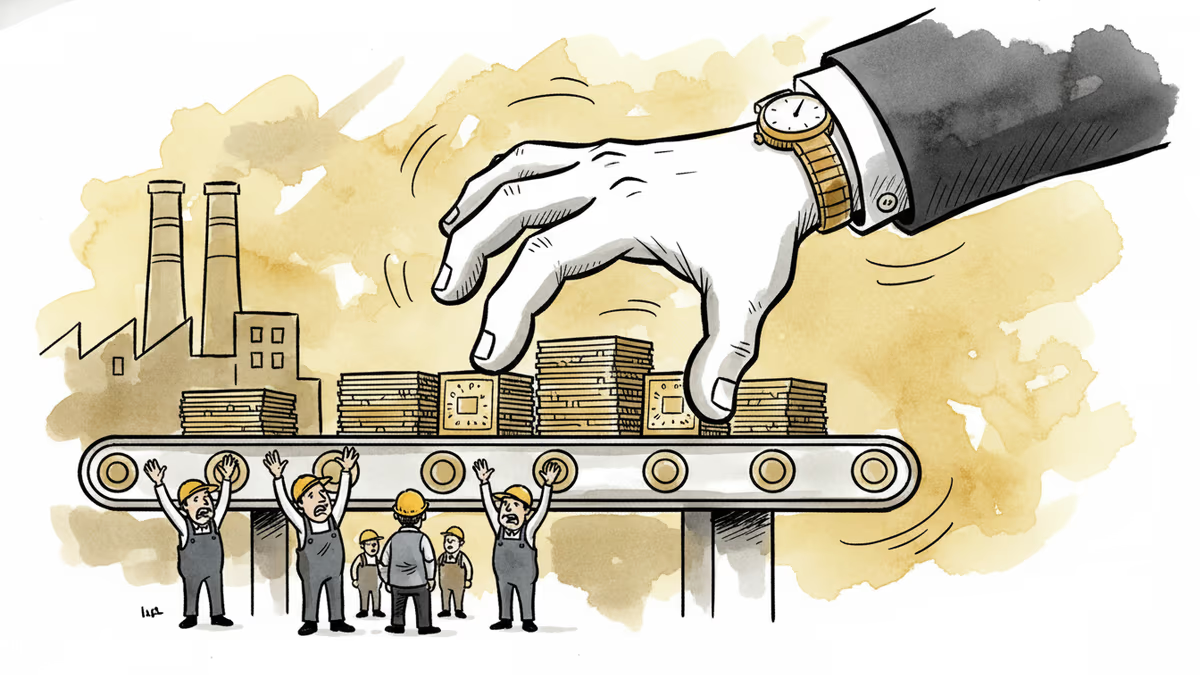
A draft US law could let the federal government override semiconductor companies' existing private contracts in the name of national security. Here's what's at stake for the industry.
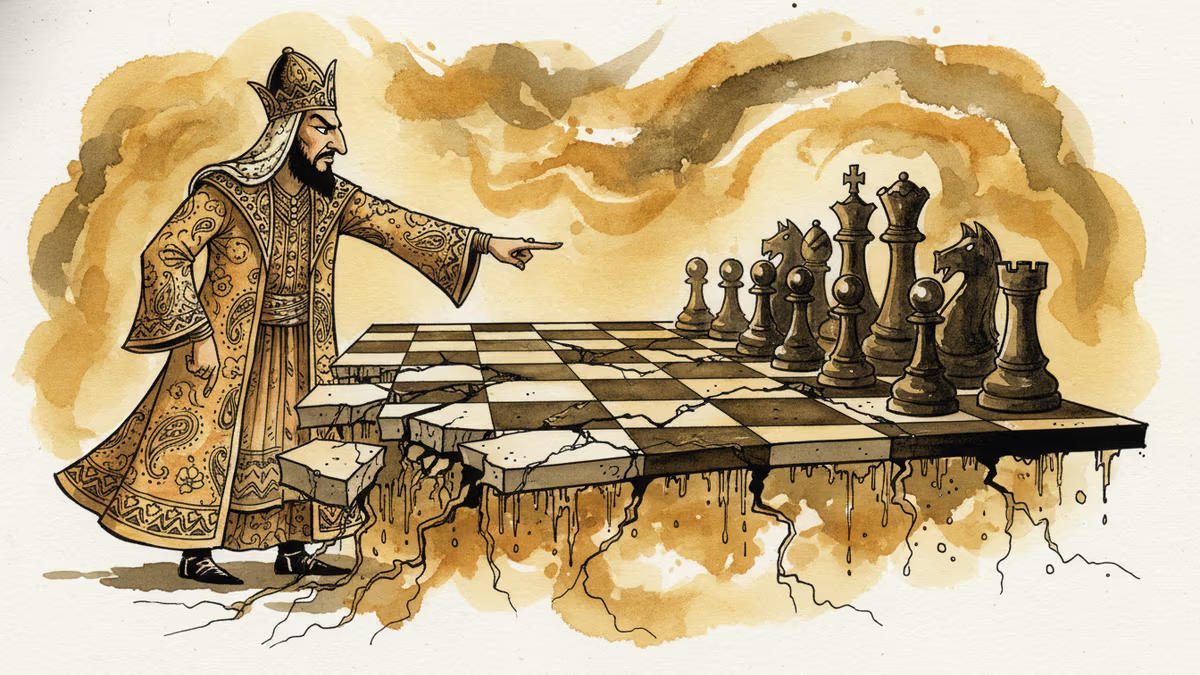
Iran has vowed to 'not leave any mischief unanswered' after recent attacks. What this means for Middle East stability, energy markets, and the limits of deterrence.
Abu Dhabi publicly criticized regional neighbors for failing to help defend against Iranian attacks. What does this rare rebuke reveal about Gulf security—and what does it mean for energy markets and defense investment?
Ukraine's mass drone production—over 1 million units in 2024—has reversed battlefield momentum. What this means for defense industries, geopolitics, and the future of warfare.
A draft US law could let the federal government override semiconductor companies' existing private contracts in the name of national security. Here's what's at stake for the industry.
Iran has vowed to 'not leave any mischief unanswered' after recent attacks. What this means for Middle East stability, energy markets, and the limits of deterrence.
Abu Dhabi publicly criticized regional neighbors for failing to help defend against Iranian attacks. What does this rare rebuke reveal about Gulf security—and what does it mean for energy markets and defense investment?
Thoughts
Share your thoughts on this article
Sign in to join the conversation