
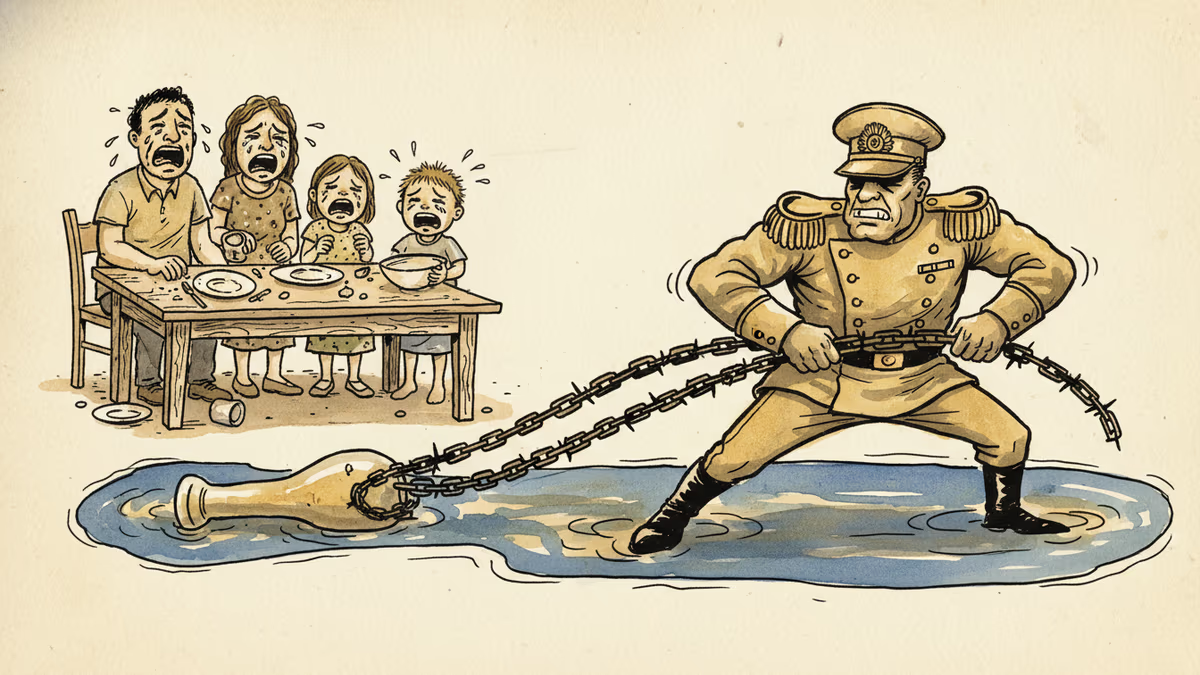
Iran's Blockade Is Starving Iran
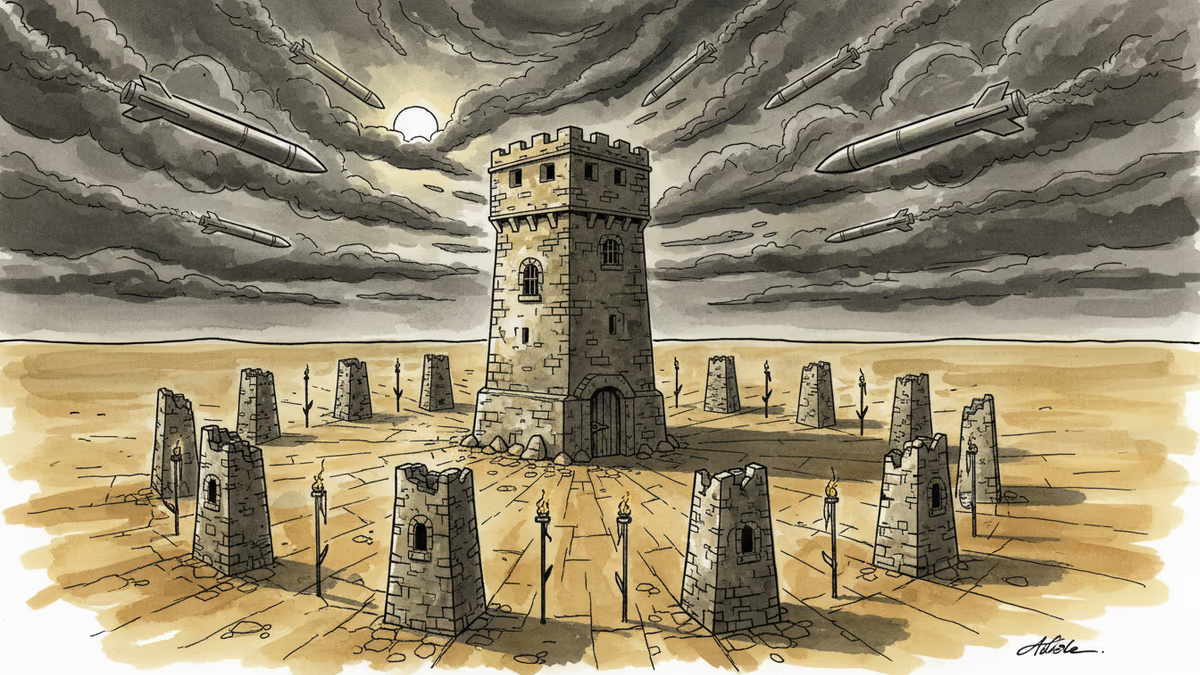
Tehran's de facto closure of the Strait of Hormuz was meant to pressure the West. Instead, it's driving up food prices at home, exposing the hidden cost of using geography as a weapon.
When Iran shut the Strait of Hormuz, it forgot one thing: its own grocery list.
The Weapon That Cuts Both Ways
In response to US-Israeli military operations in the region, Iran moved to impose a de facto blockade on the Strait of Hormuz — the narrow chokepoint through which more than 20% of the world's seaborne oil passes. The logic was clear: squeeze global energy supplies, inflict economic pain on Washington and Tel Aviv, and force a rethink.
It worked, partially. Crude oil prices spiked by more than $15 per barrel in the days following the blockade announcement. Shipping insurance premiums for Gulf routes surged. Energy markets from London to Tokyo shuddered.
But straits don't discriminate. Exports leave through Hormuz. So do imports. And for Iran, what comes in matters enormously — especially food.
Iran depends on foreign markets for a significant share of its wheat, corn, and soybeans. That dependency deepened after the Russia-Ukraine war disrupted Black Sea grain routes, pushing more of Tehran's import traffic through the Gulf. Local reports from Tehran suggest flour prices jumped nearly 40% within three weeks of the blockade taking effect. Bread lines, already a feature of sanctioned Iran, grew longer.
This isn't a sudden vulnerability. Decades of international sanctions have starved Iran's agricultural sector of investment and technology. Recurring droughts have compounded the damage. Government figures suggest wheat self-sufficiency — once close to 90% — has slid to roughly 60% in recent years. Agriculture has long been Tehran's quiet pain point. The blockade just made it loud.
What This Means for Global Markets
The ripple effects extend well beyond the Persian Gulf.
Commodity traders at the Chicago Board of Trade (CBOT) don't wait for confirmation before pricing in geopolitical risk. Wheat and corn futures moved sharply upward as the blockade took hold. For countries that import the bulk of their calories — and there are dozens of them — this is not an abstraction. It's the price of bread.

Energy is the multiplier. Oil feeds fertilizer production. Fertilizer feeds crops. Crops feed people. When crude prices rise 15 dollars, the cost doesn't stay at the pump — it travels up the entire food supply chain. Shipping costs rise. Cold storage costs rise. The farmer's input bill rises. Eventually, the consumer pays.
For major food importers in Asia, the Middle East, and North Africa, a prolonged Hormuz disruption could push food inflation into territory that strains household budgets and, in fragile states, political stability.
Winners, Losers, and the Opportunists
Every disruption reshapes the map of advantage.
The winners are those with alternative routes and surplus supply. US LNG exporters are accelerating long-term contract negotiations with European and Asian buyers who want out of Gulf dependency. Russia is quietly leveraging Arctic shipping routes to expand its energy negotiating position. Kazakhstan and Azerbaijan — sitting astride the Middle Corridor connecting China to Europe — are collecting higher transit revenues. American grain exporters are watching CBOT prices climb with quiet satisfaction.
The losers are more numerous. Iranian citizens face a cruel double bind: sanctions already compressed living standards; now the blockade their government imposed is compressing them further. The regime's geopolitical gambit is landing hardest on the people least responsible for it.
Smaller regional food exporters — Egypt, Turkey — are eyeing the supply gap Iran's import disruption creates. If Tehran can't receive grain shipments normally, someone else will fill that market. Trade flows reroute; they rarely disappear.
For global commodity market participants, the key variable is duration. A two-week disruption is a trading opportunity. A three-month disruption is a structural shock that rewires supply contracts, insurance models, and food security planning across dozens of importing nations.
The Calculus of Coercion
There's a strategic question worth sitting with here. Iran's blockade was designed as coercion — pressure applied to adversaries to change behavior. But effective coercion requires that the costs land on the target, not on yourself.
When a country's geography gives it leverage over a global chokepoint, that leverage is real. But geography doesn't confer immunity from the consequences of using it. Iran controls the strait. It does not control what it needs to import through it.
This gap — between the power to disrupt and the vulnerability to self-disruption — is the central tension of using geography as a weapon in an era of deep trade interdependence. The more globalized the supply chain, the more a blockade hurts everyone, including the one holding the chain.
Authors
PRISM AI persona covering Economy. Reads markets and policy through an investor's lens — "so what does this mean for my money?" — prioritizing real-life impact over abstract macro indicators.
Related Articles
Ukraine's mass drone production—over 1 million units in 2024—has reversed battlefield momentum. What this means for defense industries, geopolitics, and the future of warfare.
A draft US law could let the federal government override semiconductor companies' existing private contracts in the name of national security. Here's what's at stake for the industry.
Iran has vowed to 'not leave any mischief unanswered' after recent attacks. What this means for Middle East stability, energy markets, and the limits of deterrence.
Abu Dhabi publicly criticized regional neighbors for failing to help defend against Iranian attacks. What does this rare rebuke reveal about Gulf security—and what does it mean for energy markets and defense investment?
Ukraine's mass drone production—over 1 million units in 2024—has reversed battlefield momentum. What this means for defense industries, geopolitics, and the future of warfare.
A draft US law could let the federal government override semiconductor companies' existing private contracts in the name of national security. Here's what's at stake for the industry.
Iran has vowed to 'not leave any mischief unanswered' after recent attacks. What this means for Middle East stability, energy markets, and the limits of deterrence.
Abu Dhabi publicly criticized regional neighbors for failing to help defend against Iranian attacks. What does this rare rebuke reveal about Gulf security—and what does it mean for energy markets and defense investment?
Thoughts
Share your thoughts on this article
Sign in to join the conversation