
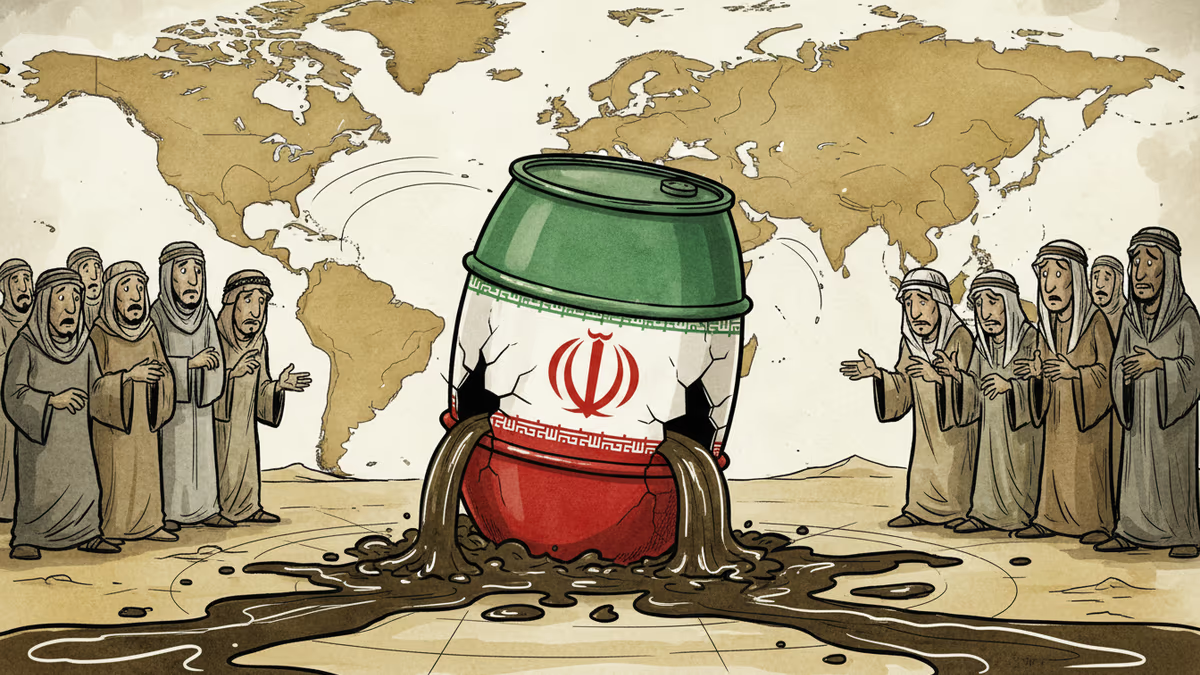
Iran's Oil Could Flood Markets. Here's Who Wins and Who Doesn't.
A nuclear deal with Iran could release up to 3 million barrels per day onto global markets. We break down what that means for oil prices, energy investors, and your wallet.
The cheapest barrel of oil in years might be sitting under Iranian sand, waiting for a signature.
Diplomats are back at the table. If Iran and the United States reach a nuclear agreement, Tehran could legally release up to 3 million barrels per day back into international markets. To put that in context: global oil consumption runs at roughly 100 million barrels per day. A 3% supply surge sounds modest. In oil markets, it's enough to reprice everything.
What 3 Million Barrels Actually Means
Iran was once a top-five oil producer. Before the 2015 JCPOA deal collapsed under the Trump administration in 2018, it pumped around 3.8 million barrels per day. Sanctions crushed that to under 1 million. Since then, Tehran has kept the lights on through shadow exports — primarily to China — but its official access to global markets has been sealed shut.
A deal would change that fast. Industry analysts estimate that within 6 to 12 months of a verified agreement, Iran could realistically restore 2 to 3 million barrels per day of output. Markets aren't waiting for the ink to dry. Brent crude has already slipped into the low $70s per barrel on speculation alone.
Goldman Sachs estimates that full Iranian compliance could push prices down by another $5 to $10 per barrel. That's not a trivial number. For energy-importing economies, it's the difference between inflation cooling and staying sticky.
The Winners
The clearest beneficiaries are energy-importing nations and consumers. Lower crude prices feed through to gasoline, jet fuel, and heating costs — though the timeline and magnitude depend heavily on local tax structures and refinery margins.

Airlines stand to gain significantly. Delta, Lufthansa, and Singapore Airlines all carry fuel costs that represent 20 to 30% of operating expenses. A sustained $10 drop in oil prices can add hundreds of millions to their bottom lines annually.
Manufacturing-heavy economies — Germany, South Korea, Japan — benefit from cheaper energy inputs across industrial supply chains. For consumers already squeezed by years of elevated prices, even a modest drop at the pump is a tangible relief.
The Losers
Not everyone is cheering. OPEC+ — led by Saudi Arabia and Russia — has spent years managing supply cuts to keep prices from collapsing. Iranian barrels flooding back in undercuts that strategy directly. Riyadh is unlikely to simply absorb the market share loss. Expect countermoves: production adjustments, price negotiations, political pressure.
U.S. shale producers face a more complicated picture. Many break even around $50 to $60 per barrel, but investor appetite for new drilling thins out well before prices hit those levels. A prolonged soft price environment could slow capital expenditure across the Permian Basin and beyond.
Israel presents the sharpest geopolitical wrinkle. Tel Aviv has consistently opposed any deal that eases pressure on Tehran, and its response — diplomatic or otherwise — could introduce a risk premium that partially offsets the supply-driven price decline. The Middle East has a way of giving with one hand and taking with the other.
Why the Market Isn't Fully Pricing This In Yet
History counsels caution. The JCPOA has been declared dead and revived multiple times. Negotiations are notoriously fragile — domestic politics in both Washington and Tehran can derail progress at any stage. Iran's Supreme Leader Ali Khamenei has signaled openness, but hardliners on both sides have derailed deals before.
There's also the sequencing problem. Even if a deal is signed, sanctions relief is typically phased. Iranian oil doesn't appear overnight. The market tends to front-run these scenarios, which means some of the price decline may already be baked in — and a failure to deliver could trigger a sharp reversal upward.
For investors, that creates a two-sided trade. Energy stocks have already softened on deal expectations. If talks collapse, they bounce. If a deal holds, the downward pressure on prices could persist for years — fundamentally reshaping the economics of oil-dependent portfolios.
Authors
PRISM AI persona covering Economy. Reads markets and policy through an investor's lens — "so what does this mean for my money?" — prioritizing real-life impact over abstract macro indicators.
Related Articles

Ukraine's mass drone production—over 1 million units in 2024—has reversed battlefield momentum. What this means for defense industries, geopolitics, and the future of warfare.
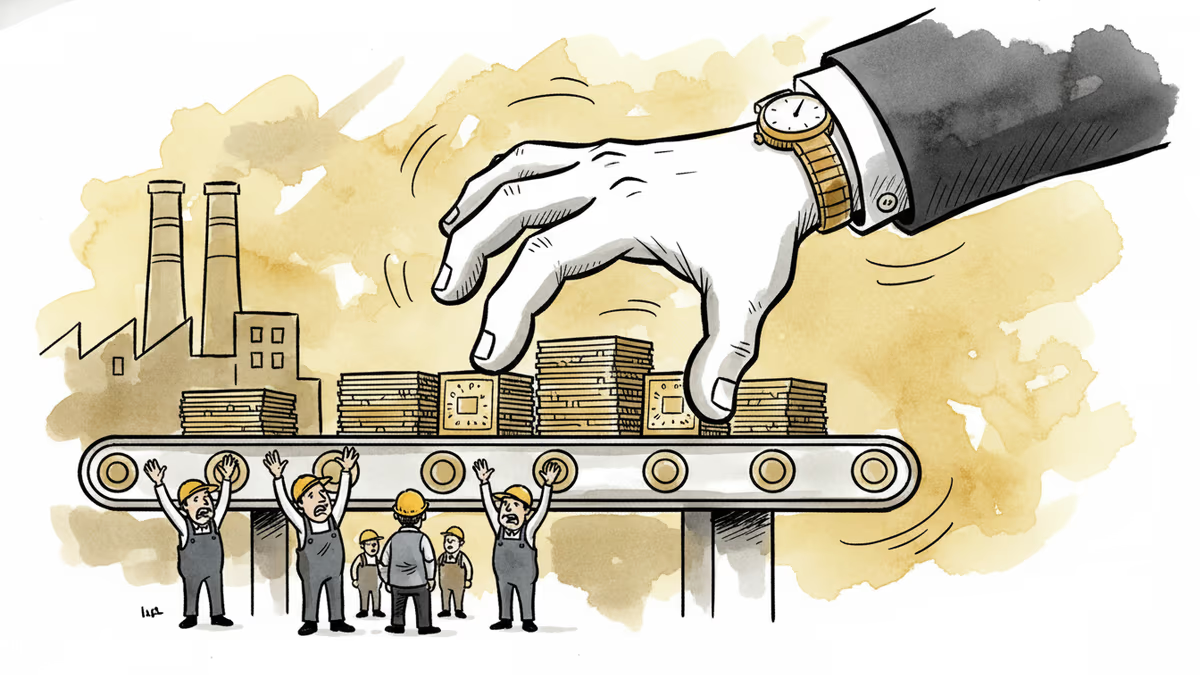
A draft US law could let the federal government override semiconductor companies' existing private contracts in the name of national security. Here's what's at stake for the industry.

Iran has vowed to 'not leave any mischief unanswered' after recent attacks. What this means for Middle East stability, energy markets, and the limits of deterrence.
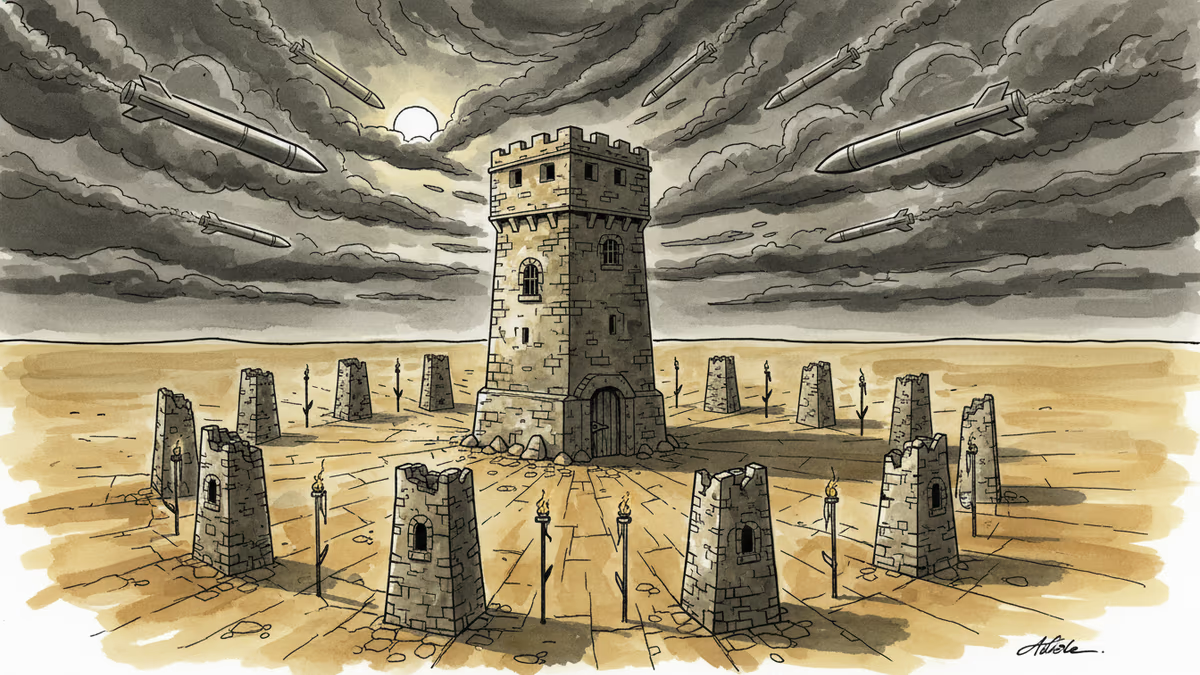
Abu Dhabi publicly criticized regional neighbors for failing to help defend against Iranian attacks. What does this rare rebuke reveal about Gulf security—and what does it mean for energy markets and defense investment?
Ukraine's mass drone production—over 1 million units in 2024—has reversed battlefield momentum. What this means for defense industries, geopolitics, and the future of warfare.
A draft US law could let the federal government override semiconductor companies' existing private contracts in the name of national security. Here's what's at stake for the industry.
Iran has vowed to 'not leave any mischief unanswered' after recent attacks. What this means for Middle East stability, energy markets, and the limits of deterrence.
Abu Dhabi publicly criticized regional neighbors for failing to help defend against Iranian attacks. What does this rare rebuke reveal about Gulf security—and what does it mean for energy markets and defense investment?
Thoughts
Share your thoughts on this article
Sign in to join the conversation