
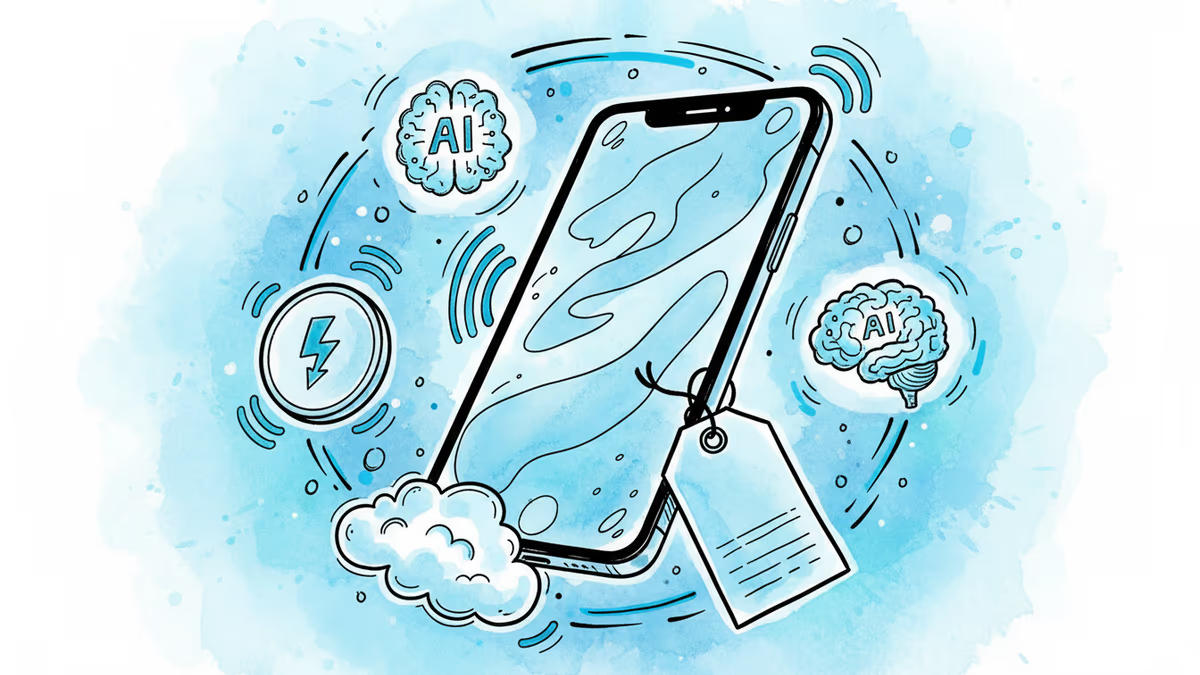
iPhone 17e at $599 Tests Apple's Mid-Range Strategy
Apple's iPhone 17e brings MagSafe, AI, and premium features to the $599 price point. A calculated move or risky gamble in the competitive mid-range market?
$599 for Premium Features: Apple's Mid-Range Gambit
Apple just made the mid-range smartphone market a lot more interesting. The iPhone 17e, launching March 11 at $599, isn't just another budget iPhone. It's Apple's most aggressive attempt yet to compete in the $500-700 segment that companies like Samsung and Google have dominated.
The price jump from last year's iPhone 16e is notable—$100 more. But what you get for that extra money tells a bigger story about Apple's strategy. MagSafe wireless charging, previously exclusive to Pro models, now comes standard. So does 15W wireless charging and double the base storage at 256GB.
This isn't just spec bumping. It's Apple saying: "We're not conceding the mid-range anymore."
The Samsung Galaxy Challenge
Apple's timing isn't coincidental. Samsung's Galaxy A series has been quietly eating Apple's lunch in the mid-range segment, offering flagship-like features at $400-600 price points. The Galaxy A55, in particular, has found sweet spots in markets where iPhone prices feel prohibitive.
The iPhone 17e's A19 chip and Apple Intelligence support signal that Apple won't compromise on performance, even in budget models. The new C1X modem promises 2x faster cellular speeds while using 30% less energy—specs that directly challenge Android competitors.
But here's the question: Will consumers pay $599 for features they can get elsewhere for $450?

Camera Strategy: Less Hardware, More Ecosystem
The camera story is telling. Apple kept the same 48-megapixel sensor from the iPhone 16e but enhanced the software experience. The Fusion camera enables 2x telephoto through computational photography—essentially giving users "two cameras in one."
4K Dolby Vision recording and Spatial Audio capture aren't just technical specs. They're ecosystem plays. These features shine when paired with AirPods or Apple Vision Pro, creating a web of interconnected experiences that Android competitors struggle to match.
This approach reflects Apple's broader philosophy: sell the ecosystem, not just the hardware.
Sustainability as Differentiation
Apple's environmental messaging—30% recycled content, 85% recycled aluminum, 100% recycled cobalt—isn't just corporate responsibility theater. It's strategic differentiation aimed at younger consumers who increasingly factor sustainability into purchasing decisions.
The IP68 rating and Ceramic Shield 2 with 3x scratch resistance address durability concerns that often plague mid-range devices. Apple is betting that perceived quality justifies the premium over competitors.
The Ecosystem Lock-In Play
Every iPhone 17e feature seems designed to pull users deeper into Apple's ecosystem. Emergency SOS via satellite, Find My integration, seamless AirPods pairing—these aren't just conveniences. They're switching cost creators.
Once users experience the integrated Apple ecosystem at the $599 price point, moving to a $1,200 iPhone Pro becomes an easier psychological leap than jumping to Android.
Authors
Related Articles
After 15 years of fragmented mobile messaging, Apple and Google are rolling out end-to-end encrypted RCS messaging between iPhones and Android devices. Here's what changed, why it took so long, and what it means for your privacy.
Apple agreed to pay $250 million to settle claims it misled iPhone 16 buyers about Apple Intelligence features. What this means for consumers, Big Tech marketing, and the AI industry.
Apple quietly removed the entry-level $599 Mac Mini, raising the starting price to $799 — just one day after Tim Cook warned of chip supply constraints on the earnings call.
Apple names John Ternus, its hardware engineering chief, as the next CEO. The shift from operator to product person signals where Apple thinks its next decade of growth will come from — and raises real questions about what comes next.
After 15 years of fragmented mobile messaging, Apple and Google are rolling out end-to-end encrypted RCS messaging between iPhones and Android devices. Here's what changed, why it took so long, and what it means for your privacy.
Apple agreed to pay $250 million to settle claims it misled iPhone 16 buyers about Apple Intelligence features. What this means for consumers, Big Tech marketing, and the AI industry.
Apple quietly removed the entry-level $599 Mac Mini, raising the starting price to $799 — just one day after Tim Cook warned of chip supply constraints on the earnings call.
Apple names John Ternus, its hardware engineering chief, as the next CEO. The shift from operator to product person signals where Apple thinks its next decade of growth will come from — and raises real questions about what comes next.
Thoughts
Share your thoughts on this article
Sign in to join the conversation