
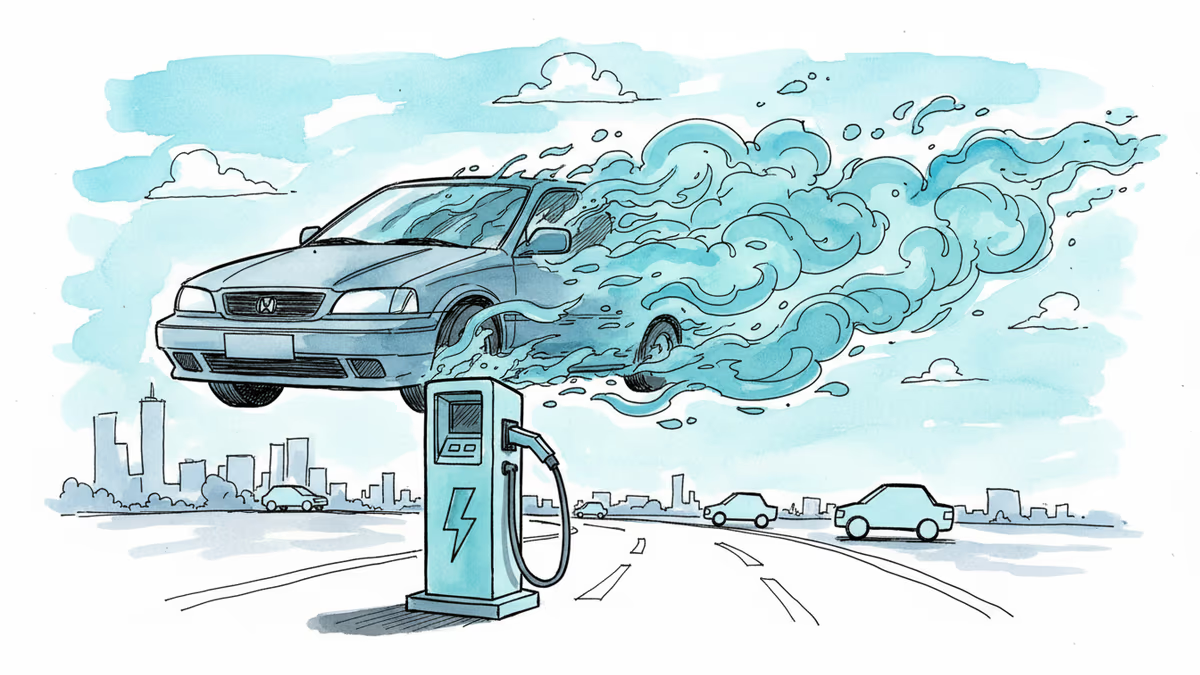
Honda's EV Exit: Who Fills the Gap?
Honda has cancelled three US electric vehicles and Sony Honda Mobility has shelved its EV launch. As legacy automakers retreat, what does this mean for the EV market's future?
The EV Dream That $7,500 Built—and Killed
Honda sold 39,000 Prologue EVs in the US last year. Then the federal clean vehicle tax credit disappeared, and so did the buyers. This month, Honda cancelled three electric vehicles it had been developing for the American market. Within days, Sony Honda Mobility—the joint venture that was supposed to bring a sleek, tech-forward EV to consumers—announced it won't be launching its vehicles at all.
This isn't just one automaker stumbling. It's a stress test for the entire EV transition narrative.
What Actually Happened
To understand the scale of Honda's retreat, you have to go back further than this month. The Honda e, a compact city car that launched in Europe and Japan, managed just 12,000 sales over four years—despite near-universal praise for its design. Cute doesn't pay the bills.
In North America, Honda took a different approach: rather than develop its own EV platform, it licensed GM's architecture and rebadged the result as the Prologue—essentially a Chevrolet Blazer EV wearing a Honda badge. The numbers looked decent on paper: 33,000 units in 2024, 39,000 in 2025. But those figures were propped up by the federal tax credit that put up to $7,500 back in buyers' pockets.
When the Trump administration ended that credit last fall, sales collapsed. The Prologue ends production later this year. A separate plan to develop lower-cost EVs using GM's battery platform—targeted for 2027—was quietly killed in late 2023. And now Sony Honda Mobility, the joint venture that generated significant buzz for its Afeela concept, has pulled the plug on its launch plans entirely.
The Subsidy Problem Nobody Wants to Talk About
Here's the uncomfortable question buried in Honda's retreat: was EV demand ever as strong as the sales figures suggested, or were we measuring subsidy uptake?

The evidence is mounting that mainstream consumers—not early adopters, not tech enthusiasts, but the median car buyer—still aren't convinced that an EV is worth the premium without government help. Ford has been losing billions on its EV division. GM has been quietly slowing its electrification timeline. Honda's exit is the most visible, but it's part of a broader pattern of legacy automakers recalibrating expectations.
The $7,500 tax credit didn't just make EVs cheaper—it masked the price gap that still exists between battery-electric vehicles and their internal combustion equivalents. Remove the subsidy, and you remove the illusion of price parity.
Who Benefits From Honda's Exit
Every retreat creates a vacuum. The question is who fills it.
Tesla remains the dominant force in the US EV market, but its brand has taken hits in recent months amid controversy around Elon Musk's political activities. Some consumers who might have bought a Tesla are actively looking for alternatives.
Hyundai and Kia are the most obvious beneficiaries. Both companies have continued investing in US EV production—Hyundai's Metaplant in Georgia is operational—and their Ioniq 6, EV6, and EV9 lineups have earned strong reviews. With Honda stepping back, Hyundai-Kia has a genuine opportunity to capture the middle of the market: buyers who want a credible, non-Tesla EV option.
Chinese manufacturers like BYD would be the other natural beneficiary globally, but US tariffs effectively wall them out of the American market for now.
Three Ways to Read This
The bear case: EV adoption is hitting a wall. The early majority has been served; convincing the rest requires price parity that battery technology hasn't yet delivered. Legacy automakers are right to slow down.
The bull case: This is a shakeout, not a collapse. Weaker players are exiting, which concentrates demand around manufacturers with genuine EV competency. The long-term trajectory toward electrification hasn't changed—it's just messier than the optimists projected.
The policy case: What's happening in the US is partly a political choice, not just a market signal. Europe and China are maintaining EV incentives, and adoption rates there tell a different story. The American retreat may say more about the current administration's priorities than about consumer appetite for electric vehicles.
Authors
Related Articles
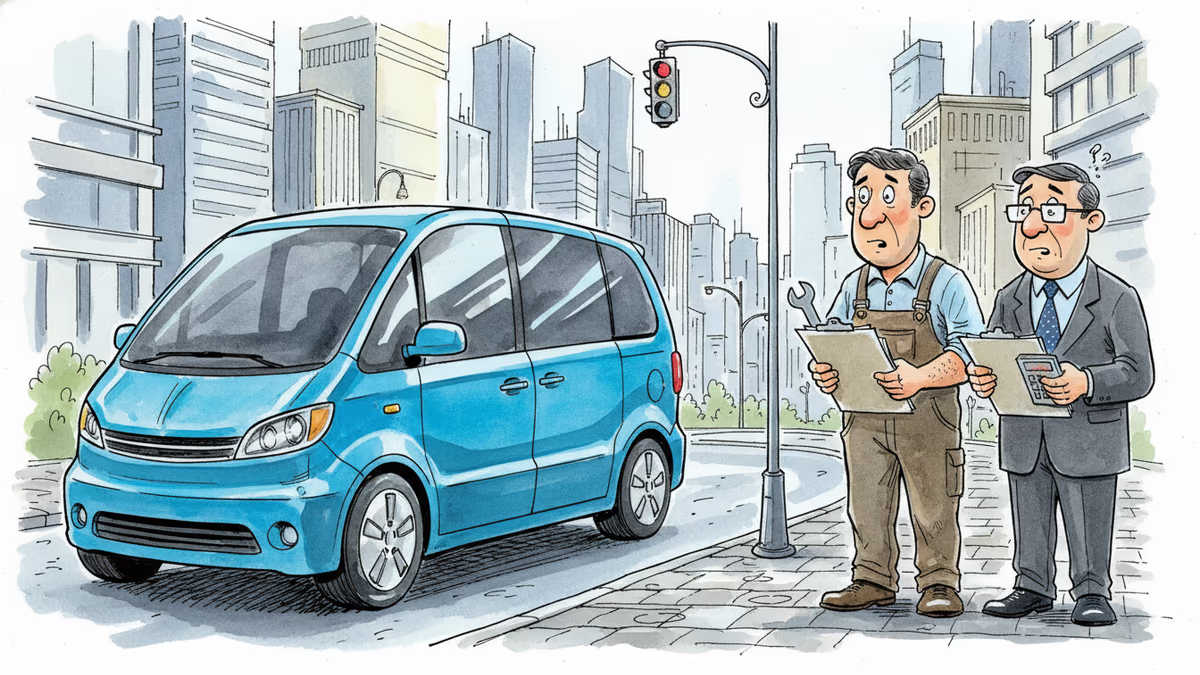
Waymo's new Ojai robotaxi isn't just a vehicle upgrade. It's the company's most serious attempt yet at cracking the cost problem that has kept autonomous vehicles from scaling. Here's what's really at stake.
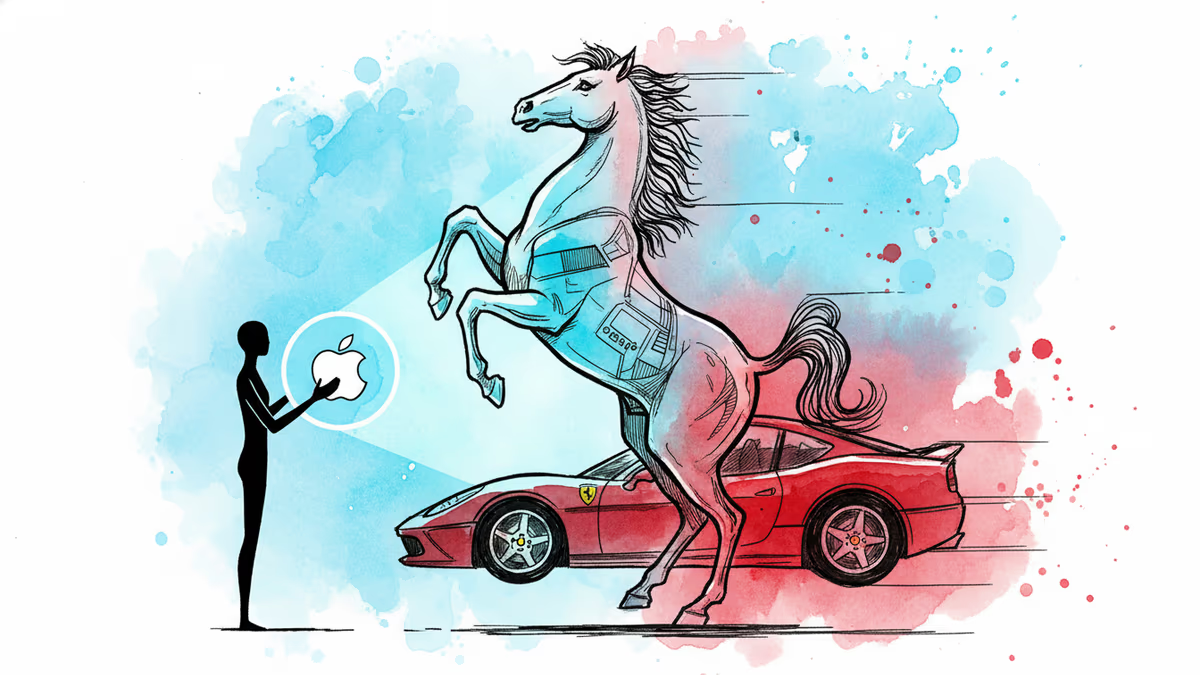
The Ferrari Luce is finally here — 1,000 hp, a 122 kWh battery, and an interior designed by the team behind the iPhone. But the real story is what Ferrari risked to build it.
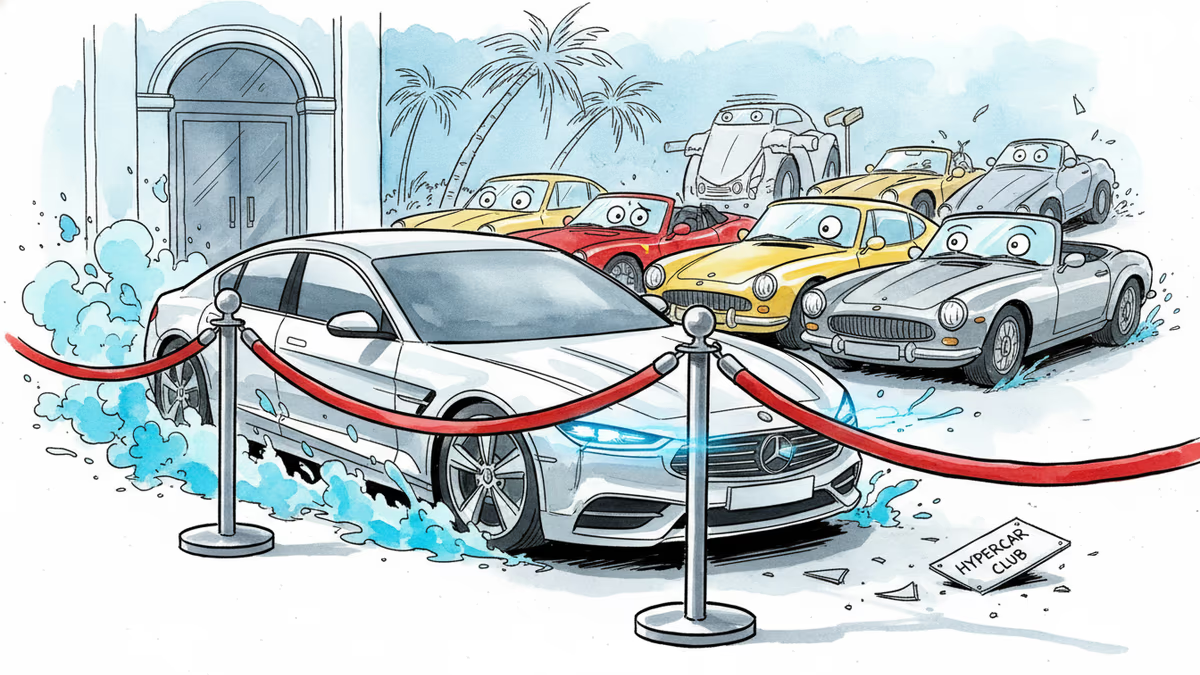
Mercedes-AMG's new GT 4-door coupe packs three YASA axial flux motors producing 1,153 hp and 1,475 lb-ft of torque. Here's what it means for the EV performance race—and who actually wins.
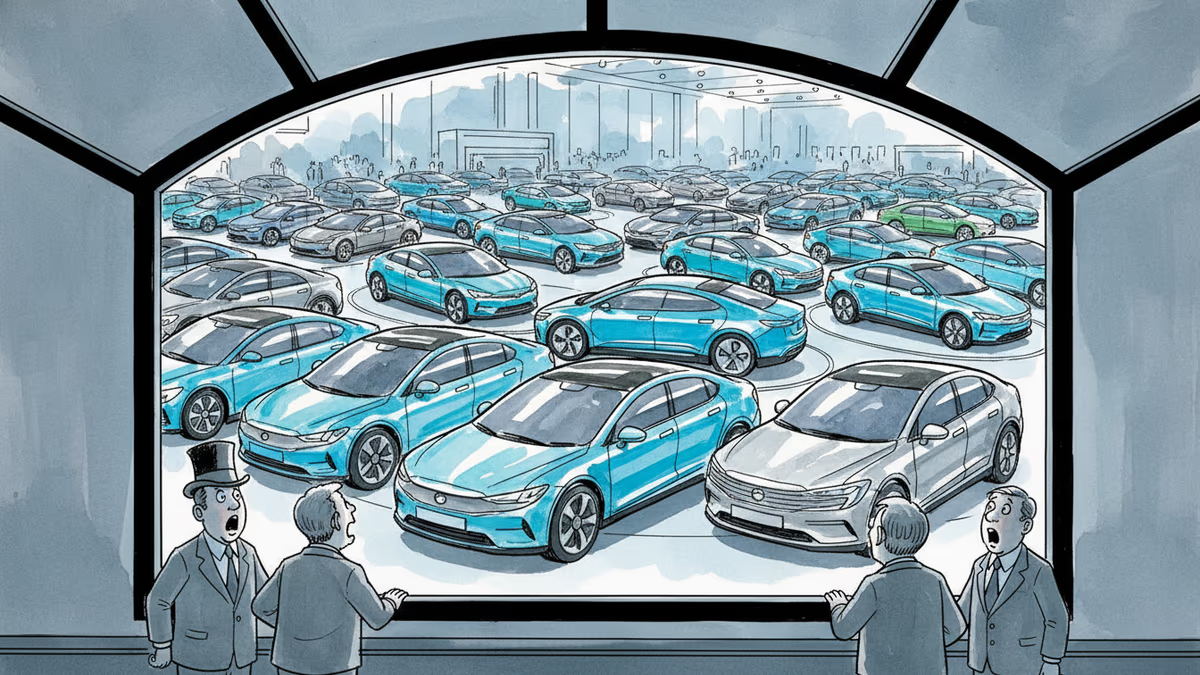
Auto China 2026 set records with 1,451 vehicles and 181 world premieres. But the real story isn't the size—it's how Chinese automakers stopped competing on price and started competing on brains.
Waymo's new Ojai robotaxi isn't just a vehicle upgrade. It's the company's most serious attempt yet at cracking the cost problem that has kept autonomous vehicles from scaling. Here's what's really at stake.
The Ferrari Luce is finally here — 1,000 hp, a 122 kWh battery, and an interior designed by the team behind the iPhone. But the real story is what Ferrari risked to build it.
Mercedes-AMG's new GT 4-door coupe packs three YASA axial flux motors producing 1,153 hp and 1,475 lb-ft of torque. Here's what it means for the EV performance race—and who actually wins.
Auto China 2026 set records with 1,451 vehicles and 181 world premieres. But the real story isn't the size—it's how Chinese automakers stopped competing on price and started competing on brains.
Thoughts
Share your thoughts on this article
Sign in to join the conversation