
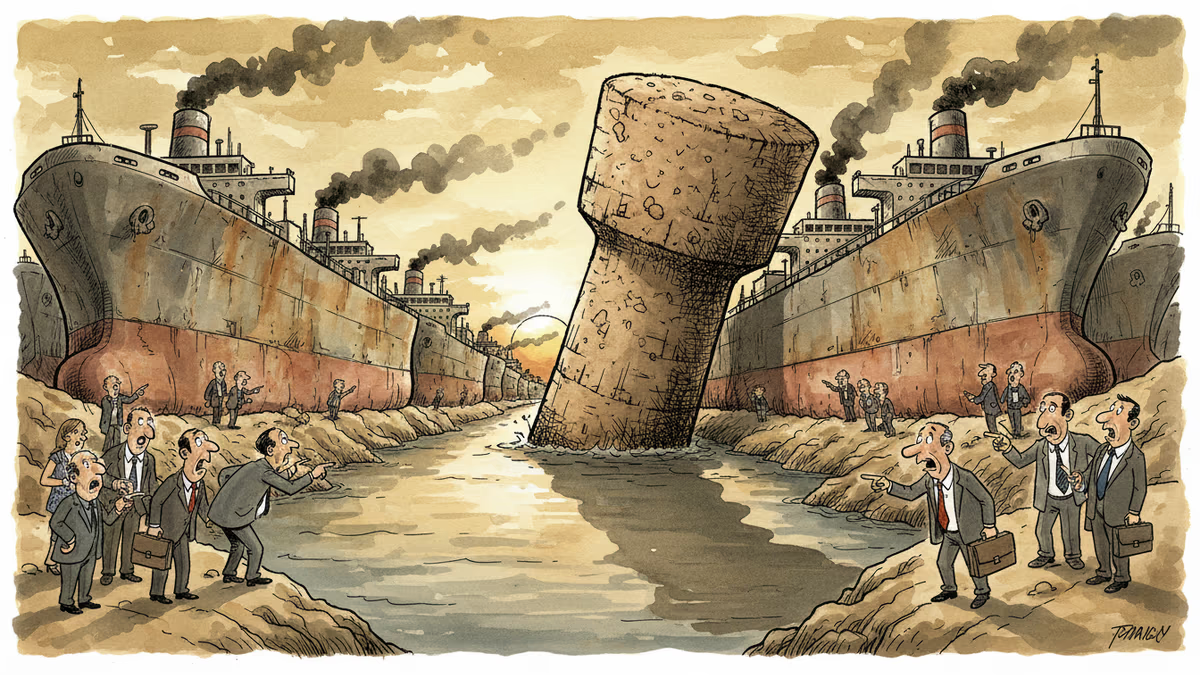
When 20% of Global Oil Supply Hangs by a Thread
The Strait of Hormuz closure threatens global energy markets and could trigger inflation shocks worldwide. What happens when the world's most critical chokepoint shuts down?
The $2 Trillion Question
When Iran's semi-official Tasnim news agency declared the "Strait of Hormuz is shut down" on February 28, it wasn't just making a geopolitical statement. It was potentially triggering the biggest energy supply shock since the 1970s oil crisis. 20 million barrels of oil pass through this narrow waterway daily—roughly one-fifth of global consumption. The question isn't whether this matters. It's whether the global economy is ready for what comes next.
Markets Moved Before Politicians Did
While diplomats debated the legal implications, shipping companies were already voting with their fleets. S&P Global Commodity Insights reported that vessel traffic through the strait dropped 40-50% within hours of the announcement. Ships that were approaching turned around. Those already inside rushed to exit.
The UK's Maritime Trade Operations center was quick to point out that radio declarations don't constitute a legal blockade under international law. But markets don't wait for legal clarity. Oil futures spiked, shipping insurance rates doubled, and energy company stocks swung wildly as traders priced in the risk of prolonged disruption.
The Chokepoint Reality
There's no Plan B at scale. Saudi Arabia and the UAE operate bypass pipelines, but these can handle only a fraction of Gulf exports. Iraq, Kuwait, and Qatar have virtually no alternatives. If the strait stays closed, roughly two-thirds of Gulf oil exports would be stranded, regardless of pipeline capacity.
The liquefied natural gas market faces an even starker reality. Qatar, the world's largest LNG exporter, depends almost entirely on Hormuz for its 77 million tons of annual exports. Asian economies—Japan, South Korea, China, and India—could lose their primary gas supplier within days.
Three Waves of Impact
Wave 1: Immediate Price Shock

Historical modeling suggests oil prices could surge $30-50 per barrel within weeks of a sustained closure. That translates directly to gas pumps, airline tickets, and shipping costs worldwide. The last time Hormuz faced serious disruption threats in 2019, oil prices jumped 15% on speculation alone.
Wave 2: Supply Chain Disruption
Rerouting oil from the Atlantic Basin means longer voyages, higher freight costs, and delivery delays. Even if alternative supplies exist, getting them to Asia takes 2-3 weeks longer than Gulf crude. Industries dependent on just-in-time delivery could face production bottlenecks.
Wave 3: Financial Contagion
Currencies of energy-importing nations would weaken as import costs soar. Central banks would face the classic dilemma: raise rates to combat inflation and risk recession, or keep rates low and watch prices spiral. The Federal Reserve's recent rate cuts could quickly reverse if energy inflation resurges.
Winners and Losers
Energy Exporters Outside the Gulf stand to benefit enormously. U.S. shale producers, Norwegian oil companies, and Canadian tar sands operations could see windfall profits as their crude commands premium prices. ExxonMobil and ConocoPhillips shares have already started climbing.
Shipping Companies face a mixed picture. While tanker rates could skyrocket—potentially tripling for long-haul routes—the reduced volume from the Gulf might offset gains. Frontline and other major tanker operators are recalculating their fleet deployments.
Asian Manufacturers would bear the brunt of higher energy costs. Countries like South Korea and Japan, which import 95% of their oil, could see energy bills surge by billions monthly. Their export competitiveness would erode as production costs rise.
The Strategic Reserve Calculation
The U.S. Strategic Petroleum Reserve holds about 365 million barrels—theoretically enough to replace Gulf imports for roughly 18 days if used exclusively for that purpose. Other major consumers maintain smaller reserves. But strategic releases are meant for emergencies, not sustained supply replacement.
The bigger question is whether reserves should be used to moderate price spikes or saved for potential escalation. Drawing down reserves now might provide temporary relief but leaves fewer options if the crisis deepens.
Authors
Related Articles
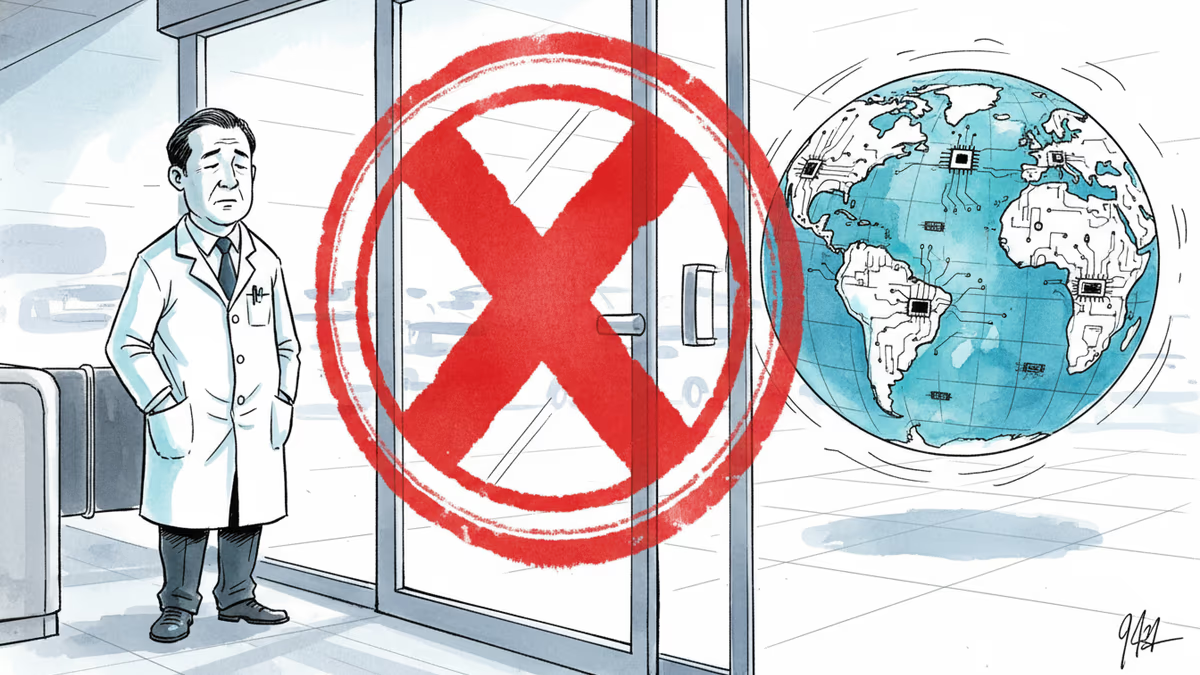
China is restricting AI researchers and startup founders from traveling abroad as the U.S.-China AI performance gap narrows to just 2.7%. What Beijing's talent lockdown means for the global AI race.
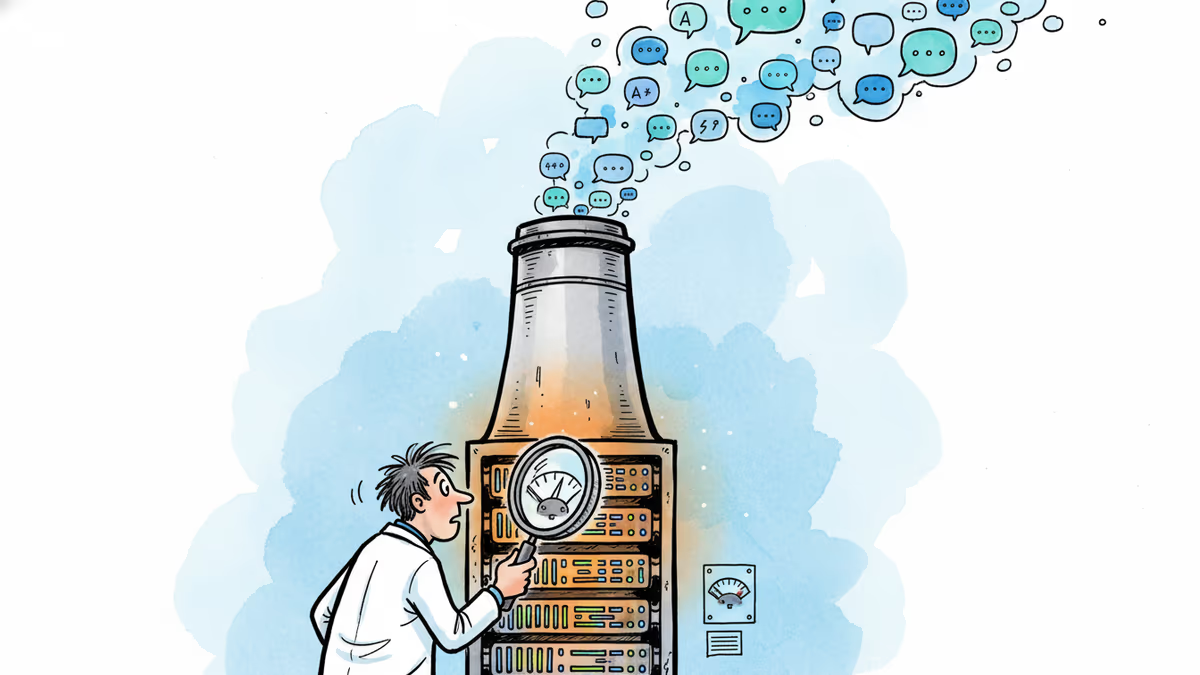
AI sustainability researcher Sasha Luccioni is launching a new venture to push for energy transparency in AI. Here's why Big Tech keeps the numbers hidden—and what's starting to change.
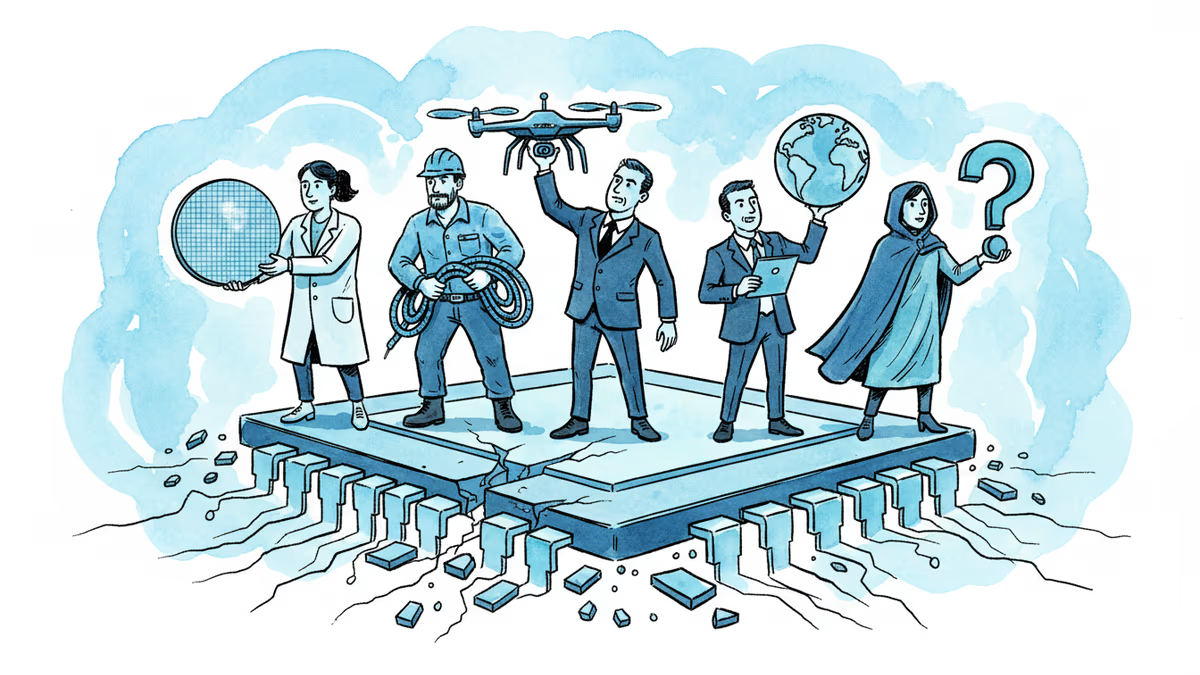
At Milken 2026, five AI insiders—from the CEO of ASML to a quantum physicist challenging LLMs—laid out the physical, energy, and geopolitical limits the AI boom is running into.
Palantir co-founder Peter Thiel and other Silicon Valley investors have poured $140 million into Panthalassa, a startup building wave-powered floating AI data centers in the open ocean. Here's what that actually means.
China is restricting AI researchers and startup founders from traveling abroad as the U.S.-China AI performance gap narrows to just 2.7%. What Beijing's talent lockdown means for the global AI race.
AI sustainability researcher Sasha Luccioni is launching a new venture to push for energy transparency in AI. Here's why Big Tech keeps the numbers hidden—and what's starting to change.
At Milken 2026, five AI insiders—from the CEO of ASML to a quantum physicist challenging LLMs—laid out the physical, energy, and geopolitical limits the AI boom is running into.
Palantir co-founder Peter Thiel and other Silicon Valley investors have poured $140 million into Panthalassa, a startup building wave-powered floating AI data centers in the open ocean. Here's what that actually means.
Thoughts
Share your thoughts on this article
Sign in to join the conversation