
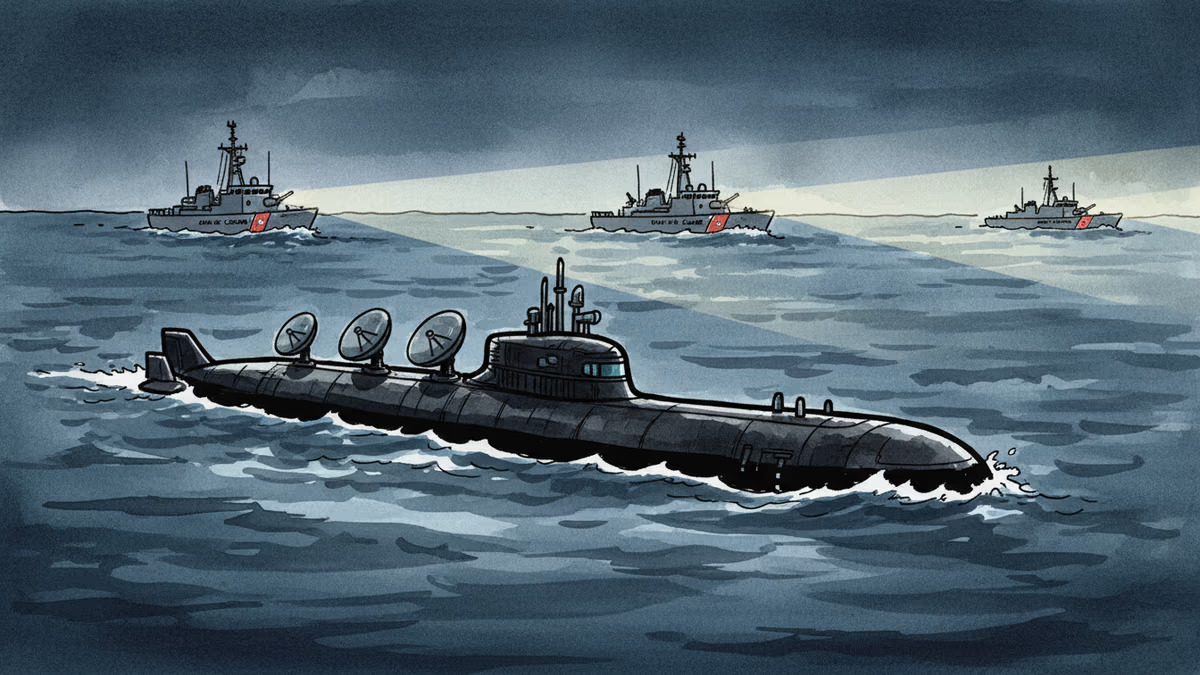
Ghost Ships: Drug Cartels Go Full Autopilot
Colombian authorities discovered the world's first autonomous narco submarine, equipped with Starlink and AI navigation. What happens when drug trafficking meets cutting-edge technology?
The $160 Million Ghost Ship
Last April, Colombian coast guard Captain Jaime González Zamudio expected a routine drug bust. His crews had spotted a 40-foot narco submarine off Tayrona National Park—the kind of semi-submersible vessel that has ferried 3 metric tons of cocaine at a time for decades. But when his officers forced open the hatch, they found something unprecedented: no crew, no helm, no space for humans at all. Just Starlink antennas, autopilot systems, and remote cameras.
Welcome to the age of autonomous drug trafficking.
The vessel, later confirmed as Colombia's first uncrewed narco sub, represents a technological leap that could reshape the $160 million wholesale cocaine trade. Built by the powerful Clan del Golfo cartel, it signals that criminal organizations are embracing the same autonomous technologies transforming legitimate industries—but with far darker implications.
The Economics of Going Crewless
Traditional narco subs have always been about calculated risk. A typical semisubmersible costs $2 million to build but can carry cargo worth over $160 million in European markets. The math is simple: even if authorities catch half of all shipments, the profits from successful runs more than cover the losses.
But human crews created bottlenecks. Convincing four people to spend weeks sealed in a cramped, diesel-fumed tube for a transpacific voyage? "That's a hard sell," notes Henry Shuldiner, a researcher at InSight Crime who has analyzed hundreds of narco-sub cases.
Autonomous subs eliminate that constraint entirely. No crew means more cargo space, no labor costs, and no risk of captured sailors revealing cartel secrets. The Tayrona prototype could travel 800 nautical miles autonomously—enough to reach Central American handoff points or even attempt longer routes previously considered too dangerous for human crews.
The technology barrier is surprisingly low. The sub's NAC-3 autopilot processor costs $2,200 on Amazon. "Midcareer mechatronics students could install them," says Wilmar Martínez, a professor at the University of America in Bogotá.

The Global Arms Race Begins
The implications extend far beyond Colombian waters. Spanish police have seized three submersible drones near Cádiz. Italian authorities confiscated a remote-controlled minisubmarine intended for drug runs. The US Marine Corps is testing its own "narco sub-inspired" vessel called the Sea Specter.
But catching ghost ships presents unprecedented challenges. Traditional interdiction relies on hailing vessels, boarding them, and arresting crews. Autonomous subs could be programmed to self-destruct when approached, destroying evidence and legal cases. They can wait out patrols, take longer routes, or simply disappear into the vast ocean.
"If they wind up being smaller, they're going to be darn near impossible to detect," warns Michael Knickerbocker, a former US Navy officer who advises defense tech firms.
Law enforcement agencies are scrambling to adapt. The US 4th Fleet is experimenting with drone swarms for counternarcotics patrols. Brazil has negotiated agreements with Starlink to monitor suspicious satellite usage patterns. The European Union deploys maritime surveillance drones across the Mediterranean.
Yet the countermeasures remain unevenly distributed and politically sensitive. Advanced electronic warfare capabilities—signal jamming, GPS spoofing, electromagnetic pulse weapons—are closely guarded military secrets. Using them against drug smugglers risks exposing capabilities better reserved for state-level conflicts.
Beyond Colombian Waters
The Tayrona sub sits today on a grass strip at the ARC Bolívar naval base in Cartagena, its gray-blue hull streaked with rain. Foreign delegations regularly visit what has become an unlikely pilgrimage site—everyone wants to see the future of maritime crime.
The vessel's crude, handmade construction belies its technological sophistication. Inside the cramped hull, investigators found commercial autopilot systems, satellite internet terminals, and remote cameras—all off-the-shelf components that cost less than $10,000 combined.
But the real innovation isn't technological—it's operational. Drug trafficking organizations have always been early adopters, embracing new technologies faster than law enforcement can respond. From encrypted messaging apps to cryptocurrency payments, cartels consistently stay "one step ahead of authorities," as Shuldiner puts it.
The question isn't whether autonomous narco subs will spread—Spanish and Italian seizures suggest they already are. It's whether international law enforcement can adapt quickly enough to counter them.
Authors
Related Articles
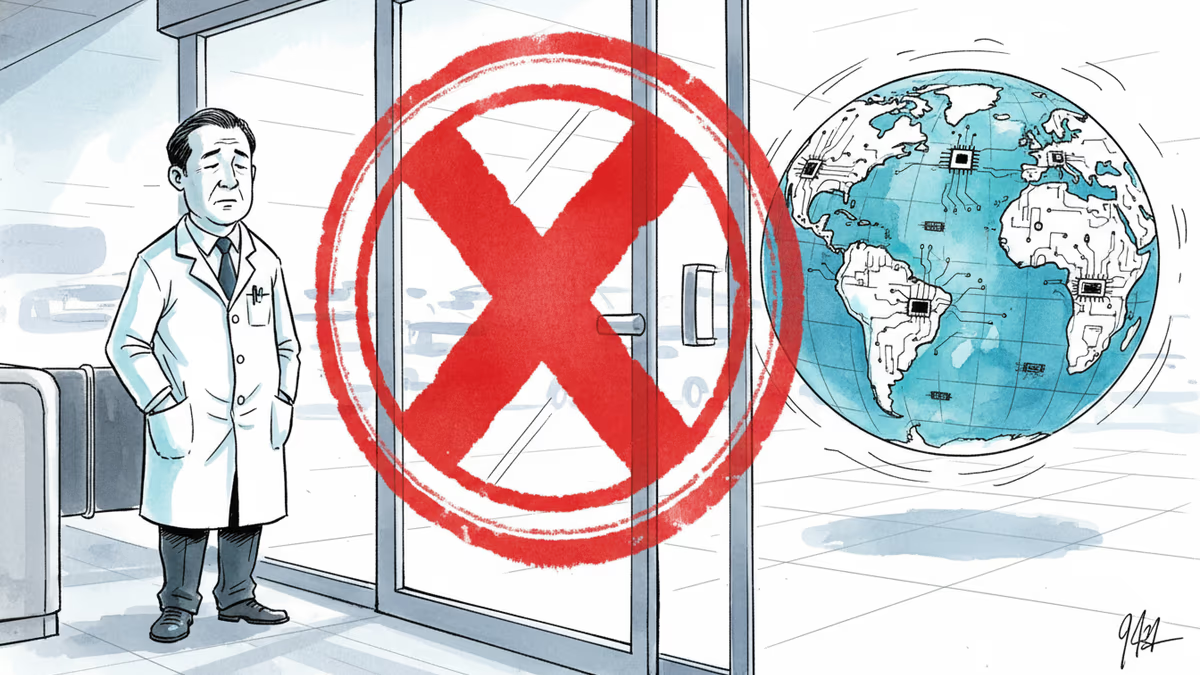
China is restricting AI researchers and startup founders from traveling abroad as the U.S.-China AI performance gap narrows to just 2.7%. What Beijing's talent lockdown means for the global AI race.

US Space Command confirms Russia has deployed operational anti-satellite weapons tracking American spy satellites in low-Earth orbit. What does this mean for space security?
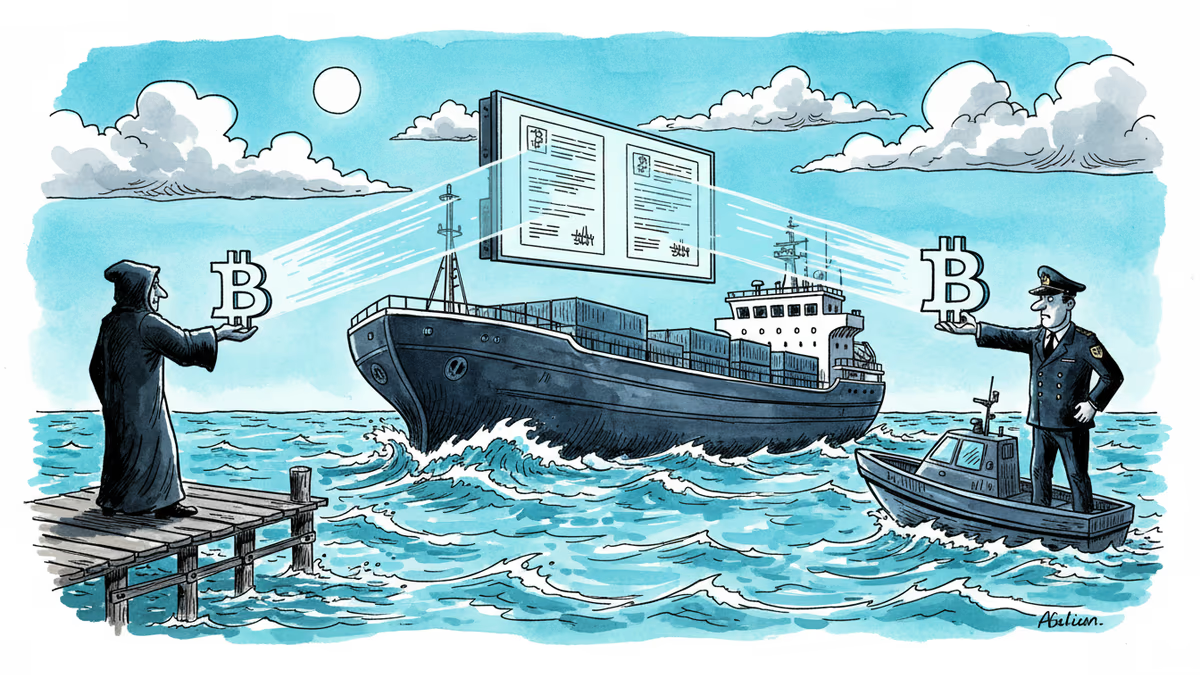
Scammers posing as Iranian authorities are demanding bitcoin and tether from ships near the Strait of Hormuz—exploiting the fact that Iran already does exactly this.

A small pro-Iran team is racking up millions of views with AI-generated Lego videos that mock Trump — and Americans are sharing them. What does that tell us about information warfare?
China is restricting AI researchers and startup founders from traveling abroad as the U.S.-China AI performance gap narrows to just 2.7%. What Beijing's talent lockdown means for the global AI race.
US Space Command confirms Russia has deployed operational anti-satellite weapons tracking American spy satellites in low-Earth orbit. What does this mean for space security?
Scammers posing as Iranian authorities are demanding bitcoin and tether from ships near the Strait of Hormuz—exploiting the fact that Iran already does exactly this.
A small pro-Iran team is racking up millions of views with AI-generated Lego videos that mock Trump — and Americans are sharing them. What does that tell us about information warfare?
Thoughts
Share your thoughts on this article
Sign in to join the conversation