
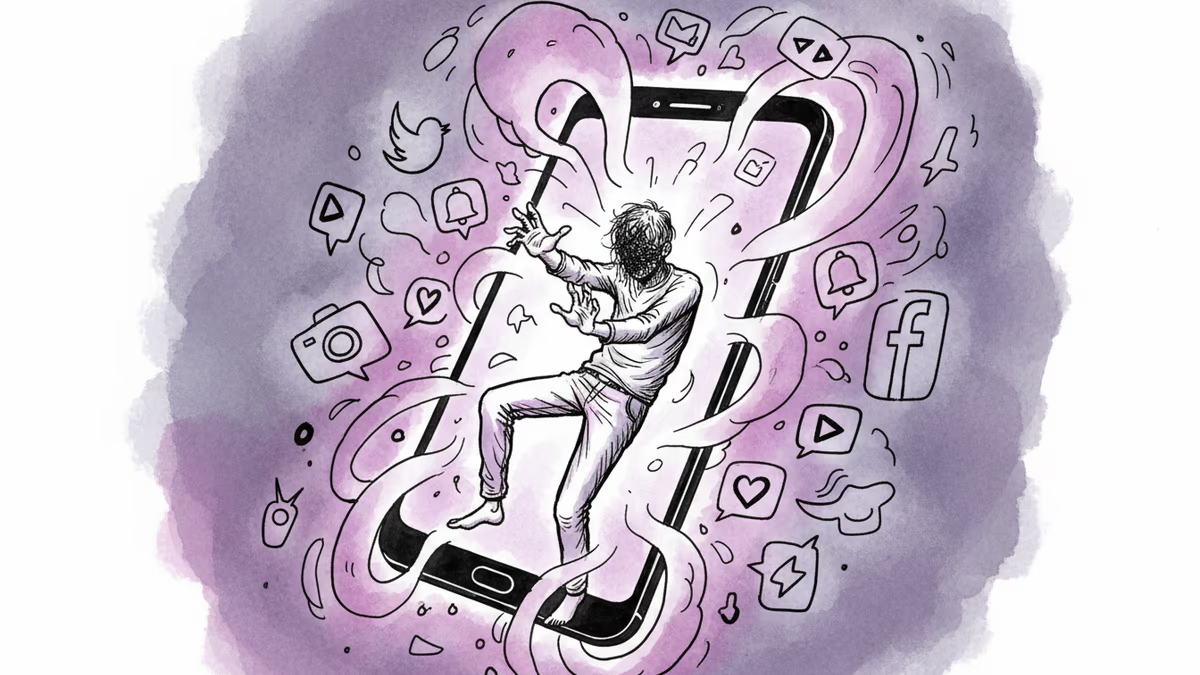
When Hollywood Meets Our Phone Addiction Crisis
Gore Verbinski's new sci-fi film tackles humanity's relationship with screens. But can cinema cure what cinema helped create?
The Irony of Fighting Screen Addiction Through Screens
Gore Verbinski wants to save us from our phones—by making us stare at another screen for two hours. His new sci-fi film Good Luck, Have Fun, Don't Die presents an apocalyptic future where humanity's digital addiction has reached its logical extreme, forcing one man to fight for our collective survival.
The premise feels uncomfortably familiar. We all recognize the behavior: reaching for our phones during awkward silences, doomscrolling through anxiety-inducing headlines, watching mindless videos when we should be sleeping. 87% of Americans check their phones within an hour of waking up, and we spend an average of 7 hours and 4 minutes daily looking at screens.
Verbinski, known for Pirates of the Caribbean and The Ring, isn't the first filmmaker to tackle our relationship with technology. But his timing feels particularly pointed in 2026, when digital wellness has become a $2.4 billion industry and governments worldwide are implementing screen time regulations for minors.
The Cultural Paradox: Diagnosing the Problem We Created
Hollywood has a complicated relationship with technology criticism. The same industry that gave us Black Mirror's dystopian warnings also pioneered the addictive engagement techniques that social media companies later adopted. Netflix binge-watching, TikTok algorithms, and YouTube autoplay all trace their DNA back to entertainment industry innovations.
Good Luck, Have Fun, Don't Die arrives as this contradiction reaches peak absurdity. Cinema chains now encourage audiences to use mobile apps for concessions, while filmmakers simultaneously warn about screen dependency. The film industry profits from the very attention economy it critiques.

Consider the viewing experience itself: audiences will likely watch trailers on Instagram, buy tickets through Fandango, and immediately post reactions on Twitter. The medium has become inseparable from the digital ecosystem it seeks to examine.
Beyond Entertainment: When Art Meets Activism
Yet Verbinski's film represents something more than Hollywood hypocrisy. It's part of a growing cultural movement where artists use familiar formats to challenge audience assumptions. Bo Burnham's Inside used comedy specials to critique social media. Charlie Brooker weaponized television to warn about television.
The question isn't whether cinema can solve digital addiction—it's whether storytelling can create the emotional distance necessary for self-reflection. When we see fictional characters trapped by their devices, do we recognize ourselves?
Early screenings suggest Good Luck, Have Fun, Don't Die doesn't offer easy solutions. Instead, it presents the uncomfortable reality that our extremely online society has made digital abstinence nearly impossible. Work, relationships, and basic civic participation now require constant connectivity.
The Global Context: Different Screens, Same Problems
This conversation extends far beyond American audiences. In South Korea, where internet addiction is classified as a public health crisis, the government operates 400+ digital detox centers. China limits gaming time for minors to three hours weekly. European regulators are crafting right to disconnect legislation.
Yet these policy responses often miss the deeper cultural shift. We're not just addicted to our phones—we've restructured society around constant availability. Remote work, digital banking, and even healthcare increasingly assume 24/7 connectivity.
Verbinski's apocalyptic vision may feel extreme, but it extrapolates from current trends. If we can't put our phones down during movies, conversations, or sleep, what happens when the stakes get higher?
Authors
Related Articles
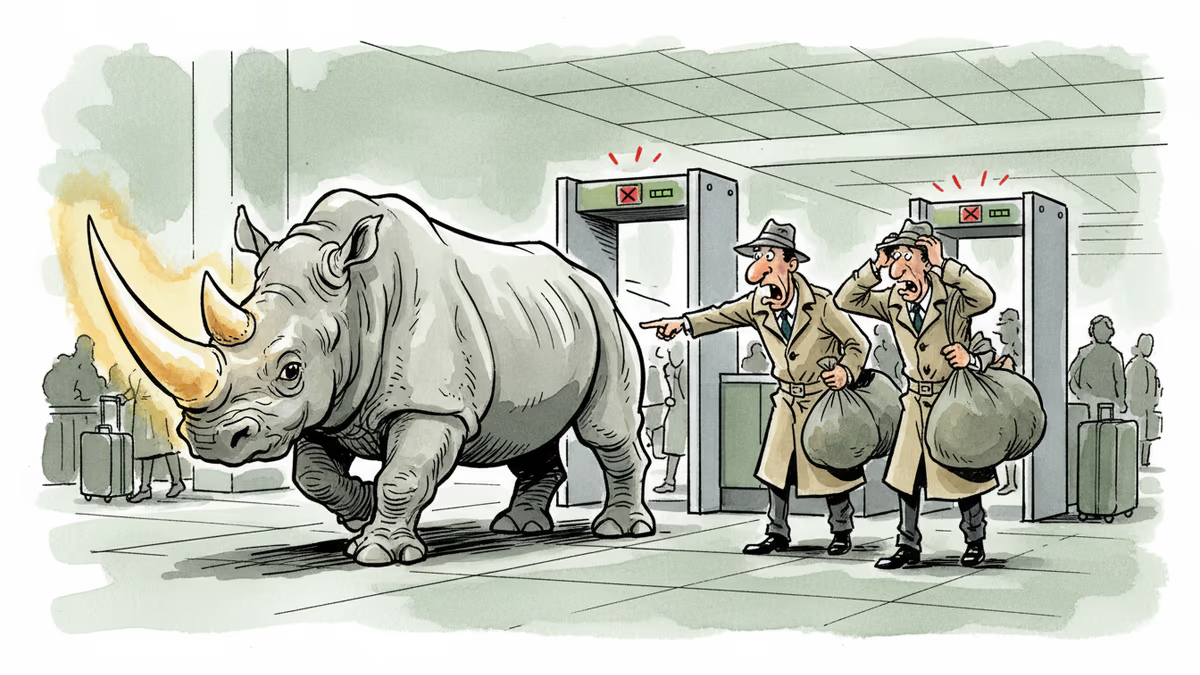
With poachers killing hundreds of rhinos annually and wildlife trafficking worth $20 billion, researchers are injecting radioactive isotopes into rhino horns. Can technology finally turn the tide against sophisticated criminal networks?

Colombian authorities discovered the world's first autonomous narco submarine, equipped with Starlink and AI navigation. What happens when drug trafficking meets cutting-edge technology?
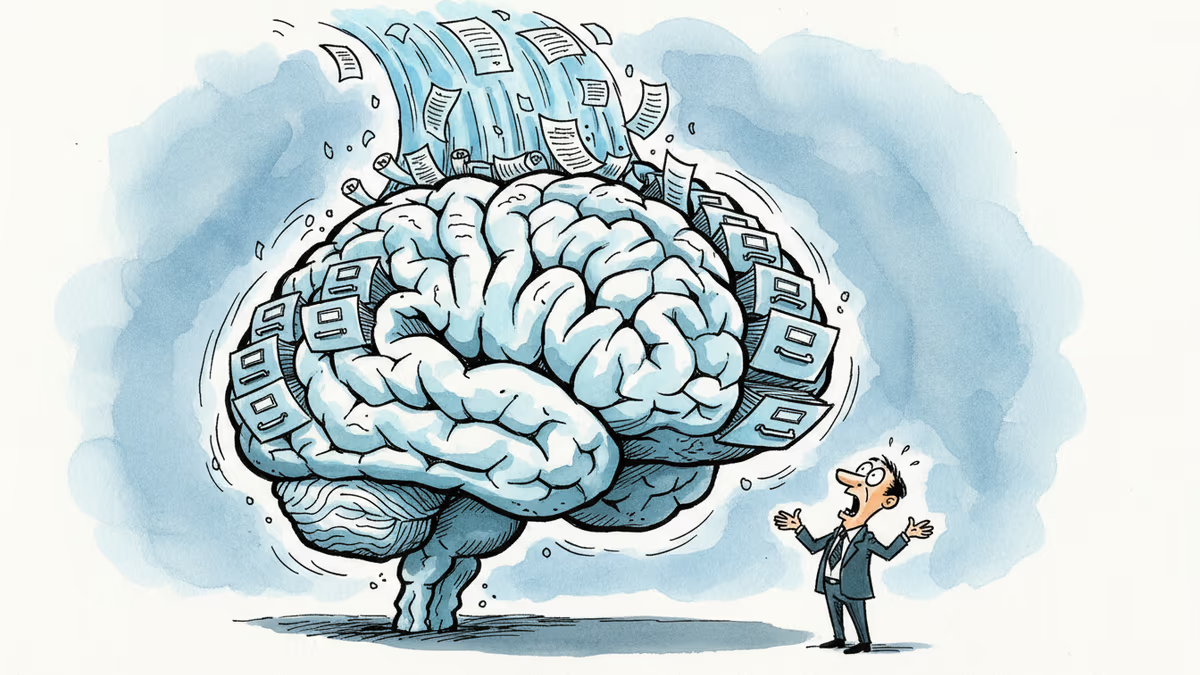
Anthropic's Sonnet 4.6 launches with 1 million token context window. Why AI companies are shifting from intelligence competition to memory competition and what it means.

Crouching Tiger, Hidden Dragon redefined martial arts cinema and cross-cultural storytelling. What makes Ang Lee's masterpiece endure in today's globalized film landscape?
With poachers killing hundreds of rhinos annually and wildlife trafficking worth $20 billion, researchers are injecting radioactive isotopes into rhino horns. Can technology finally turn the tide against sophisticated criminal networks?
Colombian authorities discovered the world's first autonomous narco submarine, equipped with Starlink and AI navigation. What happens when drug trafficking meets cutting-edge technology?
Anthropic's Sonnet 4.6 launches with 1 million token context window. Why AI companies are shifting from intelligence competition to memory competition and what it means.
Crouching Tiger, Hidden Dragon redefined martial arts cinema and cross-cultural storytelling. What makes Ang Lee's masterpiece endure in today's globalized film landscape?
Thoughts
Share your thoughts on this article
Sign in to join the conversation