
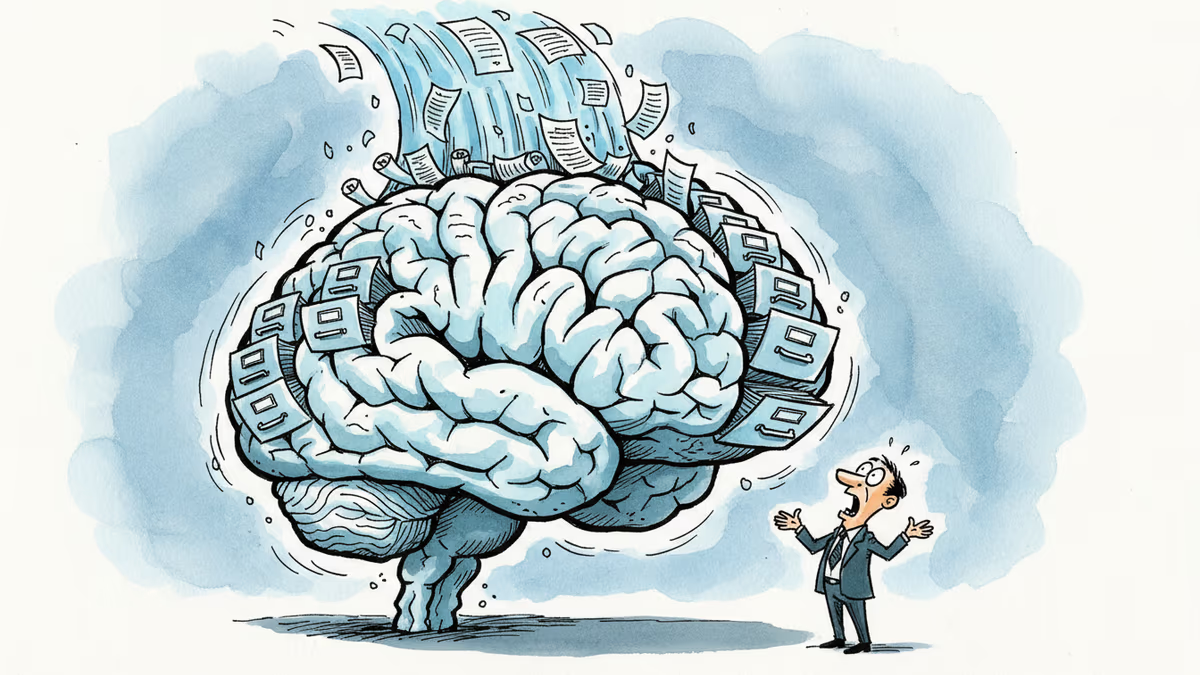
AI Is Becoming a Memory Game
Anthropic's Sonnet 4.6 launches with 1 million token context window. Why AI companies are shifting from intelligence competition to memory competition and what it means.
One Million Tokens Just Became the New Battleground
Anthropic dropped Sonnet 4.6 with a 1 million token context window—double its previous size. The company says it can hold "entire codebases, lengthy contracts, or dozens of research papers in a single request." But the real story isn't about the number.
It's about how the AI arms race is fundamentally shifting gears.
From Smarter to More Memorable
Sticking to its four-month update cycle, Anthropic delivered impressive benchmarks. Sonnet 4.6 scored 60.4% on ARC-AGI-2, beating most comparable models. Yet it still trails OpenAI's GPT 5.2, Google's Gemini 3 Deep Think, and refined versions of other flagship models.
Here's what's fascinating: AI companies are now selling "memory" as much as intelligence. Context window expansion isn't just about processing longer texts—it's rewiring how AI works entirely.
Developers can now dump entire codebases and ask "Where's the bug?" Lawyers can feed contract stacks and request comprehensive analysis. The workflow changes everything.
The Memory Arms Race Nobody Saw Coming

Two years ago, AI companies competed on reasoning ability. Now they're competing on how much they can remember at once. OpenAI's GPT-4 started with 8,000 tokens. Google's Gemini pushed 2 million. Anthropic is playing catch-up at 1 million.
But there's a catch: more memory means exponentially higher costs. Running these expanded context windows burns through compute resources like wildfire. The question becomes: who can afford to remember everything?
Enterprise Customers Are the Real Winners
While consumers get flashy demos, enterprises are quietly revolutionizing their workflows. Investment firms are feeding entire market research libraries to AI analysts. Law firms are processing decades of case law in single queries. Medical researchers are cross-referencing thousands of studies simultaneously.
The productivity gains are staggering, but so are the infrastructure demands. Only companies with deep pockets can fully leverage these capabilities—creating a new digital divide.
Privacy Implications Nobody's Discussing
One million tokens can hold months of personal emails, complete work histories, or comprehensive medical records. While Anthropic touts enterprise use cases, the privacy implications are staggering.
European regulators are already eyeing these developments. GDPR compliance becomes exponentially complex when AI systems can process and remember vast personal datasets in single sessions. The trade-off between efficiency and privacy has never been starker.
The race for AI supremacy just shifted from intelligence to memory. The implications reach far beyond tech specs—they touch the core of how we think, work, and remember.
Authors
Related Articles
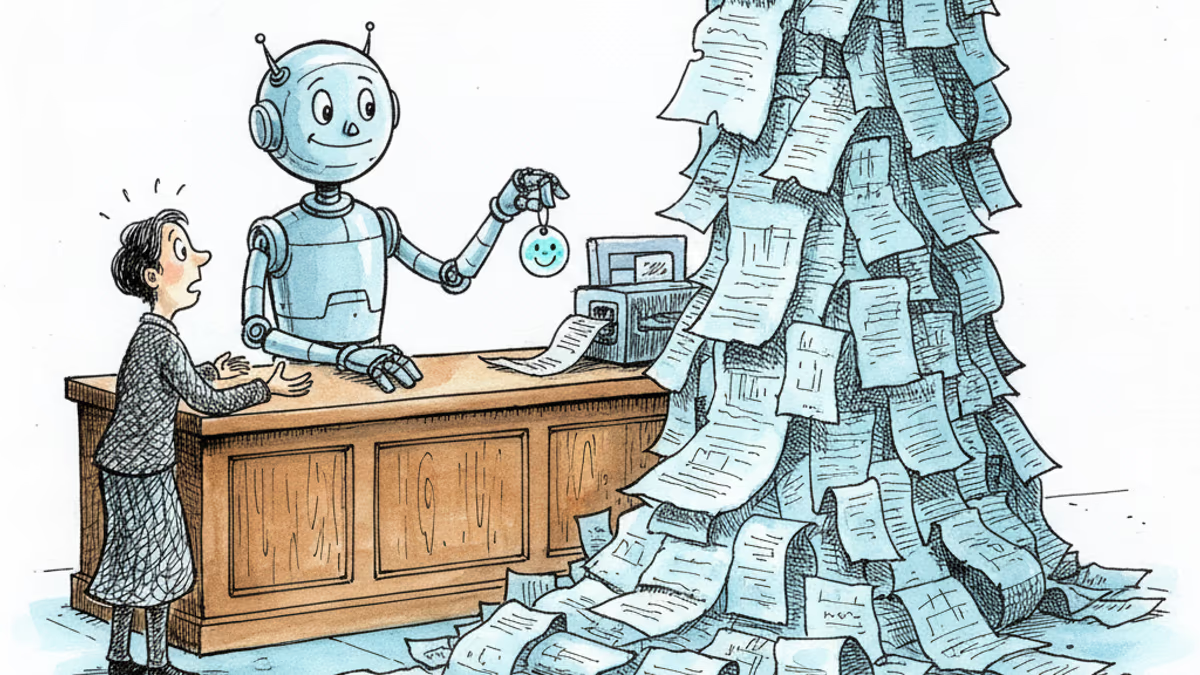
Anthropic shipped Claude Sonnet 5, its mid-tier agent model, on June 30. Behind the 'Opus-class power, budget price' headline sits a tokenizer catch and a three-horse race that's only half real. Here's what developers should actually run the numbers on.
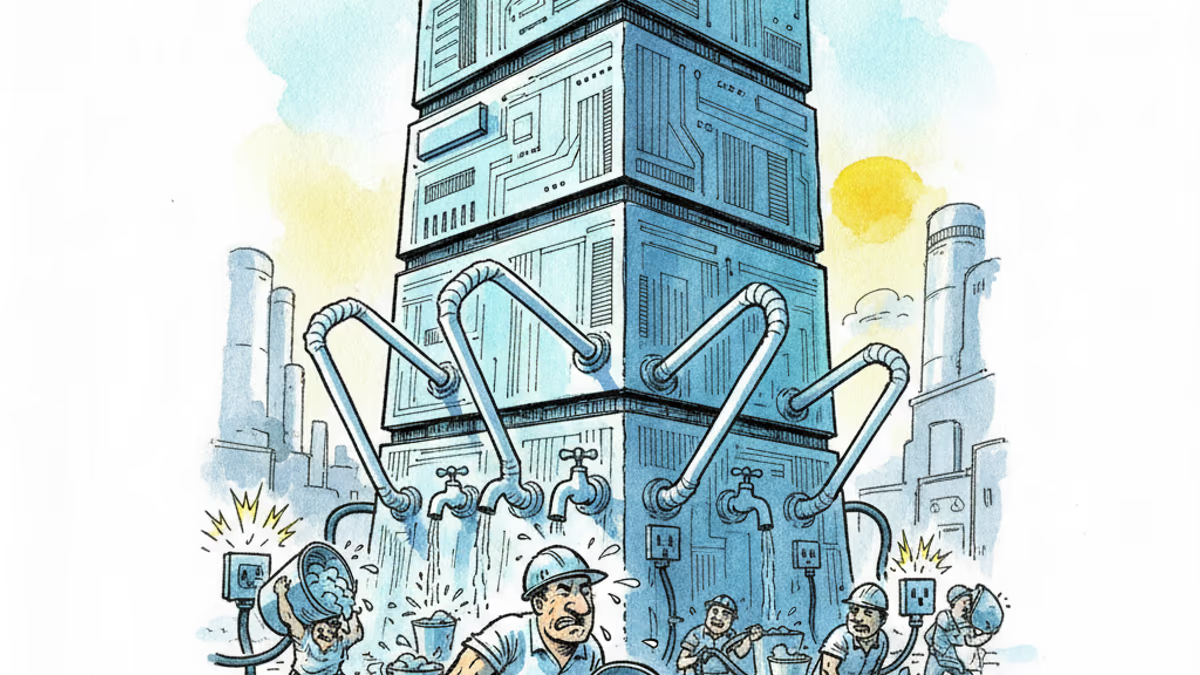
Samsung and SK unveiled a chip and AI investment package worth thousands of trillions of won on June 29. The headline number swings wildly by outlet, but the real contest isn't capital — it's water and power.
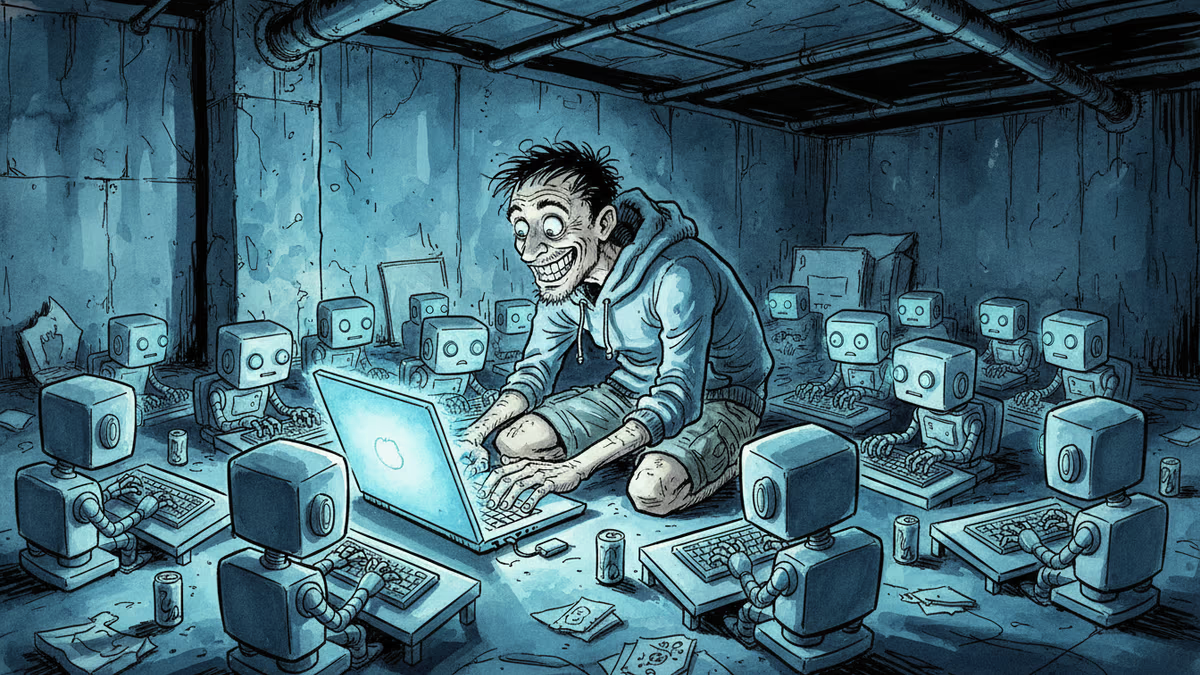
A small but growing group of developers has gone all-in on AI coding agents like Claude Code and OpenClaw. History suggests the rest of us won't be far behind.
Viral videos show 2026 graduates jeering executives who praise AI at commencement ceremonies. It's not just rudeness — it's a signal about who pays for technological optimism.
Anthropic shipped Claude Sonnet 5, its mid-tier agent model, on June 30. Behind the 'Opus-class power, budget price' headline sits a tokenizer catch and a three-horse race that's only half real. Here's what developers should actually run the numbers on.
Samsung and SK unveiled a chip and AI investment package worth thousands of trillions of won on June 29. The headline number swings wildly by outlet, but the real contest isn't capital — it's water and power.
A small but growing group of developers has gone all-in on AI coding agents like Claude Code and OpenClaw. History suggests the rest of us won't be far behind.
Viral videos show 2026 graduates jeering executives who praise AI at commencement ceremonies. It's not just rudeness — it's a signal about who pays for technological optimism.
Thoughts
Share your thoughts on this article
Sign in to join the conversation