
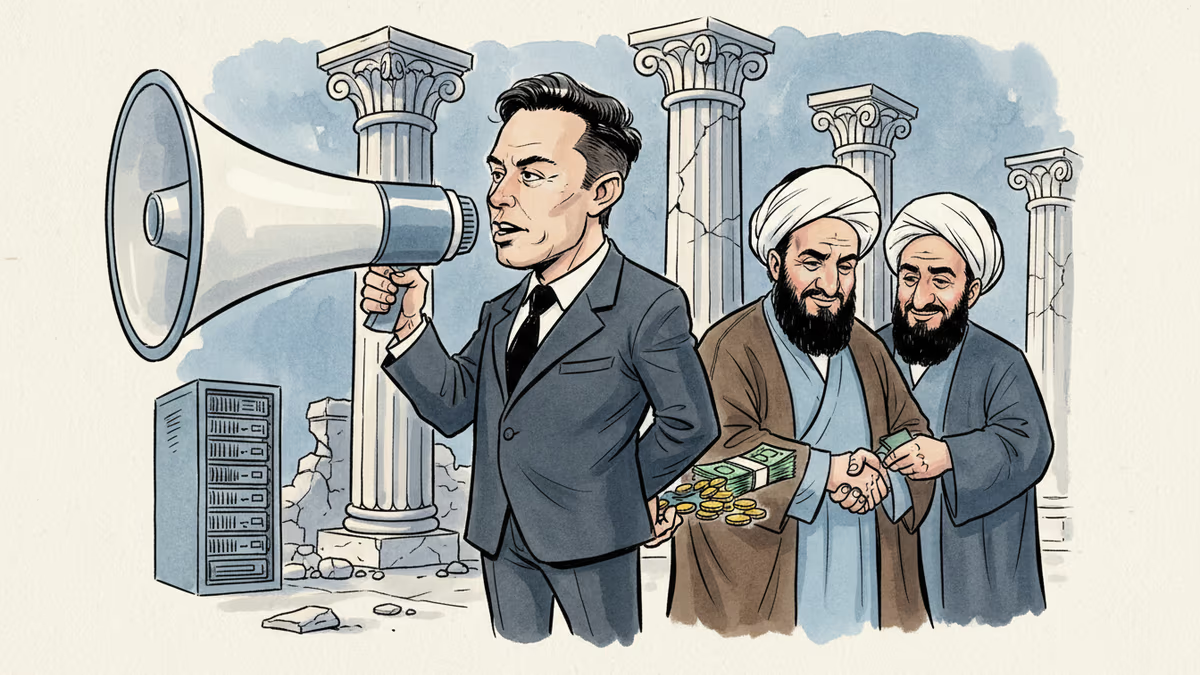
Musk's Double Game: Iran Sanctions Violation Allegations
While publicly supporting Iranian protesters, Musk's X appears to be profiting from Iranian government officials through premium subscriptions, potentially violating US sanctions.
When $8 a Month Becomes a Sanctions Issue
A month ago, Elon Musk seemed crystal clear about where he stood on Iran. As protesters flooded Tehran's streets, he slammed the regime, called Supreme Leader Ayatollah Khamenei "delusional," and offered free Starlink access during internet blackouts. Classic Musk: bold, public, seemingly principled.
But behind the tweets of solidarity, a different story was unfolding. A new report from the Tech Transparency Project (TTP), shared exclusively with WIRED, reveals that X appears to have been quietly profiting from the very Iranian officials Musk was publicly condemning—potentially violating US sanctions in the process.
The Blue Checkmark Money Trail
TTP identified more than two dozen X accounts allegedly run by Iranian government officials, state agencies, and state-run news outlets—all sporting blue checkmarks. That's significant because blue checkmarks aren't free anymore. They cost $8 per month for X Premium, or $40 monthly for Premium+, which removes ads and amplifies reach.
Here's the kicker: these accounts were spreading state propaganda while ordinary Iranians couldn't even access the internet. Their messages appeared artificially boosted—a key feature of X's premium service. When WIRED contacted X about specific Iranian official accounts, their blue checkmarks vanished within hours. The rest? Still there.
X didn't respond to requests for comment. The White House directed inquiries to Treasury, whose spokesperson said they "take allegations of sanctionable conduct extremely seriously" but don't comment on specific cases.
The Sanctioned VIP List
The accounts in question aren't minor players. Ali Larijani, a senior aide to Iran's supreme leader with over 120,000 followers, had his blue checkmark until Wednesday. Last month, the US Treasury sanctioned him as one of the "architects of Iran's brutal crackdown on peaceful protests." When Trump urged Iranians to keep protesting, Larijani called him one of the "main killers of the people of Iran."
Ali Akbar Velayati, a member of the Supreme Leader's inner circle, also lost his blue checkmark after WIRED's inquiry. He was sanctioned in 2019 for providing a "lifeline" to Syria's Bashar al-Assad regime and charged by Argentina over the 1994 Buenos Aires Jewish center bombing that killed 85 people.

Then there's Ali Ahmadnia, communications chief for Iran's president, whose account featured a bitcoin donation button—a detail that could constitute "prohibited dealing in blocked property," according to sanctions attorney Kian Meshkat.
The Legal Gray Zone Gets Murkier
US sanctions against Iran include a 2022 exemption allowing tech companies to provide platform access, designed to help ordinary citizens share information. But there's a catch: services must be "publicly available" and "at no cost."
"If X provided these 'blue checkmarks' to the Iranian government for a fee or provided services to the Iranian government not available to the public at no extra cost without a license, then that would appear to fall outside the authorization," explains Oliver Krischik, a lawyer specializing in OFAC sanctions.
The bitcoin donation feature raises even bigger red flags. It "could arguably amount to a prohibited dealing in the blocked property of the Government of Iran, as well as a prohibited export of financial services," Meshkat notes.
Pattern of Compliance Failures?
This isn't Musk's first sanctions rodeo. Last June, Senator Elizabeth Warren wrote to Treasury following another TTP report claiming X provided blue checkmarks to US-sanctioned terrorists.
"Now it looks like X may be letting sanctioned Iranian government officials make money off its platform," Warren tells WIRED. "By failing to take basic steps to enforce our sanctions, the Trump Administration continues to undermine our national security and the integrity of the financial system."
TTP's Katie Paul sees a broader pattern: "When we look at the mass layoffs X underwent after Elon Musk took over, what we see is the deterioration of not just trust and safety and moderation, but actually legal compliance for things like US sanctions."
The Starlink Paradox
The timing creates an almost surreal contradiction. On January 14, Musk announced free Starlink access for anyone in Iran—a genuine gesture of support for protesters. Yet simultaneously, his platform was allegedly collecting subscription fees from the regime crushing those same protesters.
It's worth noting that Khamenei himself maintains multiple X accounts with millions of followers, marked with gray checkmarks that identify government officials. The system exists to distinguish state actors from paying customers. Yet dozens of Iranian officials somehow ended up with blue checkmarks instead.
Authors
Related Articles
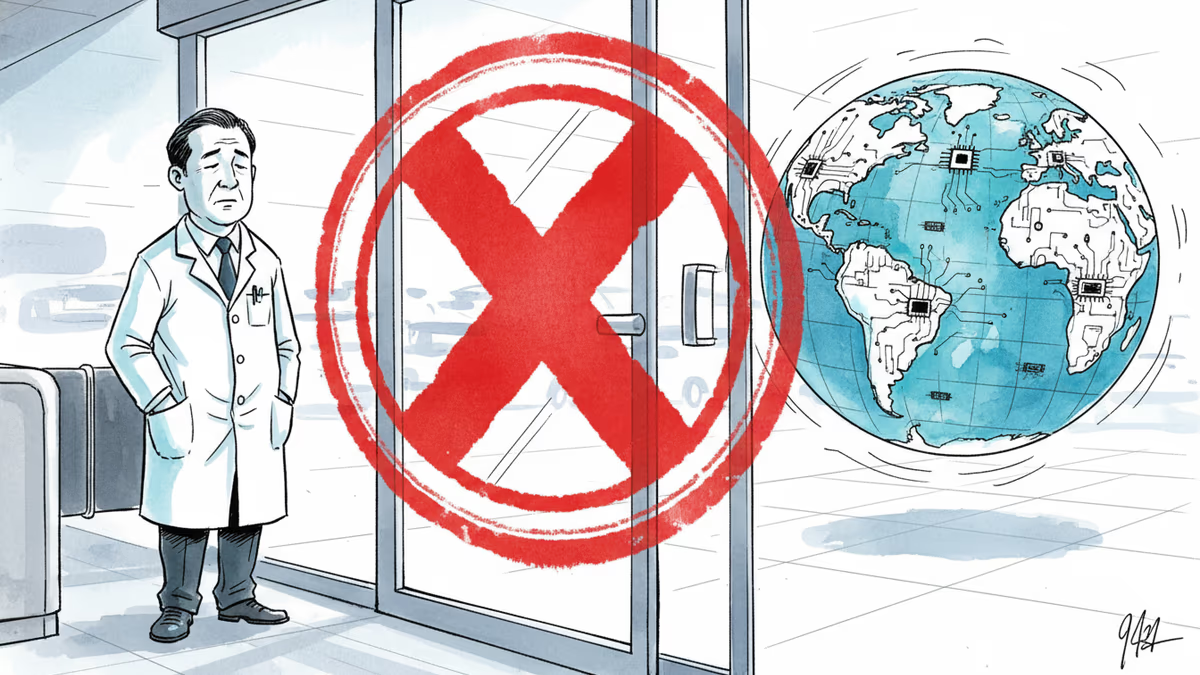
China is restricting AI researchers and startup founders from traveling abroad as the U.S.-China AI performance gap narrows to just 2.7%. What Beijing's talent lockdown means for the global AI race.
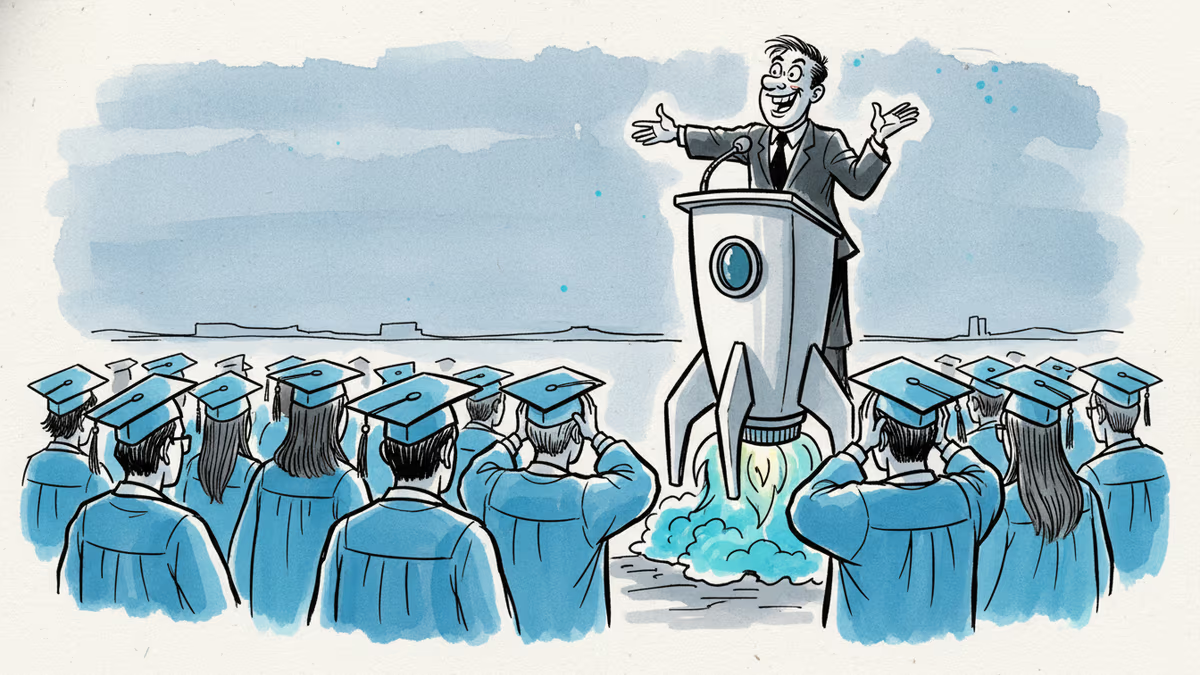
Two commencement speakers learned the hard way that AI enthusiasm doesn't land well with today's graduates. The backlash reveals a widening gap between tech optimism and Gen Z's economic reality.
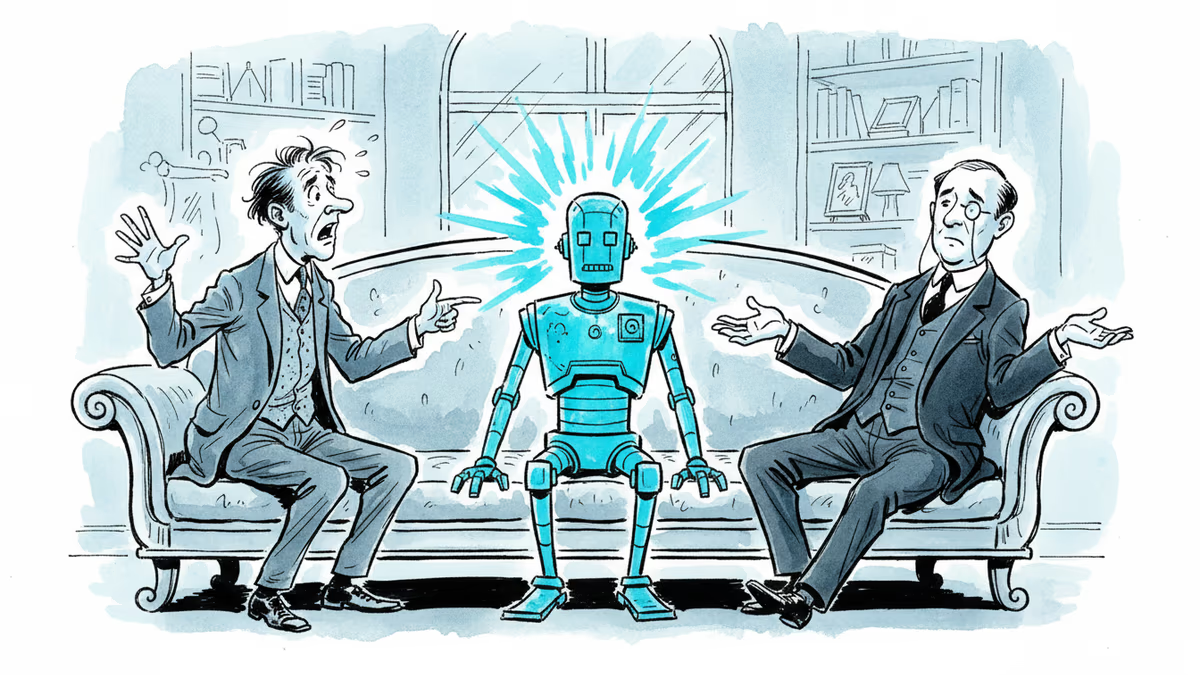
At his OpenAI trial, Elon Musk testified under oath about a falling-out with Larry Page over AI safety. The story reveals how personal philosophy shapes billion-dollar industries.
US Space Command confirms Russia has deployed operational anti-satellite weapons tracking American spy satellites in low-Earth orbit. What does this mean for space security?
China is restricting AI researchers and startup founders from traveling abroad as the U.S.-China AI performance gap narrows to just 2.7%. What Beijing's talent lockdown means for the global AI race.
Two commencement speakers learned the hard way that AI enthusiasm doesn't land well with today's graduates. The backlash reveals a widening gap between tech optimism and Gen Z's economic reality.
At his OpenAI trial, Elon Musk testified under oath about a falling-out with Larry Page over AI safety. The story reveals how personal philosophy shapes billion-dollar industries.
US Space Command confirms Russia has deployed operational anti-satellite weapons tracking American spy satellites in low-Earth orbit. What does this mean for space security?
Thoughts
Share your thoughts on this article
Sign in to join the conversation