
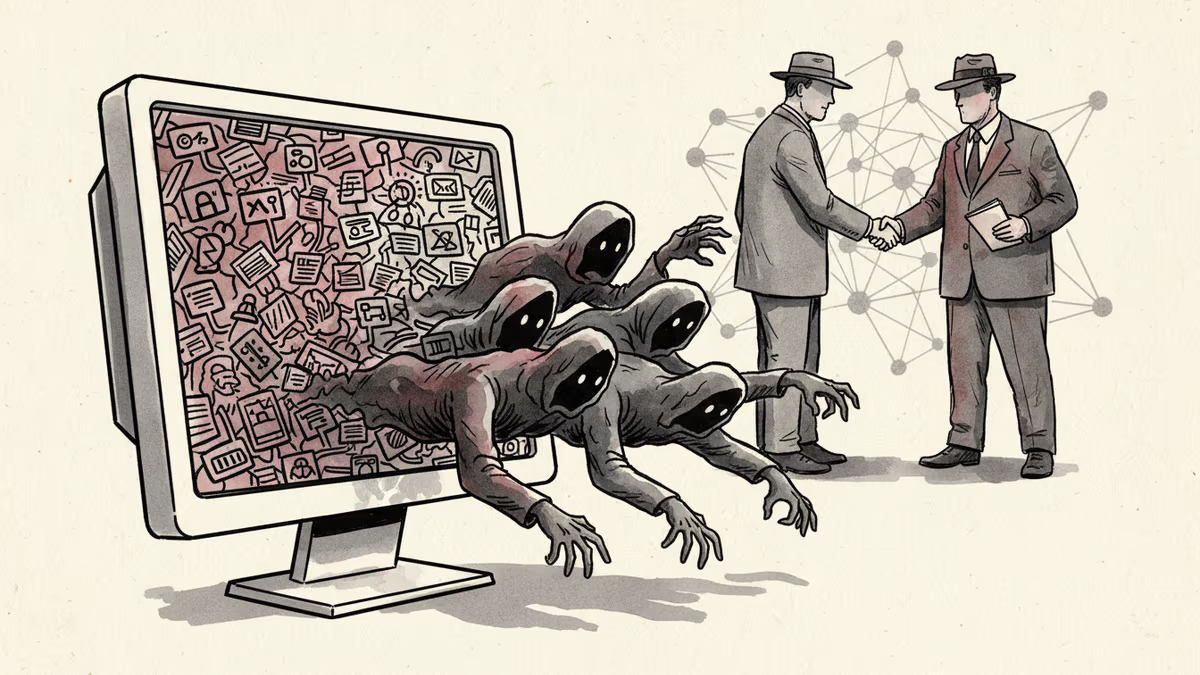
When 4chan Met Epstein: The Birth of /pol/ and Its Consequences
4chan founder Chris Poole says the timing between meeting Jeffrey Epstein and launching the /pol/ board that became an alt-right breeding ground was coincidental. But was it?
A 24-Hour Window That Changed Everything
The timing couldn't have been more awkward. 4chan founder Chris Poole met Jeffrey Epstein at a social event. Less than 24 hours earlier, he'd launched /pol/ — the "politically incorrect" message board that would become a breeding ground for QAnon conspiracy theories and the white supremacist alt-right movement.
Coincidence? That's what Poole insists. In a statement to The Verge, he explained that "the decision to add the board was made weeks beforehand, and the board was added almost 24 hours prior to a first, chance encounter at a social event." But this "chance encounter" has now become part of a much larger conversation about platform responsibility and unintended consequences.
From Memes to Mainstream Mayhem
What started as an outlet for "politically incorrect" content quickly evolved into something far more sinister. /pol/ became the epicenter of internet radicalization, where anonymous users could share increasingly extreme viewpoints without consequence. The board's influence extended far beyond 4chan's servers, seeping into Twitter, Facebook, and eventually mainstream political discourse.

The numbers tell a stark story. Researchers have traced multiple real-world violent incidents back to conversations and manifestos that originated on /pol/. The 2016 election interference campaigns, the Christchurch shooting, and the January 6th Capitol riots all had digital DNA that could be traced back to this corner of the internet.
The Platform Paradox: Intent vs. Impact
Poole's defense raises uncomfortable questions about platform accountability. If the timing really was coincidental, it highlights how quickly digital spaces can evolve beyond their creators' intentions. Facebook started as a college networking site and became a misinformation superhighway. Twitter began as a micro-blogging platform and turned into a political battleground.
But here's the rub: does intent matter when the impact is so profound? Tech executives routinely claim they "never intended" for their platforms to be used for harassment, radicalization, or election interference. Yet these outcomes seem almost inevitable given the incentive structures and design choices they make.
The venture capitalist connection — through Boris Nikolic and the released DOJ emails — adds another layer of complexity. It suggests that even peripheral connections to controversial figures can have lasting implications in our hyperconnected world.
Authors
Related Articles
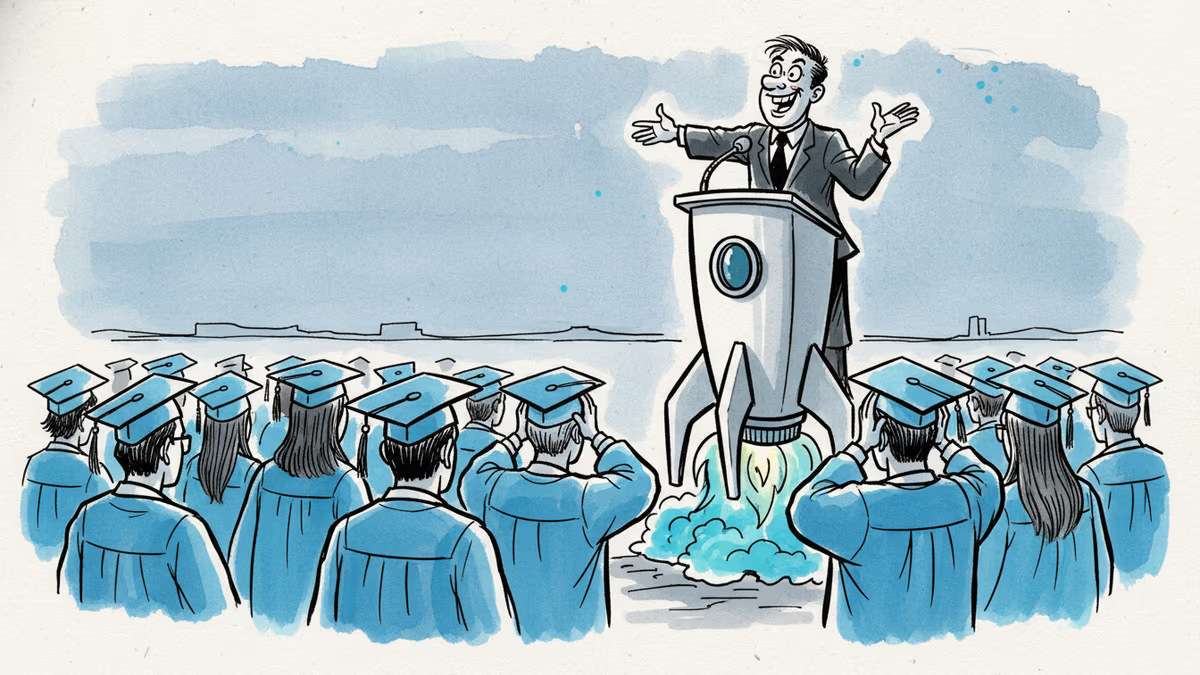
Two commencement speakers learned the hard way that AI enthusiasm doesn't land well with today's graduates. The backlash reveals a widening gap between tech optimism and Gen Z's economic reality.
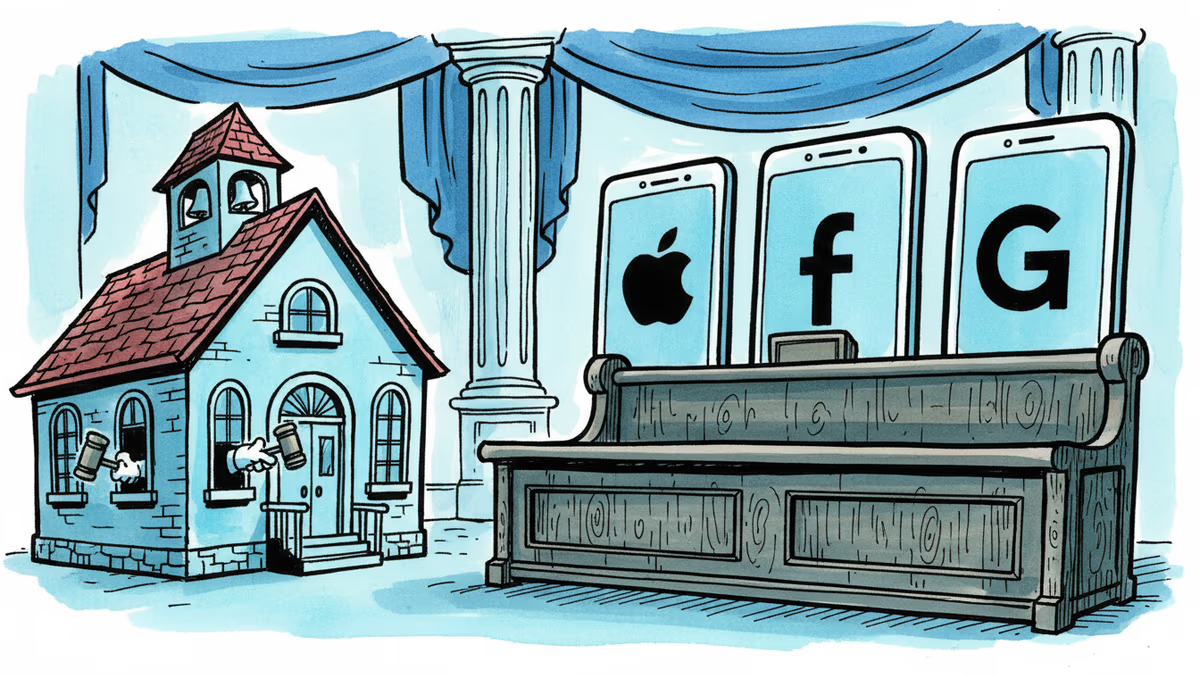
Snap, YouTube, and TikTok settled a landmark school district lawsuit over social media addiction. With 1,000+ similar cases pending, this could reshape Big Tech's liability landscape.
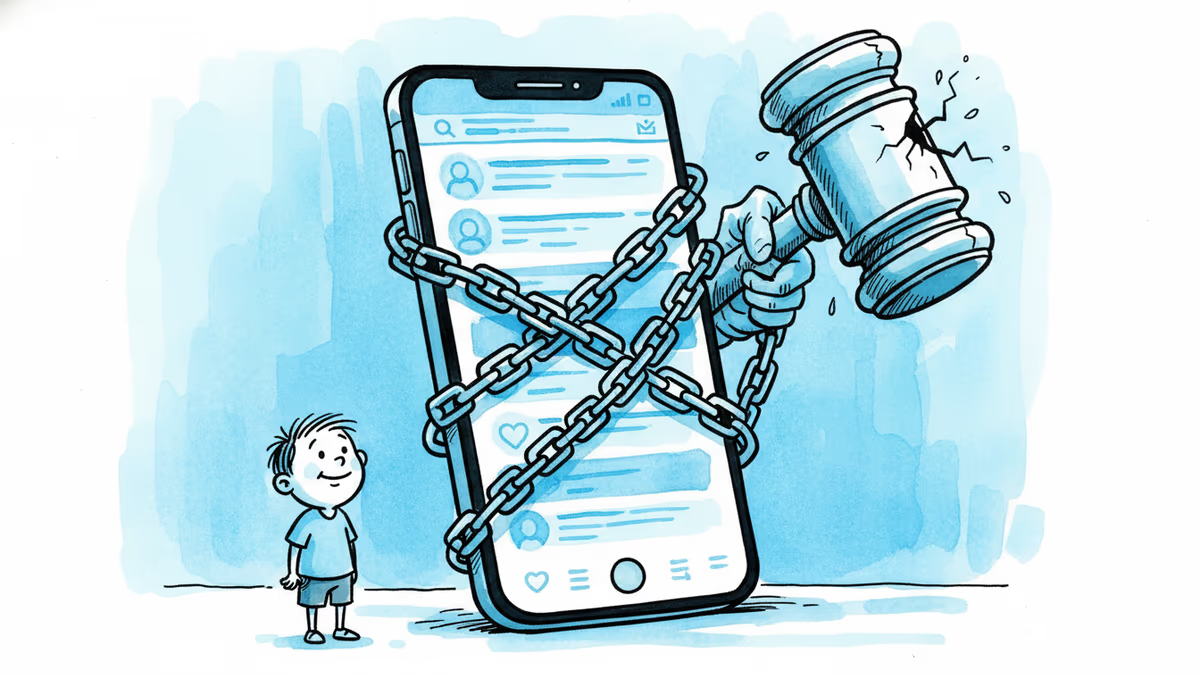
New Mexico already won $375 million from Meta. Now it wants something harder to give: a court order forcing Facebook, Instagram, and WhatsApp to redesign themselves. A three-week trial starts Monday.
At his OpenAI trial, Elon Musk testified under oath about a falling-out with Larry Page over AI safety. The story reveals how personal philosophy shapes billion-dollar industries.
Two commencement speakers learned the hard way that AI enthusiasm doesn't land well with today's graduates. The backlash reveals a widening gap between tech optimism and Gen Z's economic reality.
Snap, YouTube, and TikTok settled a landmark school district lawsuit over social media addiction. With 1,000+ similar cases pending, this could reshape Big Tech's liability landscape.
New Mexico already won $375 million from Meta. Now it wants something harder to give: a court order forcing Facebook, Instagram, and WhatsApp to redesign themselves. A three-week trial starts Monday.
At his OpenAI trial, Elon Musk testified under oath about a falling-out with Larry Page over AI safety. The story reveals how personal philosophy shapes billion-dollar industries.
Thoughts
Share your thoughts on this article
Sign in to join the conversation