
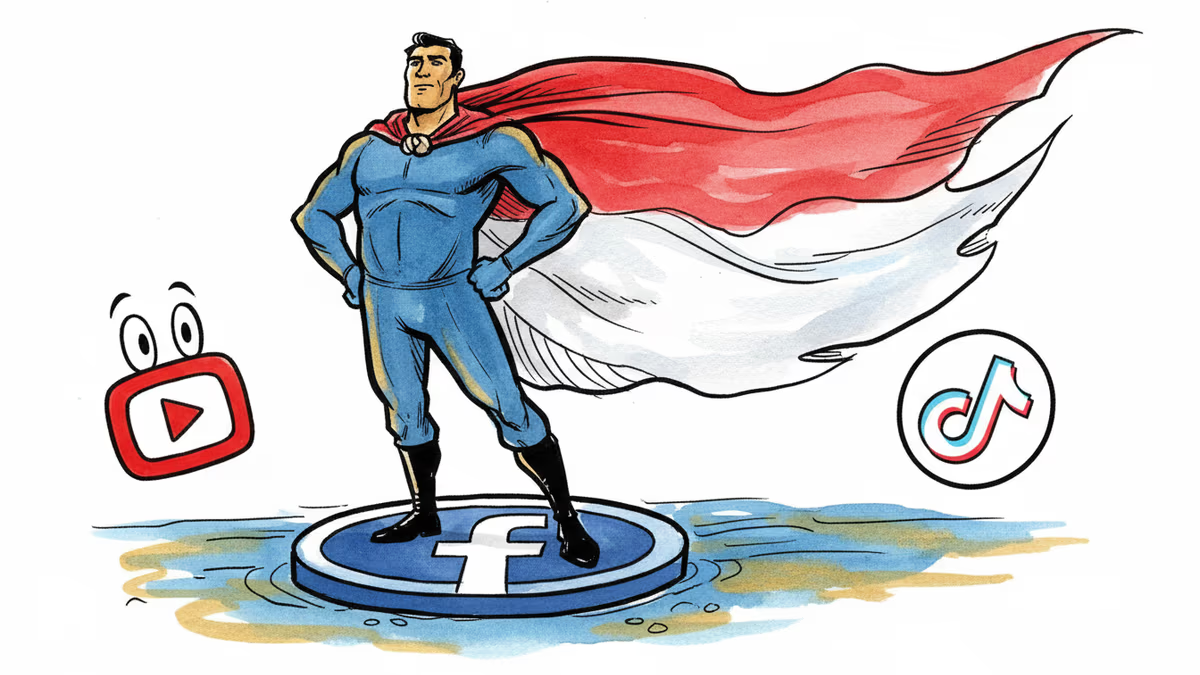
Indonesia Just Saved Facebook
Facebook's creator program exploded from 2.7M to 12M users in one year, with Indonesian creators leading the charge. How did a forgotten platform suddenly compete with YouTube and TikTok?
Nine million new creators joined Facebook's monetization program in just over a year. But here's the kicker: Indonesian creators are driving this resurrection, making up nearly 15% of all monetized accounts despite representing just one language among dozens.
Welcome to Facebook's unlikely comeback story.
The Platform Everyone Forgot
By early 2025, Facebook seemed like yesterday's news. While YouTube paid creators $70 billion between 2021-2023, Facebook managed just $2 billion in 2024. Creators flocked to TikTok for younger audiences and YouTube for stable payouts. Facebook? That was where your parents shared vacation photos.
The turnaround began in October 2024 when Meta consolidated its scattered monetization programs into one unified system. Instead of ad revenue sharing, they introduced performance-based rewards similar to TikTok's model. The results were immediate and dramatic.
Total monetized accounts jumped from 2.7 million to 12 million. Indonesian creators didn't just participate—they dominated, with 1.7 million Bahasa Indonesia accounts now monetized, dwarfing Spanish (850,000) and Hindi (280,000) combined.
The Secret Sauce: Community Over Virality
We Are Social's Indonesia director Bunga Istyani calls it a "Facebook Renaissance." But why Indonesia? The answer lies in Facebook's unique strengths that other platforms abandoned: deep community engagement and reach in smaller cities.
Facebook's Stars feature lets followers tip creators during live streams, while Facebook Groups create loyal, paying communities. For Indonesian creators who act as "community leaders" directly impacting sales, these tools are goldmines.

"For many Indonesian creators, the RPM [revenue per thousand views] on Facebook has become highly competitive compared to YouTube," Istyani explains. The platform's lower barrier to entry doesn't hurt either—creators can monetize text posts and photos, not just videos.
Traditional Media Joins the Party
Surprisingly, Indonesia's top Facebook earners include traditional news brands like Kompas, Tribunnews, and Liputan6. This isn't happening on TikTok, where news struggles for attention among dance videos and memes.
"People pay a lot more attention to traditional brands on Facebook than they do on TikTok," notes journalist Nic Newman, whose Digital News Report found that 57% of Indonesians use social media for news consumption—higher than India and most other countries.
The reason? Indonesian news outlets are advertising-dependent, not subscription-based. "They'll take advertising from wherever they can get it," Newman says.
The Broader Creator Economy Shift
This Indonesian surge reveals something bigger: creators are diversifying beyond the YouTube-TikTok duopoly. As organic reach declines across platforms, smart creators are seeking communities, not just views.
Facebook's strategy worked because it aligned with creator needs: stable income from engaged communities rather than viral lottery tickets. While TikTok chases trends and YouTube demands consistent uploads, Facebook rewards community building—something that scales better long-term.
What This Means for Global Creators
The Indonesian Facebook boom offers lessons for creators worldwide. First, don't write off "dead" platforms—they might be planning comebacks. Second, community beats virality for sustainable income. Third, different regions prefer different platforms, so geographic strategy matters.
For investors and marketers, this signals a fragmented future where no single platform dominates. The creator economy is becoming more like traditional media: multiple viable channels serving different audiences.
Authors
Related Articles
A law firm marketing itself on AI-powered legal success submitted fake citations in a federal appeal. Now its lawyers face sanctions — and the broader AI legal industry faces a credibility crisis.
Snap, YouTube, and TikTok settled a landmark school district lawsuit over social media addiction. With 1,000+ similar cases pending, this could reshape Big Tech's liability landscape.
Five major publishers and author Scott Turow have filed a class action lawsuit against Meta, alleging the company used illegal pirate sites like LibGen to train its Llama AI models without permission.
New Mexico already won $375 million from Meta. Now it wants something harder to give: a court order forcing Facebook, Instagram, and WhatsApp to redesign themselves. A three-week trial starts Monday.
A law firm marketing itself on AI-powered legal success submitted fake citations in a federal appeal. Now its lawyers face sanctions — and the broader AI legal industry faces a credibility crisis.
Snap, YouTube, and TikTok settled a landmark school district lawsuit over social media addiction. With 1,000+ similar cases pending, this could reshape Big Tech's liability landscape.
Five major publishers and author Scott Turow have filed a class action lawsuit against Meta, alleging the company used illegal pirate sites like LibGen to train its Llama AI models without permission.
New Mexico already won $375 million from Meta. Now it wants something harder to give: a court order forcing Facebook, Instagram, and WhatsApp to redesign themselves. A three-week trial starts Monday.
Thoughts
Share your thoughts on this article
Sign in to join the conversation