
Why Zuckerberg Played Dumb in Court (And What It Means)
Meta CEO's evasive testimony in social media addiction lawsuit reveals shifting legal landscape for Big Tech and potential end of Section 230 protection era.
The Man Who Built Connection Couldn't Remember Much
"It sounds like something I would have said." Mark Zuckerberg uttered this phrase—or variations of it—dozens of times during his Wednesday testimony in a Los Angeles courtroom. For a CEO known for his precise, data-driven communication style, the sudden onset of selective memory was striking.
Facing 1,600 lawsuits alleging his platforms deliberately hooked children, Zuckerberg deployed a legal strategy as old as corporate America itself: strategic amnesia. But this wasn't just another CEO dodging accountability. This was the architect of the social media age being forced to confront what he'd built—one 9-year-old user at a time.
The Billboard That Changed Everything
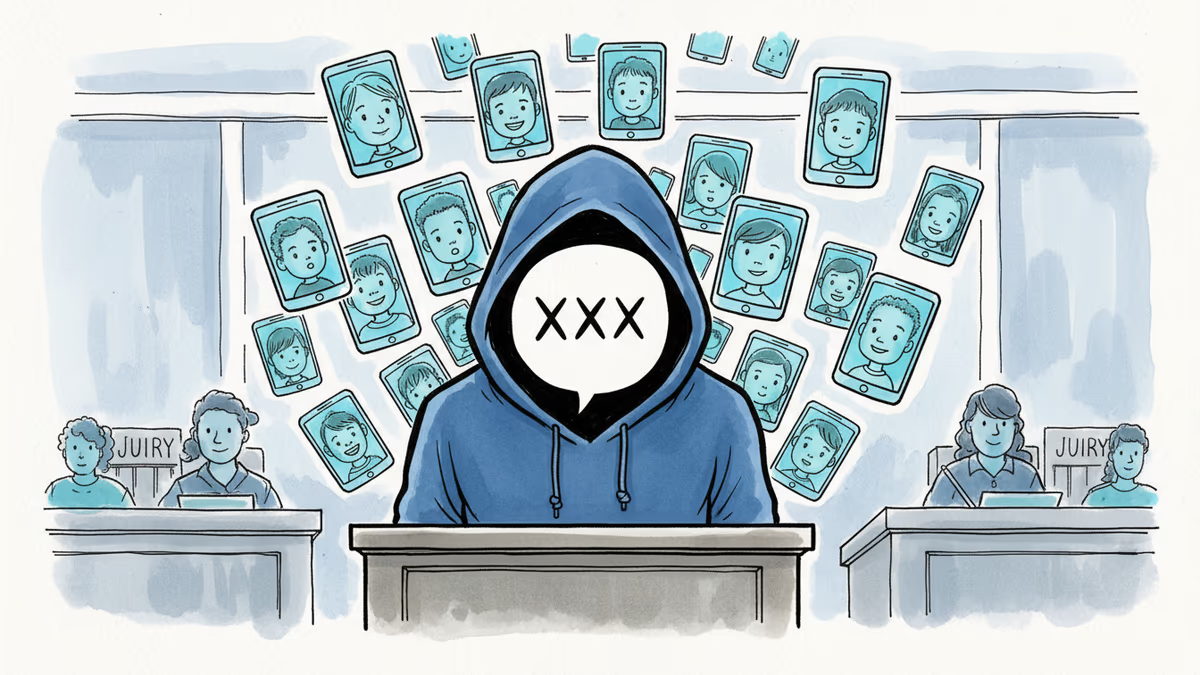
The courtroom drama reached its crescendo when plaintiff attorney Mark Lanier unfurled a massive tarp across half the courtroom. It took seven people to hold it up. Displayed were hundreds of Instagram posts from K.G.M.—the now 20-year-old woman who'd joined Instagram at age 9, years before the platform even asked for birthdates.
"In a sense, y'all own these pictures," Lanier told Zuckerberg. The Meta CEO's response? "I'm not sure that's accurate." But his body language suggested otherwise—witnesses described him blinking hard at the visual representation of a childhood consumed by his creation.
The Section 230 Workaround
What makes these lawsuits unprecedented isn't their scale—it's their strategy. For decades, tech companies have hidden behind Section 230, claiming they're merely neutral platforms for user-generated content. These cases sidestep that entirely, targeting the addictive design of the platforms themselves.

Internal Meta documents revealed the company's 2015 goal to increase "total teen time spent" on their apps. When confronted with this, Zuckerberg repeatedly fell back on "That's what the document says"—neither confirming nor denying his company's intentions.
The Credibility Gap
Lanier systematically dismantled Zuckerberg's previous Congressional testimony. While Zuckerberg had claimed children under 13 weren't allowed on Instagram, internal documents showed 4 million underage users in 2015—comprising 30% of all 10-to-12-year-olds in the US.
The attorney suggested Zuckerberg had been coached for these moments. "You have extensive media training," Lanier noted. Zuckerberg's response drew rare laughter: "I think I'm sort of well-known to be pretty bad at this."
The Regulatory Tsunami
Zuckerberg's evasive performance comes as Big Tech faces its biggest regulatory challenge yet. The EU's Digital Services Act, proposed US legislation like the Kids Online Safety Act, and now these lawsuits represent a three-pronged attack on the industry's immunity.
Unlike previous regulatory efforts focused on content moderation or antitrust, these cases target something more fundamental: the psychological mechanisms that keep users scrolling. It's not about what's on the platform—it's about how the platform works on us.
The Parent Trap
The courtroom was packed with parents whose children had suffered from social media-related mental health crises. Some had lost children to suicide. They watched Zuckerberg claim his platforms merely reflected "value" to users—that increased engagement was simply people choosing what they found worthwhile.
But K.G.M.'s story suggests otherwise. Starting Instagram at 9, she represents an entire generation that never knew life without algorithmic feeds designed to maximize attention. The question isn't whether these platforms provide value—it's whether children can meaningfully consent to their psychological manipulation.
Authors
Related Articles

Google's Gmail Live lets you ask your inbox questions out loud. Announced at I/O 2026, it's AI's pitch to skeptics — and a reminder of how much Google already knows about you.
Snap, YouTube, and TikTok settled a landmark school district lawsuit over social media addiction. With 1,000+ similar cases pending, this could reshape Big Tech's liability landscape.

OpenAI has reorganized for the second time in a month, merging ChatGPT and Codex into a single agentic platform under president Greg Brockman's unified product leadership.
AI sustainability researcher Sasha Luccioni is launching a new venture to push for energy transparency in AI. Here's why Big Tech keeps the numbers hidden—and what's starting to change.
Google's Gmail Live lets you ask your inbox questions out loud. Announced at I/O 2026, it's AI's pitch to skeptics — and a reminder of how much Google already knows about you.
Snap, YouTube, and TikTok settled a landmark school district lawsuit over social media addiction. With 1,000+ similar cases pending, this could reshape Big Tech's liability landscape.
OpenAI has reorganized for the second time in a month, merging ChatGPT and Codex into a single agentic platform under president Greg Brockman's unified product leadership.
AI sustainability researcher Sasha Luccioni is launching a new venture to push for energy transparency in AI. Here's why Big Tech keeps the numbers hidden—and what's starting to change.
Thoughts
Share your thoughts on this article
Sign in to join the conversation