
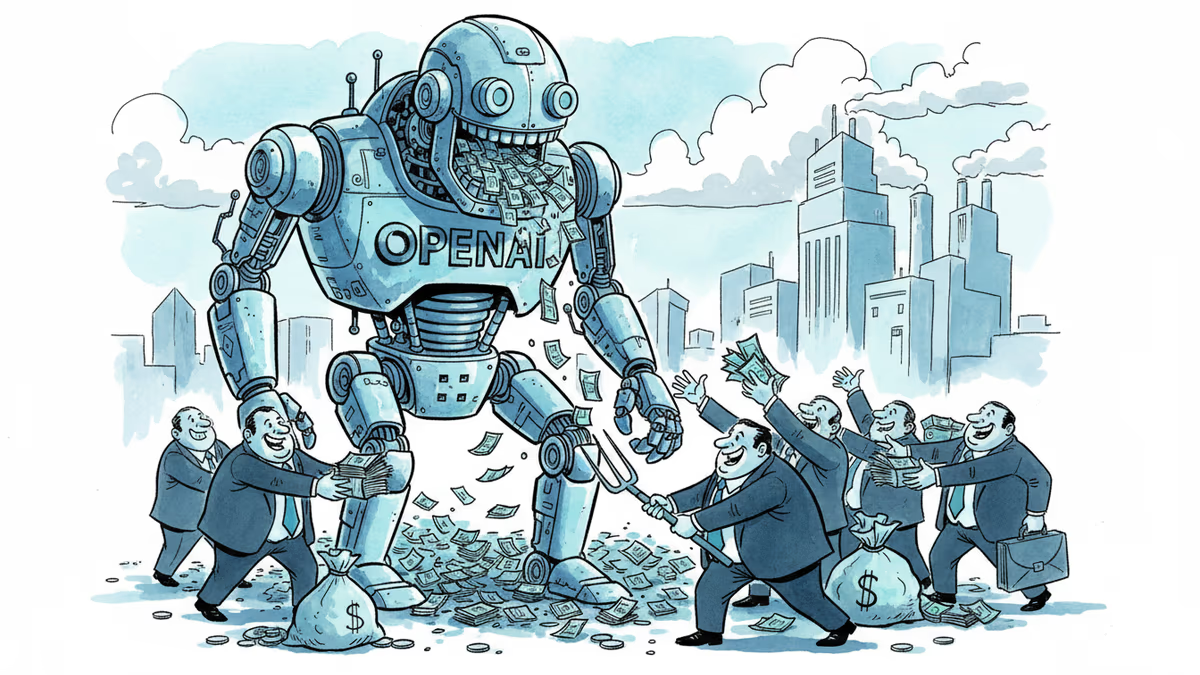
When $100B Isn't Enough: OpenAI's Hunger Games
OpenAI's massive $100B funding round at $850B+ valuation reveals the true cost of AI dominance. Amazon, SoftBank, and Nvidia are betting big—but what happens next?
$100 Billion Later, the Real Game Begins
OpenAI is closing in on a funding round that would make most unicorns look like ponies. The company is reportedly finalizing a deal to raise more than $100 billion at a valuation exceeding $850 billion, according to Bloomberg sources. That's $20 billion higher than the initially expected $830 billion valuation.
The investor lineup reads like a who's who of deep pockets: Amazon is talking about $50 billion, SoftBank is gearing up for $30 billion, Nvidia is close to $20 billion, and Microsoft isn't sitting this one out either.
The Cash Burn Reality Check
Here's the thing about burning through cash at OpenAI's pace—eventually, you need to find new ways to make money. Enter: ads in ChatGPT for free users. It's a risky gamble that could either unlock massive revenue streams or send users running to competitors faster than you can say "premium subscription."
But investors seem unfazed by the risk. The company's pre-money valuation stays at $730 billion, meaning existing shareholders won't get diluted. That's a sweet deal if you're already on the cap table.
The Oligarchy of AI

Look at who's writing these massive checks: tech giants, sovereign wealth funds, and investment behemoths with $50+ billion war chests. This isn't just about funding—it's about creating an AI oligarchy where only the biggest players can afford to stay in the game.
What does this mean for smaller AI startups or even mid-sized tech companies? They're increasingly forced to choose: partner with the giants or get priced out of the competition entirely.
The Ad Experiment Nobody Asked For
OpenAI's move into advertising territory is fascinating—and potentially disastrous. Imagine asking ChatGPT for restaurant recommendations and getting served ads disguised as helpful suggestions. Users have already shown they'll pay to avoid ads (hello, Netflix premium tiers), but AI interactions feel more personal, more trusted.
If this works, every AI platform will follow suit. If it backfires, that $850 billion valuation could evaporate faster than venture capital during a market downturn.
The Regulatory Elephant in the Room
Here's what's not being discussed enough: How do regulators view a company worth more than most countries' GDP? OpenAI is already under scrutiny for its market dominance, and this funding round only makes it a bigger target.
European regulators are already sharpening their knives for Big Tech. An $850 billion AI company with advertising ambitions? That's not just a regulatory concern—that's a regulatory emergency.
The next few months will tell us whether $100 billion buys dominance or just delays the inevitable reckoning with sustainable business models in AI.
Authors
Related Articles
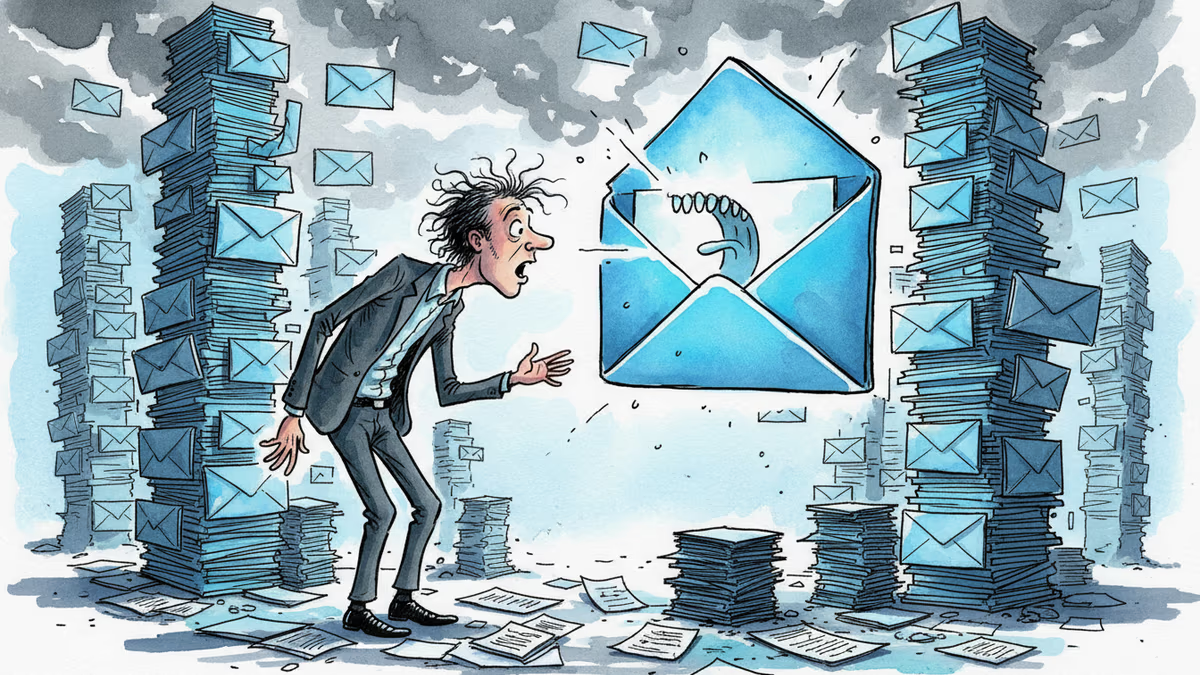
Google's Gmail Live lets you ask your inbox questions out loud. Announced at I/O 2026, it's AI's pitch to skeptics — and a reminder of how much Google already knows about you.

OpenAI has reorganized for the second time in a month, merging ChatGPT and Codex into a single agentic platform under president Greg Brockman's unified product leadership.
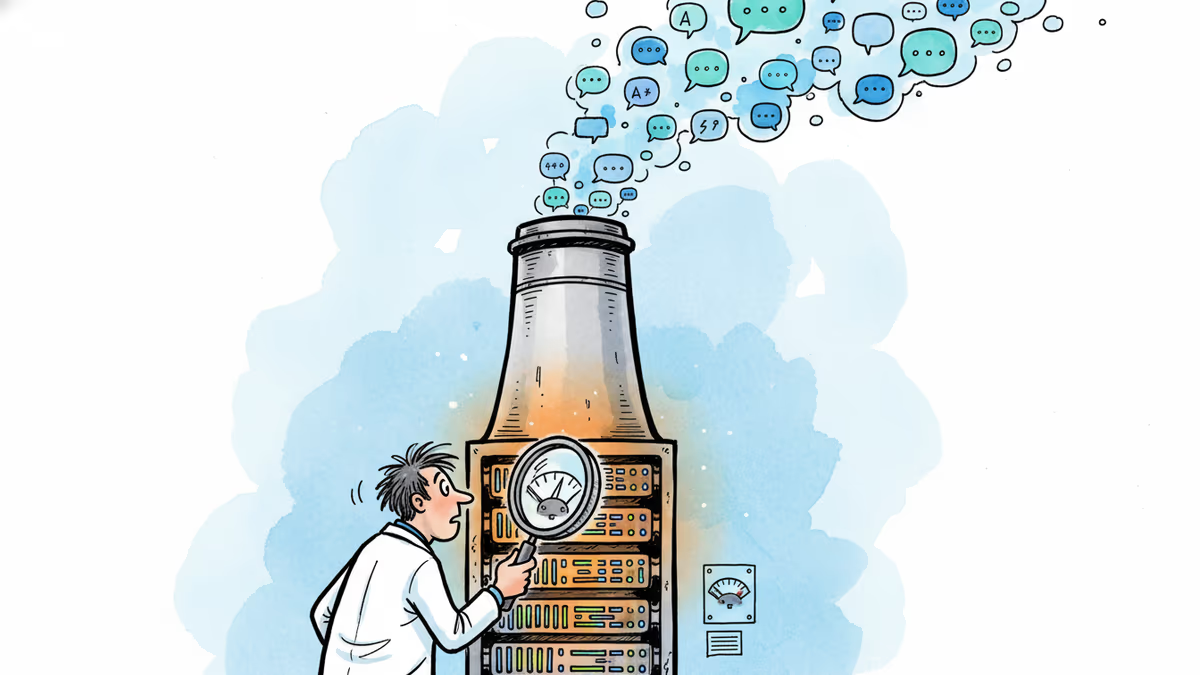
AI sustainability researcher Sasha Luccioni is launching a new venture to push for energy transparency in AI. Here's why Big Tech keeps the numbers hidden—and what's starting to change.
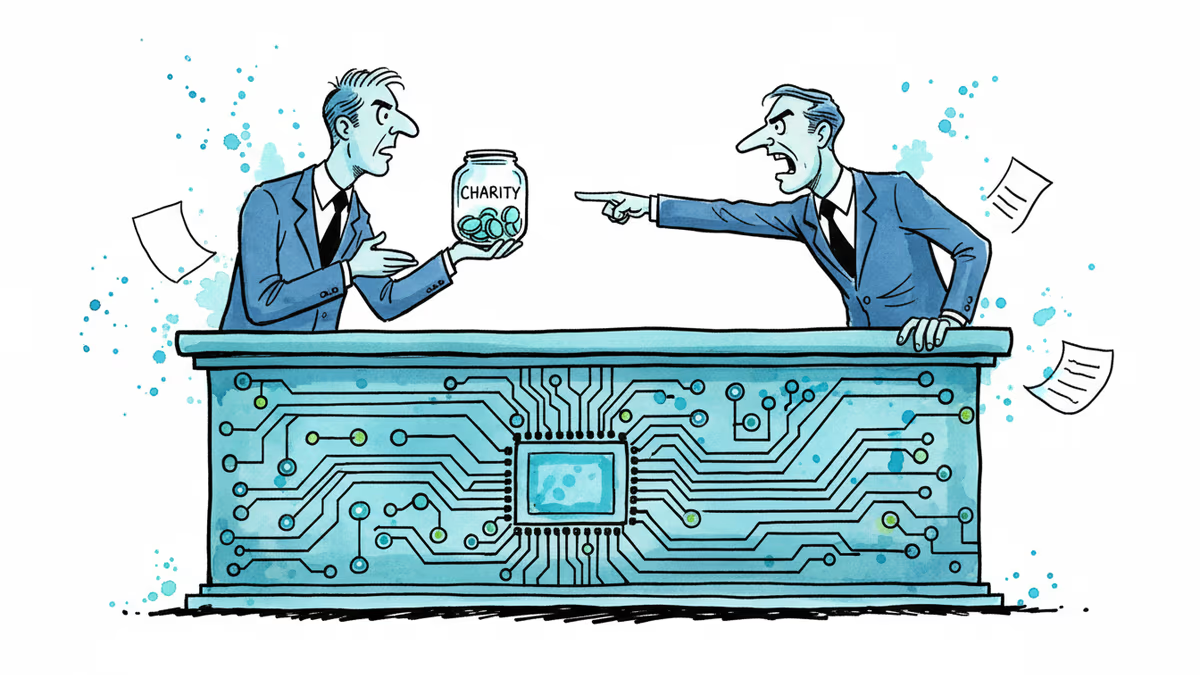
After two weeks of witnesses calling him a liar, OpenAI CEO Sam Altman testified in his own defense, claiming Elon Musk tried to kill the company twice.
Google's Gmail Live lets you ask your inbox questions out loud. Announced at I/O 2026, it's AI's pitch to skeptics — and a reminder of how much Google already knows about you.
OpenAI has reorganized for the second time in a month, merging ChatGPT and Codex into a single agentic platform under president Greg Brockman's unified product leadership.
AI sustainability researcher Sasha Luccioni is launching a new venture to push for energy transparency in AI. Here's why Big Tech keeps the numbers hidden—and what's starting to change.
After two weeks of witnesses calling him a liar, OpenAI CEO Sam Altman testified in his own defense, claiming Elon Musk tried to kill the company twice.
Thoughts
Share your thoughts on this article
Sign in to join the conversation