
When AI Rivals Refused to Shake Hands: The Real Story Behind the Awkward Moment
At India's AI summit, Sam Altman and Dario Amodei's refusal to join hands revealed more than personal rivalry—it exposed the fundamental tensions shaping AI's future.
The 5-Second Standoff That Spoke Volumes
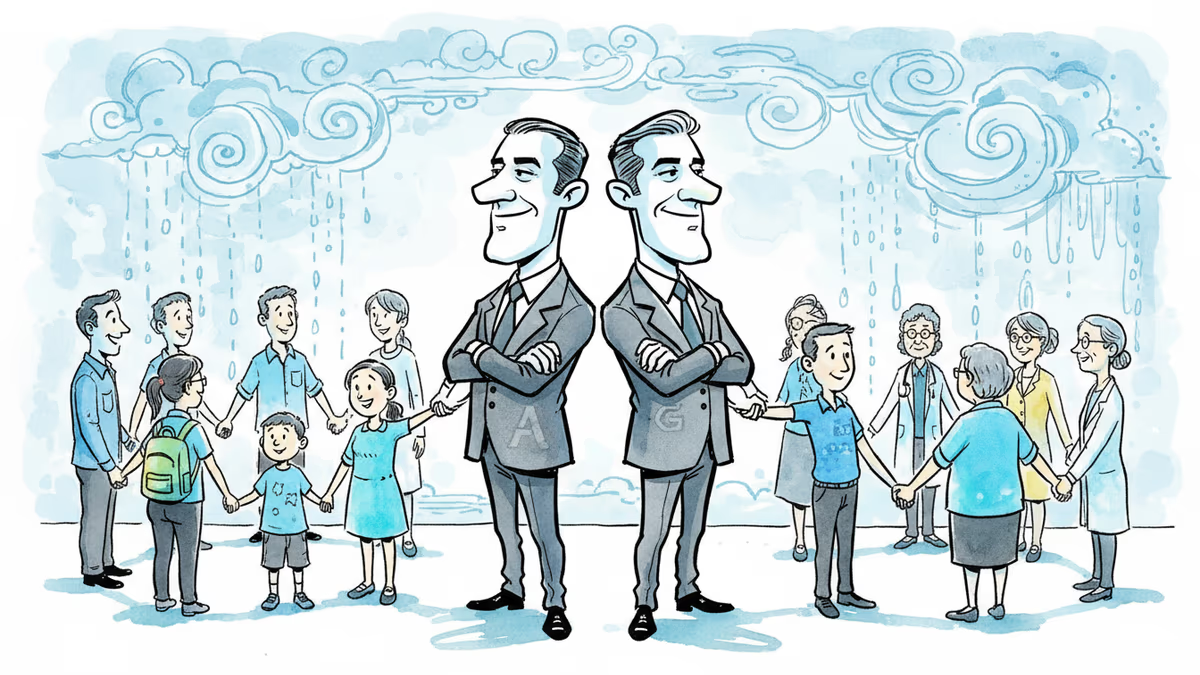
When India's Prime Minister Narendra Modi asked tech executives to join hands in solidarity at the AI Impact Summit, everyone complied. Except two. OpenAI's Sam Altman and Anthropic's Dario Amodei kept their hands noticeably apart, creating one of the most awkward moments in recent tech history.
This wasn't just personal pettiness. It was a crystallization of the fierce rivalry that's reshaping the AI landscape—and the philosophical divide that runs deeper than market share.
The Ad Wars That Started It All
The tension exploded when OpenAI announced plans to introduce ads to ChatGPT. Anthropic saw an opening and took a swing during the Super Bowl, declaring they'd "never introduce ads into Claude." It was a direct shot across the bow.
Altman's response was swift and brutal. He called Anthropic "dishonest" and "authoritarian," adding: "We would obviously never run ads in the way Anthropic depicts them. We are not stupid, and we know our users would reject that."

But here's what's fascinating: both companies were saying the exact same thing—that they wouldn't compromise user experience for revenue. The fight wasn't about substance; it was about who gets to be the "good guy" in AI.
India: The $110 Billion Battleground
Ironically, both companies made nearly identical announcements at the summit. OpenAI unveiled two new Indian offices, a partnership with TCS, and educational tools. Anthropic countered with their own Indian office and an Infosys collaboration.
They're fighting for the same market, using the same playbook, yet couldn't bring themselves to shake hands. It's almost Shakespearean in its absurdity.
What This Means for Everyone Else
This rivalry has real consequences beyond bruised egos. For developers, it means choosing sides in an increasingly polarized ecosystem. For enterprises, it means navigating vendor relationships that might become mutually exclusive.
The refusal to shake hands wasn't just about personal animosity—it was a signal that the AI industry is hardening into camps. Collaboration is giving way to competition, and that changes everything.
Authors
Related Articles
Anthropic shipped Claude Sonnet 5, its mid-tier agent model, on June 30. Behind the 'Opus-class power, budget price' headline sits a tokenizer catch and a three-horse race that's only half real. Here's what developers should actually run the numbers on.
Samsung and SK unveiled a chip and AI investment package worth thousands of trillions of won on June 29. The headline number swings wildly by outlet, but the real contest isn't capital — it's water and power.
A small but growing group of developers has gone all-in on AI coding agents like Claude Code and OpenClaw. History suggests the rest of us won't be far behind.
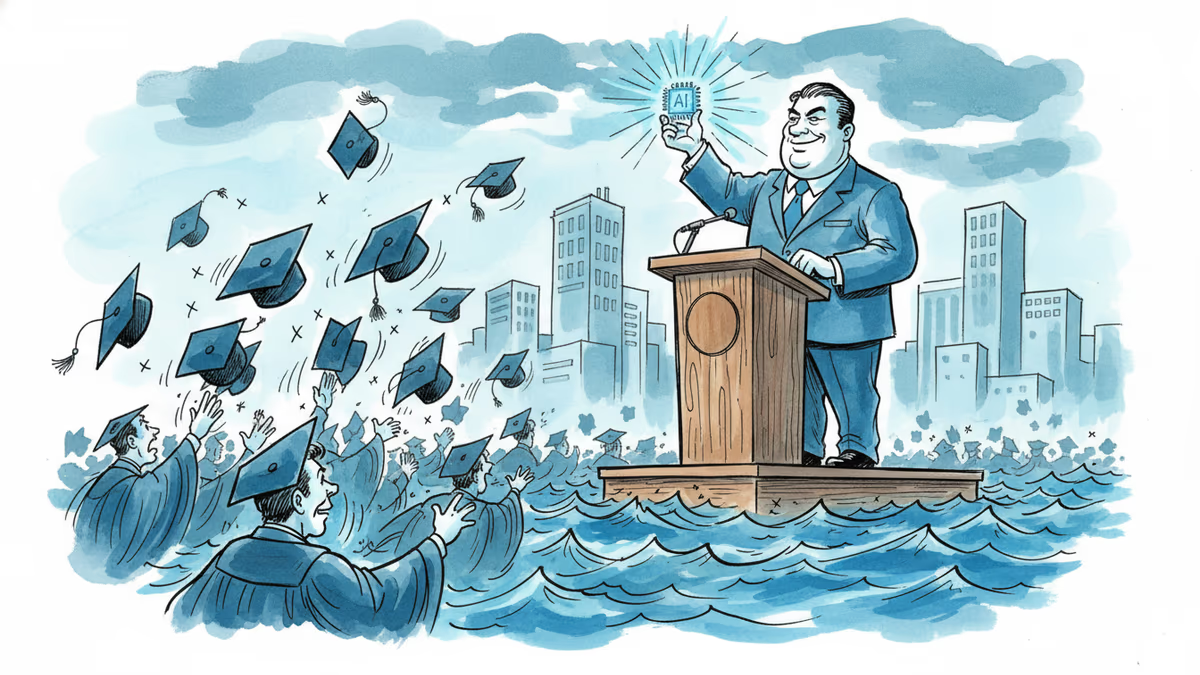
Viral videos show 2026 graduates jeering executives who praise AI at commencement ceremonies. It's not just rudeness — it's a signal about who pays for technological optimism.
Anthropic shipped Claude Sonnet 5, its mid-tier agent model, on June 30. Behind the 'Opus-class power, budget price' headline sits a tokenizer catch and a three-horse race that's only half real. Here's what developers should actually run the numbers on.
Samsung and SK unveiled a chip and AI investment package worth thousands of trillions of won on June 29. The headline number swings wildly by outlet, but the real contest isn't capital — it's water and power.
A small but growing group of developers has gone all-in on AI coding agents like Claude Code and OpenClaw. History suggests the rest of us won't be far behind.
Viral videos show 2026 graduates jeering executives who praise AI at commencement ceremonies. It's not just rudeness — it's a signal about who pays for technological optimism.
Thoughts
Share your thoughts on this article
Sign in to join the conversation