
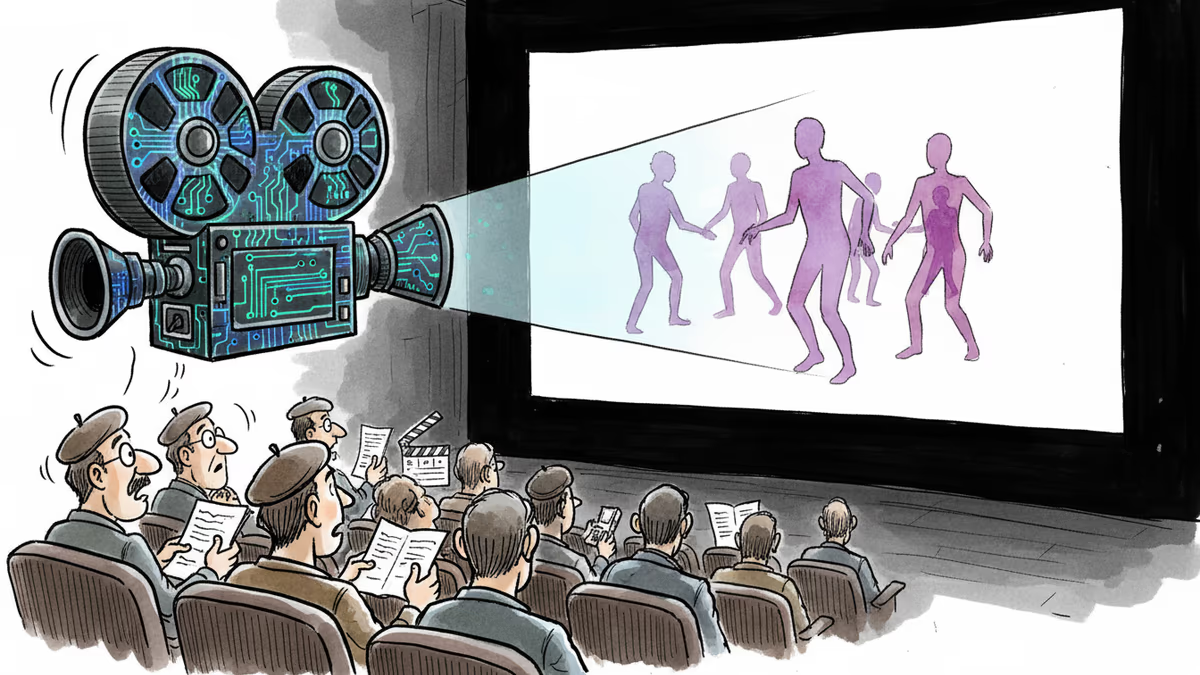
When AI Makes Movies, What Happens to Human Stories?
Google's AI filmmaking tools enabled 10 directors to create shorts that don't feel like AI slop. But the real question isn't about technology—it's about what survives when efficiency trumps artistry.
"Mom?" — The Question That Changes Everything
A Filipino man walks through his childhood backyard in rural Hawaii. At a shrine beneath a starfruit tree, wind scatters a 1950s photograph of a woman. He falls, hits his head, awakens in a dark forest where a clay-masked woman brandishes a sword. After a chase that defies physics—she alternates between running and floating—her mask shatters. "Mom?" he asks.
This is the opening of Murmuray, a short film by independent filmmaker Brad Tangonan. Everything feels like his previous work: tactile nature shots, dreamlike desaturated highlights. Except for one thing: he made it using AI.
The Five-Week Experiment That's Dividing Hollywood
Tangonan was one of 10 filmmakers in Google Flow Sessions, a five-week cohort given access to Google's AI toolkit—Gemini, image generator Nano Banana Pro, and film generator Veo. Each resulting film differed dramatically in scope and style.
Hal Watmough's "You've Been Here Before" playfully explored morning routines through hyperreal visuals mixed with cartoonish stylization. Tabitha Swanson's "The Antidote to Fear is Curiosity" offered philosophical meditation on AI and human relationships. Keenan MacWilliam animated her own scanned plants and fish for "Mimesis," a fictional guided meditation.
Screened at Soho House New York late last year, none felt like AI slop. Every filmmaker I spoke to said the same thing: AI enabled stories they couldn't have told otherwise due to budget or time constraints.
The Battle Lines Are Drawn
"I see all these tools, whether a camera or generative AI, as ways for artists to express what's in their mind," Tangonan told me. This AI-as-just-another-tool argument is exactly what Google wants to underscore.
But Hollywood's heavyweights aren't buying it. Guillermo del Toro said he'd "rather die than use generative AI" to make films. James Cameron called the idea of generating actors and emotions with prompts "horrifying," arguing AI only spits out "a blended average of everything ever done by humans." Werner Herzog was blunter: AI films "have no soul."

Yet the reality is more nuanced. MacWilliam used only her personally scanned flora and fauna, working with her longtime composer and sound designer. "My goal was to unlock new forms of expression for my established themes and style, not to replace the roles of people I like to work with."
Tangonan wrote Murmuray's script without AI, gathered visual references manually, then used those as foundations for generation. "If you hand over the keys to AI, you'll get lowest common denominator stuff," he said. "But if you have a voice and creative perspective, you'll get something different."
The Efficiency Trap
Today's film studios face rising costs, streaming pivots, and risk-averse consolidation. Big spends go to predictable revenue generators (hello, millionth Marvel movie) while original mid-budget films vanish.
AI could worsen this scarcity mindset—studios might replace everything replaceable, art be damned. But efficiency could also lower barriers for original work. Even Cameron admitted generative AI might make VFX cheaper, enabling more imaginative sci-fi and fantasy films typically reserved for existing IP.
The flying forest scene in Murmuray would have required expensive VFX or complex rigging—both impossible on a short film budget, according to Tangonan.
Empowered and Isolated
For independent filmmakers, powerful tools are blessing and curse. They "democratize access" but also mean working alone. The more you can do yourself, the less reason to collaborate.
"I know I'm a one-man band, and I just made all this by myself... but that should never be the way anyone tells a story," Watmough said, noting an actor friend contributed voice work to his short. "It should be collaborative because the more people involved, the more accessible it is and the more it reaches people."
This tension reflects broader industry anxieties. The $50 billion global film market increasingly rewards speed and scale over craftsmanship. Independent creators face a choice: adapt to AI-accelerated production or risk obsolescence.
The Creative Commons Dilemma
Beyond individual artistic choices lies a thornier question: training data. Most AI video models learn from copyrighted content without creator consent. While Flow Sessions filmmakers used personal materials and wrote original scripts, the underlying technology still raises ethical questions about intellectual property and fair compensation.
The Writers Guild and SAG-AFTRA secured AI protections in recent strikes, but independent creators lack such collective bargaining power. They're left navigating an ecosystem where their work might train tomorrow's AI competitors.
Authors
Related Articles

Samsung and SK unveiled a chip and AI investment package worth thousands of trillions of won on June 29. The headline number swings wildly by outlet, but the real contest isn't capital — it's water and power.

Viral videos show 2026 graduates jeering executives who praise AI at commencement ceremonies. It's not just rudeness — it's a signal about who pays for technological optimism.
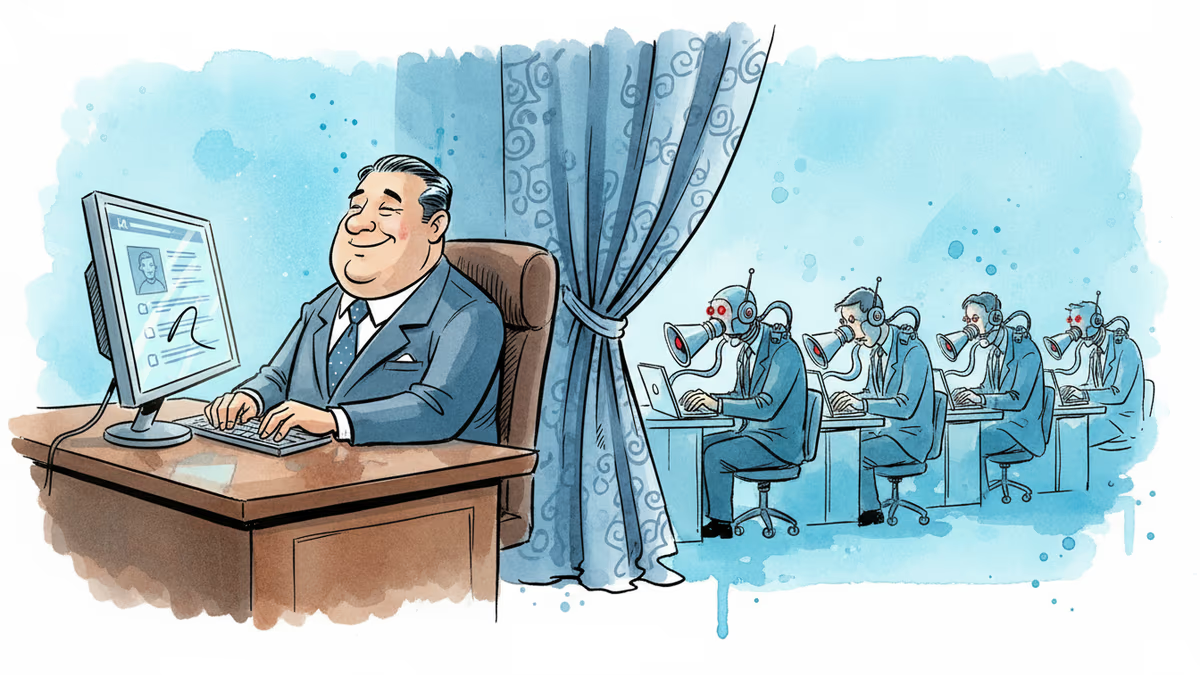
Filipino virtual assistants using AI to ghost-manage LinkedIn profiles for executives is now a structured industry. 30 comments a day, fake engagement rings, and a platform struggling to tell real from fabricated.
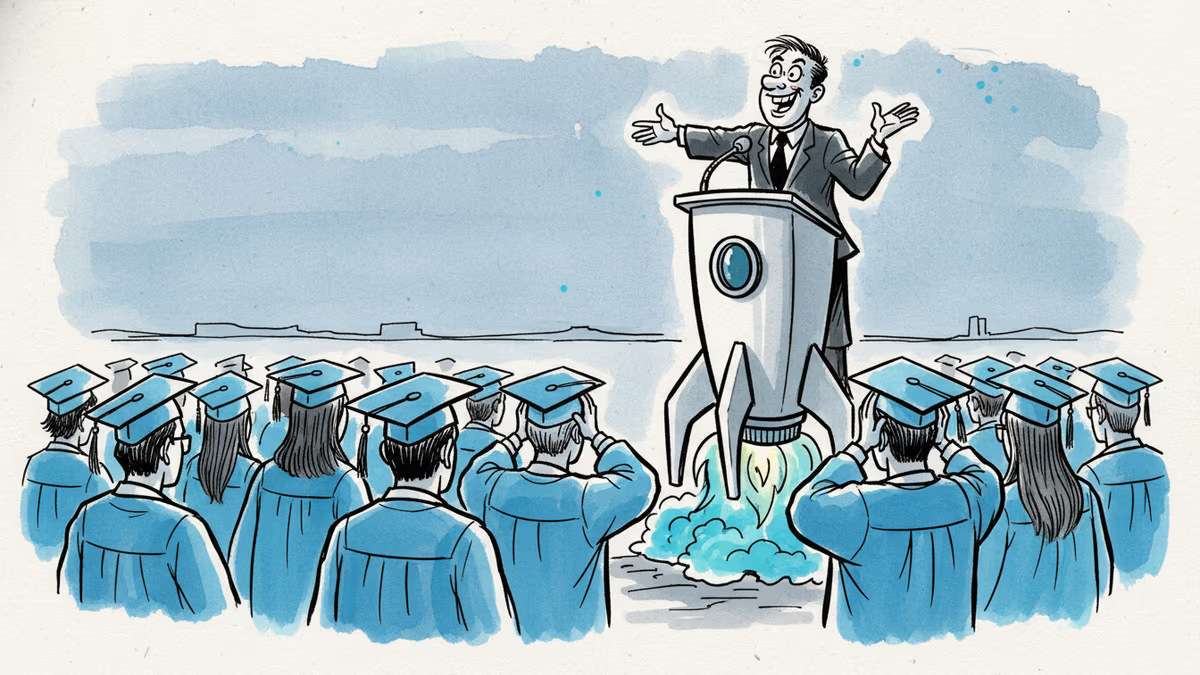
Two commencement speakers learned the hard way that AI enthusiasm doesn't land well with today's graduates. The backlash reveals a widening gap between tech optimism and Gen Z's economic reality.
Samsung and SK unveiled a chip and AI investment package worth thousands of trillions of won on June 29. The headline number swings wildly by outlet, but the real contest isn't capital — it's water and power.
Viral videos show 2026 graduates jeering executives who praise AI at commencement ceremonies. It's not just rudeness — it's a signal about who pays for technological optimism.
Filipino virtual assistants using AI to ghost-manage LinkedIn profiles for executives is now a structured industry. 30 comments a day, fake engagement rings, and a platform struggling to tell real from fabricated.
Two commencement speakers learned the hard way that AI enthusiasm doesn't land well with today's graduates. The backlash reveals a widening gap between tech optimism and Gen Z's economic reality.
Thoughts
Share your thoughts on this article
Sign in to join the conversation