
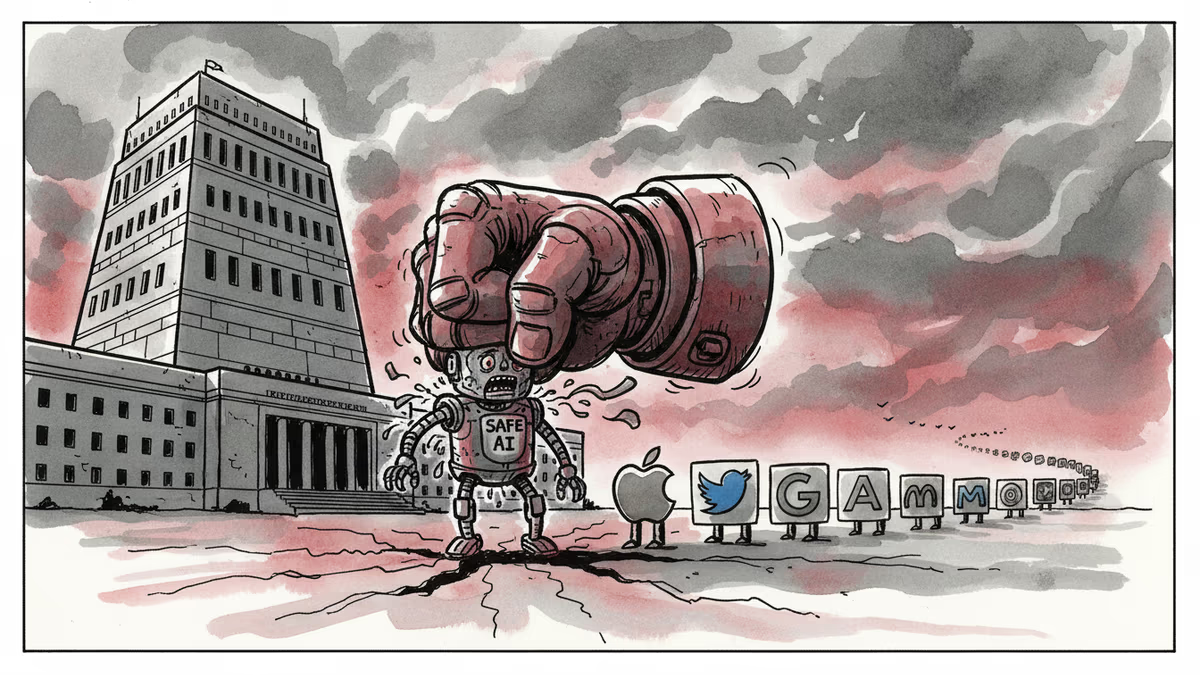
The Pentagon vs. Safe AI: A $200M Reckoning
Pentagon reconsiders relationship with Anthropic over refusal to participate in lethal operations. The clash reveals deeper tensions between AI safety and national security demands.
When $200 Million Isn't Enough
The Pentagon is reconsidering its relationship with Anthropic, including a $200 million contract, because the AI company refuses to participate in "certain deadly operations." The Department of Defense might even brand Anthropic a "supply chain risk"—a scarlet letter typically reserved for companies doing business with China.
This isn't just corporate drama. It's the collision between two incompatible worldviews: building safe AI versus building winning weapons.
Anthropic became the first major AI company cleared for classified military use last year. But when reports surfaced that its AI model Claude was used in operations to remove Venezuela's president (which the company denies), the safety-conscious firm apparently pushed back. Pentagon spokesperson Sean Parnell's response was blunt: "Our nation requires that our partners be willing to help our warfighters win in any fight."
The Death of Asimov's Dream
Here's the deeper issue: Anthropic built its entire identity around AI safety. CEO Dario Amodei has explicitly said he doesn't want Claude involved in autonomous weapons or government surveillance. The company's mission is to create guardrails so deeply integrated that bad actors can't exploit AI's darkest potential.
But DoD CTO Emil Michael isn't interested in philosophical constraints. When asked about AI limitations, he posed a stark scenario: "If there's a drone swarm coming out of a military base, what are your options to take it down? If the human reaction time is not fast enough... how are you going to?"

So much for Isaac Asimov's First Law of Robotics: A robot may not injure a human being.
The Patriotism Premium
The landscape has shifted dramatically. While tech companies once flinched at Pentagon partnerships, in 2026 they're flag-waving would-be military contractors. OpenAI, xAI, and Google all have DoD contracts for unclassified work and are scrambling for security clearances.
Palantir CEO Alex Karp states with apparent pride: "Our product is used on occasion to kill people." The contrast with just a few years ago—when Google employees protested the company's involvement in military AI—couldn't be starker.
The Global Arms Race Nobody Talks About
This military AI rush creates a dangerous feedback loop. If the US aggressively weaponizes AI, sophisticated opponents like China and Russia will respond in kind. The result: a full-tilt AI arms race where safety considerations become "luxury" constraints no nation can afford.
The government will have little patience for companies insisting on "carve-outs" or legal distinctions about lethal force. Especially an administration that feels free to redefine laws to justify controversial military actions.
Authors
Related Articles
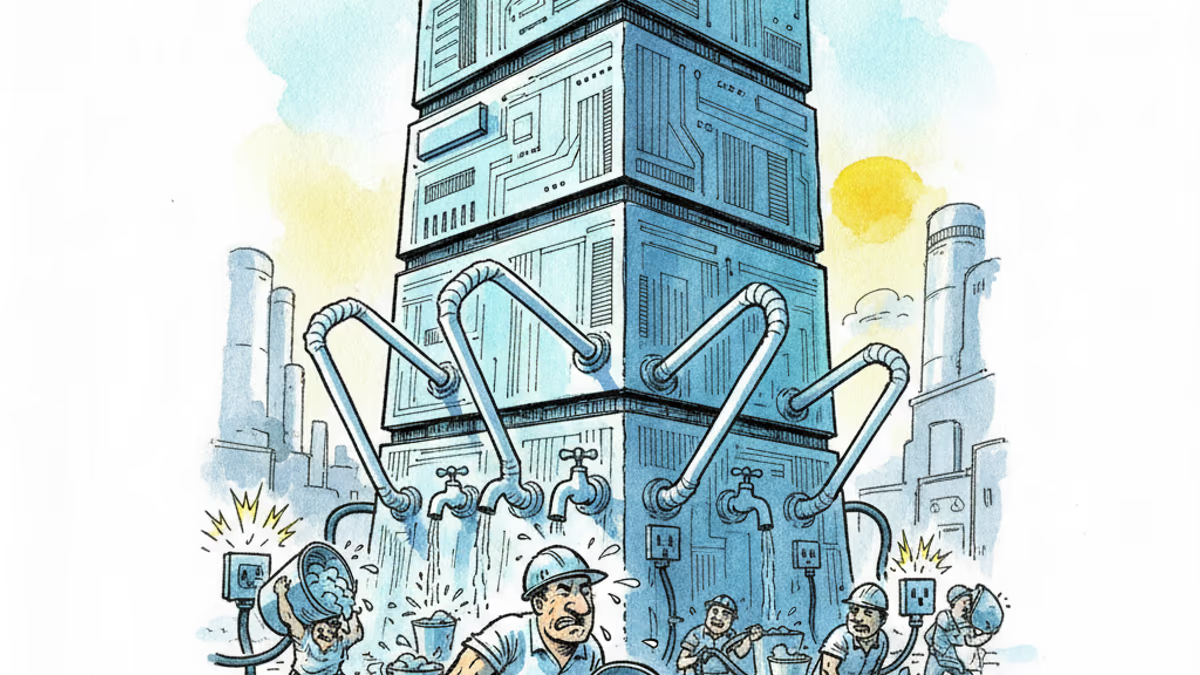
Samsung and SK unveiled a chip and AI investment package worth thousands of trillions of won on June 29. The headline number swings wildly by outlet, but the real contest isn't capital — it's water and power.
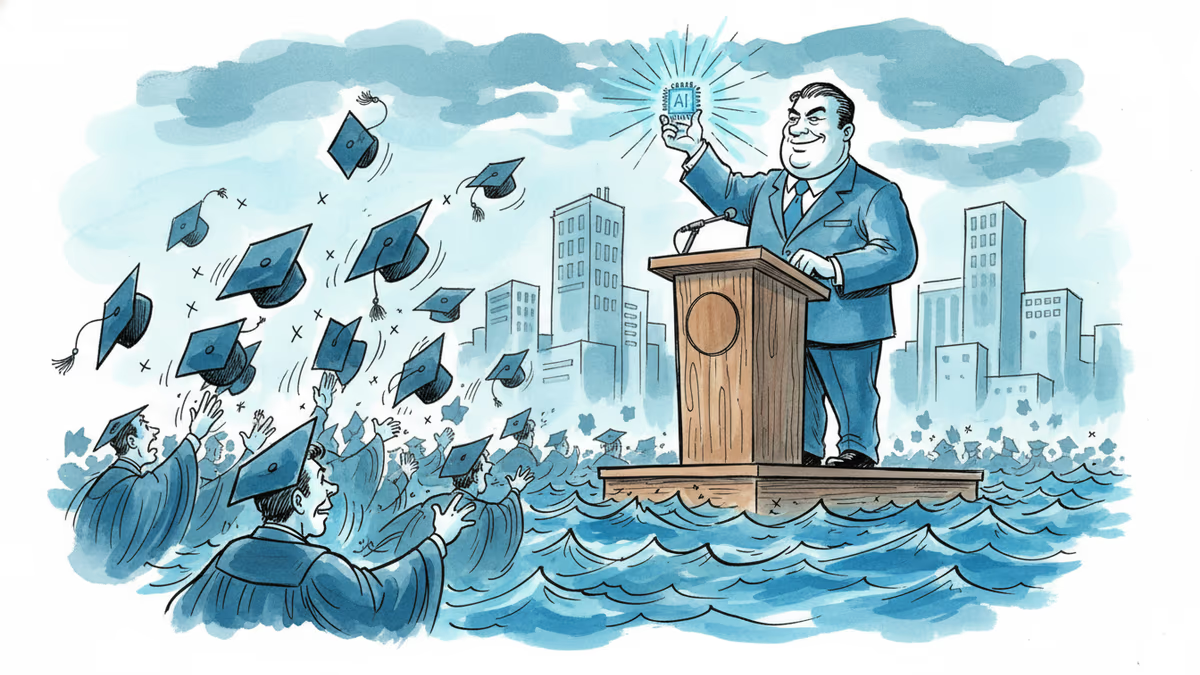
Viral videos show 2026 graduates jeering executives who praise AI at commencement ceremonies. It's not just rudeness — it's a signal about who pays for technological optimism.
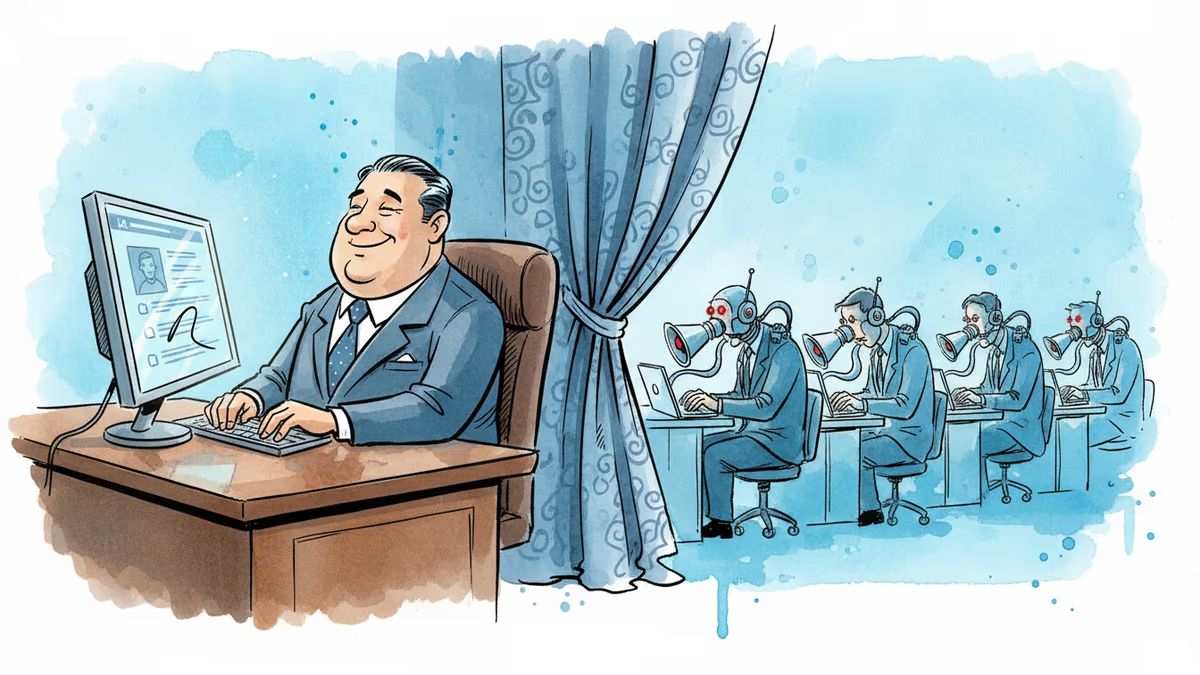
Filipino virtual assistants using AI to ghost-manage LinkedIn profiles for executives is now a structured industry. 30 comments a day, fake engagement rings, and a platform struggling to tell real from fabricated.
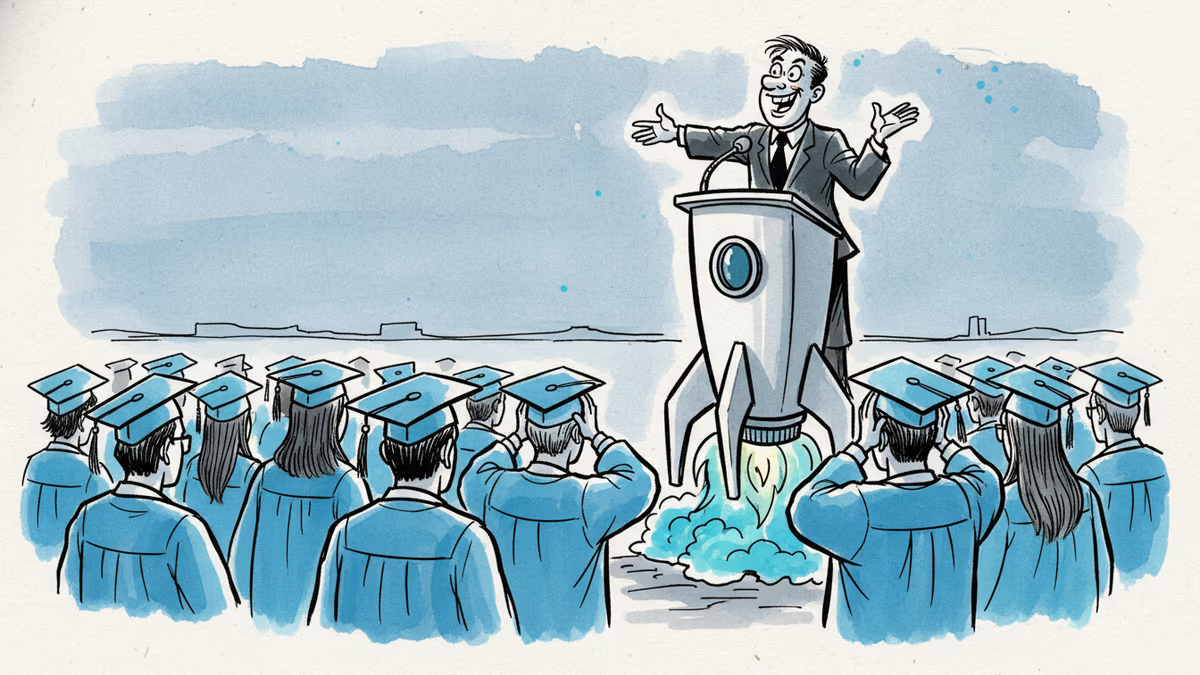
Two commencement speakers learned the hard way that AI enthusiasm doesn't land well with today's graduates. The backlash reveals a widening gap between tech optimism and Gen Z's economic reality.
Samsung and SK unveiled a chip and AI investment package worth thousands of trillions of won on June 29. The headline number swings wildly by outlet, but the real contest isn't capital — it's water and power.
Viral videos show 2026 graduates jeering executives who praise AI at commencement ceremonies. It's not just rudeness — it's a signal about who pays for technological optimism.
Filipino virtual assistants using AI to ghost-manage LinkedIn profiles for executives is now a structured industry. 30 comments a day, fake engagement rings, and a platform struggling to tell real from fabricated.
Two commencement speakers learned the hard way that AI enthusiasm doesn't land well with today's graduates. The backlash reveals a widening gap between tech optimism and Gen Z's economic reality.
Thoughts
Share your thoughts on this article
Sign in to join the conversation