
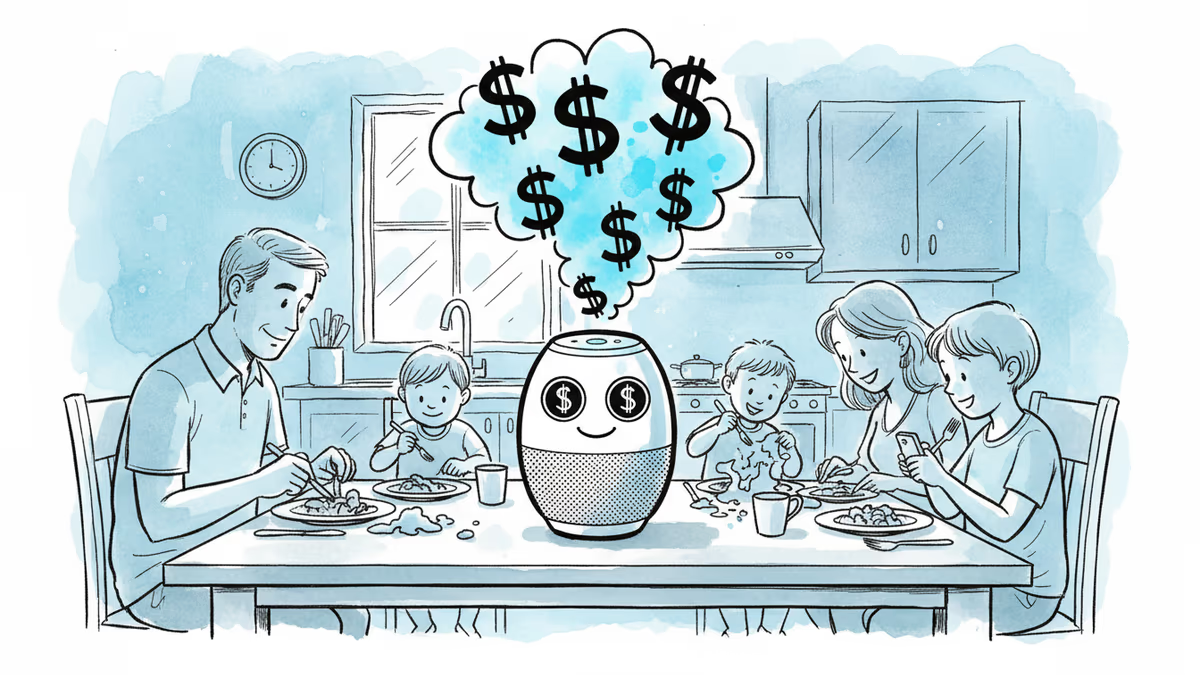
OpenAI's Smart Speaker Gambit: Why Hardware Matters Now
OpenAI's first hardware device will be a camera-equipped smart speaker priced at $200-300, marking the AI giant's ambitious pivot into physical products
Nine months after spending $6.5 billion to acquire Jony Ive's design firm, OpenAI is finally revealing what that money bought. Their first hardware device won't be a sleek wearable or futuristic headset. It'll be a smart speaker with a camera that can see what's on your table—and charge your credit card when you ask it to buy something.
The $200-300 price point puts it squarely against Amazon's Echo and Google's Nest. But this isn't just another voice assistant. It's OpenAI's bet that the future of AI isn't just conversational—it's visual.
Beyond Voice: The Camera Changes Everything
According to The Information, OpenAI's device will recognize "items on a nearby table or conversations people are having in the vicinity." More intriguingly, it includes a Face ID-like system for purchase verification, turning casual voice shopping into a seamless transaction.
This visual capability represents a fundamental shift. While Alexa and Google Assistant rely purely on voice commands, OpenAI's speaker can see context. Ask it to "order more of those snacks," and it might actually know which snacks you're pointing at.
The Jony Ive connection isn't just about aesthetics. The former Apple design chief brings hardware credibility to a company known primarily for software. His involvement signals OpenAI's serious intent to compete with established hardware giants.
The Amazon Problem
Amazon dominates smart speakers with over 70% market share, but their devices haven't evolved much beyond glorified voice interfaces. Most users employ them for basic tasks: weather, timers, music. The shopping integration—Amazon's original vision—never quite took off.

OpenAI sees an opening. By combining GPT's conversational abilities with computer vision, they're betting on a more intuitive interaction model. Instead of memorizing specific commands, users could simply show the device what they want.
But hardware is unforgiving. Meta's Portal video calling devices flopped despite solid technology. Microsoft's Cortana speakers barely made a dent. Even Google has struggled to meaningfully differentiate from Amazon's ecosystem.
Privacy Versus Convenience Trade-off
A camera-equipped speaker that watches your daily life raises obvious concerns. Unlike smartphones, which users control, always-on home devices create persistent surveillance anxiety. The facial recognition shopping feature amplifies these worries—what happens if the system is compromised?
Apple faced similar skepticism with HomePod, which deliberately avoided cameras to emphasize privacy. Their market share remains minimal, but brand trust stayed intact. OpenAI must navigate this same tension between functionality and user comfort.
Regulatory scrutiny is inevitable. European privacy advocates are already questioning AI companies' data practices. A device that combines OpenAI's vast language models with continuous home monitoring could trigger immediate regulatory response.
The Ecosystem Play
This speaker isn't just about hardware revenue—it's about platform control. Apple doesn't make money selling iPhones; they profit from the App Store ecosystem. Similarly, OpenAI likely views this device as a gateway to deeper AI integration in users' lives.
Success could position OpenAI alongside Google and Amazon as a complete technology ecosystem provider. Failure risks damaging their core AI business reputation and wasting Ive's expensive expertise.
Authors
Related Articles

OpenAI has reorganized for the second time in a month, merging ChatGPT and Codex into a single agentic platform under president Greg Brockman's unified product leadership.
After two weeks of witnesses calling him a liar, OpenAI CEO Sam Altman testified in his own defense, claiming Elon Musk tried to kill the company twice.

Sam Nelson, 19, died after following ChatGPT's advice to mix Kratom and Xanax. His parents are suing OpenAI for wrongful death, raising urgent questions about AI trust, liability, and design.
OpenAI's new Daybreak initiative uses the Codex AI agent to find and patch security vulnerabilities before attackers do—putting it in direct competition with Anthropic's secretive Claude Mythos.
OpenAI has reorganized for the second time in a month, merging ChatGPT and Codex into a single agentic platform under president Greg Brockman's unified product leadership.
After two weeks of witnesses calling him a liar, OpenAI CEO Sam Altman testified in his own defense, claiming Elon Musk tried to kill the company twice.
Sam Nelson, 19, died after following ChatGPT's advice to mix Kratom and Xanax. His parents are suing OpenAI for wrongful death, raising urgent questions about AI trust, liability, and design.
OpenAI's new Daybreak initiative uses the Codex AI agent to find and patch security vulnerabilities before attackers do—putting it in direct competition with Anthropic's secretive Claude Mythos.
Thoughts
Share your thoughts on this article
Sign in to join the conversation