

When Your Social Network Lets Others Build the Future
Bluesky integrated end-to-end encrypted messaging from startup Germ Network, showing how open ecosystems work differently from Big Tech platforms.
11 million Bluesky users can now send encrypted messages without leaving the app. The decentralized social network just integrated end-to-end encrypted messaging from startup Germ Network – something you'd never see on Meta or X.
But this isn't just about adding a feature. It's about how social platforms could work completely differently.
When the Community Builds What You Need
Germ Network started as a California startup founded by Tessa Brown, a Stanford communications scholar, and Mark Xue, a former Apple privacy engineer who worked on FaceTime and iMessage. Their encrypted messenger is now the first to launch natively within Bluesky.
Here's what makes this remarkable: Germ didn't lobby Bluesky for integration. They built their service independently using Bluesky's underlying AT Protocol, started with a private beta in August using "magic links" in user bios, and gained traction organically. Only then did Bluesky's team reach out to create a better user experience through native integration.
"We've been transparent about our planning and roadmap," said Xue, Germ's CTO. The integration was led by Bluesky's head of product Alex Benzer as an experiment in implementing third-party services.
Daily active users jumped 5x after the official integration announcement.
No Phone Number Required

Germ takes a different technical approach than Signal, WhatsApp, or iMessage. Instead of requiring phone numbers, it integrates with the AT Protocol for authentication. Users simply click a badge on a friend's Bluesky profile, which opens an iOS App Clip – a lightweight, temporary app experience. Log in with your AT Protocol handle, and you're messaging immediately.
The technology uses Messaging Layer Security (MLS), a newer standard approved by the Internet Engineering Task Force (IETF). Messages can't be decrypted by any other service, including Germ itself or Bluesky.
Downloading the full Germ app is optional – the App Clip handles basic messaging needs.
Why Big Tech Can't Do This
Bluesky deliberately chose not to build encryption directly into their protocol. As protocol engineer Daniel Holms explained, "E2EE is hard. This inherent complexity isn't something that the protocol team at Bluesky can just handle – it gets pushed out to every dev trying to build a client."
Instead, they're letting specialists handle the hard problems. Germ uses cutting-edge MLS technology while Bluesky focuses on the social networking protocol itself. It's a division of labor that Big Tech platforms, with their walled-garden approaches, can't replicate.
Interestingly, shortly after Bluesky added support for the Germ badge, another AT Protocol-based client called Blacksky did the same. One innovation spreading across an entire ecosystem.
The Monetization Question
Germ isn't focused on making money yet. Brown noted they're "currently focused on shipping more everyday messaging features, not on monetization." But when they do test paid features, they expect to target "prosumer power users like creators, journalists, and politicians" with features like multiple handle support and AI-powered message screening.
It's a stark contrast to how Big Tech monetizes through data collection and advertising.
Authors
Related Articles
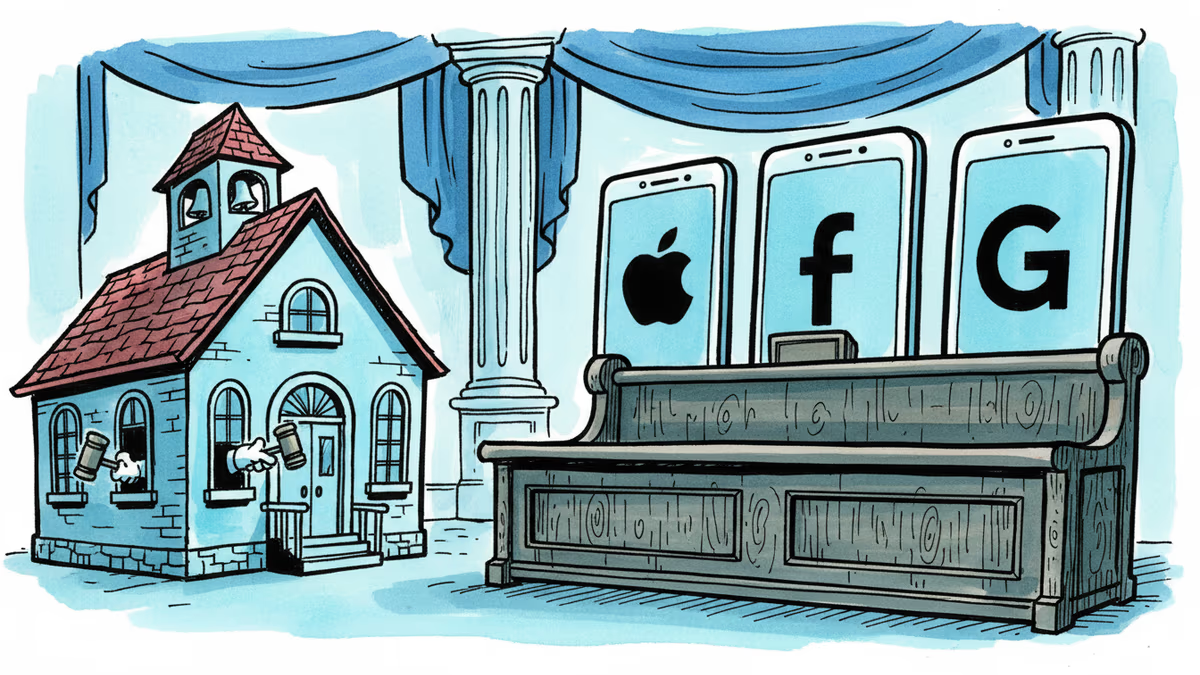
Snap, YouTube, and TikTok settled a landmark school district lawsuit over social media addiction. With 1,000+ similar cases pending, this could reshape Big Tech's liability landscape.
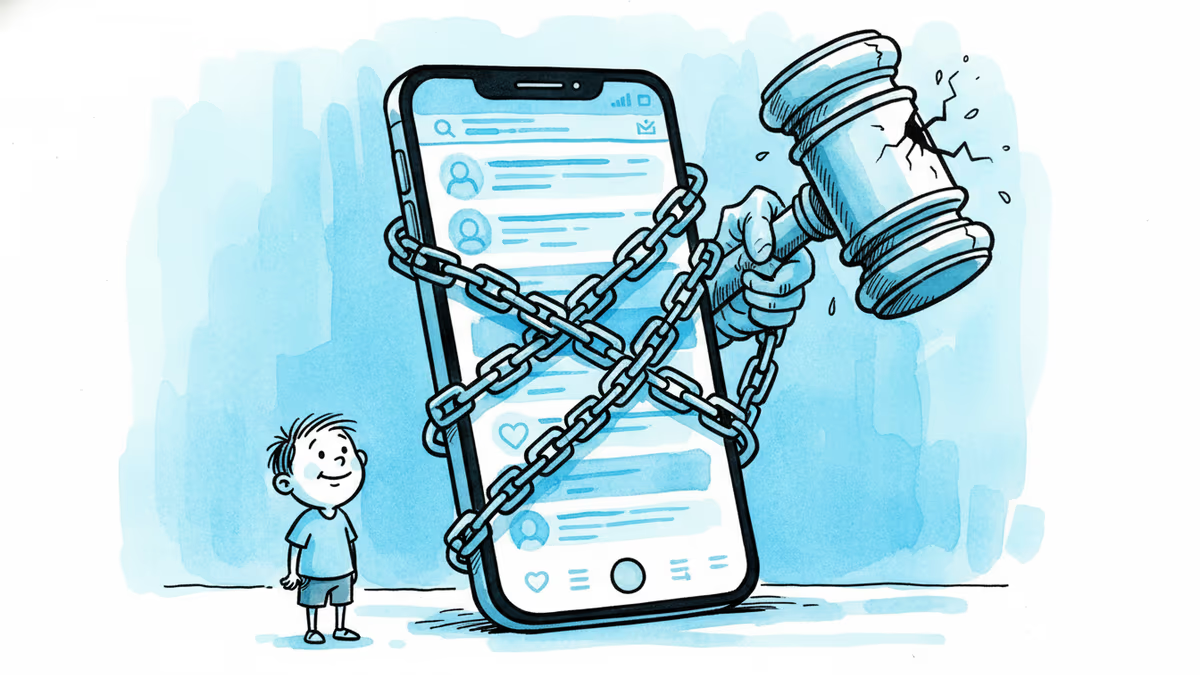
New Mexico already won $375 million from Meta. Now it wants something harder to give: a court order forcing Facebook, Instagram, and WhatsApp to redesign themselves. A three-week trial starts Monday.
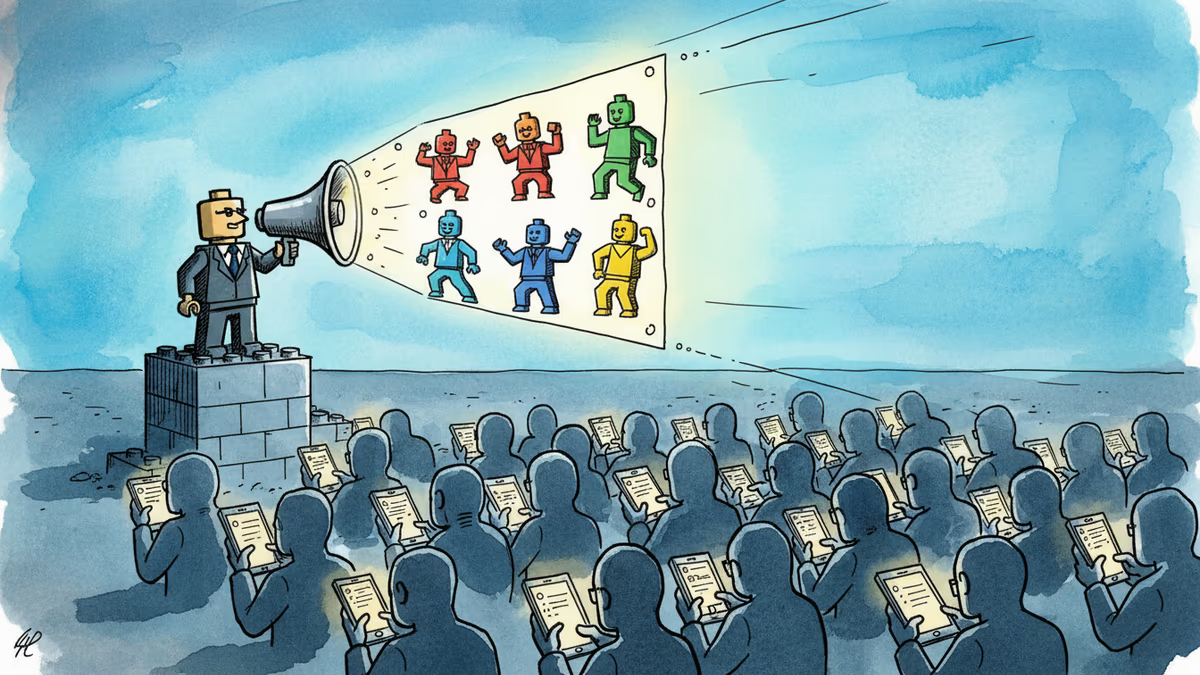
A small pro-Iran team is racking up millions of views with AI-generated Lego videos that mock Trump — and Americans are sharing them. What does that tell us about information warfare?
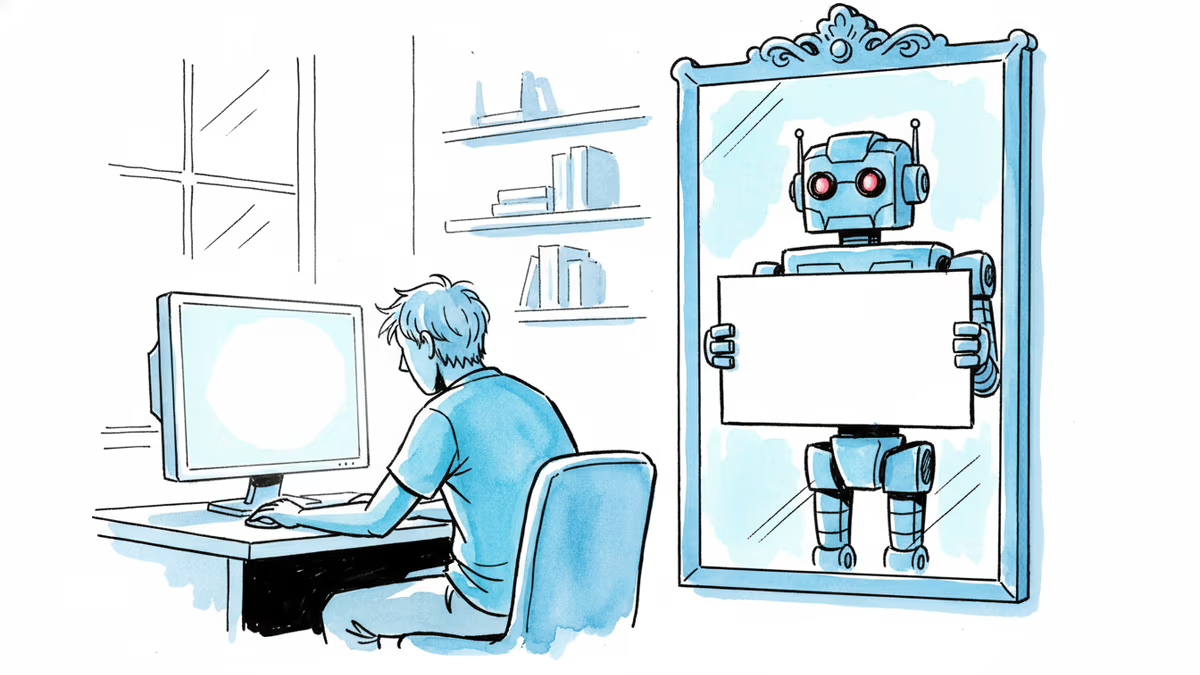
Reddit CEO Steve Huffman announced human verification for suspicious accounts. As AI bots flood the internet, one platform is drawing a line — but the line keeps moving.
Snap, YouTube, and TikTok settled a landmark school district lawsuit over social media addiction. With 1,000+ similar cases pending, this could reshape Big Tech's liability landscape.
New Mexico already won $375 million from Meta. Now it wants something harder to give: a court order forcing Facebook, Instagram, and WhatsApp to redesign themselves. A three-week trial starts Monday.
A small pro-Iran team is racking up millions of views with AI-generated Lego videos that mock Trump — and Americans are sharing them. What does that tell us about information warfare?
Reddit CEO Steve Huffman announced human verification for suspicious accounts. As AI bots flood the internet, one platform is drawing a line — but the line keeps moving.
Thoughts
Share your thoughts on this article
Sign in to join the conversation