
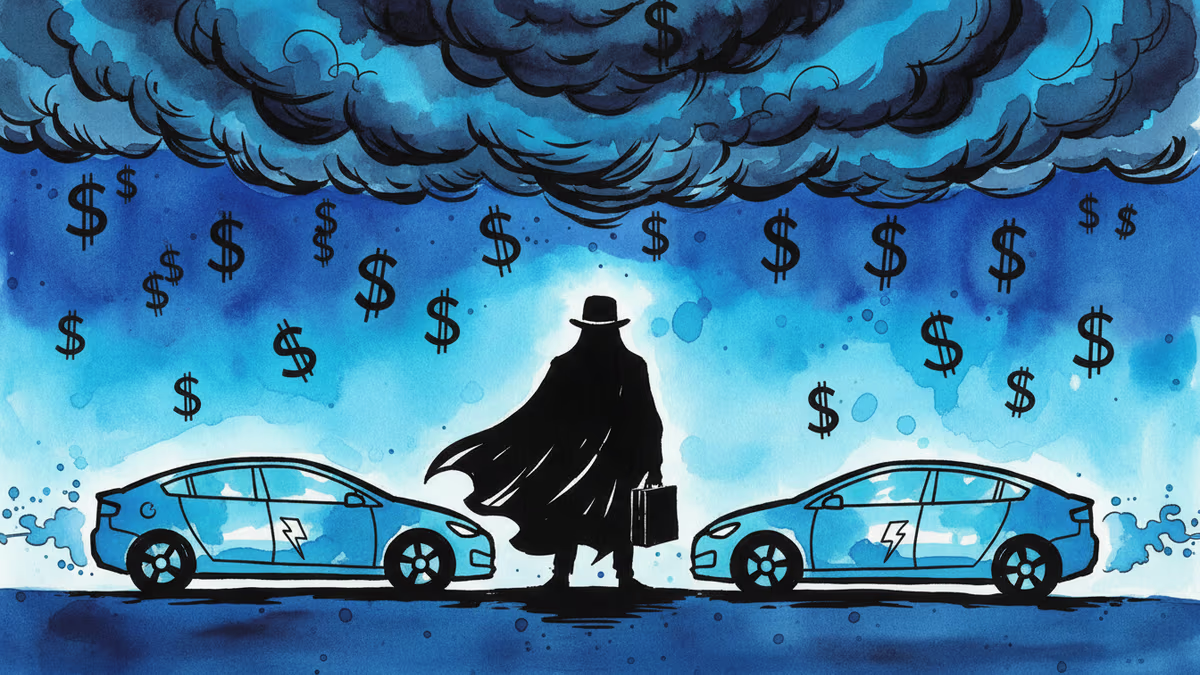
Epstein Files Expose Silicon Valley's Shadow Investors
Newly released Jeffrey Epstein documents reveal mysterious funding networks behind major EV startups including Faraday Future, Lucid Motors, and Canoo through businessman David Stern.
$200 million. That's how much mysterious businessman David Stern tried to convince Jeffrey Epstein to invest in electric vehicle startups a decade ago. The Justice Department's latest document release reveals how the convicted sex offender's network reached deep into Silicon Valley's EV boom, touching companies like Faraday Future, Lucid Motors, and Canoo.
The revelations aren't just about one criminal's business dealings. They expose how Silicon Valley's "don't ask, don't tell" investment culture created opportunities for shadowy money—and the people who brokered it.
The Ghost Investor Emerges
For years, David Stern was Silicon Valley's most enigmatic figure. TechCrunch's investigation reveals he was a founding investor in Canoo (now bankrupt), alongside the son-in-law of a former top Chinese Communist Party official and a Taiwanese electronics magnate. But Stern's background remained a mystery—until now.
The Epstein files show Stern wasn't just connected to Prince Andrew, as industry whispers suggested. He maintained a decade-long relationship with Epstein starting in 2008, evolving from a desperate fundraiser to a trusted dealmaker pitching hundreds of millions in EV investments.
"There was never a full picture of how a lot of these companies were funded," notes TechCrunch's Sean O'Kane, who uncovered the connections. The 2010s EV rush created perfect cover for opaque funding sources, especially as Chinese investors flooded Silicon Valley seeking the next Tesla.
The Fast Money Playbook
The emails reveal Stern and Epstein's true motivation: quick profits over company building. When Lucid Motors struggled to raise its Series D in the mid-2010s, Stern approached Epstein with inside information from Morgan Stanley. Their plan? Buy cheap, sell fast when Ford's rumored acquisition materialized.
"Can you get information from Morgan Stanley?" Stern asked. Epstein delivered, and they calculated whether to flip the investment when Ford came calling months later. Though they never invested in Lucid, the exchange shows how they viewed startups—not as future transportation solutions, but as trading opportunities.

This wasn't unusual. The mobility hype cycle attracted "secretive types" looking to capitalize on automakers' desperation to own "the future of transportation," as one industry observer noted.
The Known Criminal Factor
Here's the most damning detail: every deal happened after 2008, when Epstein pleaded guilty to soliciting prostitution from a minor. Silicon Valley's power players weren't dealing with an unknown quantity—they were comfortable doing business with someone who already had a criminal record.
"Because he was a source of connections to power, to famous names, to money, a lot of people were just willing to look past that," explains one tech reporter who covered the era.
The Broader Silicon Valley Problem
The Epstein-Stern network represents something larger than individual bad actors. It highlights Silicon Valley's structural blind spots around due diligence and ethical investing. When venture capital moves fast and asks few questions, it creates space for questionable money and the people who broker it.
Consider the pattern: mysterious funding sources, offshore connections, and investors who prioritize quick returns over sustainable business building. Sound familiar? It should—similar dynamics play out across today's startup ecosystem, from crypto to AI.
What Founders Should Ask
For entrepreneurs seeking funding, the Epstein revelations raise uncomfortable questions. How thoroughly should cash-strapped startups investigate their investors' backgrounds? What red flags should trigger deeper scrutiny?
The mobility boom shows what happens when nobody asks hard questions. Companies like Canoo burned through hundreds of millions before collapsing, leaving employees and smaller investors holding worthless equity while early backers like Stern had already moved on.
Authors
Related Articles
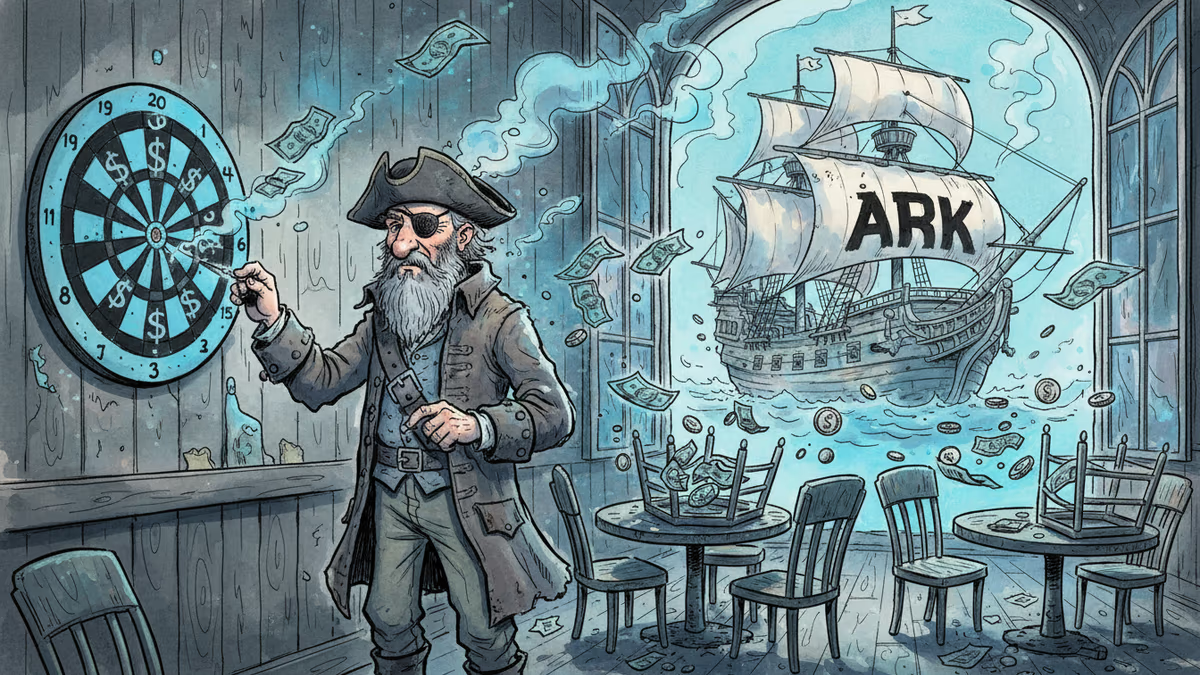
Lucra Sports CEO Dylan Robbins landed Cathie Wood's ARK Invest as a Series B lead without building AI. The story behind his unconventional fundraising playbook.
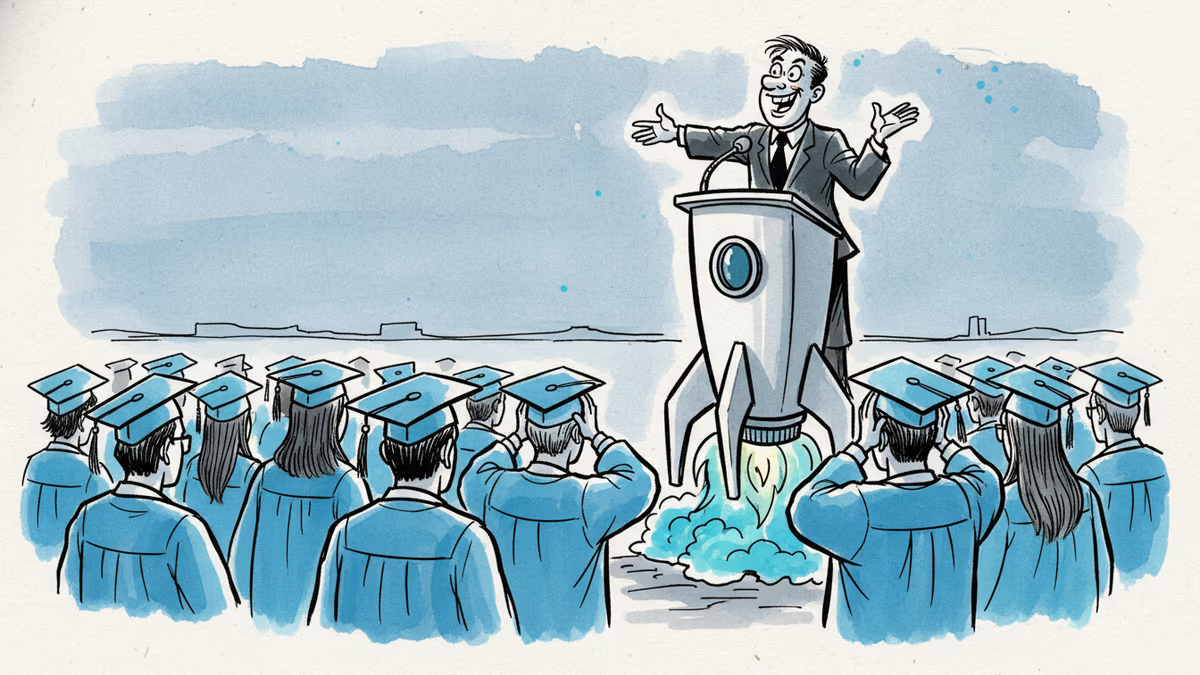
Two commencement speakers learned the hard way that AI enthusiasm doesn't land well with today's graduates. The backlash reveals a widening gap between tech optimism and Gen Z's economic reality.
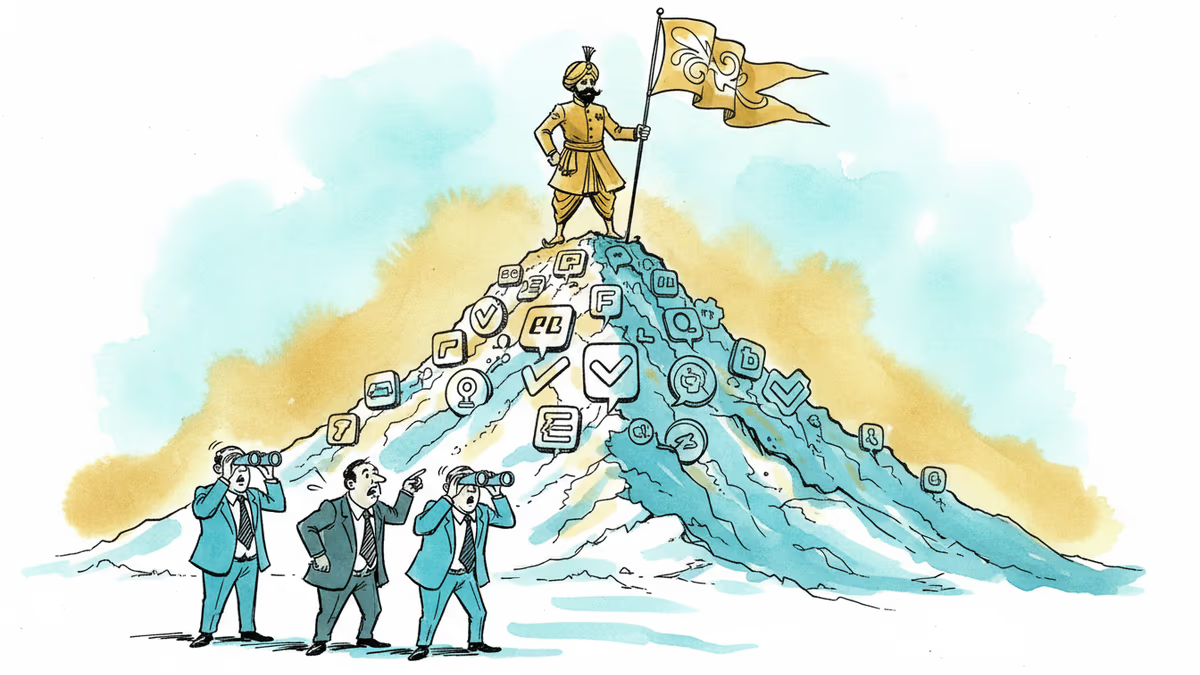
Indian venture capital has quietly displaced Silicon Valley in its own backyard. Only one American VC made India's top 10 investor list last year. Here's why that matters beyond India.
E-commerce fintech Parker filed for Chapter 7 bankruptcy on May 7, despite raising over $200M. The YC-backed startup's abrupt shutdown left small business customers scrambling—and exposed the fragility of vertical fintech models.
Lucra Sports CEO Dylan Robbins landed Cathie Wood's ARK Invest as a Series B lead without building AI. The story behind his unconventional fundraising playbook.
Two commencement speakers learned the hard way that AI enthusiasm doesn't land well with today's graduates. The backlash reveals a widening gap between tech optimism and Gen Z's economic reality.
Indian venture capital has quietly displaced Silicon Valley in its own backyard. Only one American VC made India's top 10 investor list last year. Here's why that matters beyond India.
E-commerce fintech Parker filed for Chapter 7 bankruptcy on May 7, despite raising over $200M. The YC-backed startup's abrupt shutdown left small business customers scrambling—and exposed the fragility of vertical fintech models.
Thoughts
Share your thoughts on this article
Sign in to join the conversation