
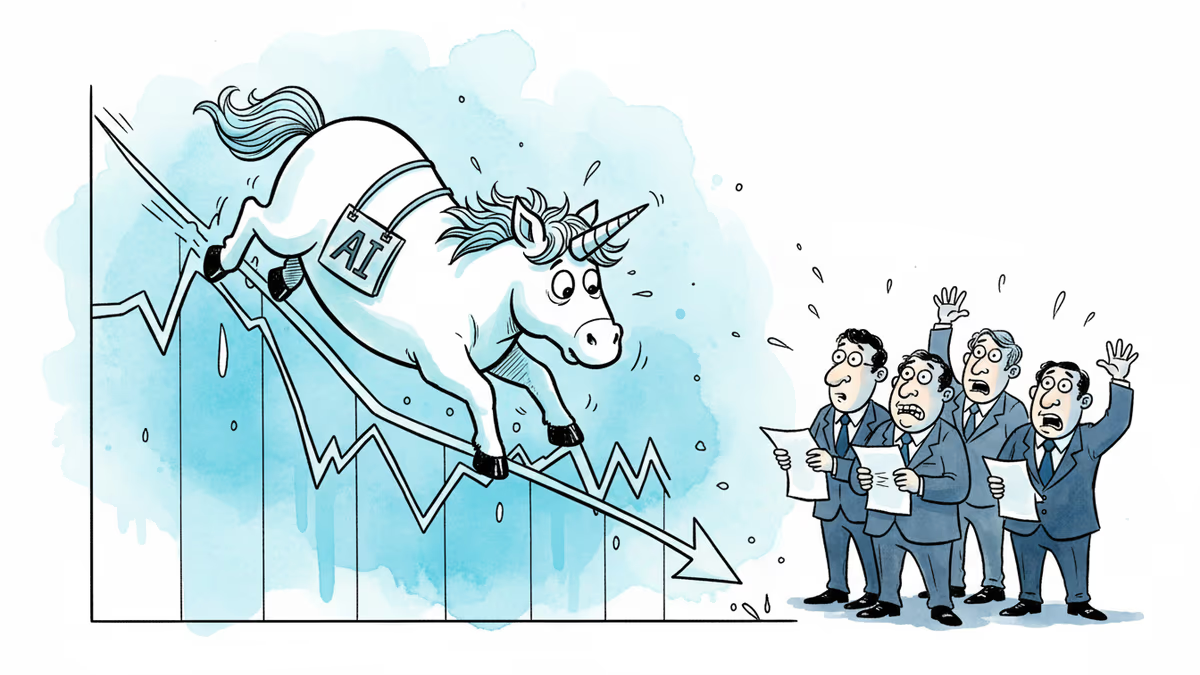
India's First AI Unicorn Stumbles 7% on Debut Day
Fractal Analytics' lukewarm IPO reception reveals the reality check hitting AI investments as markets mature beyond the hype
India's first AI unicorn just learned a harsh lesson about market reality. Fractal Analytics closed its debut trading day at ₹873.70, down 7% from its ₹900 issue price, valuing the company at roughly $1.6 billion—a far cry from its $2.4 billion private market high just seven months ago.
The 22-Year 'Overnight' Success
Here's what makes Fractal's story fascinating: it operated as a traditional data analytics firm for over two decades before pivoting to AI in 2022. Yet it carries the prestigious title of "India's first AI unicorn." This timeline reveals something important about the current AI investment landscape.
The company sells AI and analytics software to large enterprises across financial services, retail, and healthcare. Most revenue comes from overseas markets, particularly the U.S. Financially, the numbers look solid: revenue jumped 26% to ₹27.65 billion ($304.8 million) in fiscal 2025, and the company swung from a loss to a ₹2.21 billion profit.
So why the cold shoulder from investors?
When Reality Meets Hype
The warning signs were already there. Fractal had to slash its IPO size by more than 40% after bankers advised "conservative pricing." The original ₹49 billion offering became ₹28.34 billion—a significant retreat from initial ambitions.

The timing didn't help either. The IPO came on the heels of a major sell-off in Indian software stocks, with jittery investors still recovering from broader market volatility.
But there's a deeper issue at play: investor skepticism about what constitutes a "real" AI company versus traditional tech firms with AI branding. Can a 24-year-old data analytics company truly transform into an AI innovator overnight?
India's AI Ambitions Hit a Speed Bump
Fractal's lukewarm reception comes as India aggressively positions itself as a global AI hub. This week's AI Impact Summit in New Delhi brought together technology leaders and policymakers, with companies like OpenAI and Anthropic increasingly engaging with India's government and developer ecosystem.
The country offers compelling advantages: massive scale, deep talent pool, and growing appetite for AI tools. But Fractal's debut suggests investors are becoming more discerning about distinguishing between genuine AI innovation and AI-branded services.
The Valuation Reality Check
The market's message is clear: AI labels alone don't guarantee premium valuations anymore. Despite solid financials and growth metrics, Fractal couldn't maintain its private market highs in the public arena.
This shift reflects broader market maturation. Early AI investments were often driven by potential and promise. Now, investors demand clearer evidence of sustainable competitive advantages and differentiated technology.
For other AI companies eyeing public markets, Fractal's experience offers a preview of heightened scrutiny. Revenue growth and profitability—once sufficient for tech IPOs—may not be enough in the AI space without demonstrable technological moats.
Authors
Related Articles
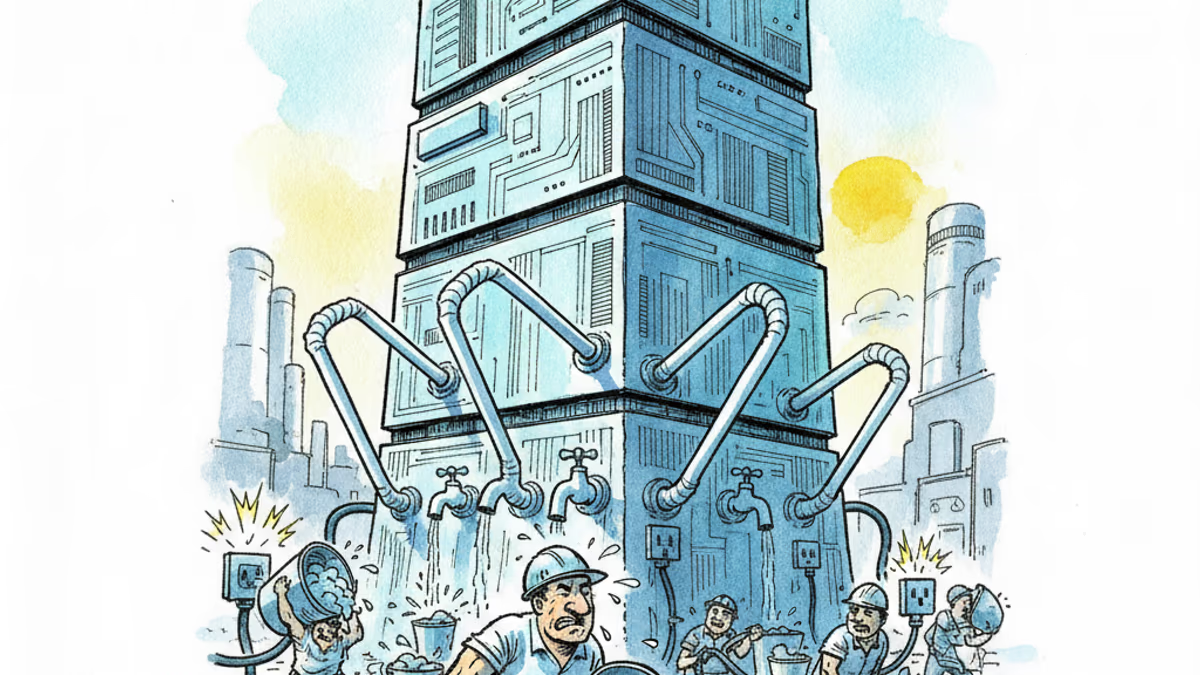
Samsung and SK unveiled a chip and AI investment package worth thousands of trillions of won on June 29. The headline number swings wildly by outlet, but the real contest isn't capital — it's water and power.
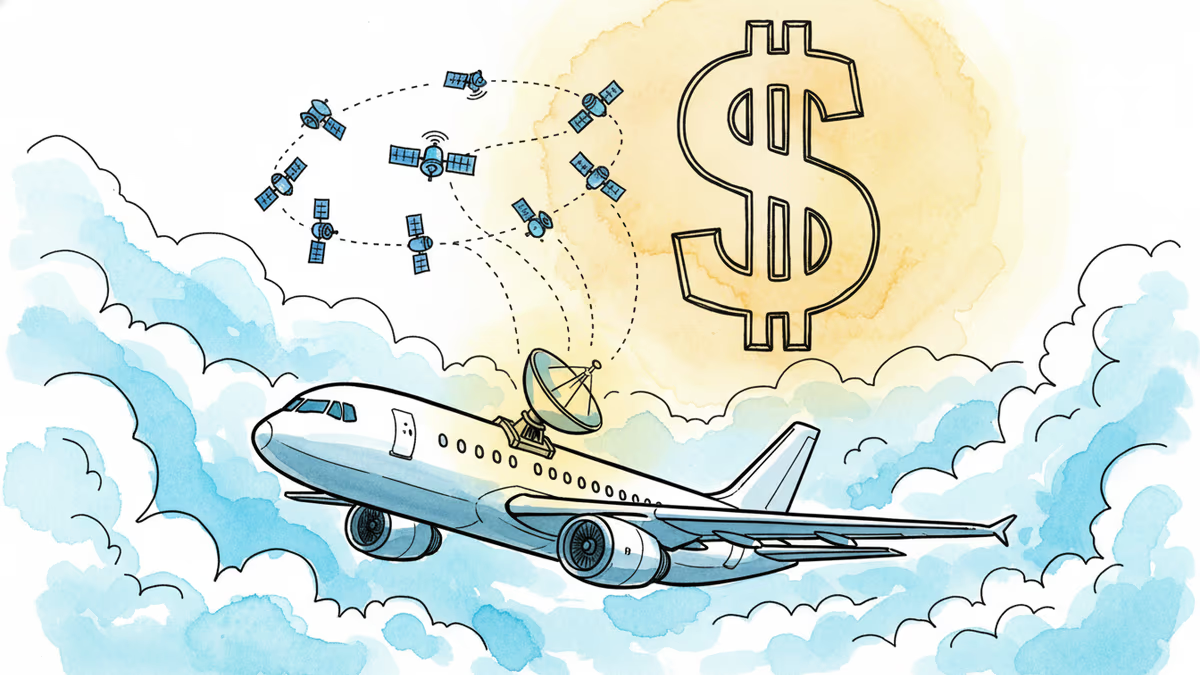
American Airlines just signed Starlink for 500+ aircraft. It's not just about faster inflight internet — it's a calculated move in the run-up to what could be the largest IPO in history.
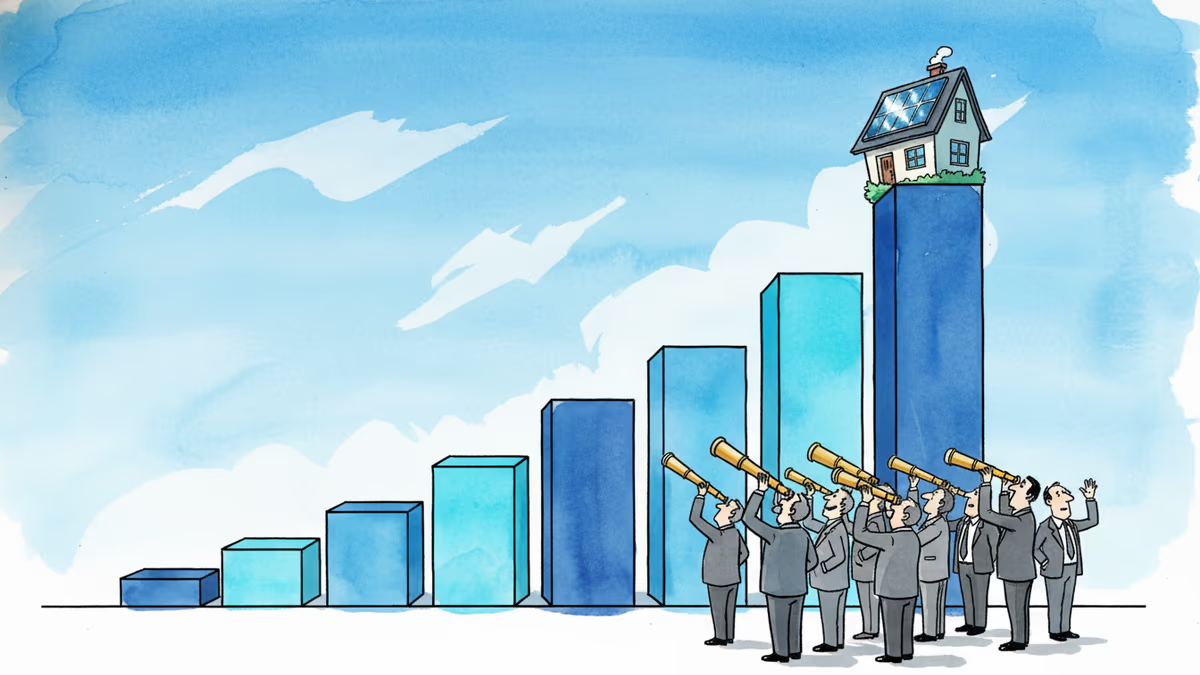
SolarSquare is raising $55-60M at a $450-500M valuation, more than doubling its worth in 18 months. Here's what's driving investor conviction in India's residential solar market.
SpaceX's upgraded Starship V3 completed its first test flight, deploying 20 Starlink simulators but losing the Super Heavy booster. With an IPO weeks away, the stakes just got higher.
Samsung and SK unveiled a chip and AI investment package worth thousands of trillions of won on June 29. The headline number swings wildly by outlet, but the real contest isn't capital — it's water and power.
American Airlines just signed Starlink for 500+ aircraft. It's not just about faster inflight internet — it's a calculated move in the run-up to what could be the largest IPO in history.
SolarSquare is raising $55-60M at a $450-500M valuation, more than doubling its worth in 18 months. Here's what's driving investor conviction in India's residential solar market.
SpaceX's upgraded Starship V3 completed its first test flight, deploying 20 Starlink simulators but losing the Super Heavy booster. With an IPO weeks away, the stakes just got higher.
Thoughts
Share your thoughts on this article
Sign in to join the conversation