
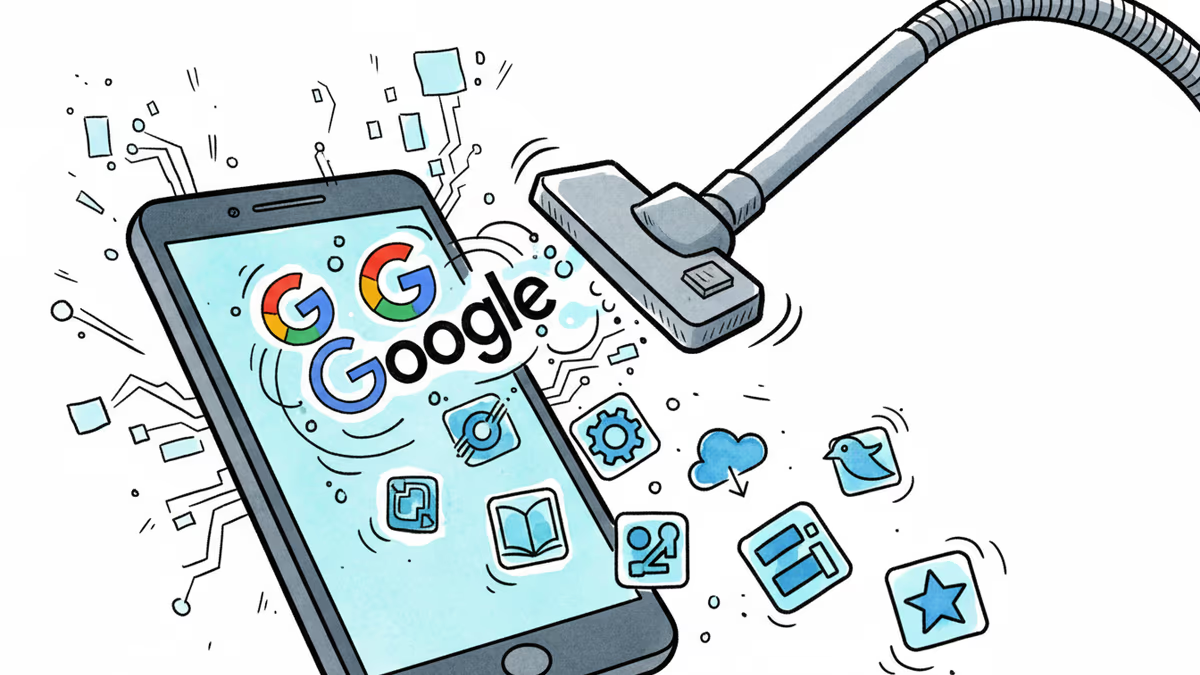
Can You Really Live Without Google on Your Phone?
Privacy-focused Android alternatives are gaining traction, but are they ready for everyday use? We tested the reality of de-Googled smartphones.
The $749 Question: Freedom or Functionality?
A Fairphone 6 sits on the desk, looking like any other Android device. But boot it up, and something's missing—every trace of Google has been surgically removed. No Play Store, no Gmail, no location tracking. Instead, /e/OS powers a smartphone experience that promises privacy without compromise.
It sounds too good to be true. And for years, it mostly was.
But WIRED's latest testing suggests we've hit a turning point. De-Googled phones aren't just working—they're working well. The /e/OS Fairphone 6 achieved 99% app compatibility while blocking trackers that most users never knew existed. GrapheneOS on Pixel devices offers military-grade security with surprisingly smooth daily use.
The question isn't whether you can escape Google's ecosystem anymore. It's whether you should.
The Technical Reality Check
Let's be clear: these aren't truly "Google alternatives." They're modified Android systems running the Android Open Source Project (AOSP) with Google's surveillance apparatus ripped out and replaced with privacy-focused alternatives.
The magic happens through projects like microG—open-source code that mimics Google Play Services just enough to keep apps happy, but without the data harvesting. Apps think they're talking to Google, but they're actually talking to a privacy-respecting middleman.
Still, there are trade-offs. Google Pay won't work (Google actively blocks it). Some banking apps refuse to run on "modified" systems. And here's the kicker: most users have to leave their bootloader unlocked—a security vulnerability that defeats some of the privacy gains.

GrapheneOS solves this on Pixel phones, allowing bootloader relocking. But that limits you to Google's own hardware, which feels ironic when you're trying to escape Google.
Three Paths to Privacy
For the Mainstream User: The /e/OS Fairphone 6 offers the smoothest experience. Pre-installed privacy features, a curated app store with privacy ratings (1-10 scale), and the ability to install Play Store apps anonymously. The catch? It only works on T-Mobile networks in the US.
For the Security-Conscious: GrapheneOS on Pixel devices provides unmatched security features. "Scopes" let you fake app permissions—Gmail thinks it has full contact access but only sees your work contacts. The bootloader stays locked, maintaining hardware security.
For the Tinkerer: LineageOS offers maximum customization across hundreds of devices. But you'll need to handle the de-Googling yourself, and most users end up with unlocked bootloaders.
The App Store Paradox
Here's where things get interesting. /e/OS's App Lounge combines apps from multiple sources—Play Store, F-Droid, and others—while rating each app's privacy impact. An app with 10/10 privacy has no trackers. A 1/10 app is surveillance software masquerading as utility.
This transparency is revolutionary. When did you last know which of your apps were tracking you? The App Lounge makes the invisible visible, turning privacy from an abstract concept into actionable information.
The Broader Stakes
De-Googled phones represent more than individual choice—they're a stress test for Big Tech's business model. If 99% of apps work without Google's data collection, what does that say about the necessity of surveillance capitalism?
Regulators are watching. The EU's Digital Markets Act already forces Apple to allow alternative app stores. Similar pressure on Google could make de-Googled experiences more mainstream.
But there's a chicken-and-egg problem. These systems need more users to attract developer attention, but they need better developer support to attract more users.
Authors
Related Articles
The FTC fined Cox Media and two ad firms $930,000 — not for actually eavesdropping on users, but for falsely claiming they could. The case raises uncomfortable questions about surveillance capitalism.
Two commencement speakers learned the hard way that AI enthusiasm doesn't land well with today's graduates. The backlash reveals a widening gap between tech optimism and Gen Z's economic reality.
A Utah woman was sentenced to life in prison partly because of her Google searches and deleted texts. The Kouri Richins case reveals how digital footprints have become the courtroom's most reliable witness.
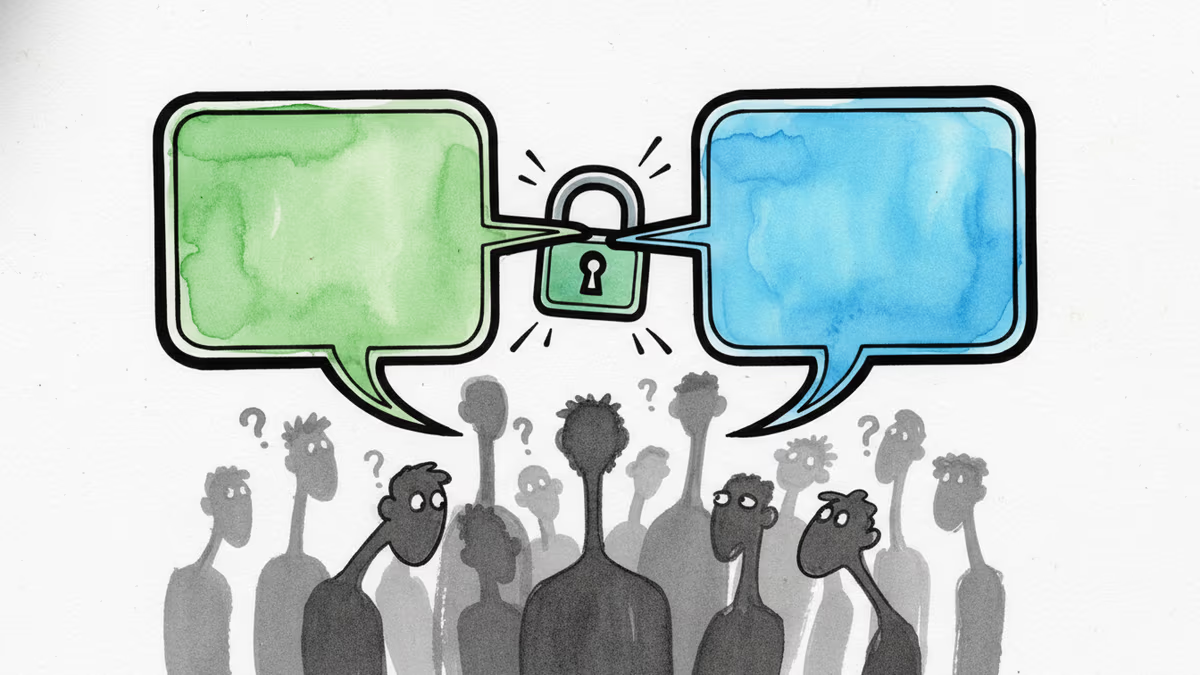
After 15 years of fragmented mobile messaging, Apple and Google are rolling out end-to-end encrypted RCS messaging between iPhones and Android devices. Here's what changed, why it took so long, and what it means for your privacy.
The FTC fined Cox Media and two ad firms $930,000 — not for actually eavesdropping on users, but for falsely claiming they could. The case raises uncomfortable questions about surveillance capitalism.
Two commencement speakers learned the hard way that AI enthusiasm doesn't land well with today's graduates. The backlash reveals a widening gap between tech optimism and Gen Z's economic reality.
A Utah woman was sentenced to life in prison partly because of her Google searches and deleted texts. The Kouri Richins case reveals how digital footprints have become the courtroom's most reliable witness.
After 15 years of fragmented mobile messaging, Apple and Google are rolling out end-to-end encrypted RCS messaging between iPhones and Android devices. Here's what changed, why it took so long, and what it means for your privacy.
Thoughts
Share your thoughts on this article
Sign in to join the conversation