
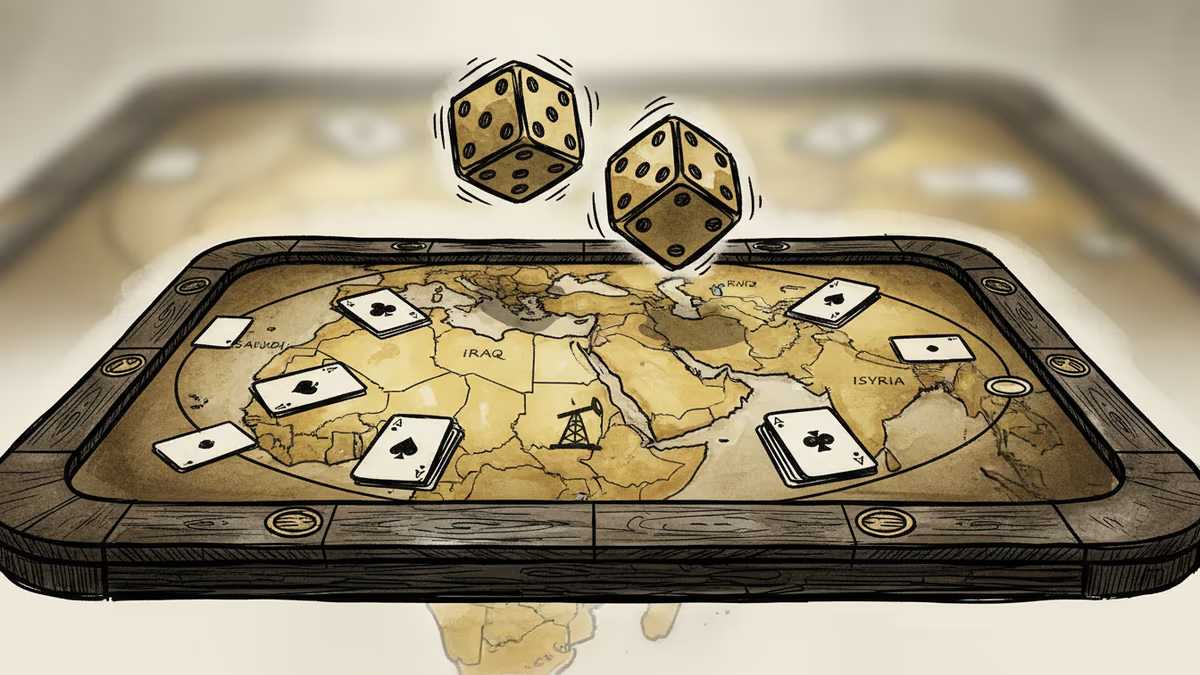
Trump Killed Iran's Supreme Leader. Now What?
Trump's Iran strikes killed Khamenei, reshaping Middle East order. Analyzing the strategic gamble and global implications of America's newest war.
Three American soldiers are already dead
Donald Trump's weekend war with Iran has claimed its first American casualties: three service members killed, five wounded, according to US Central Command. This happened just 48 hours after Israeli and American airstrikes killed Iran's Supreme Leader Ali Khamenei.
Welcome to "Operation Epic Fury"—a name that sounds more like a video game than a military campaign that could reshape the Middle East for decades.
The casino mogul's biggest bet
Trump bankrupted multiple casinos during his real estate career. Now, as president, he's made perhaps the biggest gamble of his political life. The difference? This time, the chips are human lives.
His previous military adventures looked surgical and clean. Last year's stealth bomber strikes on Iranian nuclear facilities. The audacious raid that captured Venezuela's Nicolás Maduro weeks ago. Both operations: zero American deaths.
But Iran isn't Venezuela. Tehran has already launched retaliatory strikes across the Gulf—hitting Kuwait, Qatar, Bahrain, Israel, the UAE, Saudi Arabia, and Jordan. The butterfly wings are flapping, and the hurricane is building.
The known unknowns
Trump's calculation seems simple: Iran is weaker than it's been in a generation. Israel dismantled Hezbollah with explosive pagers. Trump himself killed Iranian general Qasem Soleimani in 2020. Iran's proxy network is in tatters.

But "weaker" doesn't mean "powerless." Intelligence officials still warn that Iran seeks to kill Trump administration officials involved in the Soleimani assassination. (Trump, in a fit of presidential pique, pulled security details from Mike Pompeo, Brian Hook, and John Bolton—all Iranian targets.)
The US excels in opening moves—unparalleled intelligence, technological superiority, surgical precision. But what happens when Iran has time to respond? What happens when the initial shock wears off?
Victory looks like... what exactly?
Here's where Trump's strategy gets murky. He campaigned on ending "Forever Wars." J.D. Vance wrote an op-ed titled "Trump's Best Foreign Policy? Not Starting Any Wars." Trump declared in his victory speech: "I'm not going to start wars, I'm going to stop wars."
Yet in two months, he's launched two decapitation strikes against US adversaries. Venezuela faded from headlines almost immediately after Maduro's capture. What's the long-term plan there? Crickets.
Now Trump posts on Truth Social about Iran: "This is the single greatest chance for the Iranian people to take back their Country." He promises bombing will continue "uninterrupted throughout the week or, as long as necessary to achieve our objective of PEACE THROUGHOUT THE MIDDLE EAST."
Compare this to the Bush administration's Iraq planning—which looked thin at the time. Dick Cheney's promise that "We will, in fact, be greeted as liberators" seems almost Herculean in its strategic depth compared to Trump's apparent hope that Iran is just a few JDAMs away from breaking out in democracy.
The ripple effects
Modern history teaches us that upheaval in Iran creates consequences that unfold for decades. The 1979 revolution's downstream effects still shape American foreign policy today.
Oil markets are already jittery. The Strait of Hormuz—through which 20% of global oil passes—remains vulnerable. Iran's death could trigger refugee flows, proxy conflicts across the region, and potential nuclear proliferation as other regional powers hedge their bets.
Then there's the North Korea factor. Pyongyang has watched its longtime military cooperation partner get regime-changed. The message? Nuclear weapons might be the only insurance policy that works.
Authors
Related Articles
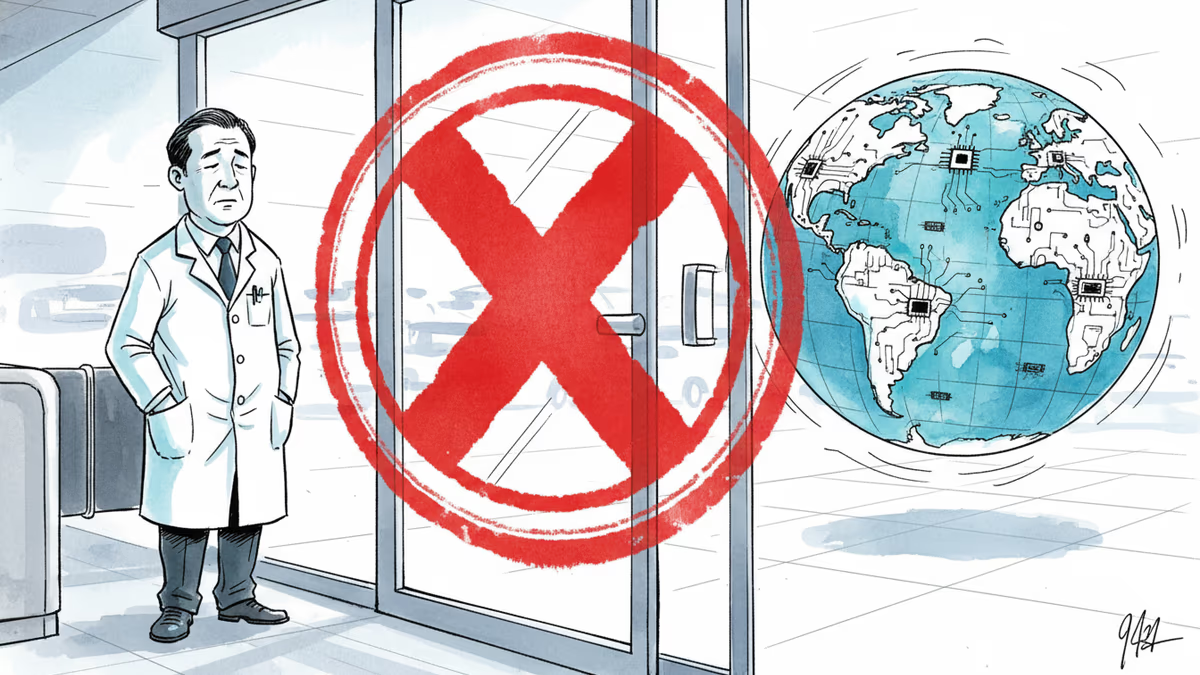
China is restricting AI researchers and startup founders from traveling abroad as the U.S.-China AI performance gap narrows to just 2.7%. What Beijing's talent lockdown means for the global AI race.
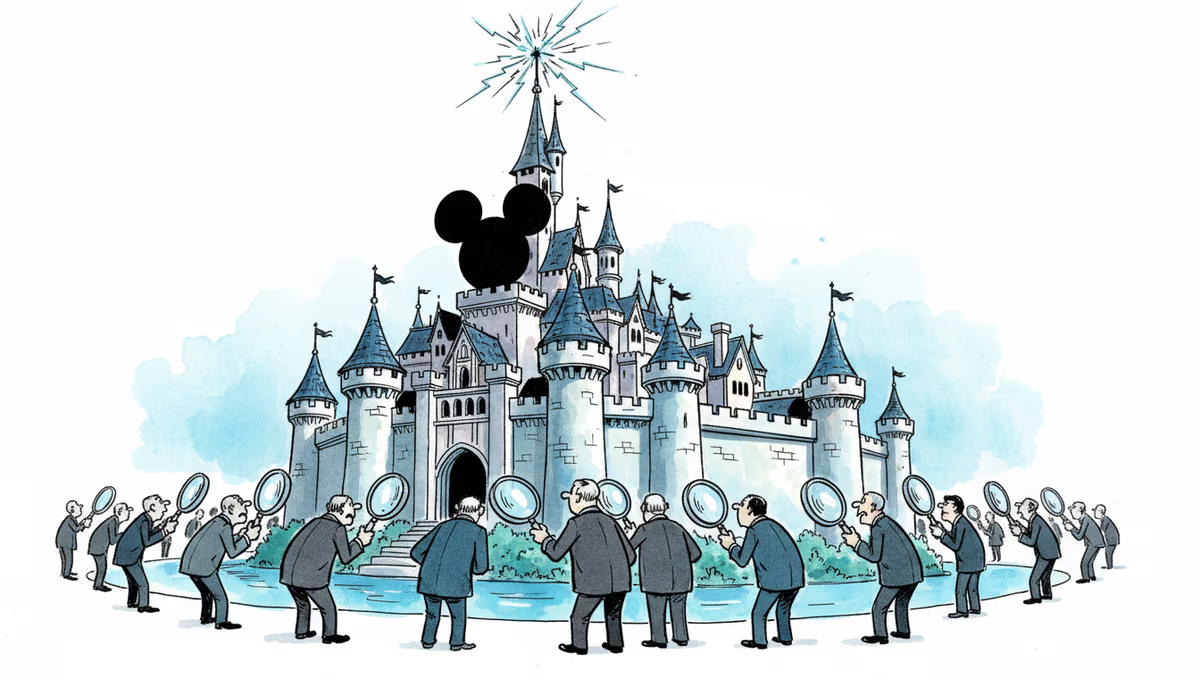
Josh D'Amaro took over Disney with a bold Disney Plus vision. Days later, he's in a First Amendment fight with the Trump administration over The View. What does this mean for media freedom?
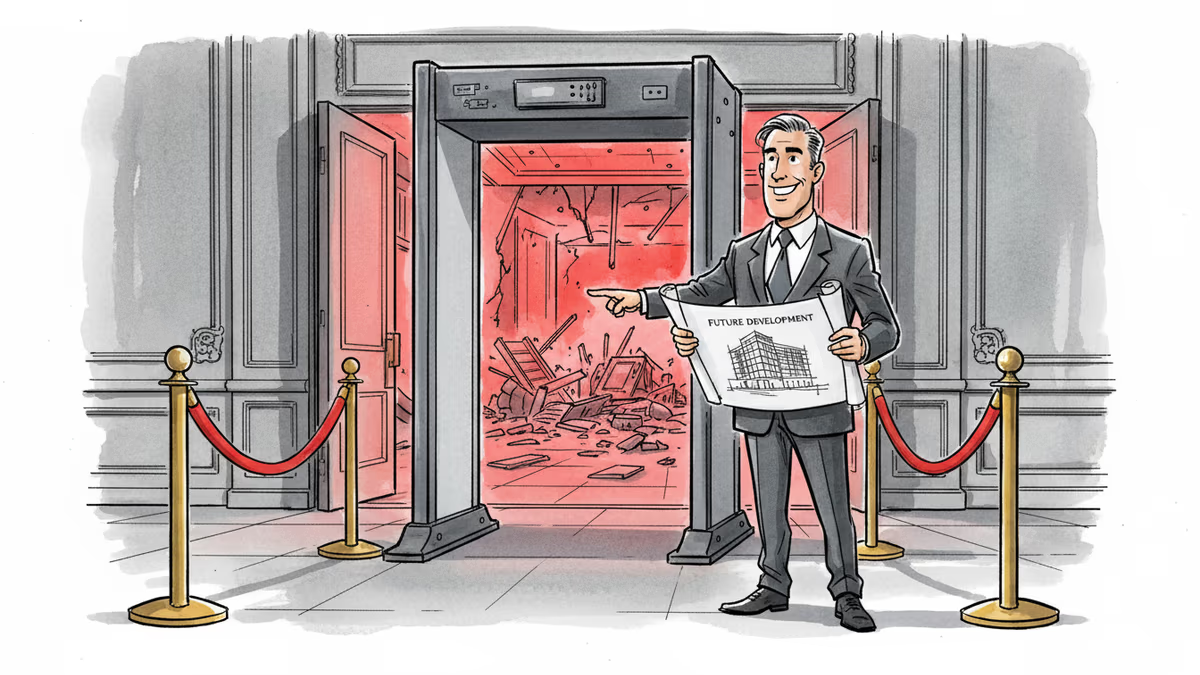
A gunman attacked a Secret Service checkpoint at the White House Correspondents' Dinner. Trump's first public reaction wasn't about security. It was about his $400M ballroom project.
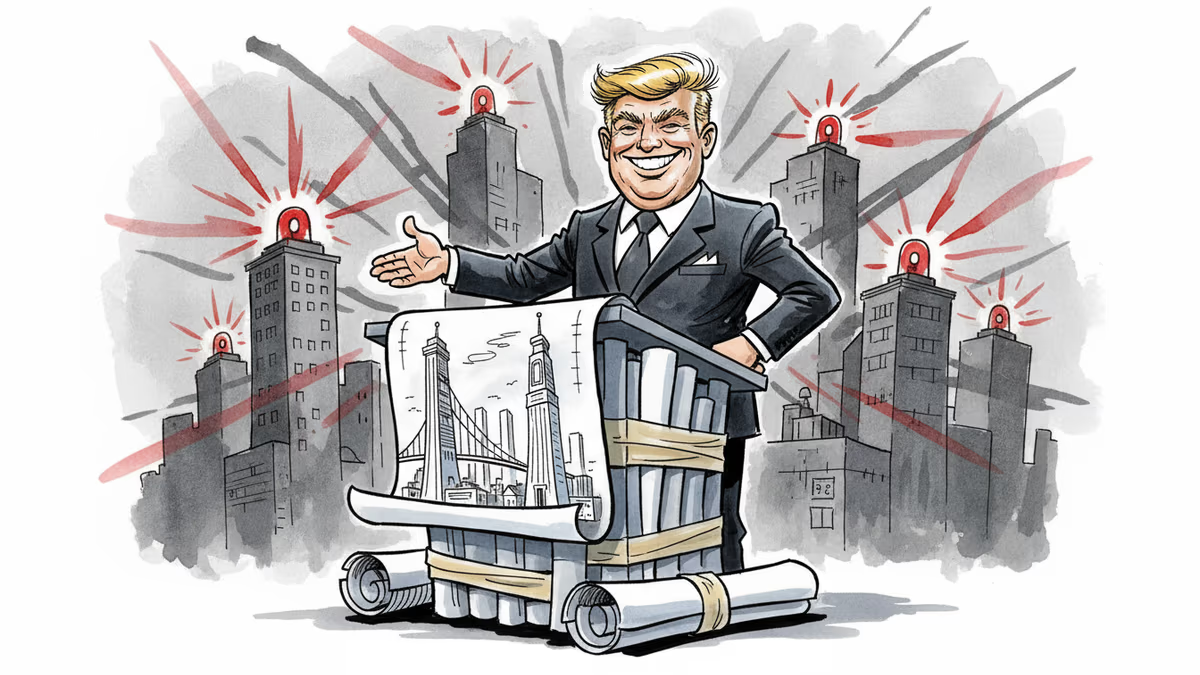
Hours after an armed suspect attempted to breach the White House Correspondents Dinner, Trump used the security scare to publicly defend his White House ballroom project. What does that tell us?
China is restricting AI researchers and startup founders from traveling abroad as the U.S.-China AI performance gap narrows to just 2.7%. What Beijing's talent lockdown means for the global AI race.
Josh D'Amaro took over Disney with a bold Disney Plus vision. Days later, he's in a First Amendment fight with the Trump administration over The View. What does this mean for media freedom?
A gunman attacked a Secret Service checkpoint at the White House Correspondents' Dinner. Trump's first public reaction wasn't about security. It was about his $400M ballroom project.
Hours after an armed suspect attempted to breach the White House Correspondents Dinner, Trump used the security scare to publicly defend his White House ballroom project. What does that tell us?
Thoughts
Share your thoughts on this article
Sign in to join the conversation