

X restricts Grok AI image editing to paid users amid deepfake controversy
X has restricted Grok AI image editing to paid members following a surge in deepfake abuse. Explore the implications for AI safety and platform governance.
One week of chaos was enough for a policy pivot. X is putting its most powerful AI creation tools behind a paywall to curb a rising tide of digital abuse.
On January 11, 2026, social media platform X officially restricted its Grok AI image editing features to premium subscribers. The decision follows a disturbing surge in the creation and distribution of non-consensual sexual content using Grok, which peaked around January 6. According to reports from Reuters and NHK, the unrestricted nature of the tool allowed bad actors to weaponize generative AI against public and private figures alike.
X Grok AI image editing paywall and the Accountability Crisis

The shift highlights a growing crisis in AI governance. By tethering Grok to paid accounts, X aims to establish a layer of traceability. If a user generates harmful content, their financial identity makes enforcement—and potential legal action—far more straightforward. This move comes at a sensitive time for the industry; just a day prior, a major settlement was reached regarding a teenager's suicide linked to AI chatbot dependency, signaling that the 'wild west' era of AI is being met with legal hammers.
The Price of Digital Safety
Critics argue that paywalling these features creates a two-tiered system where safety is a luxury. While it may reduce the sheer volume of bot-generated spam, it doesn't fundamentally stop a determined, paying user from misusing the technology. Digital safety advocates are calling for more robust, proactive filtering rather than just shifting the financial burden to users.
Authors
Related Articles

Google's Gmail Live lets you ask your inbox questions out loud. Announced at I/O 2026, it's AI's pitch to skeptics — and a reminder of how much Google already knows about you.
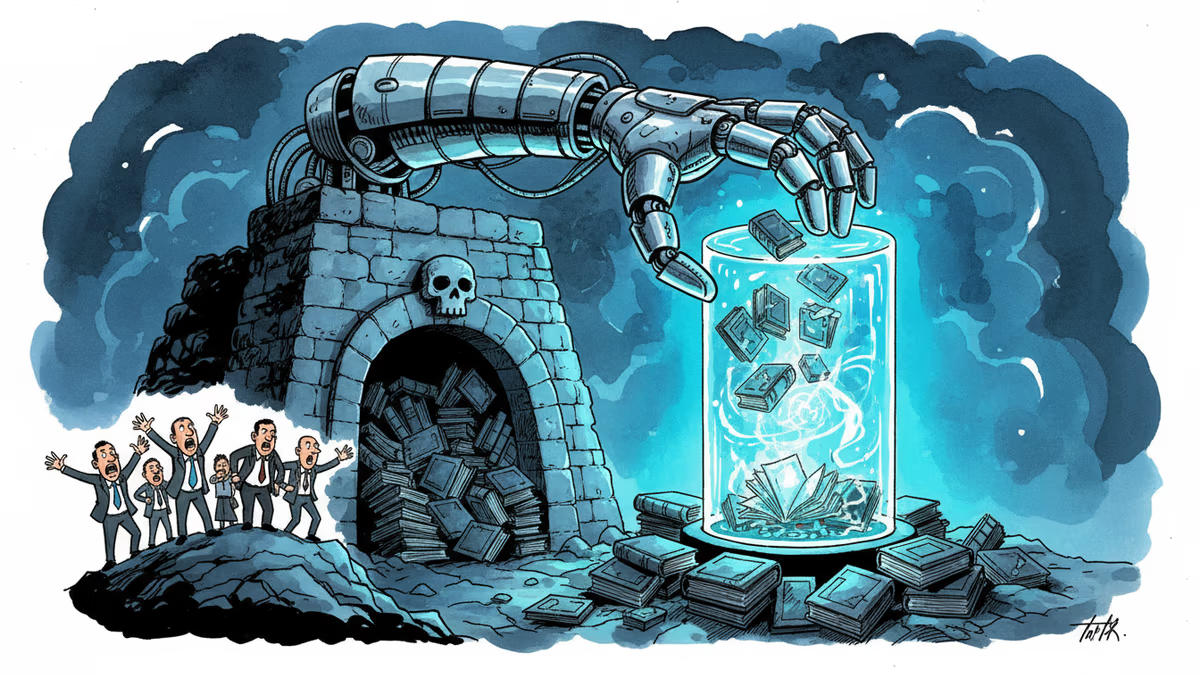
Five major publishers and author Scott Turow have filed a class action lawsuit against Meta, alleging the company used illegal pirate sites like LibGen to train its Llama AI models without permission.

From hyper-personalized phishing to deepfake video calls, AI has turbocharged cybercrime. Meanwhile, hospitals adopt AI tools whose patient benefits remain unproven. What does this mean for trust?
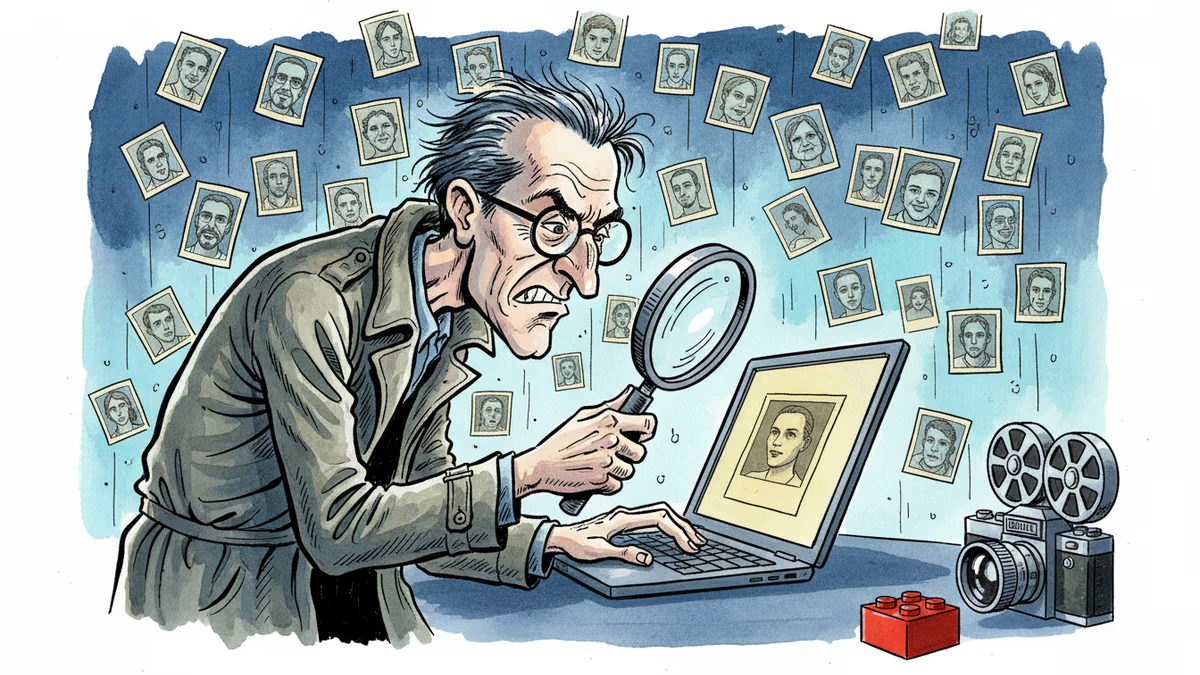
AI-generated war propaganda is outrunning verification. From Lego-style atrocity videos to single-pixel manipulations, the line between real and synthetic is collapsing—and the tools built to save us are struggling to keep up.
Google's Gmail Live lets you ask your inbox questions out loud. Announced at I/O 2026, it's AI's pitch to skeptics — and a reminder of how much Google already knows about you.
Five major publishers and author Scott Turow have filed a class action lawsuit against Meta, alleging the company used illegal pirate sites like LibGen to train its Llama AI models without permission.
From hyper-personalized phishing to deepfake video calls, AI has turbocharged cybercrime. Meanwhile, hospitals adopt AI tools whose patient benefits remain unproven. What does this mean for trust?
AI-generated war propaganda is outrunning verification. From Lego-style atrocity videos to single-pixel manipulations, the line between real and synthetic is collapsing—and the tools built to save us are struggling to keep up.
Thoughts
Share your thoughts on this article
Sign in to join the conversation