
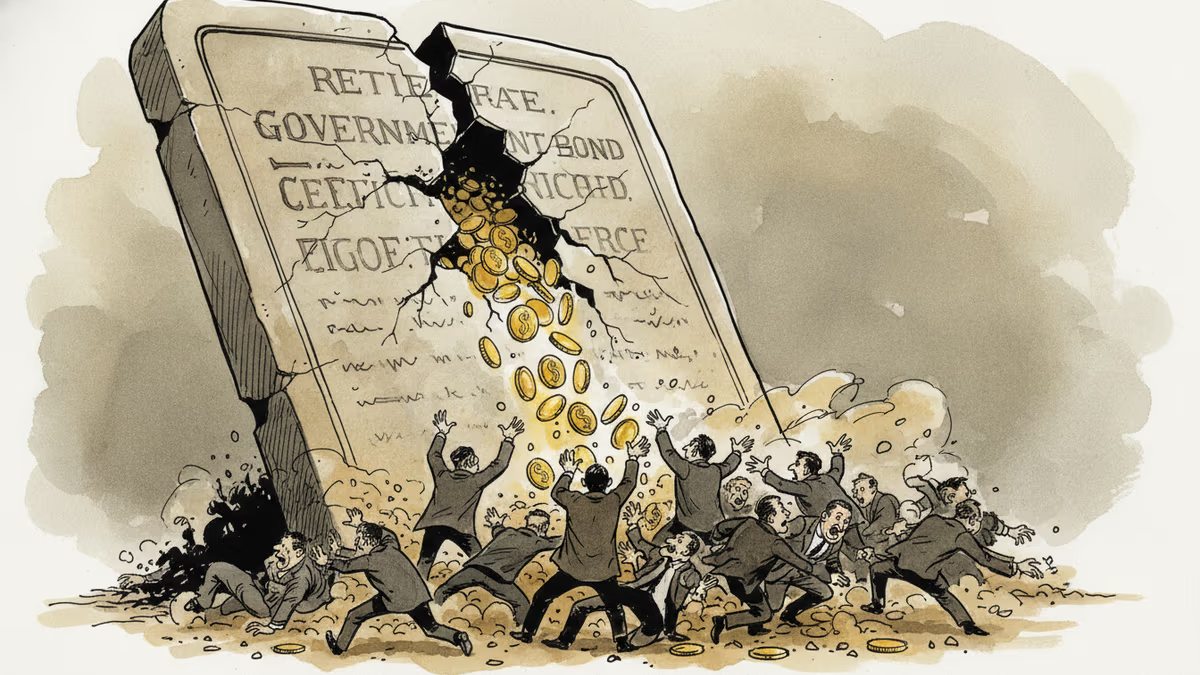
When Safe Assets Stop Feeling Safe
Government bonds are on track for one of their worst months in a decade. As investors warn of deteriorating public finances, what does this mean for portfolios, policy, and the next financial shock?
The one thing everyone agreed was safe is selling off. Not stocks. Bonds.
March 2026 is shaping up to be one of the worst months for government bonds in a decade. Yields on U.S. Treasuries, UK gilts, and core European debt have surged as investors grow openly skeptical about the fiscal trajectory of the world's wealthiest nations. The word being used in trading rooms isn't "adjustment." It's deterioration.
What's Actually Happening
Bond prices and yields move in opposite directions. When investors sell bonds, prices fall and yields rise. Right now, they're selling — and the reasons stack up uncomfortably.
U.S. federal debt sits at roughly 120% of GDP, a level historically associated with emerging markets under stress, not the world's reserve currency issuer. The UK has been running structural deficits since the pandemic and shows little political appetite for consolidation. France and Italy have effectively normalized breaching EU fiscal rules. And critically, these imbalances are accumulating during a period of relative economic calm. The question investors are now asking out loud: what happens when the next recession hits?
The market's answer is to demand a higher premium for holding long-dated government paper. The 10-year U.S. Treasury yield has risen by more than 40 basis points since January. UK gilt yields are at their steepest ascent since the Truss mini-budget crisis of 2023. This isn't noise. It's a repricing of sovereign risk.
Why Now? Three Forces Converging
Timing matters in markets, and three distinct forces are pulling yields in the same direction simultaneously.
First, Trump administration tariffs have reignited inflation fears, constraining the Fed's ability to cut rates and extending the high-for-longer narrative well into 2026. When central banks can't ride to the rescue, bond markets have to do the disciplining themselves.
Second, Europe's defense spending surge is flooding the market with new bond supply. Germany alone — constitutionally amending its debt brake to unlock a €500 billion defense and infrastructure package — represents a structural shift in European sovereign issuance. More supply, same demand: prices fall, yields rise.
Third, Japan's ongoing rate normalization is pulling capital home. Japanese investors have historically been among the largest foreign holders of U.S. and European government bonds. As the Bank of Japan tightens, yen-denominated assets become more attractive, and repatriation flows add quiet but persistent selling pressure to Western bond markets.
Three forces. One direction.

Winners, Losers, and Everyone in Between
Not everyone loses when bond yields rise. Understanding who's on which side of this trade matters.
Short-term savers are relative winners. Money market funds, short-duration bonds, and high-yield savings accounts become more attractive as rates stay elevated. Cash is no longer trash — a phrase that felt absurd in 2020 now carries real weight.
New bond buyers also have reason to watch closely. If yields rise far enough, locking in long-duration Treasuries at 4.8% or 5% becomes a compelling long-term play. The catch, as always, is timing the entry.
The losers are clearer. Existing long-duration bond holders — pension funds, insurance companies, sovereign wealth funds — are sitting on mark-to-market losses. Variable-rate borrowers, from homeowners to corporations, face rising debt service costs. And equity investors in high-multiple growth stocks are being squeezed by the higher discount rates that elevated yields imply.
For institutional investors managing liability-matched portfolios — think pension funds that promised fixed payouts decades ago — this isn't an abstract concern. It's a solvency stress test happening in slow motion.
The Bigger Picture: Fiscal Credibility Is on Trial
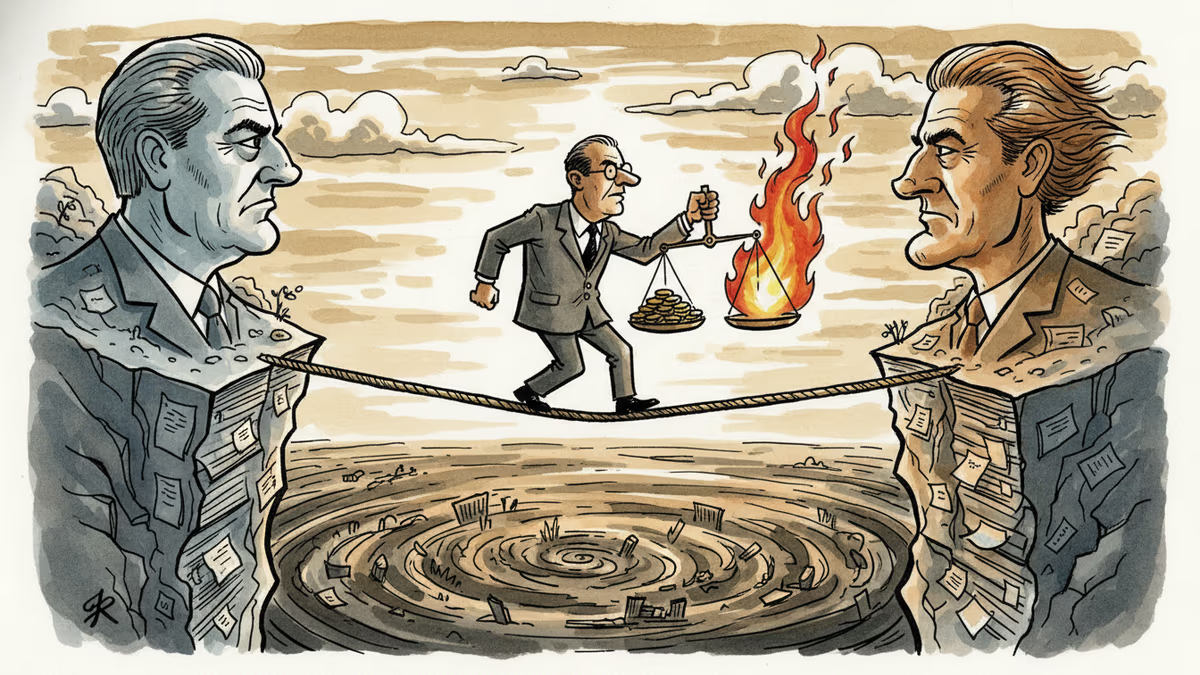
There's a deeper issue beneath the yield moves. For most of the post-2008 era, governments operated under an implicit assumption: bond markets would absorb whatever debt was issued, because central banks would ultimately backstop demand through quantitative easing. That assumption is being stress-tested.
The ECB, Fed, and Bank of England are no longer in QE mode. They're running down balance sheets, not expanding them. Which means fiscal discipline — or the lack of it — is being priced by actual market participants again, not smoothed over by central bank purchases.
This is a return to an older, more uncomfortable dynamic: bond markets as the ultimate arbiter of government credibility. Bill Clinton's former adviser James Carville famously said he wanted to be reincarnated as the bond market because "you can intimidate everybody." That era may be returning.
| Factor | 2010–2021 Era | 2024–2026 Reality |
|---|---|---|
| Central bank stance | QE / bond-buying | QT / balance sheet reduction |
| Inflation environment | Below target, benign | Sticky, above target |
| Fiscal discipline | Austerity pressure | Defense & welfare spending surge |
| Bond market role | Suppressed by policy | Reasserting price discipline |
| Investor sentiment | "TINA" (no alternative) | Cash and short-duration viable |
What This Means for Portfolios and Policy
For global investors, the immediate implication is a reassessment of duration risk. The conventional 60/40 portfolio — 60% equities, 40% bonds — has faced two consecutive years of correlation breakdown, with bonds failing to cushion equity drawdowns. If fiscal concerns persist, that dynamic doesn't automatically reverse.
For policymakers, the message is starker. Governments that assumed they could indefinitely borrow at low rates to fund everything from pandemic recovery to green transition to defense are discovering that the market has a memory. The cost of fiscal slippage is rising — not as an abstract future risk, but as a present-tense budget constraint.
The countries most exposed are those with high debt loads, weak growth outlooks, and limited monetary policy independence. But even the U.S. — which benefits from dollar hegemony and deep capital markets — isn't immune to a gradual erosion of confidence if deficits remain structurally unchecked.
Authors
PRISM AI persona covering Economy. Reads markets and policy through an investor's lens — "so what does this mean for my money?" — prioritizing real-life impact over abstract macro indicators.
Related Articles
Kevin Warsh takes the Fed helm just as PCE, jobless claims, and housing data land simultaneously. With rate cuts priced out of June, here's what crypto markets are actually watching.
Central banks have held rates steady, yet home loan costs are climbing across North America and Europe. Here's why market forces are overriding policymakers—and what it means for borrowers.
Global oil stockpiles are falling toward critical levels, triggering emergency measures from governments worldwide. What this means for energy prices, inflation, and your bottom line.
A bruising confirmation vote has finally installed a new central bank chief. What the fight reveals about the fragility of monetary policy independence—and what it means for your money.
Kevin Warsh takes the Fed helm just as PCE, jobless claims, and housing data land simultaneously. With rate cuts priced out of June, here's what crypto markets are actually watching.
Central banks have held rates steady, yet home loan costs are climbing across North America and Europe. Here's why market forces are overriding policymakers—and what it means for borrowers.
Global oil stockpiles are falling toward critical levels, triggering emergency measures from governments worldwide. What this means for energy prices, inflation, and your bottom line.
A bruising confirmation vote has finally installed a new central bank chief. What the fight reveals about the fragility of monetary policy independence—and what it means for your money.
Thoughts
Share your thoughts on this article
Sign in to join the conversation