
#Fiscal Policy
Total 21 articles
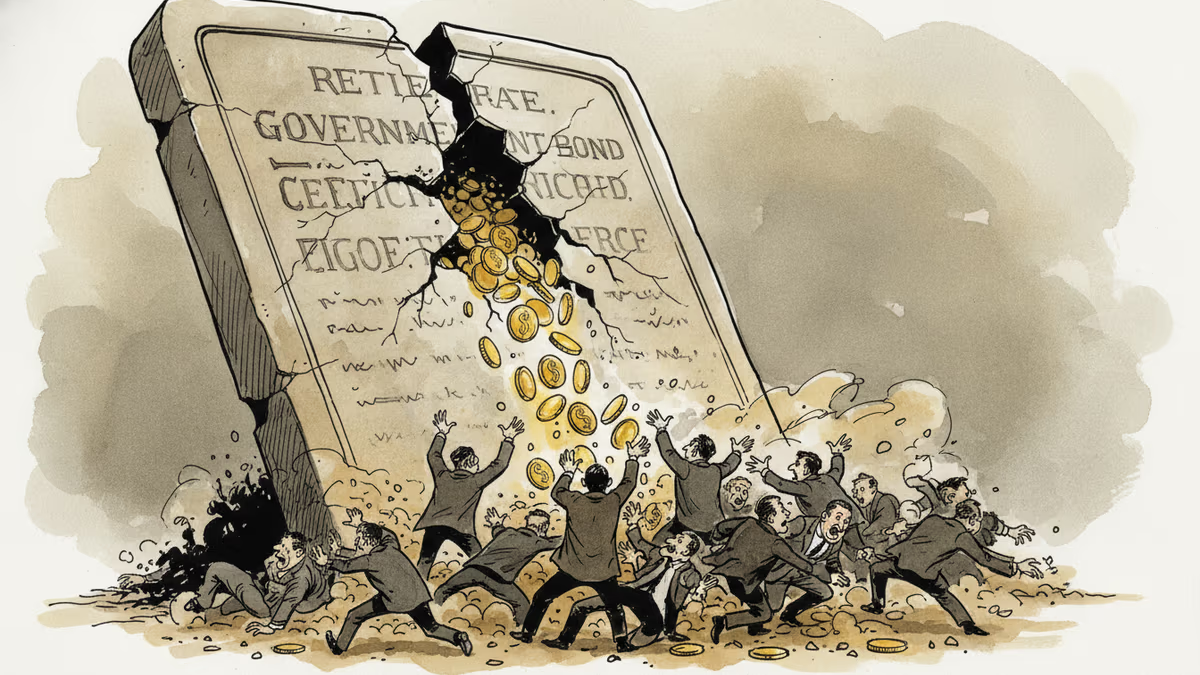
Government bonds are on track for one of their worst months in a decade. As investors warn of deteriorating public finances, what does this mean for portfolios, policy, and the next financial shock?
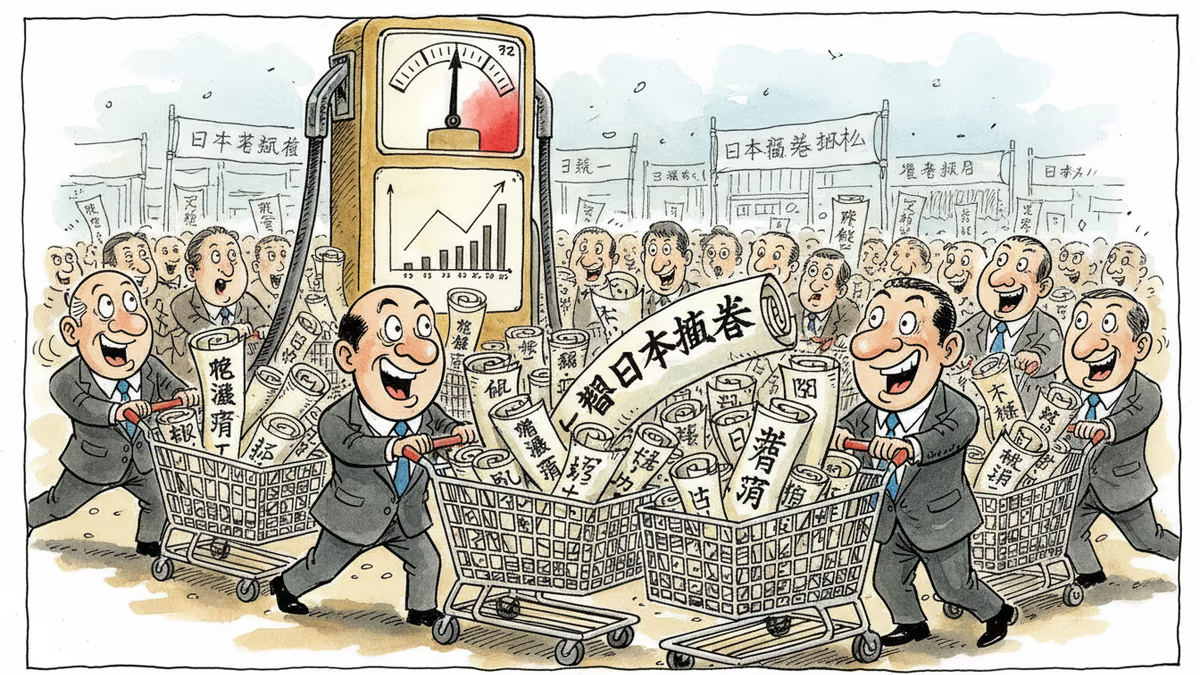
International investors are piling into Japanese government bonds with 10+ year maturities, but concerns about PM Takaichi's fiscal policy persist. What's driving this apparent contradiction?
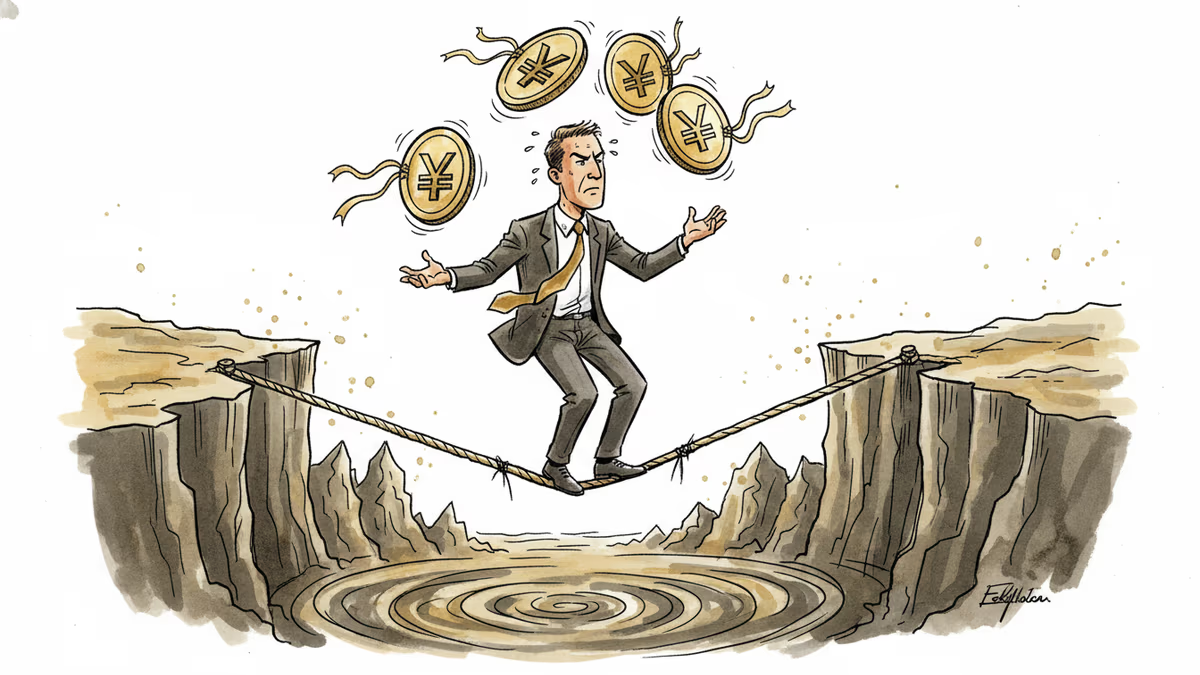
Japan has been actively trading government bonds to manage its massive debt burden. Is this financial engineering sustainable, or a risky bet that could backfire?

PRISM by Liabooks
Place your ad in this space
[email protected]
Prime Minister Takaichi must win over bond investors before voters as Japan's debt market becomes the ultimate political referee. Why financial markets now hold more power than ballot boxes.

Indonesia's Rupiah hit a near-30-year low of 16,985 as President Prabowo's nomination of his nephew to the central bank sparks fears over independence.

The Japan 10-year government bond yield 2.2% surge marks a 27-year high. PM Sanae Takaichi's snap election and fiscal spending plans are driving the sell-off.

Japanese stocks hit record highs as investors bet on PM Sanae Takaichi’s snap election and fiscal policies. Explore the impact on valuations and the contrast with other Asian markets.
PRISM by Liabooks
Place your ad in this space
[email protected]
Japanese lawmakers propose a $3.2 trillion sovereign wealth fund to consolidate foreign reserves and pension money. Read about the Japan Sovereign Wealth Fund proposal 2026.

Japan plans to raise visa and tourism fees in 2026 to offset revenue losses from ending the gasoline surtax. The hikes are expected to add $2.23 billion annually.

The US plans a $2 billion UN funding cut for 2026, signaling a major shift in global power dynamics. Analyze the impact on geopolitics and market volatility.

Japan targets its first primary budget surplus since 1998 in fiscal 2026. However, rising interest rates and expansionary spending under PM Takaichi fuel market skepticism.
PRISM by Liabooks
Place your ad in this space
[email protected]
President Yoon Suk Yeol has nominated veteran economist and former three-term lawmaker Lee Hye-hoon as the first-ever head of the Ministry of Planning and Budget.
