
Google Gemini Gmail Integration 2026: AI Power for 3 Billion Users
Google brings Gemini AI features to 3 billion Gmail users. Explore the 2026 integration including AI thread summaries, suggested replies, and the battle for AI dominance.
3 billion people are about to see a massive shift in how they handle their inboxes. Google announced on January 8, 2026, that it's embedding Gemini AI deeper into Gmail, bringing intelligent summaries and contextual responses to the masses.
Key Google Gemini Gmail Integration 2026 Features
The latest rollout introduces AI-generated summaries for long email threads. When you open a conversation with dozens of replies, Gemini synthesizes the entire thread into concise key points at the top. Another major upgrade is Suggested Replies, which evolves from the old 'Smart Replies' to offer one-click, full-sentence responses based on the actual context of your conversation.
- Thread Summaries: Automatically condenses long discussions.
- Suggested Replies: One-click contextual responses.
- Proofreading: Advanced grammar and tone adjustments for concise writing.

Alphabet’s Surge in the Generative AI Market
Driven by its rapid AI advancements, Alphabet officially topped Apple by market cap this week—a feat not seen since 2019. As OpenAI and Anthropic reach massive private valuations of $500 billion and $350 billion respectively, Google is leveraging its massive user base to stay ahead in the booming AI sector.
Authors
Related Articles

Google's Gmail Live lets you ask your inbox questions out loud. Announced at I/O 2026, it's AI's pitch to skeptics — and a reminder of how much Google already knows about you.
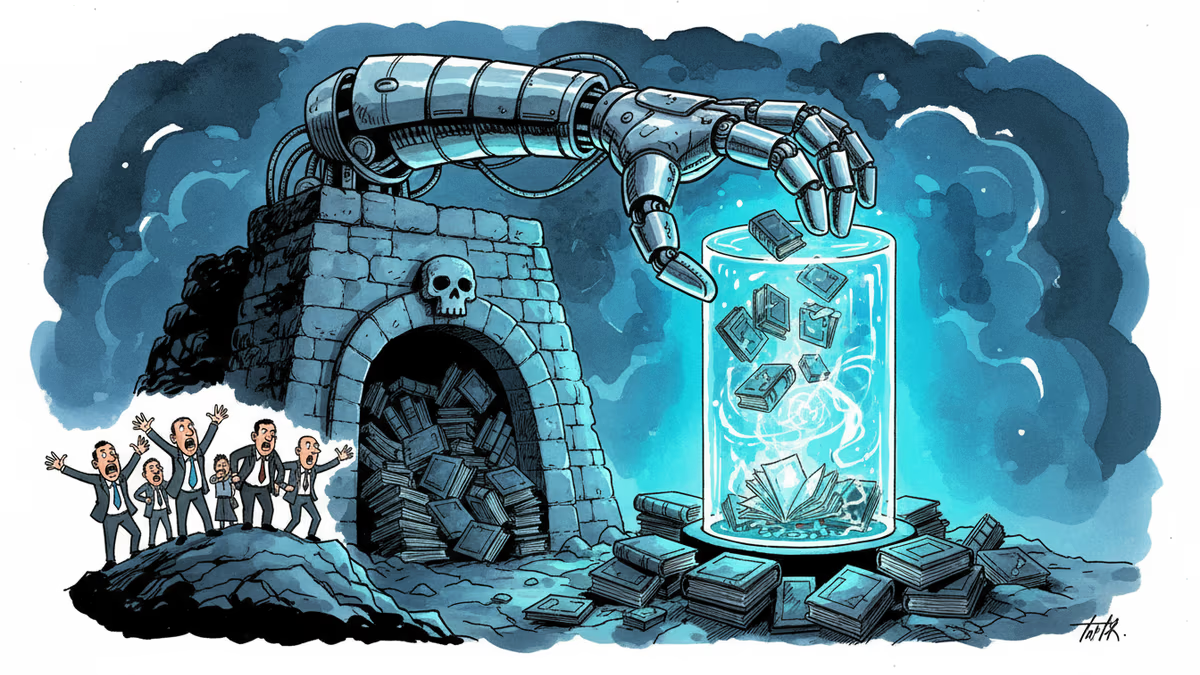
Five major publishers and author Scott Turow have filed a class action lawsuit against Meta, alleging the company used illegal pirate sites like LibGen to train its Llama AI models without permission.

Two ex-Apple engineers built an AI puck that only listens when you press it. At $179, Button is a deliberate bet that dedicated AI hardware beats the Swiss Army knife approach of smartphones.
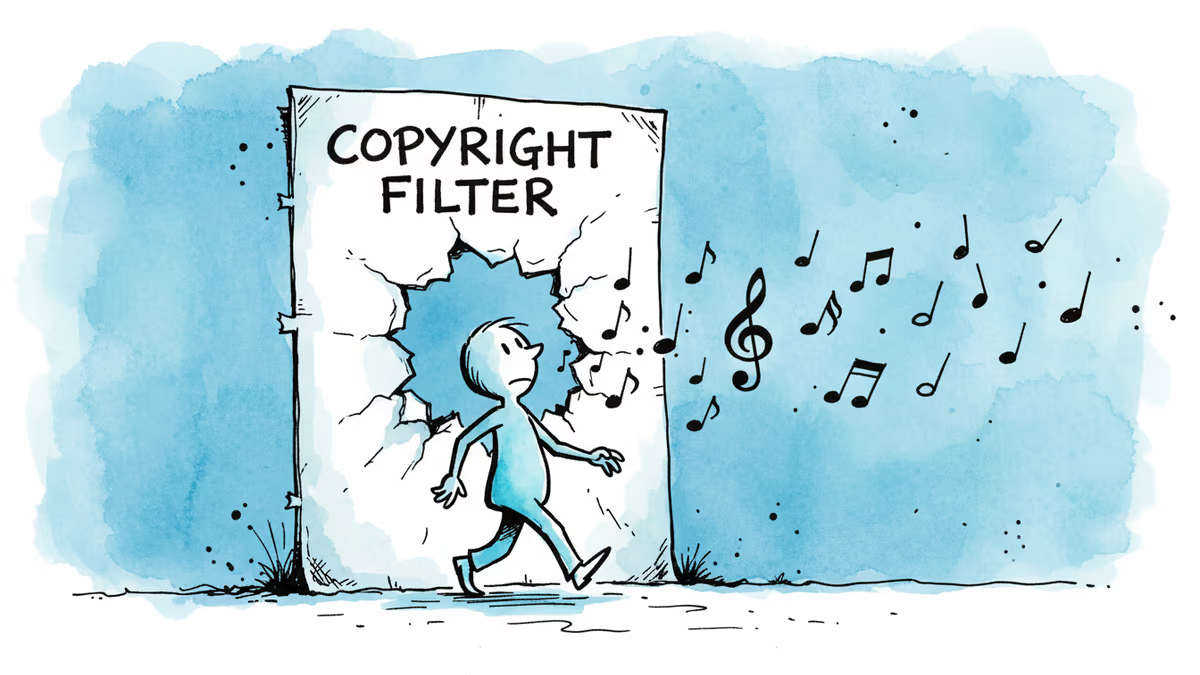
Suno's AI music platform claims to block copyrighted content, but researchers found its filters can be bypassed with minimal effort and free tools, generating near-identical imitations of Beyoncé, Black Sabbath, and more.
Google's Gmail Live lets you ask your inbox questions out loud. Announced at I/O 2026, it's AI's pitch to skeptics — and a reminder of how much Google already knows about you.
Five major publishers and author Scott Turow have filed a class action lawsuit against Meta, alleging the company used illegal pirate sites like LibGen to train its Llama AI models without permission.
Two ex-Apple engineers built an AI puck that only listens when you press it. At $179, Button is a deliberate bet that dedicated AI hardware beats the Swiss Army knife approach of smartphones.
Suno's AI music platform claims to block copyrighted content, but researchers found its filters can be bypassed with minimal effort and free tools, generating near-identical imitations of Beyoncé, Black Sabbath, and more.
Thoughts
Share your thoughts on this article
Sign in to join the conversation