

FTC vs. Instacart: AI Price Testing Enters the Regulatory Crosshairs
The FTC is investigating Instacart's AI pricing tool. PRISM analyzes why this signals a new era of regulatory scrutiny for all algorithmic commerce.
The Lede: More Than Just Groceries at Stake
The Federal Trade Commission's (FTC) probe into Instacart's AI-powered pricing isn't just about the cost of granola; it's a warning shot across the bow of the entire digital economy. For any executive deploying algorithms to optimize pricing, this investigation marks a pivotal moment. The era of treating pricing as a simple A/B testing variable without consequence is over. The core question has shifted from "Can we do this?" to "Should we?"—and regulators are now demanding answers.
Why It Matters: The Ripple Effects
This isn't an isolated incident; it's a symptom of a much larger collision between algorithmic optimization and consumer protection, with significant second-order effects:
- Erosion of Consumer Trust: Instacart defends its tool as a "randomized A/B test," not personalized "surveillance pricing." To the consumer seeing a 23% price hike on essential goods, this is a distinction without a difference. In an inflationary economy, the perception of being algorithmically gouged—fairly or not—shatters trust and can permanently damage a brand.
- The New Compliance Burden: The "black box" of AI is becoming a liability. Companies will now face increasing pressure to not only use fair algorithms but to be able to prove their fairness. The burden is shifting from the regulator to prove harm to the company to demonstrate a lack of it.
- A Strategic Crossroads for Retail: This pushes retailers to a critical choice. Do they double down on complex, opaque pricing models for maximum profit, or do they market themselves on transparency and price consistency as a competitive advantage? This could become the next major battleground for customer loyalty.

The Analysis: Not All Dynamic Pricing is Created Equal
Instacart’s situation is fundamentally different from the surge pricing models of Uber or airlines. Those systems, while sometimes frustrating, operate on a transparent logic of supply and demand. Users understand, even if they dislike, that a ride in a rainstorm at 5 PM will cost more. The perceived justification is clear.
Instacart’s model, by contrast, is opaque. Two neighbors ordering the same items from the same store at the same time can receive vastly different prices with no discernible reason. Instacart’s claim that this is not based on personal data but is a randomized test to find optimal price points misses the point. When applied to essential goods like food, large-scale price experimentation, even if anonymized, feels less like a benign test and more like a high-tech method to determine the maximum pain point for consumers' wallets.
The FTC's interest signals a maturing regulatory view: the nature of the product matters. An algorithm that sets the price for a concert ticket will be viewed through a different lens than one that sets the price for baby formula. The non-discretionary nature of groceries places Instacart, and any e-commerce platform in the essentials space, under a much brighter, more critical spotlight.
PRISM's Take: The 'It's Just Math' Defense is Dead
This FTC probe is a landmark event. For too long, Silicon Valley has hidden behind the veil of the algorithm, using the defense that its outputs are the result of neutral, objective mathematics. That defense is now officially dead. When an algorithm's output directly impacts a family's ability to afford groceries, the math becomes a matter of public policy.
Instacart may win the legal battle by proving its testing was truly random and not discriminatory. But it is already losing the more important battle for public trust. The lesson for every tech leader is clear: you are responsible for the societal impact of your code. The most successful platforms of the next decade will be those that design for fairness from the ground up, not as a feature to be added after the regulator comes knocking.
Authors
Related Articles

The FTC fined Cox Media and two ad firms $930,000 — not for actually eavesdropping on users, but for falsely claiming they could. The case raises uncomfortable questions about surveillance capitalism.
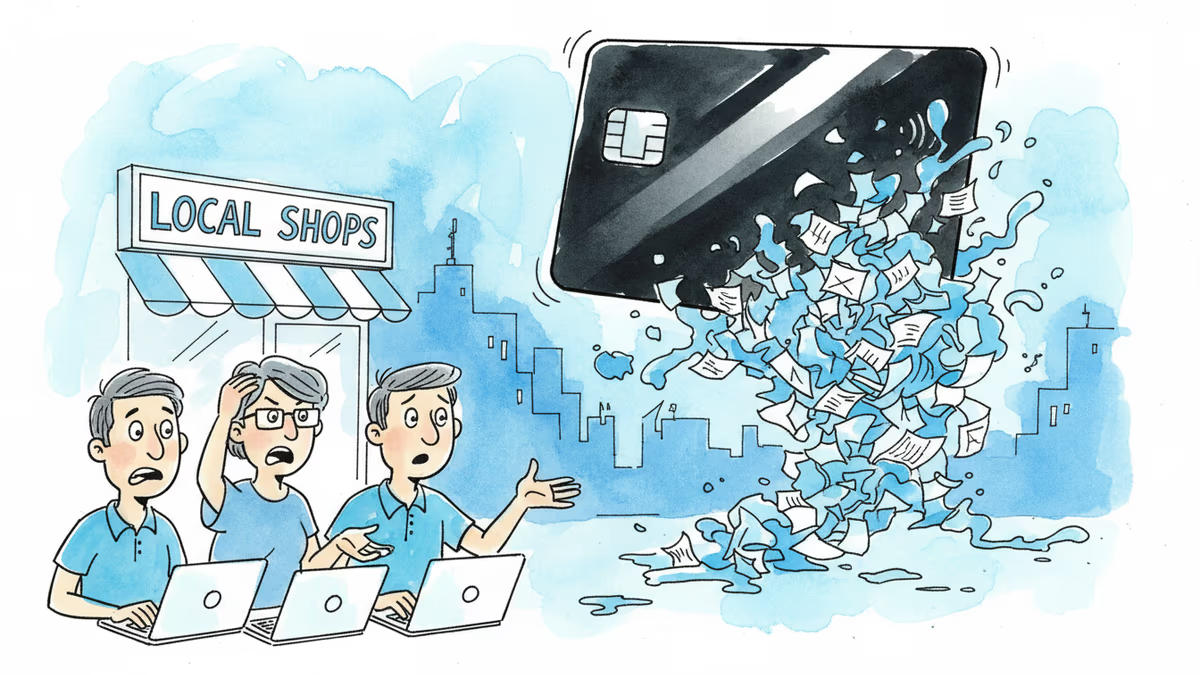
E-commerce fintech Parker filed for Chapter 7 bankruptcy on May 7, despite raising over $200M. The YC-backed startup's abrupt shutdown left small business customers scrambling—and exposed the fragility of vertical fintech models.

Florida is investigating OpenAI over alleged links to a mass shooting. As AI firms quietly restrict their most powerful tools, a harder question is taking shape: who's legally responsible when AI helps someone plan violence?
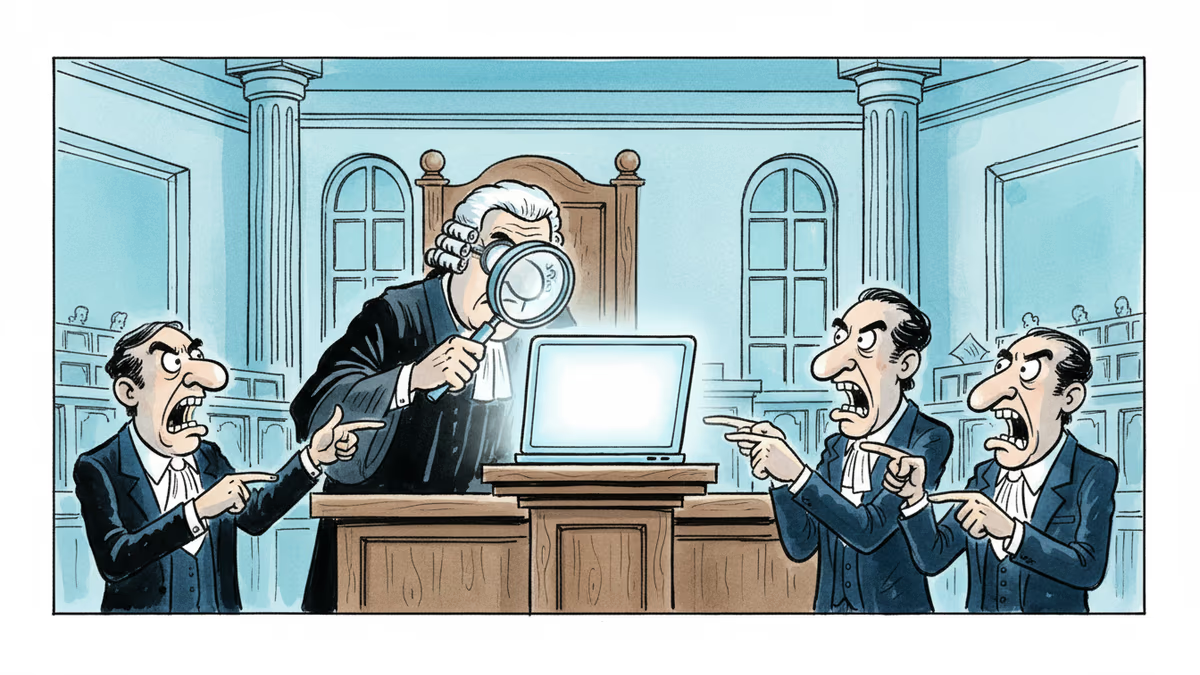
Florida's AG is investigating OpenAI over a campus shooting, child safety risks, and national security concerns. What it means for AI regulation in America.
The FTC fined Cox Media and two ad firms $930,000 — not for actually eavesdropping on users, but for falsely claiming they could. The case raises uncomfortable questions about surveillance capitalism.
E-commerce fintech Parker filed for Chapter 7 bankruptcy on May 7, despite raising over $200M. The YC-backed startup's abrupt shutdown left small business customers scrambling—and exposed the fragility of vertical fintech models.
Florida is investigating OpenAI over alleged links to a mass shooting. As AI firms quietly restrict their most powerful tools, a harder question is taking shape: who's legally responsible when AI helps someone plan violence?
Florida's AG is investigating OpenAI over a campus shooting, child safety risks, and national security concerns. What it means for AI regulation in America.
Thoughts
Share your thoughts on this article
Sign in to join the conversation