
Amazon's 4-Hour Outage Exposes the Fragility of Digital Commerce
Over 20,000 reports flood in as Amazon suffers major service disruption, highlighting dangerous over-reliance on single platforms in modern e-commerce.
When 20,804 Complaints Tell a Bigger Story
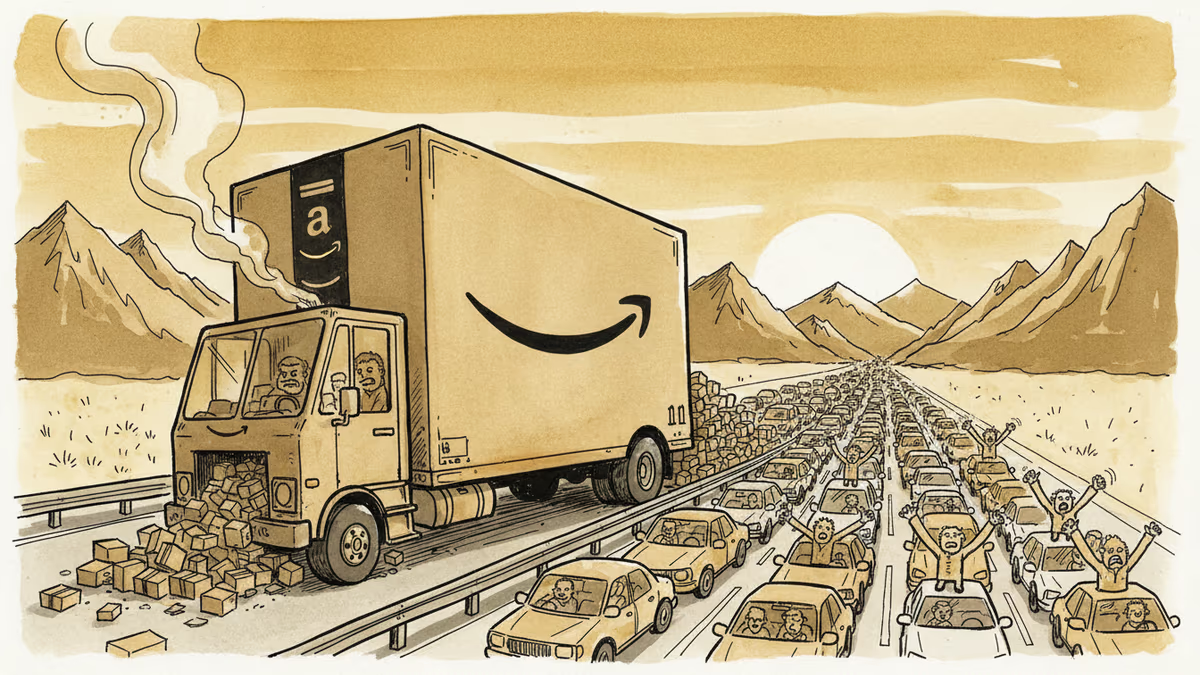
At 1:41 PM ET today, something broke. Not just Amazon's website, but our collective realization of how precariously we've built modern commerce. What started as scattered user complaints snowballed into 20,804 problem reports by 3:32 PM, painting a stark picture of digital dependency gone wrong.
Downdetector tracked the cascade: 18,320 reports by 2:26 PM, climbing steadily as frustrated users hit refresh buttons across the globe. Amazon's response? A terse acknowledgment at 3:02 PM that "some customers may be experiencing issues" and they're "working to resolve" them. No timeline. No specifics. Just millions of people suddenly remembering what life was like before one-click shopping.
The Invisible Infrastructure We Can't Live Without
This wasn't just about delayed Prime deliveries. Amazon has quietly become the backbone of digital commerce, far beyond its shopping interface. Small businesses selling through Amazon Marketplace saw their revenue streams evaporate. Companies relying on Amazon Web Services (AWS) watched their applications stumble. The ripple effects spread through an ecosystem most people never knew existed.
Consider this: when Amazon sneezes, entire supply chains catch cold. Third-party sellers who've built their businesses around the platform suddenly found themselves cut off from customers. For many, Amazon isn't just a sales channel—it's the sales channel.
The Comfort Trap: Why We Don't Diversify
Here's the paradox: while Amazon struggled, other e-commerce sites saw temporary traffic spikes. But most users didn't actually complete purchases elsewhere. They waited. This reveals something deeper than platform loyalty—it's about the cognitive load of switching.

We've optimized for convenience at the expense of resilience. Our payment information is stored. Our preferences are learned. Our delivery addresses are memorized. Starting fresh somewhere else feels like moving to a new city where you don't know the streets.
Businesses face the same trap. Multi-cloud strategies sound smart in boardrooms, but 80% of companies still concentrate their infrastructure with single providers. The switching costs—both technical and psychological—keep us locked in, even when we know better.
Regulators Face a New Kind of Monopoly
Traditional antitrust law focused on market share and pricing power. But Amazon's influence operates differently. It's not about crushing competitors through predatory pricing—it's about becoming so systemically important that alternatives feel inadequate.
This creates a regulatory puzzle. How do you address a company that consumers genuinely prefer, that offers real value, but whose dominance creates systemic risk? The European Union's Digital Services Act and proposed US legislation are early attempts to grapple with this question.
The challenge isn't just economic—it's about digital sovereignty. When one company's technical hiccup can disrupt commerce across continents, we're dealing with infrastructure, not just a business.
The Real Cost of Efficiency
Today's outage lasted roughly four hours. In that time, countless transactions failed, deliveries stalled, and businesses lost revenue. But the deeper cost is harder to quantify: the erosion of alternatives.
Every time we choose convenience over diversification, we make the system more fragile. Every small retailer that closes their independent website to focus solely on Amazon makes the next outage more impactful.
Authors
Related Articles
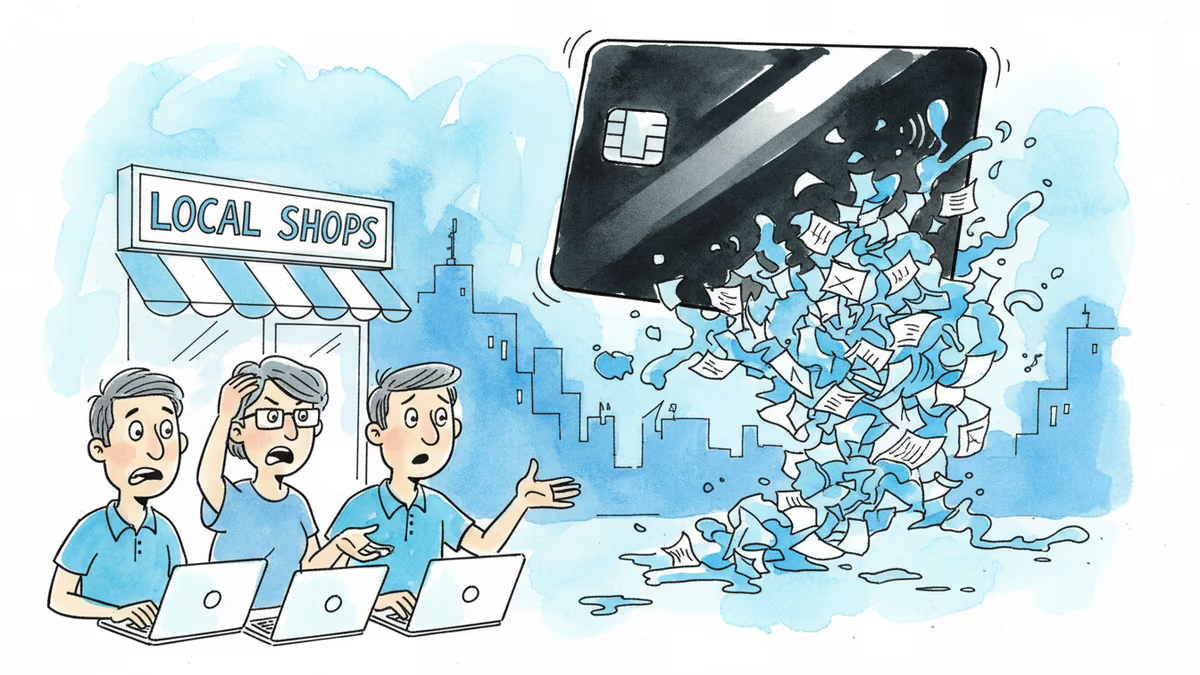
E-commerce fintech Parker filed for Chapter 7 bankruptcy on May 7, despite raising over $200M. The YC-backed startup's abrupt shutdown left small business customers scrambling—and exposed the fragility of vertical fintech models.
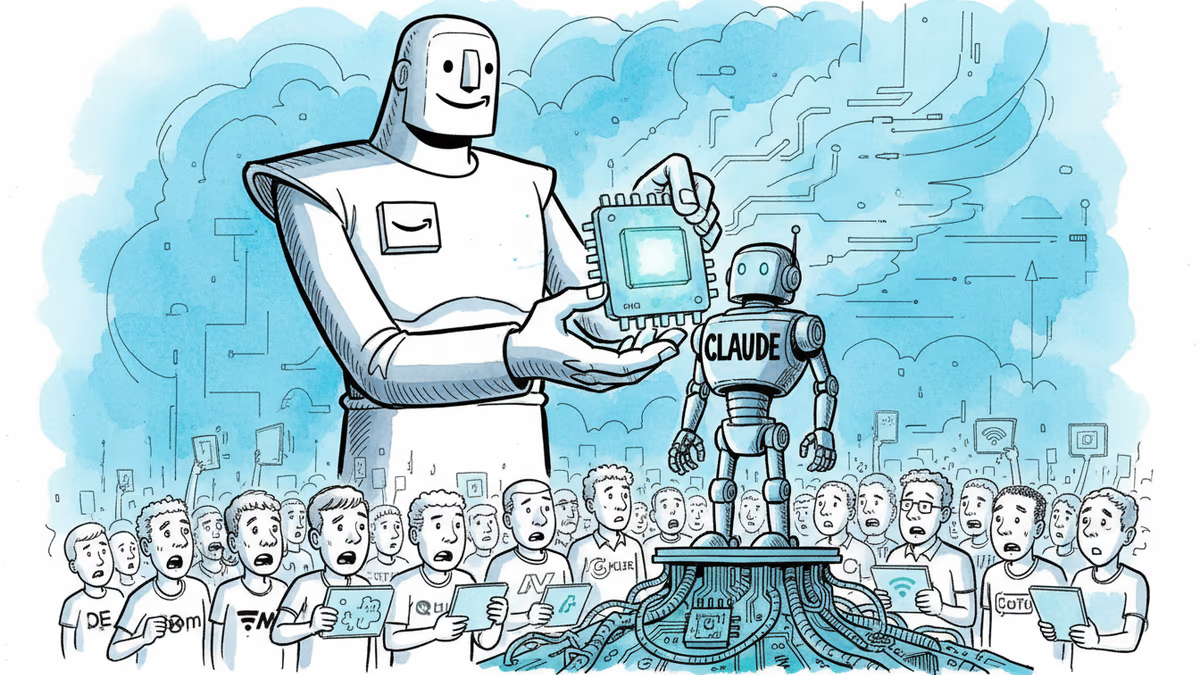
Amazon has poured an additional $5 billion into Anthropic, bringing its total stake to $13 billion—with up to $20 billion more on the table. Here's what the deal really signals about the AI infrastructure race.
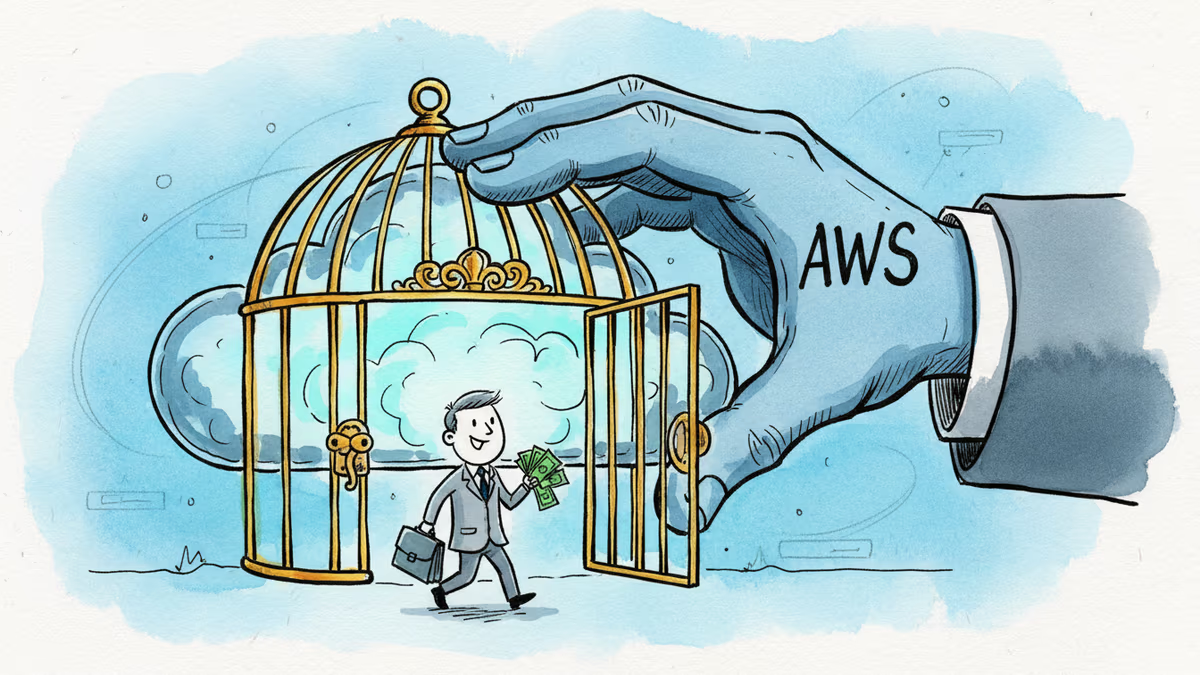
Amazon's fresh $5B investment in Anthropic brings its total to $13B. But the real story is a $100B AWS spending pledge and a bet on Amazon's own AI chips over Nvidia.
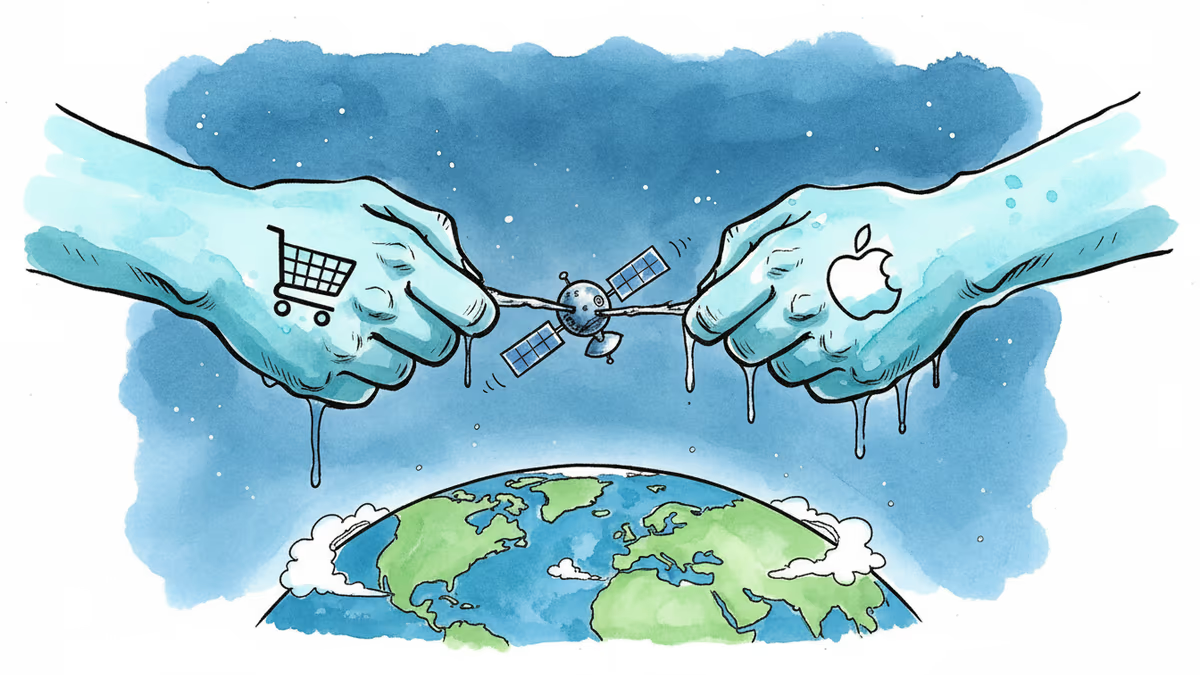
Amazon is in talks to acquire Globalstar, the satellite telecom firm that powers Apple's emergency SOS feature. A 20% Apple stake is complicating everything — and the stakes go beyond one deal.
E-commerce fintech Parker filed for Chapter 7 bankruptcy on May 7, despite raising over $200M. The YC-backed startup's abrupt shutdown left small business customers scrambling—and exposed the fragility of vertical fintech models.
Amazon has poured an additional $5 billion into Anthropic, bringing its total stake to $13 billion—with up to $20 billion more on the table. Here's what the deal really signals about the AI infrastructure race.
Amazon's fresh $5B investment in Anthropic brings its total to $13B. But the real story is a $100B AWS spending pledge and a bet on Amazon's own AI chips over Nvidia.
Amazon is in talks to acquire Globalstar, the satellite telecom firm that powers Apple's emergency SOS feature. A 20% Apple stake is complicating everything — and the stakes go beyond one deal.
Thoughts
Share your thoughts on this article
Sign in to join the conversation