
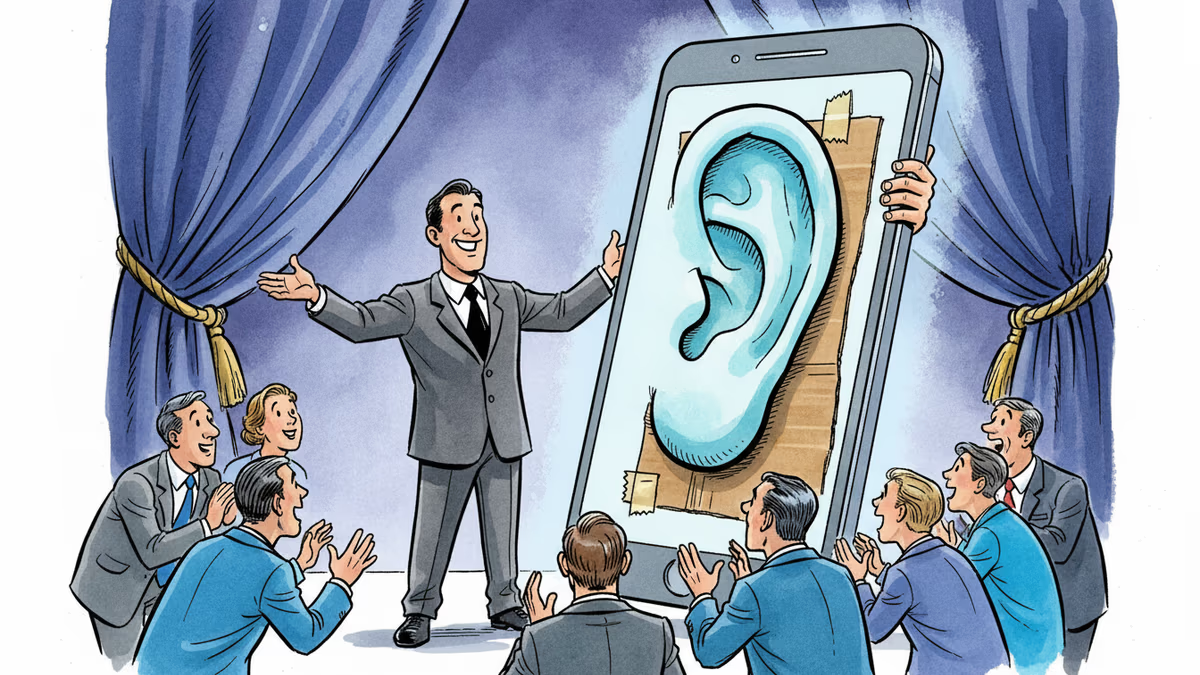
They Lied About Spying on You — and Got Fined for the Lie
The FTC fined Cox Media and two ad firms $930,000 — not for actually eavesdropping on users, but for falsely claiming they could. The case raises uncomfortable questions about surveillance capitalism.
The pitch was audacious: Cox Media Group told potential advertising clients in 2023 that it could tap into "every casual conversation" happening near a smartphone or smart device — harvesting ambient audio to serve eerily targeted ads. The service had a name, "Voice Data," and a price tag.
There was just one problem. It wasn't real.
On Thursday, the Federal Trade Commission announced that Cox Media Group, MindSift, and 1010 Digital Works would collectively pay $930,000 to settle allegations that they had falsely claimed to possess surveillance capabilities they never actually had. The companies weren't punished for spying on consumers. They were punished for lying that they could.
The Scam That Sold Itself on Fear
The story begins with a marketing deck. In 2023, Cox Media circulated materials to prospective clients describing a passive listening system that could monitor users' real-world conversations and translate them into behavioral data for ad targeting. Tech publication Techdirt surfaced the documents, triggering public outcry and an FTC investigation.
What investigators found wasn't a surveillance apparatus. It was a sales pitch built on a capability that didn't exist. The FTC's complaint alleges the companies made deceptive claims to both consumers — who feared being monitored — and to advertisers, who were paying for a product that was essentially fiction.
The $930,000 settlement, spread across three companies, also includes injunctions barring them from making similar claims in the future. In the context of the U.S. digital advertising market, which exceeded $225 billion in 2024, the fine is modest. But the FTC's apparent goal here wasn't financial punishment — it was precedent.
Why the Lie Worked

Perhaps the most revealing aspect of this case is that the lie was commercially viable in the first place.
For years, a persistent urban myth has circulated among consumers: that smartphones are secretly listening to conversations and feeding that data to advertisers. People swap stories — mention a product in conversation, see an ad for it hours later. Apple, Google, and Meta have all formally denied doing this. Security researchers have repeatedly pointed out the technical impracticality of constant audio capture at scale, citing battery drain and detectable data traffic as near-insurmountable obstacles.
And yet the belief persists. Because modern ad algorithms — trained on location data, search history, app behavior, social graphs, and purchase patterns — are sophisticated enough that their outputs feel like eavesdropping. The targeting is so precise that "they must be listening" becomes the intuitive explanation.
Cox Media didn't invent this anxiety. It monetized it. The implicit promise — we go deeper than the competition — was apparently compelling enough for advertisers hungry for an edge.
The Regulator's Calculation
The FTC's framing of this case deserves attention. Rather than attempting to prove whether actual surveillance occurred — a technically complex and legally uncertain endeavor — the agency focused on the deceptive claims themselves. Lying to advertisers about your product's capabilities is an unfair trade practice. Full stop.
This approach cuts two ways. It establishes that you can be penalized for claiming invasive capabilities you don't have. But it also implies a harder truth: if the capabilities had been real, the legal exposure would have been far greater. The settlement's injunctive relief — prohibiting similar services going forward — signals that the FTC views "Voice Data" as a category of product it wants to preemptively suppress, real or fictional.
For the broader ad tech industry, the message is layered. Surveillance-as-a-selling-point is now a regulatory red flag, regardless of whether the surveillance is genuine. That's a meaningful shift in an industry that has long operated in the gray zone between "personalization" and "tracking."
Privacy advocates will likely argue the fine is insufficient — that $930,000 barely registers as a deterrent for companies operating in a market worth hundreds of billions. Advertising professionals may note that the case targets an outlier, not standard industry practice. Legal observers will watch whether this precedent extends to companies that make more carefully worded claims about data capabilities.
This content is AI-generated based on source articles. While we strive for accuracy, errors may occur. We recommend verifying with the original source.
Related Articles
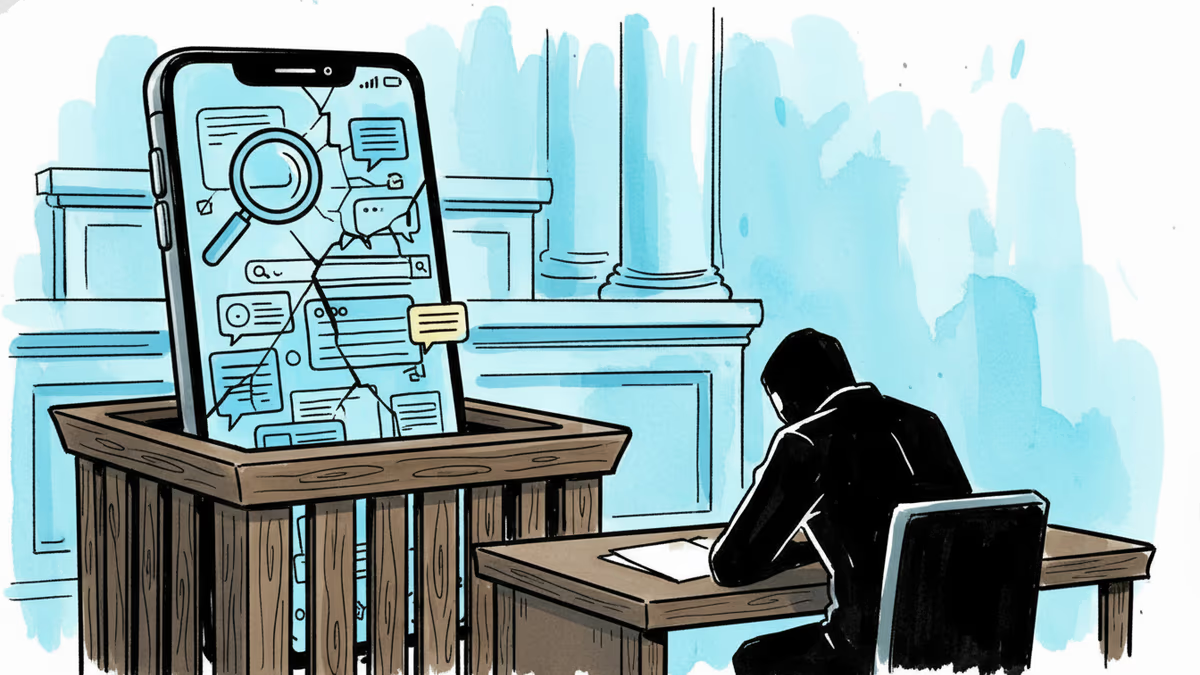
A Utah woman was sentenced to life in prison partly because of her Google searches and deleted texts. The Kouri Richins case reveals how digital footprints have become the courtroom's most reliable witness.
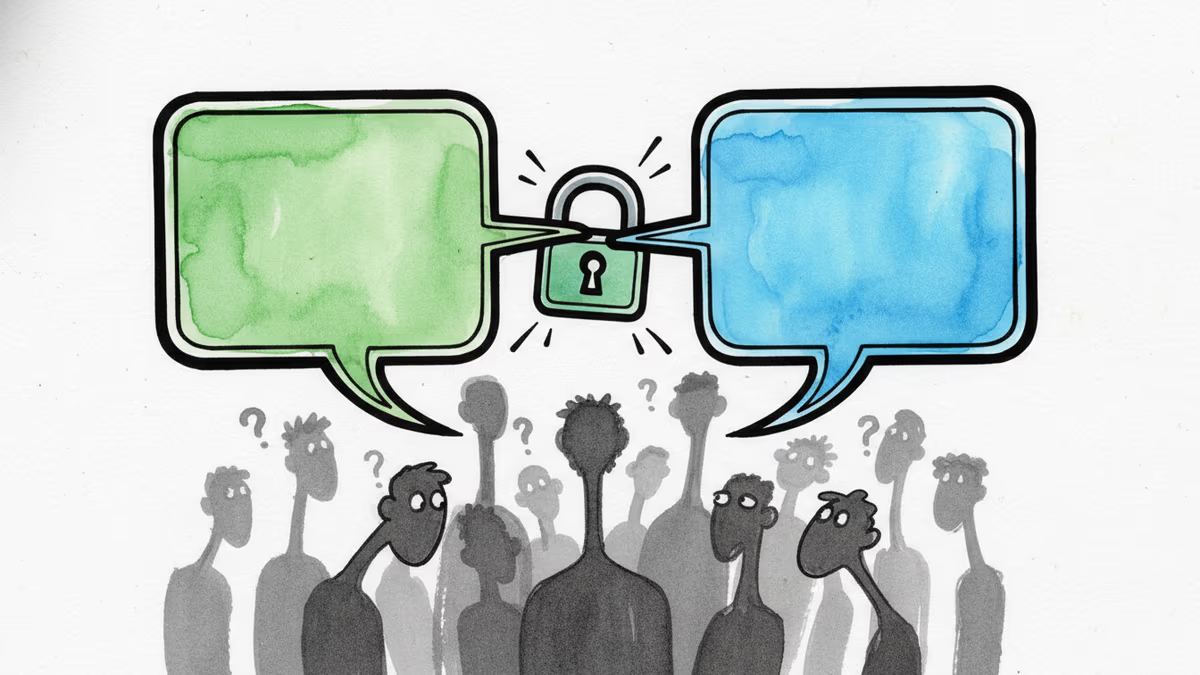
After 15 years of fragmented mobile messaging, Apple and Google are rolling out end-to-end encrypted RCS messaging between iPhones and Android devices. Here's what changed, why it took so long, and what it means for your privacy.
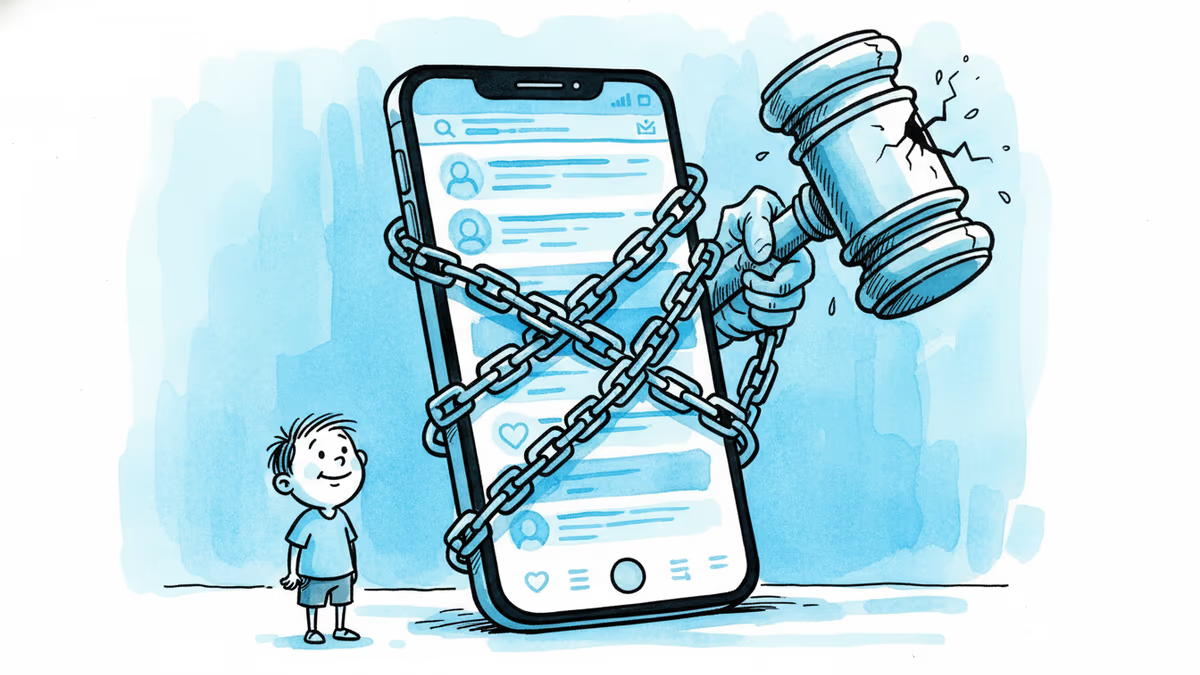
New Mexico already won $375 million from Meta. Now it wants something harder to give: a court order forcing Facebook, Instagram, and WhatsApp to redesign themselves. A three-week trial starts Monday.

Palantir has become the tech backbone of Trump's immigration enforcement. Former employees are calling it a 'descent into fascism.' What happens when the people who build surveillance tools start asking uncomfortable questions?
A Utah woman was sentenced to life in prison partly because of her Google searches and deleted texts. The Kouri Richins case reveals how digital footprints have become the courtroom's most reliable witness.
After 15 years of fragmented mobile messaging, Apple and Google are rolling out end-to-end encrypted RCS messaging between iPhones and Android devices. Here's what changed, why it took so long, and what it means for your privacy.
New Mexico already won $375 million from Meta. Now it wants something harder to give: a court order forcing Facebook, Instagram, and WhatsApp to redesign themselves. A three-week trial starts Monday.
Palantir has become the tech backbone of Trump's immigration enforcement. Former employees are calling it a 'descent into fascism.' What happens when the people who build surveillance tools start asking uncomfortable questions?
Thoughts
Share your thoughts on this article
Sign in to join the conversation