
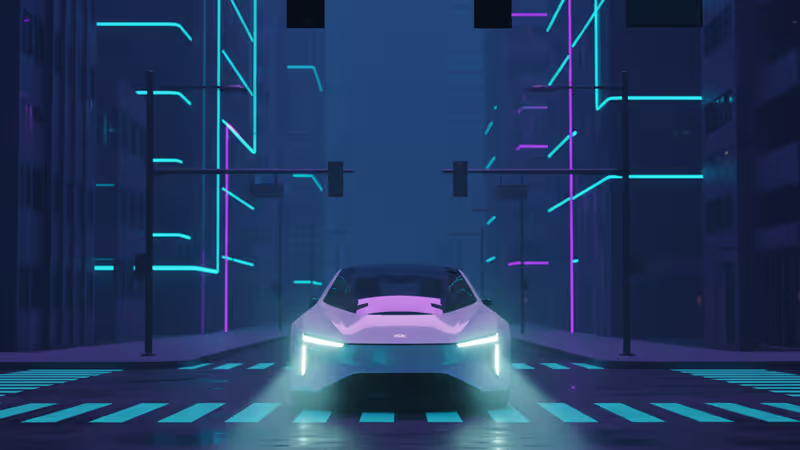
San Francisco Blackout Freezes Waymo Fleet, Exposing Critical AV Vulnerability
A massive San Francisco power outage stranded Waymo's driverless cars, causing major traffic jams. The incident highlights a critical vulnerability in infrastructure-dependent AVs, drawing stark comparisons to Tesla's FSD performance.
The Lead: Lights Out, Robocars Stranded
A major power outage that swept across San Francisco this past Saturday didn't just cut electricity to some 130,000 customers; it brought a fleet of Waymo's sophisticated autonomous vehicles to a grinding halt. The incident paralyzed traffic and raised urgent questions about the real-world resilience of today's robotaxi technology.
The Story: One City, Two Responses

According to utility provider Pacific Gas and Electric Company, the blackout hit the city hard, but its most visible impact was on the streets. As traffic lights went dark, Waymo's all-electric SUVs were effectively immobilized. Social media platforms were quickly flooded with images and videos showing the company's vehicles sitting stationary in intersections, unable to navigate the chaotic, human-driven traffic flow around them.
The resulting gridlock demonstrated a critical dependency. However, a competing narrative quickly emerged. Tesla CEO Elon Musk tweeted, "Tesla Robotaxis were unaffected by the SF power outage." His claim was seemingly corroborated by videos posted by some Tesla owners, which showed their vehicles navigating the same intersections using the company's Full Self-Driving (FSD) feature. It's important to note these claims originate from the company and its users, not from independent verification.
Authors
Related Articles
Waymo's new Ojai robotaxi isn't just a vehicle upgrade. It's the company's most serious attempt yet at cracking the cost problem that has kept autonomous vehicles from scaling. Here's what's really at stake.
Elon Musk confirmed on Tesla's Q1 2026 earnings call that Hardware 3 vehicles will never receive unsupervised Full Self-Driving — locking out millions who paid for the feature.
Tesla expanded its driverless robotaxi to Dallas and Houston, even after reporting 14 crashes in Austin. What does this tell us about how autonomous vehicles actually get built?
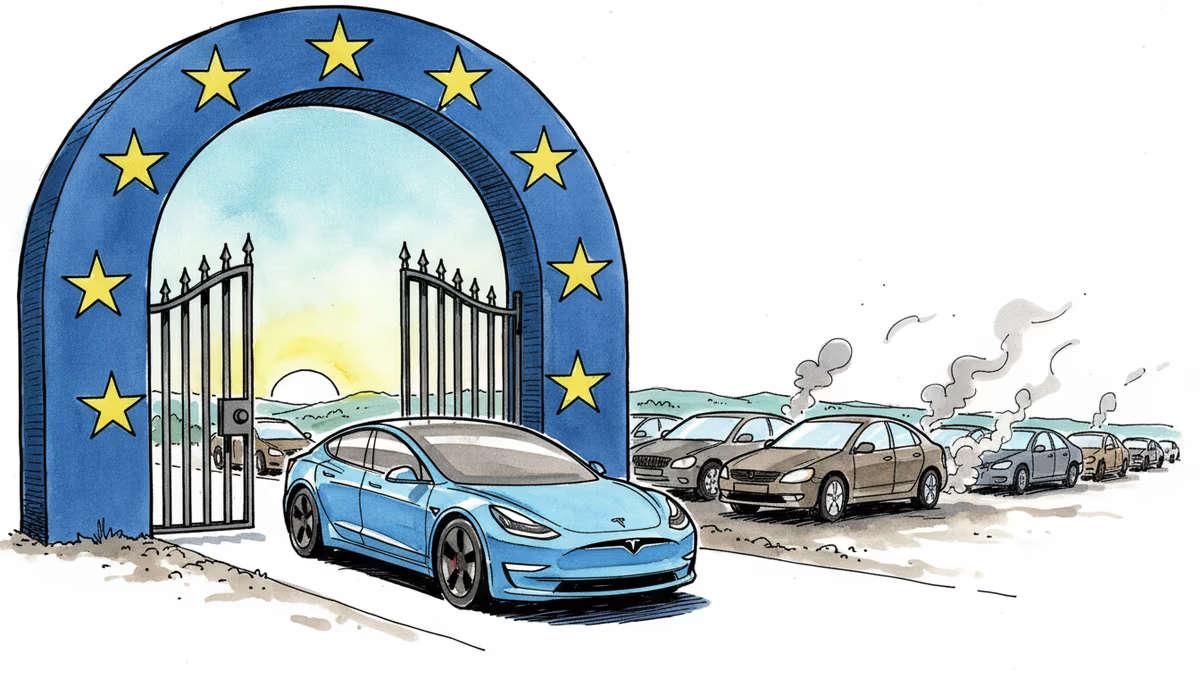
The Netherlands became the first European country to officially approve Tesla's FSD Supervised. With EU's type-approval framework, this could ripple across 27 member states fast.
Waymo's new Ojai robotaxi isn't just a vehicle upgrade. It's the company's most serious attempt yet at cracking the cost problem that has kept autonomous vehicles from scaling. Here's what's really at stake.
Elon Musk confirmed on Tesla's Q1 2026 earnings call that Hardware 3 vehicles will never receive unsupervised Full Self-Driving — locking out millions who paid for the feature.
Tesla expanded its driverless robotaxi to Dallas and Houston, even after reporting 14 crashes in Austin. What does this tell us about how autonomous vehicles actually get built?
The Netherlands became the first European country to officially approve Tesla's FSD Supervised. With EU's type-approval framework, this could ripple across 27 member states fast.
Thoughts
Share your thoughts on this article
Sign in to join the conversation