
Ford Wants AI to Run Your Fleet. Should You Let It?
Ford's new generative AI tool for commercial fleets turns vehicle data into plain-English recommendations. It's convenient—but who's really in control?
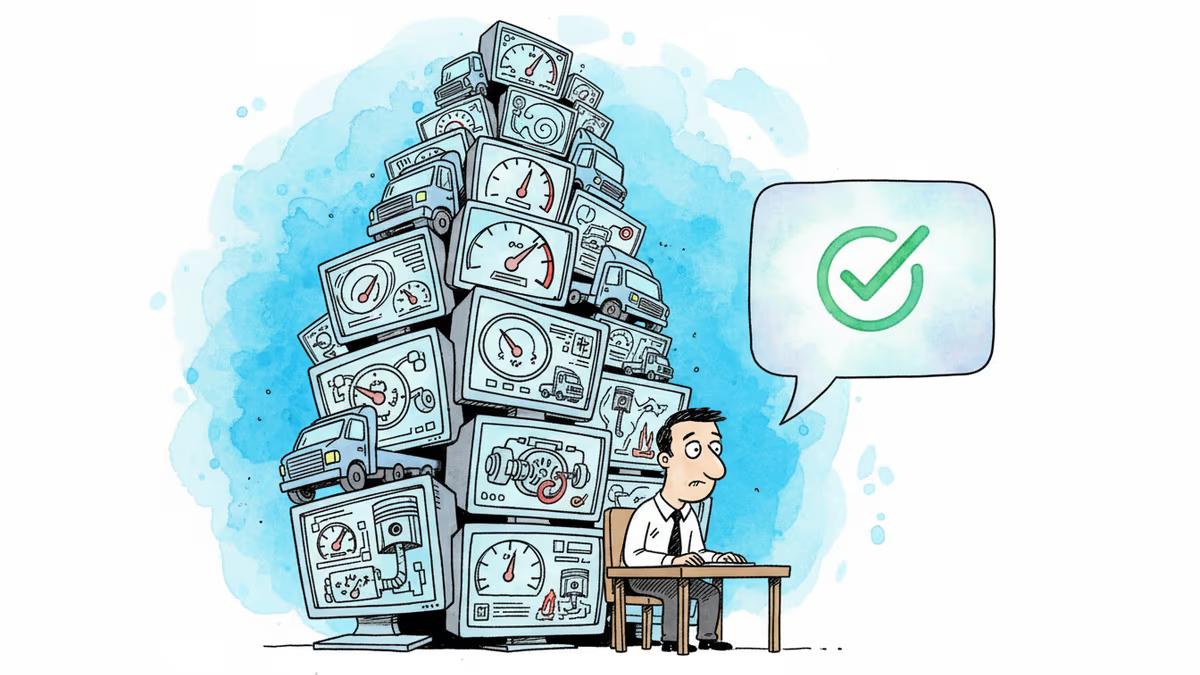
Managing a fleet of 100 commercial vehicles used to mean drowning in dashboards. Fuel logs, engine alerts, seatbelt compliance reports—each one a separate tab, a separate headache. Ford thinks a chatbot can fix that.
What Ford Pro AI Actually Does
Ford has launched Ford Pro AI, a generative AI layer built directly into its existing Ford Pro Telematics software for commercial fleet customers. The pitch is straightforward: instead of manually combing through vehicle data, fleet managers can simply ask questions in plain English.
The system ingests real-time data from commercial vehicles—speed, engine health, seatbelt activity, and more—and surfaces it as actionable recommendations. A manager can ask, "How do I lower fuel costs this month?" or "Give me a health summary on vehicle 7." The chatbot can even draft a summary email to a supervisor on the manager's behalf.
Crucially, this isn't a standalone app. It lives inside software that Ford Pro customers are already using, which lowers the adoption barrier considerably. No migration, no new login, no retraining from scratch.
Why This Matters Beyond Ford
This isn't just a product update. It's a signal about where enterprise AI is heading.
For the past few years, generative AI has lived mostly in consumer apps and developer tools. But 2025–2026 is shaping up as the period when it embeds itself into the operational layer of industries that run on physical assets—trucks, warehouses, machines. Fleet management is a natural entry point: the data is already there, it's already being collected, and most of it is going to waste.
The average mid-sized fleet operator doesn't have a data science team. They have a dispatcher, a spreadsheet, and a lot of phone calls. A tool that converts raw telemetry into a conversational interface doesn't just save time—it potentially democratizes a capability that was previously available only to companies with dedicated analytics infrastructure.

The Business Case—and Its Limits
The efficiency argument is real. Fuel is typically one of the largest operating costs for commercial fleets, and behavioral data (hard braking, idling, route inefficiency) can meaningfully reduce it when acted upon. Predictive maintenance—catching engine issues before they become breakdowns—reduces vehicle downtime, which in logistics translates directly to revenue.
But there are limits worth noting. AI recommendations are only as good as the data they're trained on. A system that flags a driver for "inefficient routing" may not account for a road closure, a customer who needed extra time, or a judgment call that saved a delivery. The chatbot summarizes; it doesn't understand context.
There's also the question of vendor lock-in. Ford Pro AI is built into Ford's telematics platform. Customers who adopt it deeply are, by extension, deepening their dependency on Ford's software ecosystem—a consideration for fleet operators who run mixed-brand vehicles or are evaluating platform switches.
The Driver's Perspective
Here's the tension that tends to get glossed over in product announcements: the data that powers Ford Pro AI is generated by drivers, but the insights flow to managers.
Seatbelt activity. Speed patterns. Engine behavior. All of it is now being processed by an AI that can surface anomalies, flag individuals, and generate reports—automatically. For drivers, this isn't a new concern; GPS tracking and performance monitoring have been standard in commercial fleets for years. But generative AI makes the analysis faster, cheaper, and more granular.
Labor advocates have already raised concerns about AI-driven surveillance in delivery and logistics. Amazon warehouse monitoring and gig-economy algorithmic management have both faced pushback. Ford Pro AI operates in a similar space. Whether companies use this tool for genuine safety improvement or as a productivity pressure mechanism will depend entirely on organizational culture—not the technology itself.
Who Else Is Watching
Ford isn't alone in this space. Samsara, Verizon Connect, and Geotab have all been building AI features into their fleet platforms. GM has its own commercial vehicle software ambitions. The difference here is that Ford—a vehicle manufacturer—is integrating AI at the point where hardware and software meet, which gives it a data advantage that pure software vendors don't have.
For investors, the more interesting story may be what this signals about Ford's long-term revenue model. Vehicle sales are cyclical and margin-thin. Software subscriptions are recurring and scalable. Ford Pro—the commercial division—has been one of the company's brighter financial spots recently. AI-enhanced software could accelerate that shift.
Authors
Related Articles
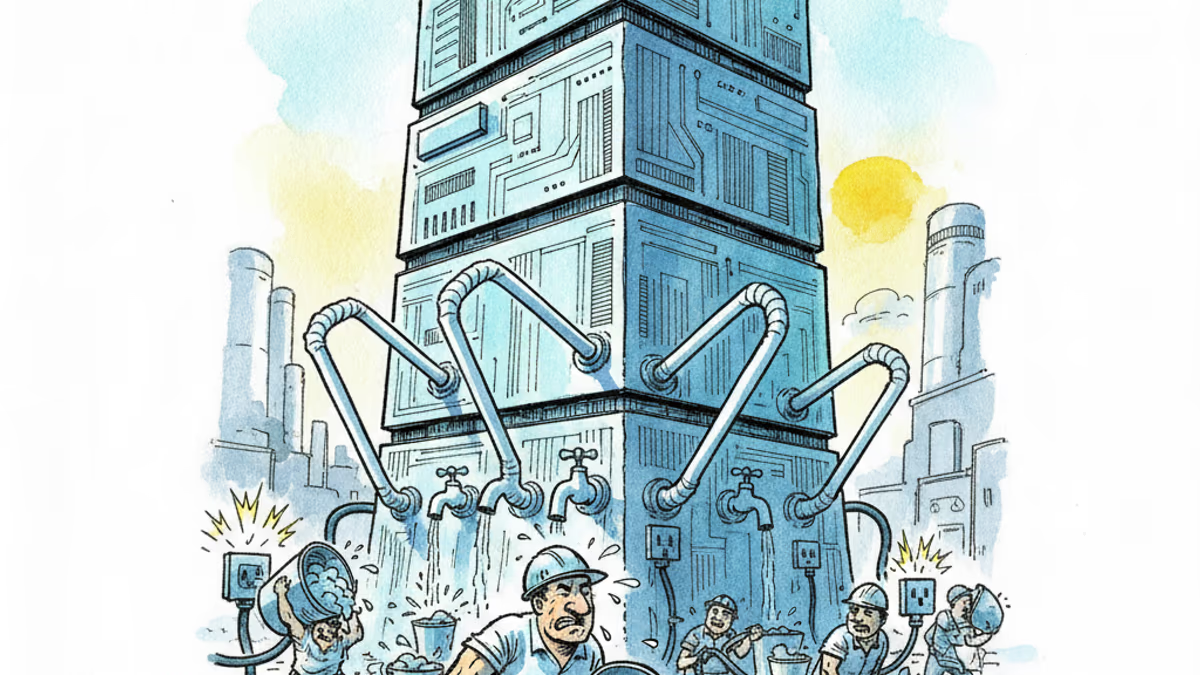
Samsung and SK unveiled a chip and AI investment package worth thousands of trillions of won on June 29. The headline number swings wildly by outlet, but the real contest isn't capital — it's water and power.
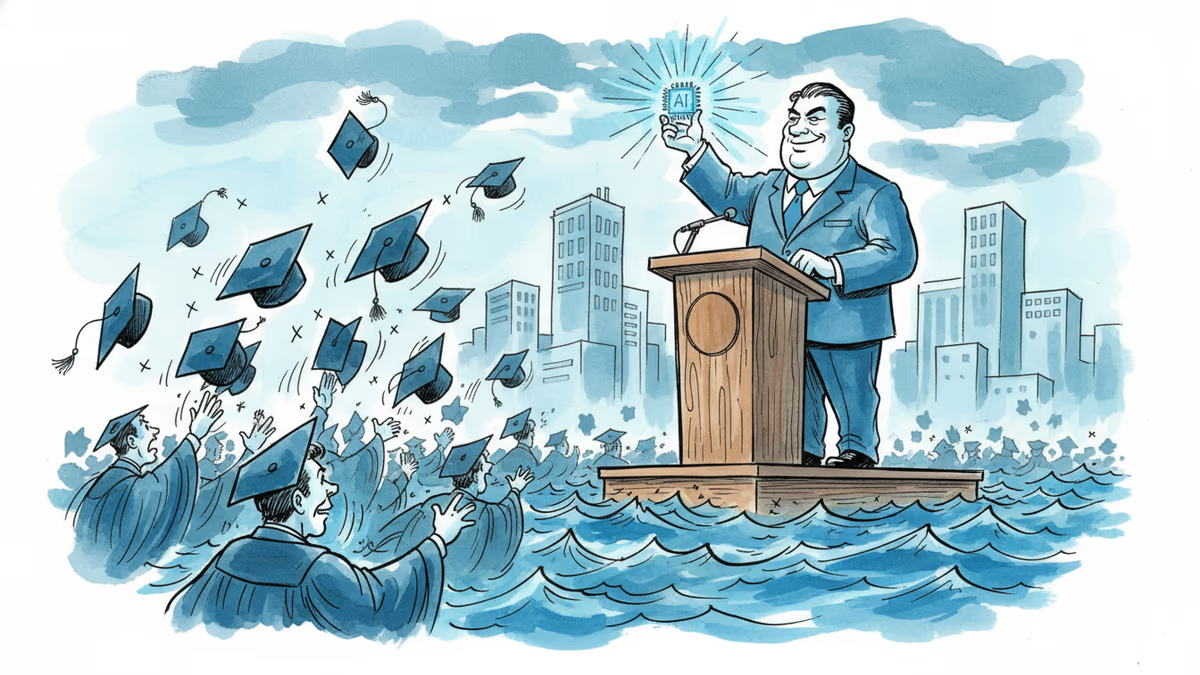
Viral videos show 2026 graduates jeering executives who praise AI at commencement ceremonies. It's not just rudeness — it's a signal about who pays for technological optimism.
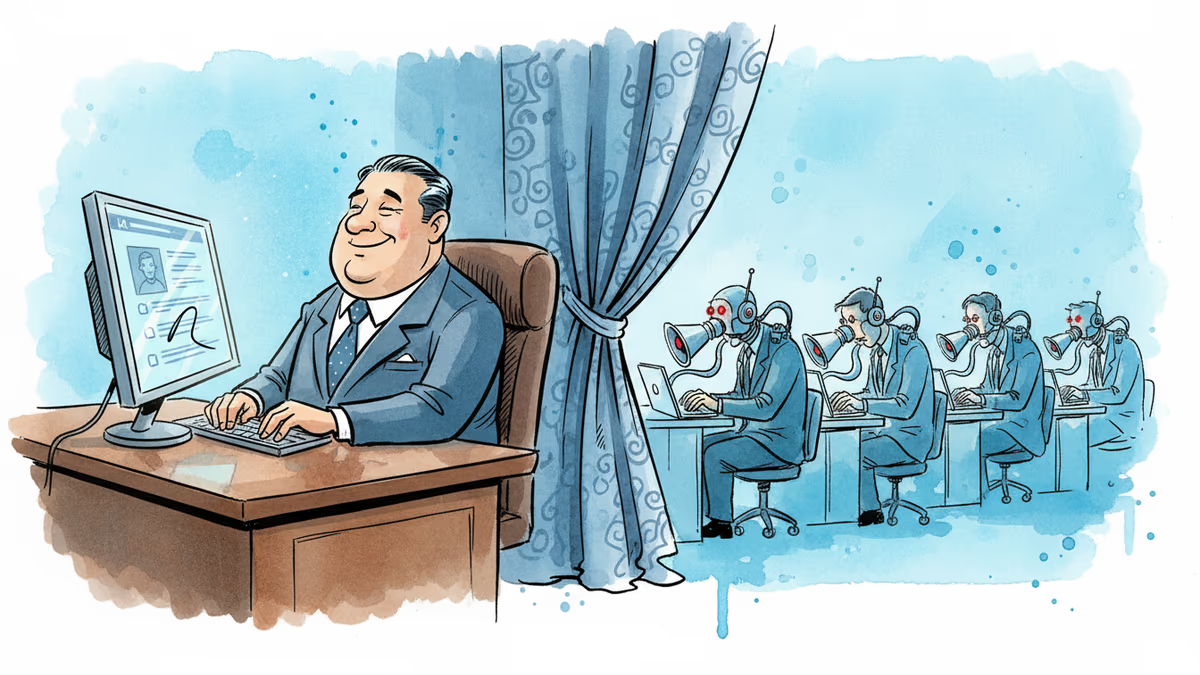
Filipino virtual assistants using AI to ghost-manage LinkedIn profiles for executives is now a structured industry. 30 comments a day, fake engagement rings, and a platform struggling to tell real from fabricated.
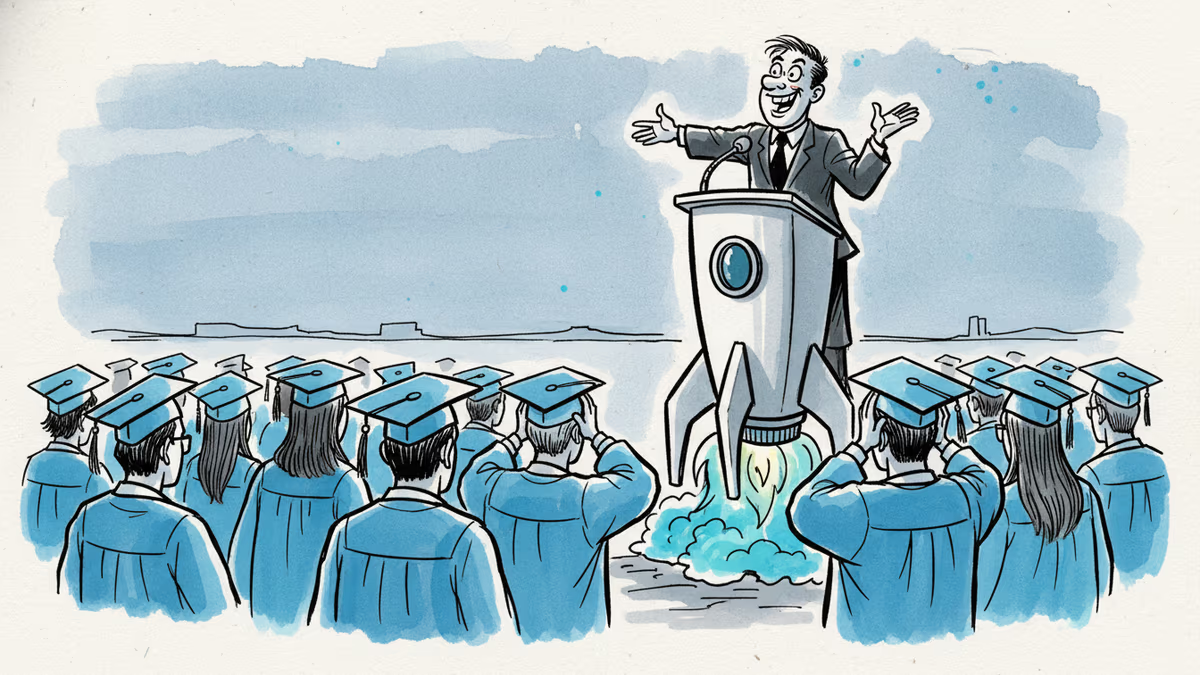
Two commencement speakers learned the hard way that AI enthusiasm doesn't land well with today's graduates. The backlash reveals a widening gap between tech optimism and Gen Z's economic reality.
Samsung and SK unveiled a chip and AI investment package worth thousands of trillions of won on June 29. The headline number swings wildly by outlet, but the real contest isn't capital — it's water and power.
Viral videos show 2026 graduates jeering executives who praise AI at commencement ceremonies. It's not just rudeness — it's a signal about who pays for technological optimism.
Filipino virtual assistants using AI to ghost-manage LinkedIn profiles for executives is now a structured industry. 30 comments a day, fake engagement rings, and a platform struggling to tell real from fabricated.
Two commencement speakers learned the hard way that AI enthusiasm doesn't land well with today's graduates. The backlash reveals a widening gap between tech optimism and Gen Z's economic reality.
Thoughts
Share your thoughts on this article
Sign in to join the conversation