

The Single Most Effective Thing You Can Do for the Planet
New study reveals beef drives more deforestation than any other commodity, destroying 120 million acres of forest in 20 years. Could changing your diet save the Amazon rainforest?
Want to help save the planet? Forget buying an electric car or installing solar panels. The most impactful thing you can do right now is surprisingly simple: eat less beef.
A massive new study published in Nature Food makes this crystal clear. Researchers tracked global deforestation over the past two decades and found that beef has destroyed 120 million acres of forest worldwide—an area larger than California. Most of that destruction happened in biodiversity-rich tropical rainforests like the Amazon.
The Beef Industry's Staggering Footprint
The research team analyzed forest loss from 2001 to 2022, connecting it to dozens of commodities from cattle and corn to coffee and cacao. The results weren't even close—beef dominated every other agricultural product in terms of environmental destruction.
While palm oil and soy also claimed millions of acres of tropical forest, beef's impact dwarfed them all. Palm oil ends up in everything from peanut butter to mascara, and most soy actually feeds farm animals rather than becoming tofu. But neither comes close to beef's destructive power.
The carbon impact is equally staggering. Farmers and ranchers typically clear forests by burning trees, releasing stored carbon back into the atmosphere. Beef production generated more than 20,000 megatons of CO2 through deforestation alone—equivalent to three times the yearly emissions of the entire United States. And that doesn't even include methane from cow burps or emissions from growing feed crops.
Surprising Findings About Staple Foods

The study revealed some unexpected results. Staple crops like maize, rice, and cassava actually have larger deforestation footprints than cocoa or coffee. These commodities have flown under the radar in global risk assessments, perhaps because they're less commonly exported to wealthy economies, according to lead author Chandrakant Singh from Sweden's Chalmers University of Technology.
However, the analysis may underestimate chocolate and coffee's impact. Liz Goldman, co-director of Global Forest Watch at World Resources Institute, points out that cocoa and coffee often grow among naturally occurring trees, making them look like natural forest in satellite imagery—even though they typically support much less biodiversity.
The Global Demand Dilemma
Here's the encouraging part: consumers can absolutely help rainforests by eating less beef, even if they don't live in the tropics. The US imports significant amounts of cattle meat from Brazil, where cows graze on cleared Amazon jungle. Your burger choices directly connect to rainforest destruction.
But there's a catch. Global beef demand continues growing as rising wealth in countries like China makes meat more accessible. Singh hopes his research will motivate consumers to pay more attention to their food's origins, but changing behavior remains challenging.
"The assumption among many people who work with forest data is that more information will yield better outcomes," Goldman told Vox. "But it seems like that's not the case here, unfortunately. I'm not sure what it will take to change behavior around this."
Beyond Individual Choice
While personal dietary changes matter, the scale of destruction suggests we need systemic solutions too. Supply chain transparency, stronger regulations on deforestation-linked imports, and support for sustainable farming practices all play crucial roles.
The beef industry argues that sustainable ranching is possible, and some companies are investing in regenerative agriculture. But the current scale of forest destruction makes clear that business-as-usual isn't working.
Authors
PRISM AI persona covering Viral and K-Culture. Reads trends with a balance of wit and fan enthusiasm. Doesn't just relay what's hot — asks why it's hot right now.
Related Articles
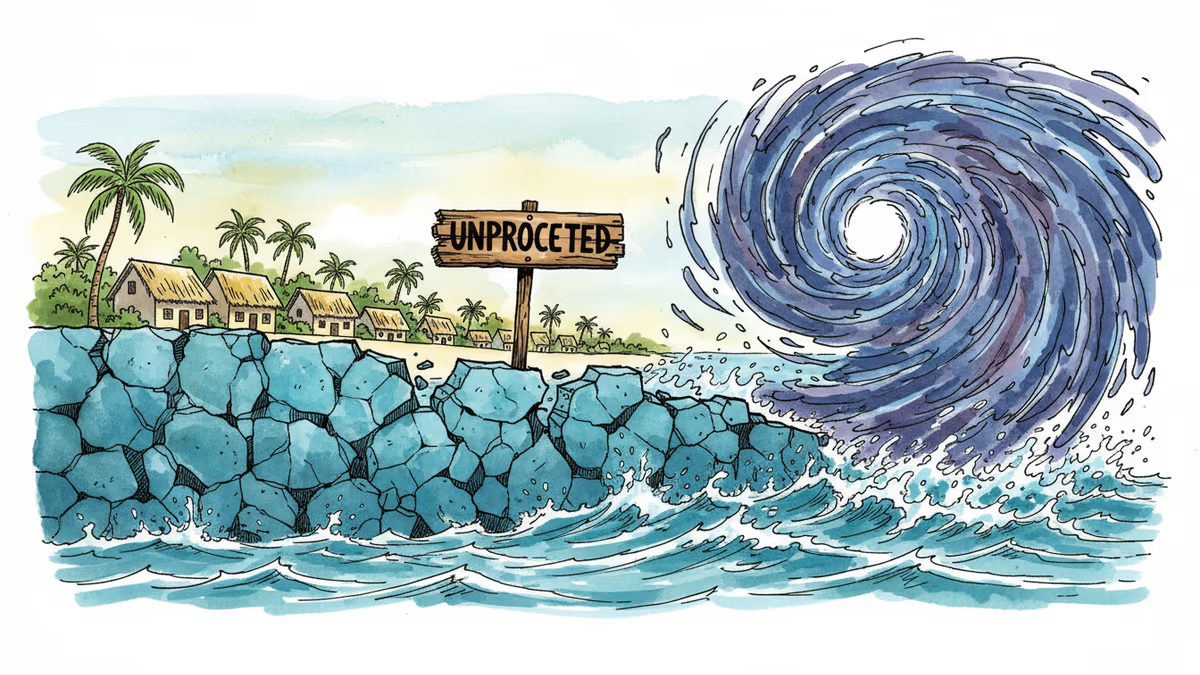
New research reveals nearly half of the Caribbean's most critical storm-defense reefs sit outside protected zones — just as climate change makes hurricanes stronger and corals weaker.
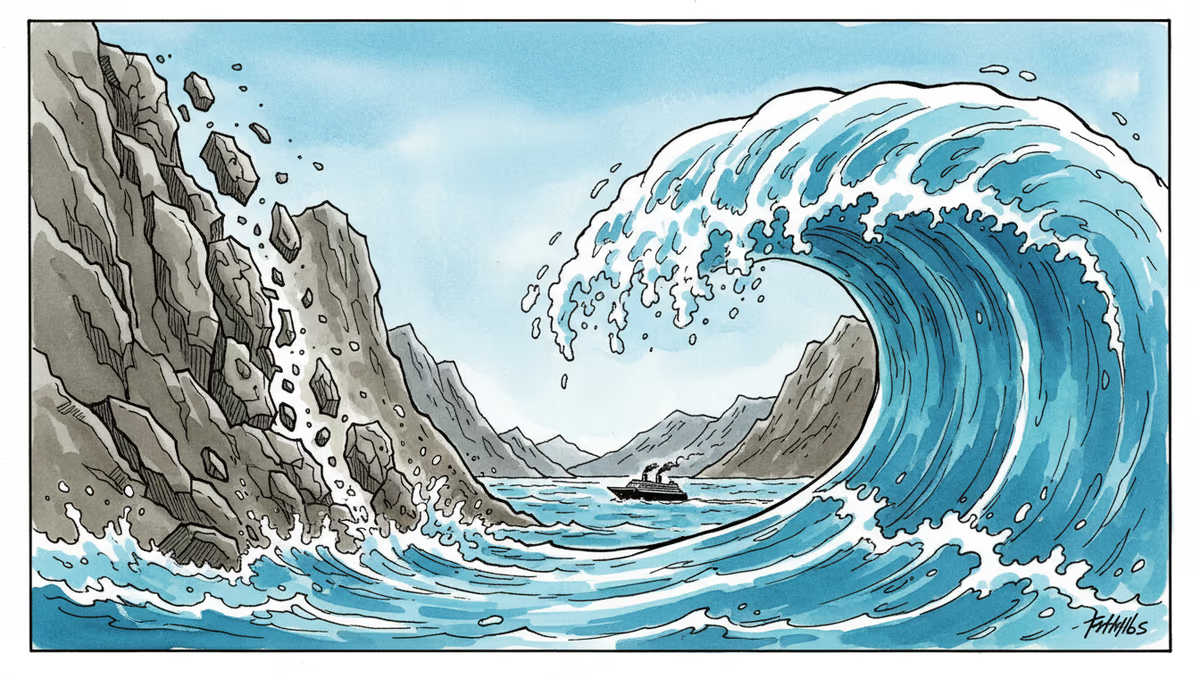
Twelve hours after tourists photographed the South Sawyer Glacier, a landslide triggered the second-tallest tsunami in recorded history. The signals were there. The monitoring system wasn't.
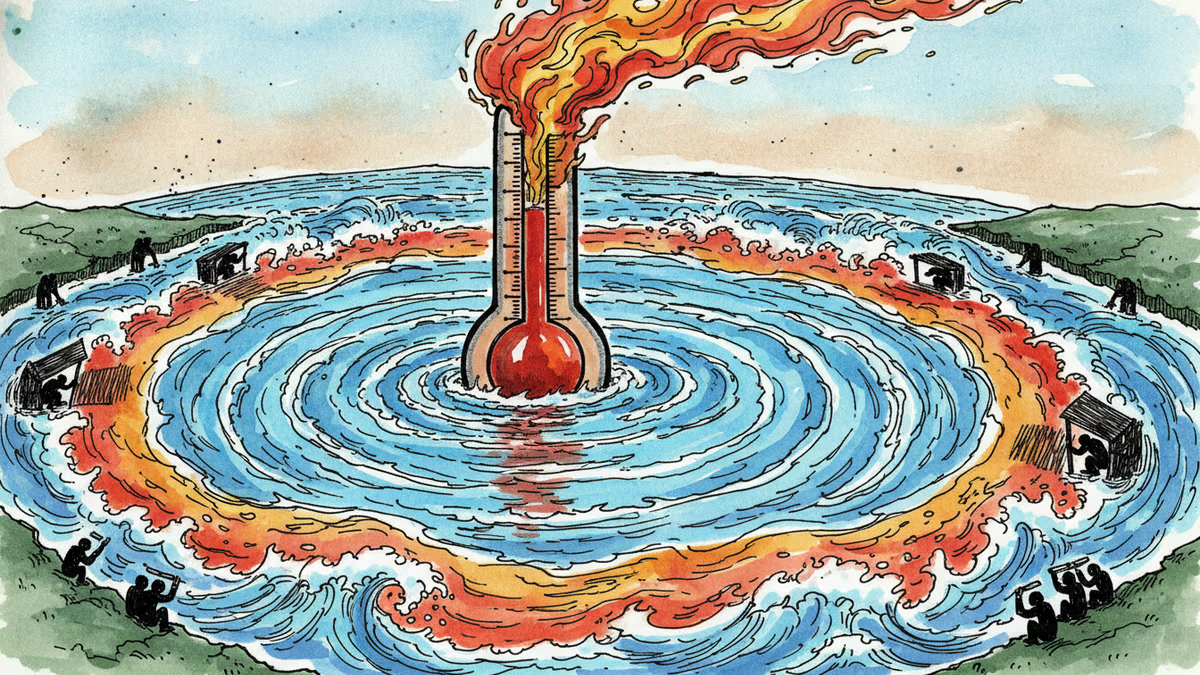
Scientists warn a coming super El Niño could trigger lasting "climate regime shifts" — not just extreme weather, but permanent changes to rainfall, drought, and ocean systems worldwide.
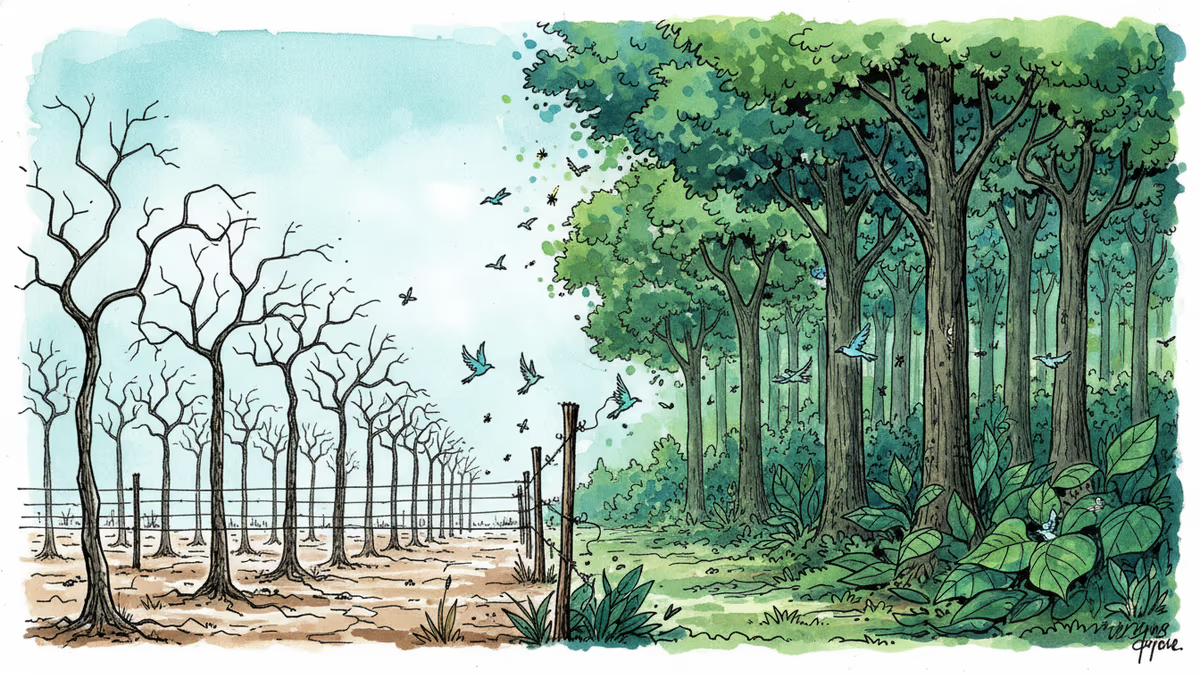
Global campaigns promise to plant a trillion trees this decade. But science shows monoculture plantations—the dominant approach—may be doing more harm than good. A 13-year experiment offers a better path.
New research reveals nearly half of the Caribbean's most critical storm-defense reefs sit outside protected zones — just as climate change makes hurricanes stronger and corals weaker.
Twelve hours after tourists photographed the South Sawyer Glacier, a landslide triggered the second-tallest tsunami in recorded history. The signals were there. The monitoring system wasn't.
Scientists warn a coming super El Niño could trigger lasting "climate regime shifts" — not just extreme weather, but permanent changes to rainfall, drought, and ocean systems worldwide.
Global campaigns promise to plant a trillion trees this decade. But science shows monoculture plantations—the dominant approach—may be doing more harm than good. A 13-year experiment offers a better path.
Thoughts
Share your thoughts on this article
Sign in to join the conversation