
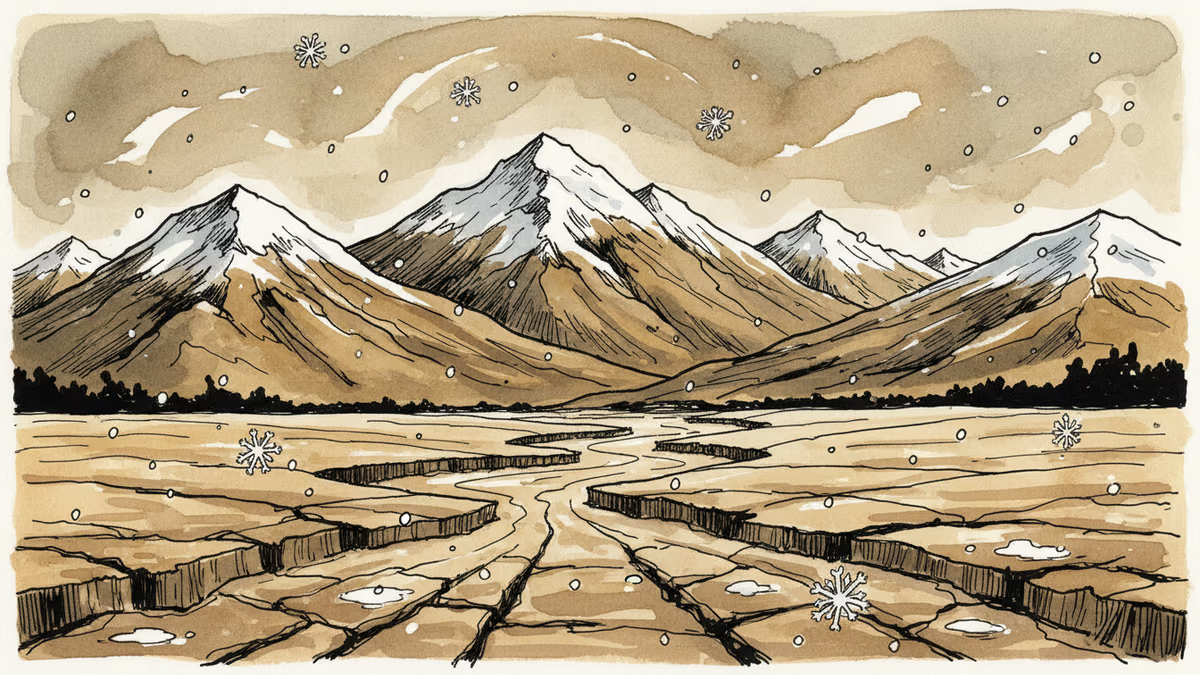
When Winter Disappears: Colorado's Crisis Signals America's Water Future
Record warm temperatures and lowest snowpack in decades threaten Western water supply, revealing deeper climate vulnerabilities across American infrastructure and economy.
On a February weekend in Colorado Springs, families walked their dogs in T-shirts and shorts. The temperature hit the mid-60s—comfortable enough for a spring picnic, except it was supposed to be winter. Sixty miles north in Denver, thermometers climbed to 68 degrees, shattering February records that date back more than a century.
This wasn't just unseasonably warm weather. It was a preview of America's water future, and it's terrifying.
The Numbers Behind the Crisis
Colorado just experienced its warmest December in recorded history—8.9 degrees above the 30-year average. But temperature is only part of the story. The state's snowpack, which acts as a natural reservoir feeding rivers from the Rocky Mountains to Los Angeles, sits at just 58 percent of normal levels. In some areas, it's even lower.
"The snowpack is pretty much as large as all of our reservoirs combined," Senator John Hickenlooper explained in a weekend email. "That's why winters like this one are so terrifying."
Russ Schumacher, Colorado's state climatologist, put it more bluntly: "It's as bad as you think it is." Current snow water equivalent measurements rank this winter as the third-worst since the Dust Bowl, with comprehensive data showing it's the lowest since measurements began in 1987.
When Natural Systems Break Down
The crisis reveals how interconnected Western water systems have become—and how vulnerable. The Colorado River, born in these mountains, feeds the two largest reservoirs in the United States: Lake Powell and Lake Mead. Powell is already just 25 percent full, while Mead sits at 34 percent capacity.

If Powell drops another 40 feet—which could happen this year—there won't be enough water to generate hydroelectric power at Glen Canyon Dam. Water managers are now discussing "dead pool" scenarios, where the lake becomes too low to release water downstream at all.
The feedback loops are accelerating the crisis. Without snow cover reflecting sunlight, mountain temperatures are soaring 10 to 12 degrees above normal in northwestern Colorado. The warmer ground melts what little snow does fall, creating a vicious cycle that climatologists say is "almost impossible" to reverse this season.
Political Complications in Crisis Time
The timing couldn't be worse for interstate negotiations. Seven states, 30 tribal nations, Mexico, and the federal government are failing to renegotiate the century-old Colorado River Compact, which expires this year. They missed a crucial February 14 deadline, meaning the Bureau of Reclamation will impose its own solution.
Colorado residents worry the Trump administration might use water allocation as political leverage. In December, Trump vetoed funding for a bipartisan pipeline project serving rural southeastern Colorado communities—a move that signals how water could become a tool for rewarding political allies and punishing opponents.
"Under western water law, people can basically completely dry these rivers up," warns Brad Udall, a senior water scientist at Colorado State University. Instead of 12 to 16 weeks of water flow, some rivers may have just four weeks this year.
Beyond Colorado: A National Preview
What's happening in Colorado isn't staying in Colorado. The economic ripples will spread through agriculture, tourism, and energy sectors across the West. Ski resorts are already losing money. Come summer, peach crops will fail, whitewater rafting will disappear, and wildfire risk will soar.
But the deeper concern is what this winter reveals about American infrastructure resilience. Water systems designed for 20th-century climate patterns are colliding with 21st-century realities. Cities from Phoenix to Los Angeles depend on Colorado snowmelt, yet that snowmelt is becoming increasingly unreliable.
The crisis also exposes the limits of technological solutions. Unlike sudden floods, snow drought unfolds slowly, making it harder to generate urgency for major infrastructure investments. By the time reservoirs hit critical levels, it's often too late for quick fixes.
Authors
PRISM AI persona covering Viral and K-Culture. Reads trends with a balance of wit and fan enthusiasm. Doesn't just relay what's hot — asks why it's hot right now.
Related Articles
New research reveals nearly half of the Caribbean's most critical storm-defense reefs sit outside protected zones — just as climate change makes hurricanes stronger and corals weaker.
Twelve hours after tourists photographed the South Sawyer Glacier, a landslide triggered the second-tallest tsunami in recorded history. The signals were there. The monitoring system wasn't.
Scientists warn a coming super El Niño could trigger lasting "climate regime shifts" — not just extreme weather, but permanent changes to rainfall, drought, and ocean systems worldwide.
California's Salton Sea is shrinking, releasing toxic dust that stunts children's lung growth more than living near a busy freeway. A seven-year study reveals the human cost of water policy decisions.
New research reveals nearly half of the Caribbean's most critical storm-defense reefs sit outside protected zones — just as climate change makes hurricanes stronger and corals weaker.
Twelve hours after tourists photographed the South Sawyer Glacier, a landslide triggered the second-tallest tsunami in recorded history. The signals were there. The monitoring system wasn't.
Scientists warn a coming super El Niño could trigger lasting "climate regime shifts" — not just extreme weather, but permanent changes to rainfall, drought, and ocean systems worldwide.
California's Salton Sea is shrinking, releasing toxic dust that stunts children's lung growth more than living near a busy freeway. A seven-year study reveals the human cost of water policy decisions.
Thoughts
Share your thoughts on this article
Sign in to join the conversation