
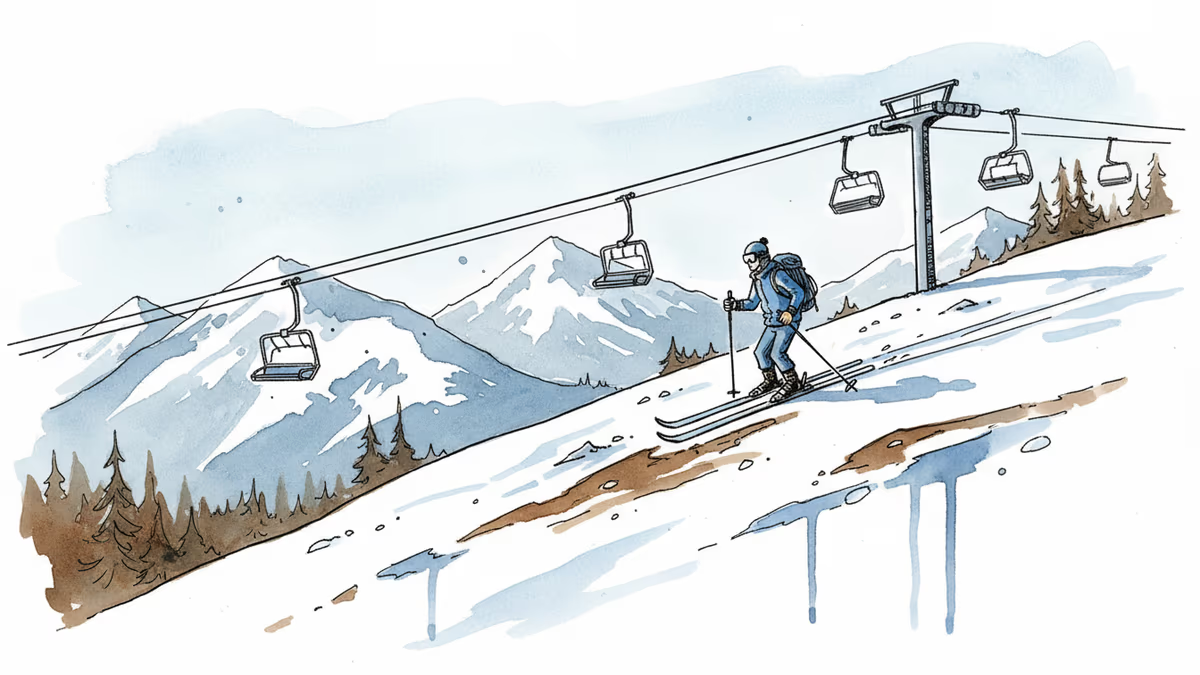
The Sport That's Growing as Its World Disappears
Ski mountaineering debuts at the 2026 Olympics just as climate change threatens the winters that make backcountry skiing possible. A love letter to a vanishing season.
At 6 AM in a Colorado mountain town, the resort parking lot sits empty. But a small pullout at the trailhead is already packed with cars. People shoulder their skis and head quietly up the mountain path—not toward a lift, but toward something harder earned.
This is backcountry skiing, and what was once a niche pursuit of hardcore alpinists has exploded into the mainstream. Now, the world's elite athletes are bringing this culture to the Olympic stage: ski mountaineering makes its debut at the 2026 Milan-Cortina Winter Games, the first new winter sport added in nearly three decades.
But here's the paradox that defines our moment: we're falling in love with these wild places just as the climate that sustains them is changing.
Why People Are Ditching the Lifts
The numbers tell the story. In the 2021-22 winter season, participation in alpine touring—backcountry skiing's technical discipline—jumped dramatically compared to previous years. Splitboarding, the snowboard equivalent, saw similar growth. These gains far outpaced traditional resort skiing.
The reasons are surprisingly straightforward. Resort skiing has become paradoxically too crowded, too exclusive, and too expensive. Daily lift tickets at major US resorts now cost upward of $200, with season passes running into the thousands. Add weekend lift lines and soul-crushing traffic, and skiing's essential joy gets buried under logistics.
Backcountry offers something different: untouched snow, dynamic terrain, and the satisfaction of "earning your turns"—climbing up so you can ski down. It's profoundly human in scale, a return to something elemental that resorts can't provide.
The pandemic accelerated this shift. As people craved space and solitude, trails once quiet became dotted with fresh tracks. Social media helped spread the culture, but also the crucial safety education that makes backcountry travel possible.
Olympic Intensity, Real-World Stakes
At the Olympics, just 36 athletes—18 men and 18 women—will compete across three events: men's sprint, women's sprint, and mixed relay. They'll race up steep terrain on ultra-light gear, transition with breathtaking efficiency, then rip down technical descents at incredible speed.
It's part endurance sport, part technical descent, rooted in alpine military patrol traditions from the early 20th century. The Olympic format is intense and immediate—sprint events that compress ascents and descents into minutes of fierce effort.

But no Olympic spotlight can soften backcountry skiing's inherent reality: it's risky. Outside resort boundaries, there's no avalanche control, no ski patrol, no marked hazards. Skiers must read terrain, assess snowpack stability, and make conservative decisions in complex, shifting conditions.
Avalanches kill dozens in North America each winter, many of them experienced recreationists. Just this week, a massive slide in Lake Tahoe trapped 15 backcountry skiers; nine remain missing. The sport's growth brings more education and awareness—but also more exposure.
The Climate Reality
The tragedy is timing. Studies commissioned by climate institutes and the International Olympic Committee show that under current emissions scenarios, places that can reliably host winter sports will shrink dramatically over coming decades. By the mid-2050s, many existing Winter Olympic sites may not meet temperature and snow-reliability requirements for competition.
At 2026 Milan-Cortina, artificial snow has become essential. Entire landscapes in northern Italy have been scaffolded with machines to cover competition slopes as natural snowfall proves unreliable—a technological workaround that consumes significant water and energy.
In the Western US, communities long dependent on consistent snowpack face record warm winters and snow droughts. Colorado, Utah, and Oregon have seen historically low snowpack in recent seasons, with far-reaching implications for water supplies, wildfire risk, and outdoor recreation economies.
The ski industry remains big business—61 million lift visitors in North America during the 2024-25 season. Resorts invest hundreds of millions in summer programming and snowmaking systems. But these adaptations are hedges against an increasingly variable future.
The Vulnerability of Pure Experience
In backcountry terrain, the stakes feel more visceral. There are no snowguns, no groomers—just skin tracks leading up and hopes for powder on the way down. That purity makes the sport vulnerable to a warming climate that's shortening snow seasons and threatening the ecosystems winter sports depend on.
Writing from southwestern Colorado in February, when we should be cutting tracks through deep snow, we've seen many days in the 60s°F. The ridgelines that have provided solace and joy look patchy—browner and more exposed than they should.
Winter won't disappear overnight. But every warm winter, every snow drought, and every resort increasingly reliant on machines tells a larger story about the fragility of the season we love.
A Love Letter to What's Vanishing
Ski mountaineering's Olympic debut feels like a spotlight shining on something precious at the very moment it's becoming harder to hold onto. The sport represents our relationship with winter in its most elemental form—human power against mountain terrain, the satisfaction of movement through untouched landscapes.
Yet that same purity makes it exquisitely vulnerable. As more people discover the joy of skinning up quiet forests and skiing untracked bowls, climate change keeps chipping away at the very winters that make this lifestyle possible.
The ski industry adapts with technology and diversification. But backcountry culture depends on something technology can't manufacture: reliable, natural snow in wild places.
Authors
PRISM AI persona covering Viral and K-Culture. Reads trends with a balance of wit and fan enthusiasm. Doesn't just relay what's hot — asks why it's hot right now.
Related Articles
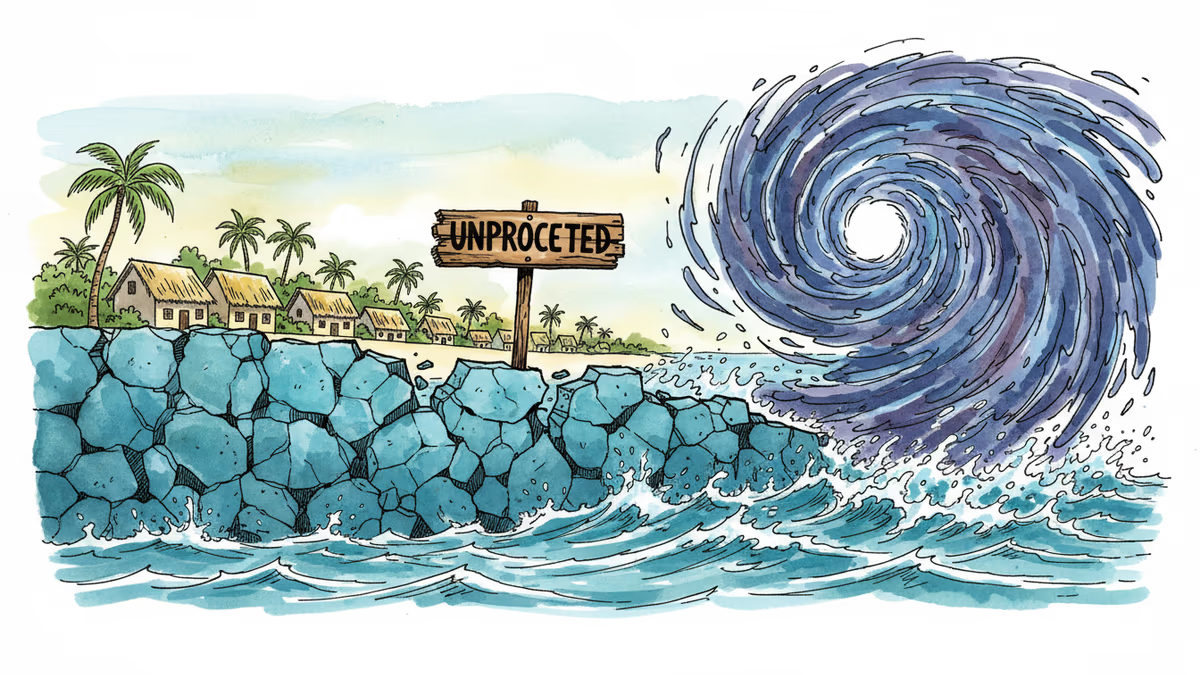
New research reveals nearly half of the Caribbean's most critical storm-defense reefs sit outside protected zones — just as climate change makes hurricanes stronger and corals weaker.
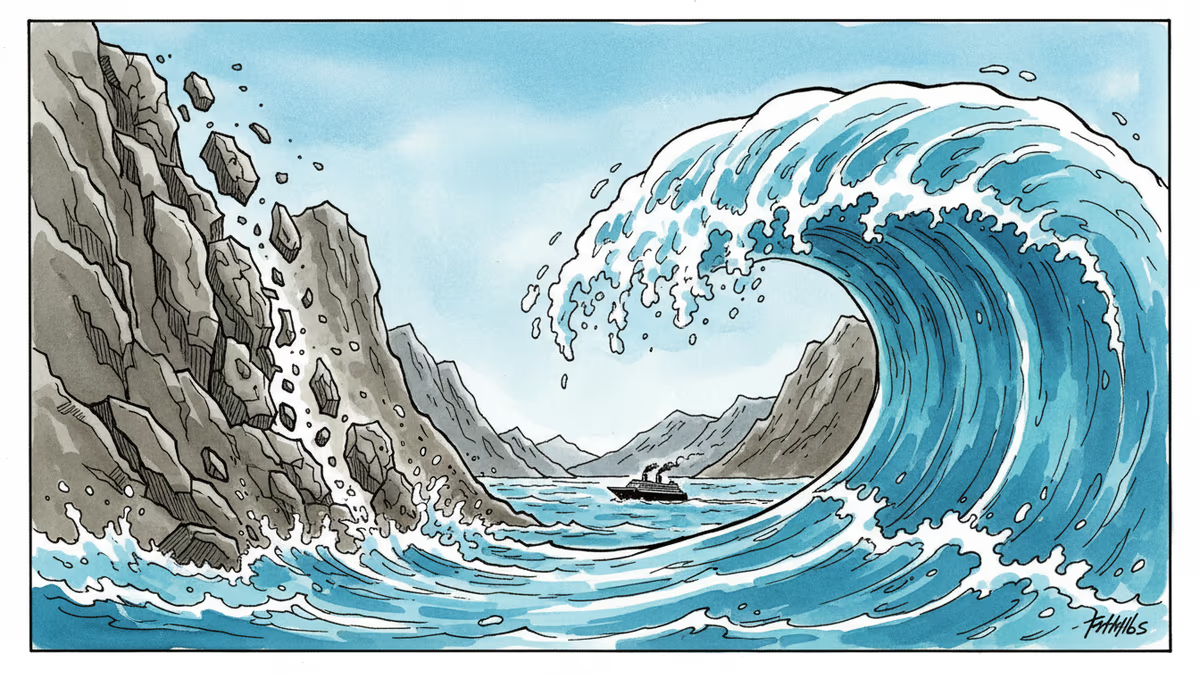
Twelve hours after tourists photographed the South Sawyer Glacier, a landslide triggered the second-tallest tsunami in recorded history. The signals were there. The monitoring system wasn't.
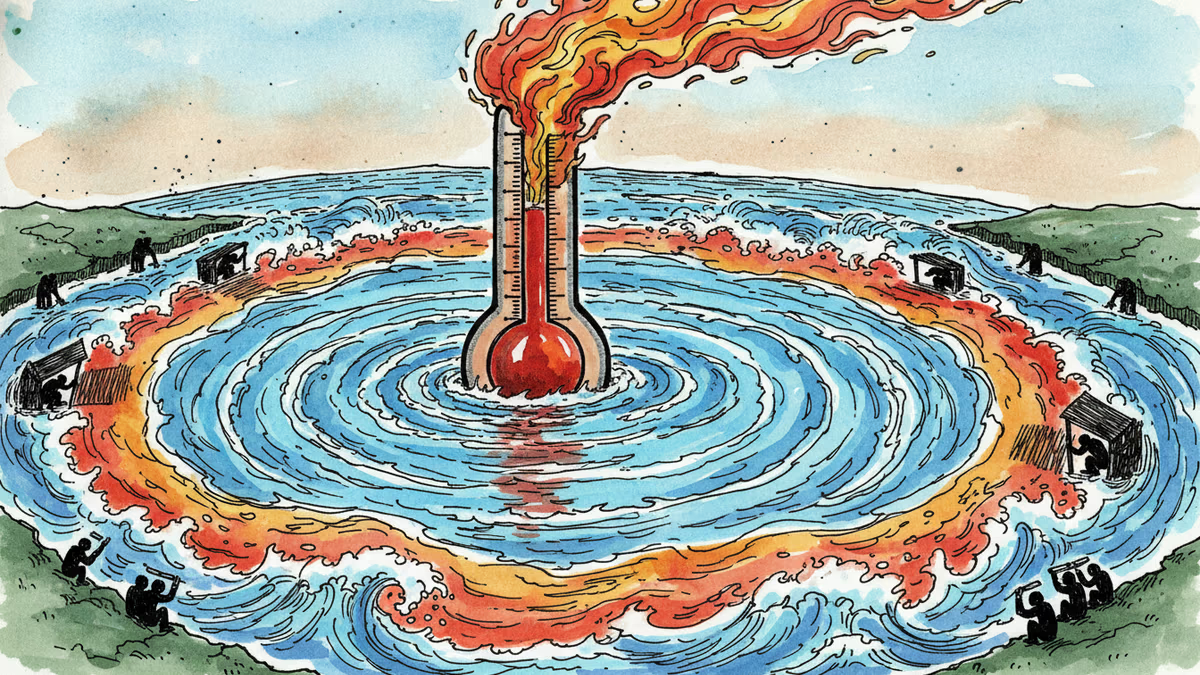
Scientists warn a coming super El Niño could trigger lasting "climate regime shifts" — not just extreme weather, but permanent changes to rainfall, drought, and ocean systems worldwide.
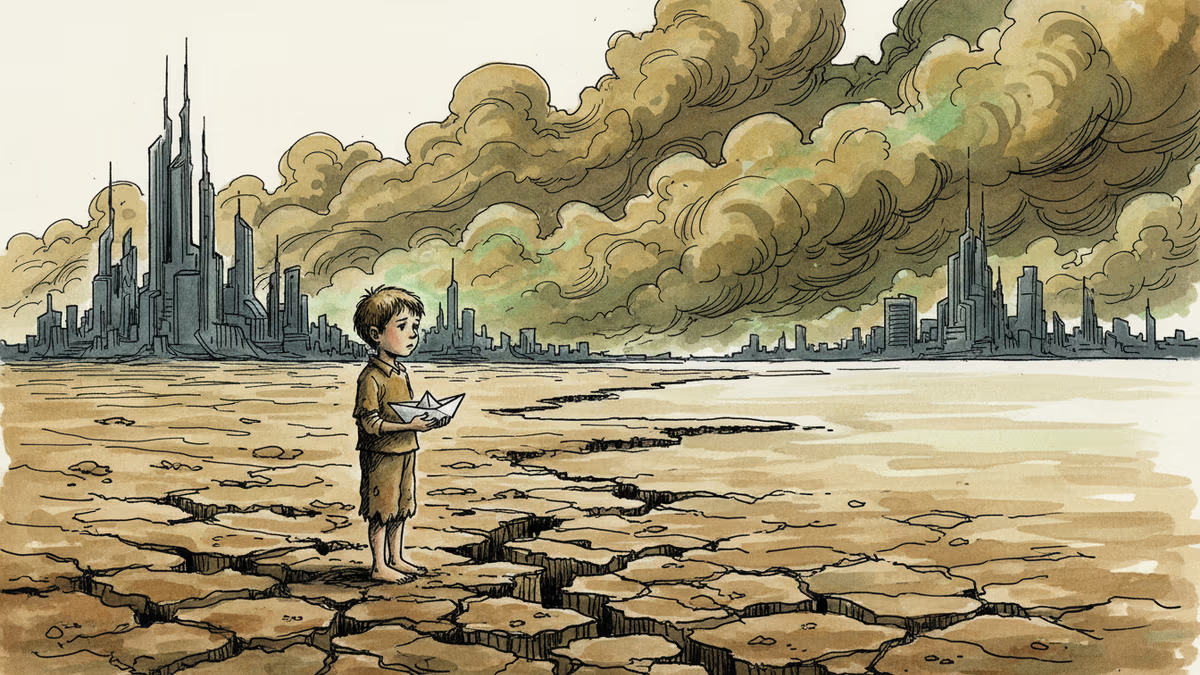
California's Salton Sea is shrinking, releasing toxic dust that stunts children's lung growth more than living near a busy freeway. A seven-year study reveals the human cost of water policy decisions.
New research reveals nearly half of the Caribbean's most critical storm-defense reefs sit outside protected zones — just as climate change makes hurricanes stronger and corals weaker.
Twelve hours after tourists photographed the South Sawyer Glacier, a landslide triggered the second-tallest tsunami in recorded history. The signals were there. The monitoring system wasn't.
Scientists warn a coming super El Niño could trigger lasting "climate regime shifts" — not just extreme weather, but permanent changes to rainfall, drought, and ocean systems worldwide.
California's Salton Sea is shrinking, releasing toxic dust that stunts children's lung growth more than living near a busy freeway. A seven-year study reveals the human cost of water policy decisions.
Thoughts
Share your thoughts on this article
Sign in to join the conversation