

5 Things You Missed This Week — US Core CPI, China PPI, Japan Import Prices
Within each country, prices differed by stage: China PPI 5.0% vs CPI 0.9%, Japan 6.8% domestic vs 24.5% import, US core 2.6%, plus Korea exports and TSMC.
US consumer prices up 3.7%, China's producer prices up 5.0%, Japan's import prices up 24.5% in yen terms. Those are the year-on-year price figures three countries put out this week. For each country we picked one stage (consumer, producer or import), then added two chip numbers from the same week: Korea's early-October exports and TSMC's third quarter. Throughout, we separate figures we reached in primary documents from those we could confirm only through news reports.
1. US Inflation Hits 3.7% in September, With Core Rising to 2.6%
September consumer prices (CPI-U) rose 3.7% from a year earlier and 0.6% from the previous month (seasonally adjusted), the US Bureau of Labor Statistics (BLS) reported on October 14. Core prices, which exclude food and energy, rose 2.6%, a faster pace than August's 2.4%. Gasoline rose 9.1% in a month, accounting for more than half of the monthly increase, and is 34.2% higher than a year ago.
In the BLS real earnings data released the same day, real average hourly earnings fell 0.7% from a year earlier and 0.5% in September alone (nominal hourly pay +0.1%, prices +0.6%). PRISM's own recalculation of the year-on-year rates from the index levels in the BLS data API comes to 3.74% (headline) and 2.56% (core).
A pre-release preview from brokerage Admiral Markets expected core to hold at 2.4%, and the actual reading was 2.6%. The core figure lands ahead of the first FOMC meeting (October 27–28) since the Fed's September rate hike. PRISM couldn't confirm how market rate expectations moved after the release.
2. China's September Producer Prices Rise 5.0%, Consumer Prices 0.9%
China's National Bureau of Statistics said on October 14 that September producer prices (PPI) rose 5.0% from a year earlier, up from 3.8% in August. They rose 1.2% from the previous month, and year on year, mining prices were up 25.4% and nonferrous metal smelting 21.4%. Consumer prices (CPI), released the same day, rose 0.9%, close to August's 0.8%, with core at 1.0%.
The bureau's commentary said a 16.6% rise in gasoline prices added about 0.47 percentage point to year-on-year consumer inflation. Lower prices for pork (-10.0%) and fresh vegetables (-8.1%) subtracted about 0.33 point. It attributed the monthly rise in producer prices to higher international crude oil and nonferrous metal prices.
The commentary doesn't say whether these items account for the whole gap between 5.0% and 0.9%. Nor does this release show how much of that figure shows up in the prices of intermediate goods that Korean and Taiwanese companies import.
3. Japan's Corporate Goods Prices Slow to 6.8%, With Electronics Leading Export Price Gains

In preliminary September figures for its corporate goods price index, released on October 13, the Bank of Japan said domestic corporate goods prices rose 6.8% from a year earlier. That's slower than July's 7.7% and August's 7.6% (revised), and prices fell 0.3% from the previous month. Import prices rose 24.5% in yen terms and 17.9% in contract-currency terms from a year earlier, and the yen figure is higher because the yen weakened over that period.
Of the 1.4% month-on-month rise in export prices (contract currency), electrical and electronic equipment contributed the most (+0.80 percentage point), and the first item the Bank of Japan listed was MOS memory integrated circuits. The corporate goods price index tracks prices in transactions between businesses, so it's a different index from the consumer prices behind the Japan real-wage item in our last issue. September's figures are preliminary and may be revised next month, as August's were this time.
Price gains slowed at the domestic stage, but import prices are still nearly a quarter higher than a year ago in yen terms. This release doesn't say when, or by how much, that gap will reach consumer prices.
4. Korea's October 1–10 Exports Up 102%, With Two More Working Days
Korea's exports for October 1–10 came to $26.1 billion, up 102.0% from the same period last year, according to preliminary trade figures the Korea Customs Service released on October 12 (as posted by the KDI Economic Information Center). Last year, the period included a holiday stretch running from National Foundation Day through Hangeul Day, the day marking the Korean alphabet (October 3–9), with the Chuseok harvest festival in between; this year, Korea took off a substitute holiday on October 5 and Hangeul Day on October 9.
According to SBS Biz, working days rose from 3.5 to 5.5, and average daily exports were up 28.5%. PRISM couldn't access the Korea Customs Service's attached data, and we checked that adjusting the 102.0% increase for the ratio of working days yields 28.5%.
Chip exports rose 170.9%, and total imports rose 65.5% to $22.3 billion, both growth rates unadjusted for working days. September exports, lifted by chips, were covered in our first issue. Neither release says whether Japan's export prices in item 3 or these chip numbers reflect price effects or volume effects. Over a 10-day window, a two-day difference in working days changes the multiple sharply, so the trend needs to be checked again against full-month October data.
5. TSMC's Q3 Revenue Hit $46.7 Billion, Above the Top of Its Guidance
TSMC reported third-quarter revenue of $46.72 billion on Oct. 15, about 2% above the top of the $44.6 billion to $45.8 billion range it guided a quarter earlier. That's up 16.2% from $40.2 billion in the second quarter. Gross margin of 66.4% landed inside its 65%–67% guidance, while operating margin of 58.7% beat the top of its guidance (58%). PRISM read these figures in the original earnings release and management report on TSMC's investor relations site.
Seventy-nine percent of wafer revenue came from 7-nanometer and more advanced processes, and 2-nanometer's share rose to 8% from 3%. High-performance computing (HPC) made up 68% of total revenue. The company attributed most of the 1.3-point drop in gross margin from the second quarter to dilution from the early ramp of its 2-nanometer technology. Taken at the company's word, this was a quarter in which the cost of scaling up a new process showed up in margins first. TSMC expects fourth-quarter revenue of $52.3 billion to $54.3 billion.
What to Watch in the Next Two Weeks
On October 20, we'll publish a Deep Dive comparing how South Korea, Japan, Taiwan, China and the US are responding to oil prices. When JNTO's September estimate comes out on October 21, we'll extend the tables in our tourism story to cover January through September.
According to news reports, the Bank of Korea's Monetary Policy Board meets on October 22, its first meeting since US core inflation rose to 2.6%. The first FOMC meeting since the Fed's September hike follows on October 27–28. Korea's September employment data and the next real-wage figures for Korea and Japan haven't come out yet, and PRISM couldn't confirm their release dates.
This content is AI-generated based on source articles. While we strive for accuracy, errors may occur. We recommend verifying with the original source.
Related Articles

Samsung's quarterly operating profit tops 100 trillion won, US July jobs revised negative, Japan's real wages up again, and why wage data won't line up.

Korea logged 24,275 births in July. Taiwan and China fell by double digits; Japan reads two ways. We ask whether the rebound is cohort size or policy.
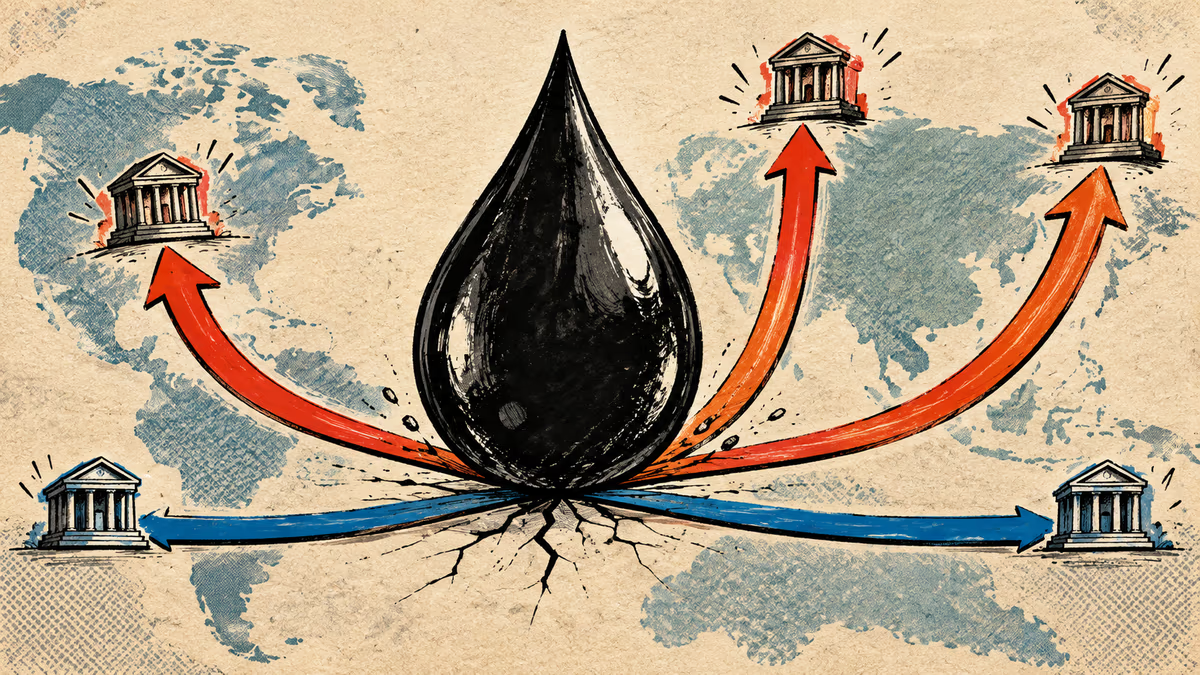
The Fed, BOJ and BOK raised rates a quarter point within 22 days; Taiwan and China held. What each said, plus the impact on Korean borrowers and the won.
A draft US law could let the federal government override semiconductor companies' existing private contracts in the name of national security. Here's what's at stake for the industry.
Samsung's quarterly operating profit tops 100 trillion won, US July jobs revised negative, Japan's real wages up again, and why wage data won't line up.
Korea logged 24,275 births in July. Taiwan and China fell by double digits; Japan reads two ways. We ask whether the rebound is cohort size or policy.
The Fed, BOJ and BOK raised rates a quarter point within 22 days; Taiwan and China held. What each said, plus the impact on Korean borrowers and the won.
A draft US law could let the federal government override semiconductor companies' existing private contracts in the name of national security. Here's what's at stake for the industry.
Thoughts
Share your thoughts on this article
Sign in to join the conversation